The weeks leading up to GCSE exams can feel like running a marathon without a map. You know there’s a finish line somewhere, but the course seems endless and the pressure can be overwhelming. For parents, watching their child juggle revision, homework and anxiety can be just as stressful. One of the most powerful tools students and families can use to bring order and confidence to this process is GCSE past papers.
When used properly, past papers transform revision from endless reading into focused practice, reveal knowledge gaps and help students build the exam skills they need to succeed. This guide explains what past papers are, why they matter and how to use them effectively for maths, science, English and other subjects. Along the way, we’ll share insights from our team of experienced tutors and stories from students who have turned past papers into their secret weapon.
Jump to Section
What Are GCSE Past Papers?
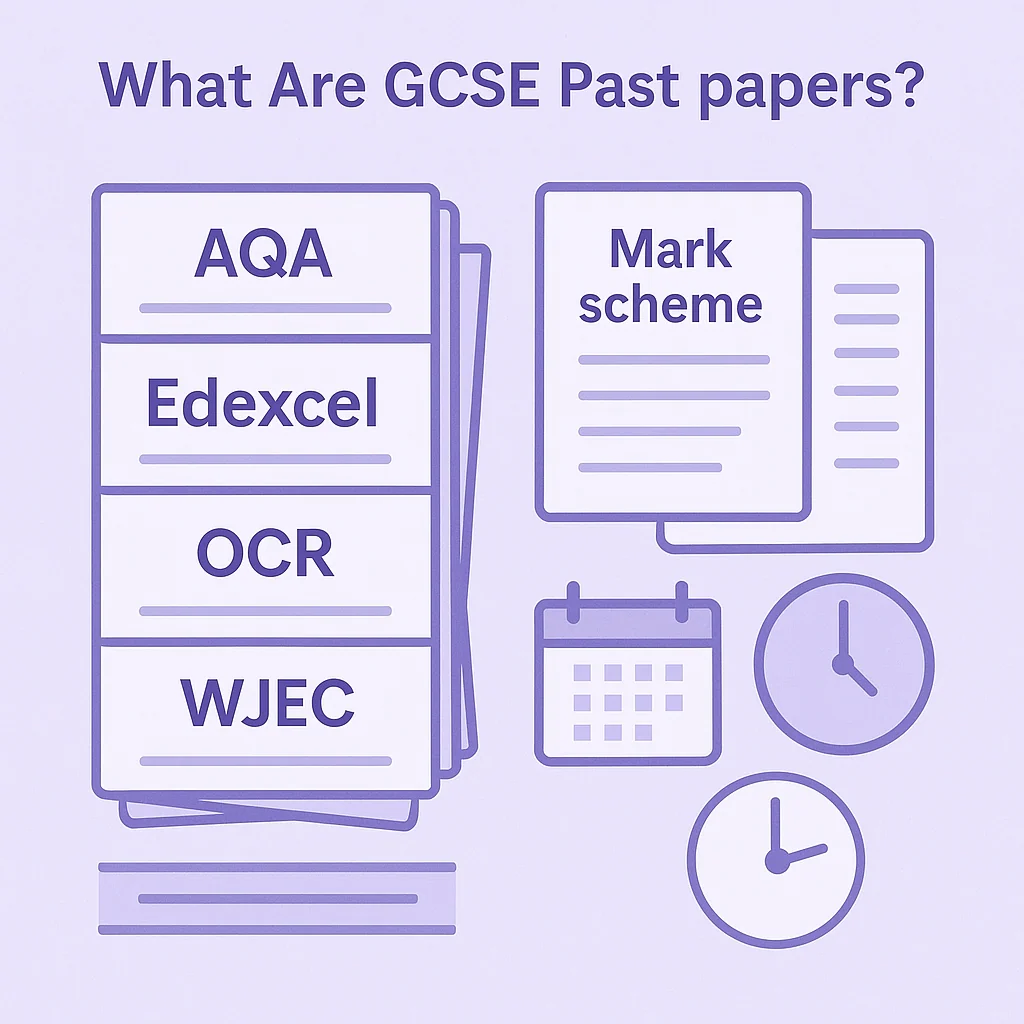
Past papers are real exam papers from previous years. They’re published by the exam boards AQA, Edexcel/Pearson, OCR and WJEC, along with mark schemes and sometimes examiner reports. Because they mirror the content, structure and timing of the actual exams, past papers provide the closest possible rehearsal for the real thing.
Working through past papers helps students become familiar with question formats, practise answering under timed conditions and learn the style of language examiners use. Importantly, they also reveal which topics appear frequently and how marks are allocated, allowing students to prioritise their revision.
Why Past Papers Are So Useful
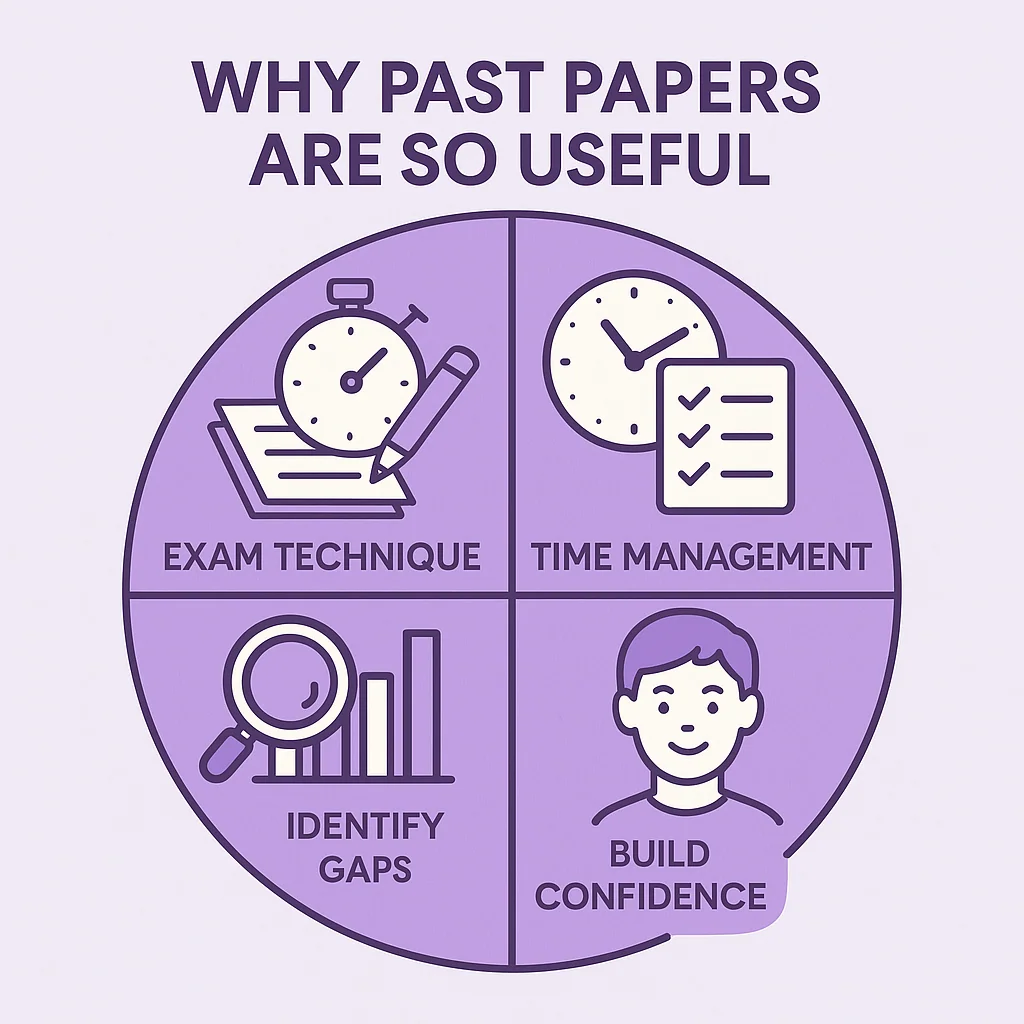
- Exam technique and active learning: Past papers force you to engage actively with the material. They’re not just about reading notes; they require you to recall facts, apply methods and structure your answers within exam constraints. This transforms passive revision into active practice, which research shows leads to better memory and understanding.
- Familiarity with exam style: Different boards have different question styles and mark allocations. Regularly practising with past papers helps you recognise command words like describe, evaluate and calculate and understand the depth of response required. You also learn how questions are structured, so fewer surprises trip you up on the day.
- Time management: Completing papers under timed conditions teaches you how to pace yourself, when to move on from a tricky problem and how to allocate time by mark value. Confidence with timing reduces panic when you encounter difficult questions.
- Identify knowledge gaps: Past papers show which topics you’re confident with and where you stumble. This allows you to target revision on weak areas rather than endlessly revisiting everything.
- Build confidence: Working through genuine exam questions and seeing improvement over time boosts self‑belief. By GCSE exam day you’ll feel more prepared and less anxious because the format feels familiar.
When to Start Using Past Papers
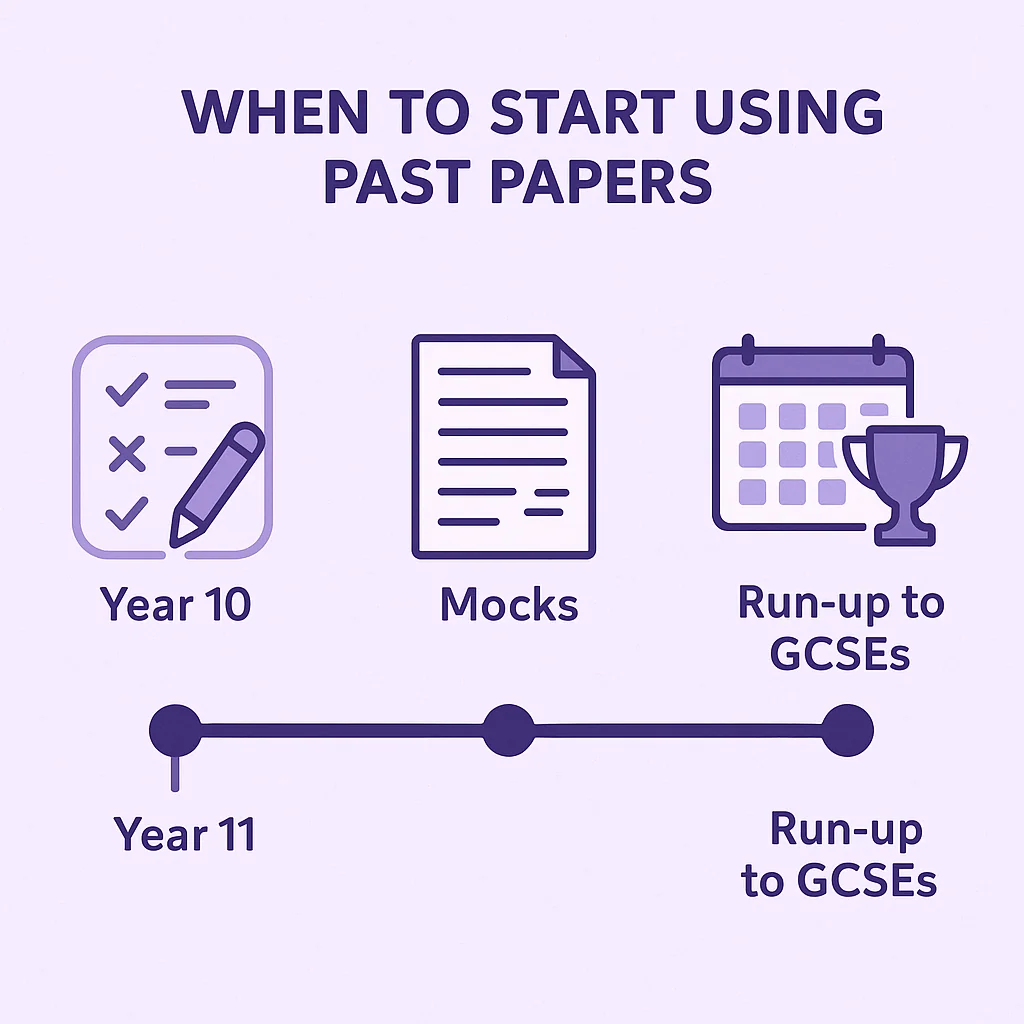
Past papers are most effective when you’ve covered at least a portion of the syllabus and can apply what you’ve learned. The revision experts at Atom Learning recommend introducing past papers gradually from Year 10 onwards, increasing their use as exams approach. Here’s a guideline:
| Stage | How to use past papers | Rationale |
|---|---|---|
| Year 10 | Use single questions or topic sections to test understanding as you learn new material. | Early exposure helps students see how concepts are examined and prevents misconceptions from taking hold. |
| Start of Year 11 | Incorporate full or partial papers into revision sessions and plan targeted revision based on results. | Regular practice identifies gaps and builds stamina early. |
| Before mock exams | Use recent papers under timed conditions to practise exam technique and refine revision plans. | Mock exams simulate the real thing; past papers train you for them. |
| After mock exams | Review your answers carefully, noting what went well and what needs improvement, then revisit past papers to focus on weaker areas. | Reflection prevents repeating mistakes and guides further study. |
| Run‑up to GCSEs | Practise complete papers across all subjects in exam‑like conditions and use the mark schemes to guide revision. | Full papers polish exam skills and build confidence. |
It’s important to learn the content before jumping into full papers. Past papers work best when they reinforce what you’ve already studied and help you apply knowledge under pressure.
How to Use Past Papers Effectively
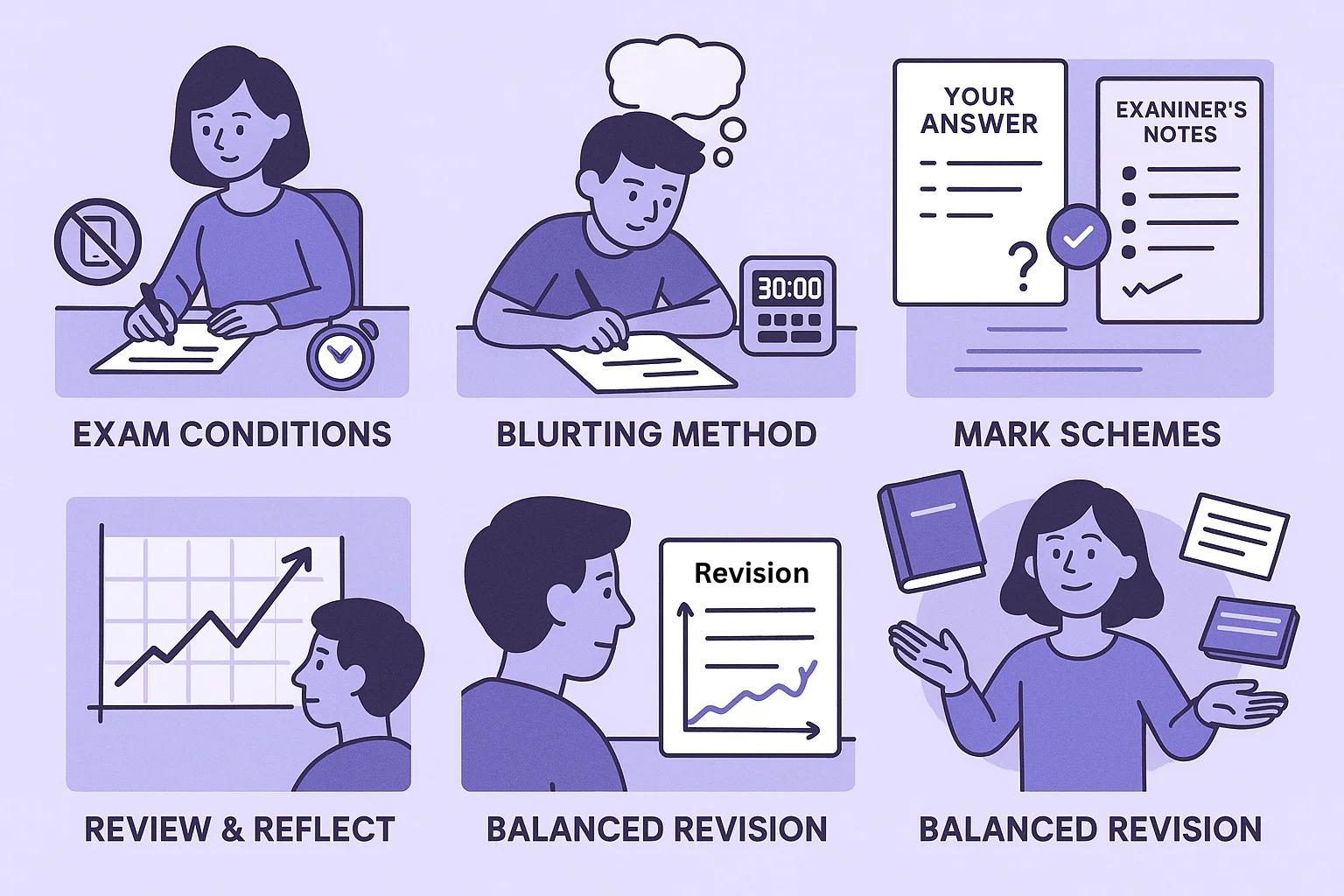
1. Set Up Exam‑Like Conditions
To get the most out of past papers, replicate the exam environment as closely as possible:
- Choose a quiet, distraction‑free space so you can concentrate fully. Turn off your phone and clear your desk of unrelated materials.
- Use a timer. If a paper lasts 90 minutes, aim to finish within that time, allowing a few minutes at the end to check your work. This teaches you to pace yourself and not get bogged down on tricky questions.
- Have the right equipment: pens, pencils, calculator (for calculator papers), ruler, protractor and any other allowed tools. Don’t use notes or textbooks during the paper; treat it like the real exam.
- Complete the entire paper in one sitting. Half papers may be useful for short practice, but full papers build stamina and exam fitness.
- Mark your paper using the official mark scheme. If you’re unsure why an answer is wrong, ask a teacher or tutor for clarification.
This disciplined approach transforms past paper practice into exam rehearsal. Students who practise under realistic conditions are more confident and less stressed on the day because they’ve already experienced the intensity of a timed papers.
2. Use the “Blurting” Method to Test Recall
Active recall is proven to strengthen memory. The blurting method is a simple but powerful way to use past papers for short‑answer or topic‑specific questions:
- Choose a question from a past paper.
- Without looking at your notes, write down everything you remember about the topic. This is the blurting stage.
- Compare your response to the mark scheme or revision notes. Use a different colour to highlight missing information or errors.
- Use the gaps as a prompt for targeted revision. Make summary notes or flashcards on the missing points.
- Repeat the process for other questions or revisit the same question after a week to see if you’ve improved.
This technique forces you to recall information rather than just recognise it, helping to consolidate knowledge and highlight areas needing further study.
3. Understand and Use Mark Schemes
Mark schemes are invaluable because they show exactly what examiners look for and how marks are awarded. They include:
- Command words: terms like describe, explain and evaluate that indicate the type of response required and the depth of detail.
- Key phrases and terminology: subject‑specific vocabulary that must be used for full marks.
- Point‑by‑point breakdowns: showing how marks are allocated across multi‑part questions.
- Model or exemplar responses: examples of top‑mark answers.
- Common errors and misconceptions: highlighting frequent mistakes and how to avoid them.
When marking your paper, read the corresponding mark scheme thoroughly. For each question you answer incorrectly, analyse why the mark scheme’s answer earns marks and yours doesn’t. Make a note of important phrases and expressions. Over time, you’ll develop a sense for how to phrase answers to earn all available marks.
4. Review and Reflect
Doing the paper is only half the process. To benefit fully, you must spend time analysing your performance:
- Identify patterns: Which questions did you get wrong consistently? Are there topics or question formats (e.g. two‑step calculations, interpreting graphs) that trip you up? Use this information to prioritise revision.
- Look for marks left on the table: Did you lose easy marks due to poor spelling, forgetting units or misreading the question? These are quick wins you can fix next time.
- Rewrite incorrect answers: After marking, rewrite the questions you got wrong without looking at the mark scheme. This will cement the correct method and reinforce learning.
- Track progress: Keep a record of scores and topics over time. Seeing improvement boosts motivation and shows your revision is working.
5. Balance Past Papers with Other Revision
Past papers are powerful, but they’re not the only tool you need. It’s important to balance them with other revision methods:
- Content revision: Use textbooks, revision guides or online resources to learn and revise topics thoroughly before you tackle full papers. Past papers test what you know; they don’t teach you content.
- Topic‑based question banks: Many websites organise past paper questions by topic (e.g. all algebra questions from past maths papers). These are great for targeted practice and can be used alongside topic revision.
- Flashcards and mind maps: These help you remember formulas, definitions and key facts. Use them to review quickly between longer study sessions.
- Examiner reports: These documents, published by exam boards, explain common mistakes and what examiners liked in high‑scoring answers. They’re excellent for understanding what to do and not to do.
6. Avoid Common Past Paper Pitfalls
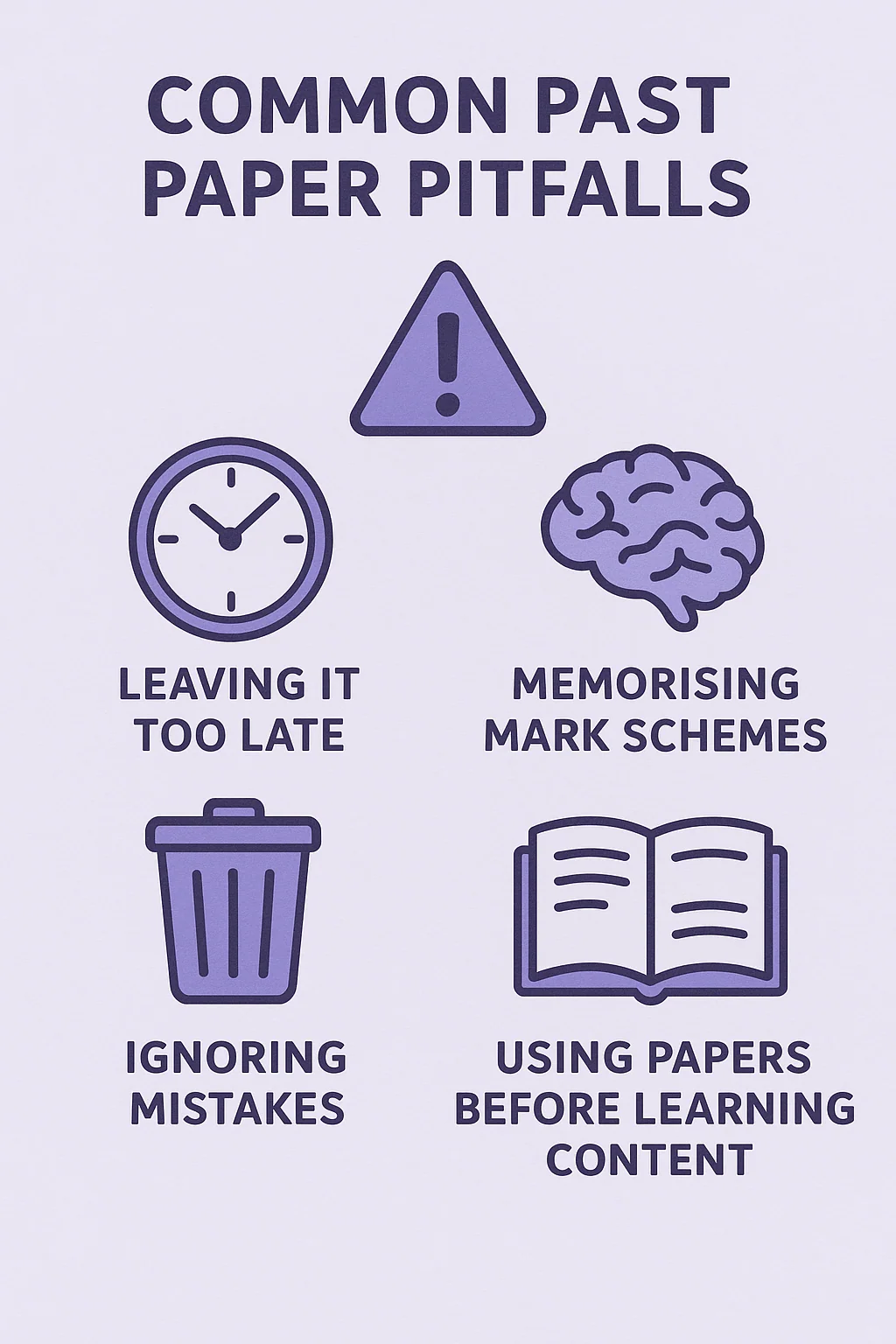
Past papers are most helpful when used wisely. Avoid these mistakes:
- Leaving past papers until the last minute: If you only start using them a week before the exam, you won’t have time to identify and fix weak areas.
- Memorising mark schemes: Past papers are meant to train you to apply knowledge, not to memorise answers. Exam boards change questions each year, so memorisation won’t help.
- Ignoring mistakes: It’s tempting to toss a marked paper aside and forget about the red crosses. But true progress comes from analysing errors and practising again.
- Using past papers to learn new content: Past papers can highlight gaps, but if you don’t understand the underlying topic, spend time learning it properly before attempting more papers.
Past Papers by Subject
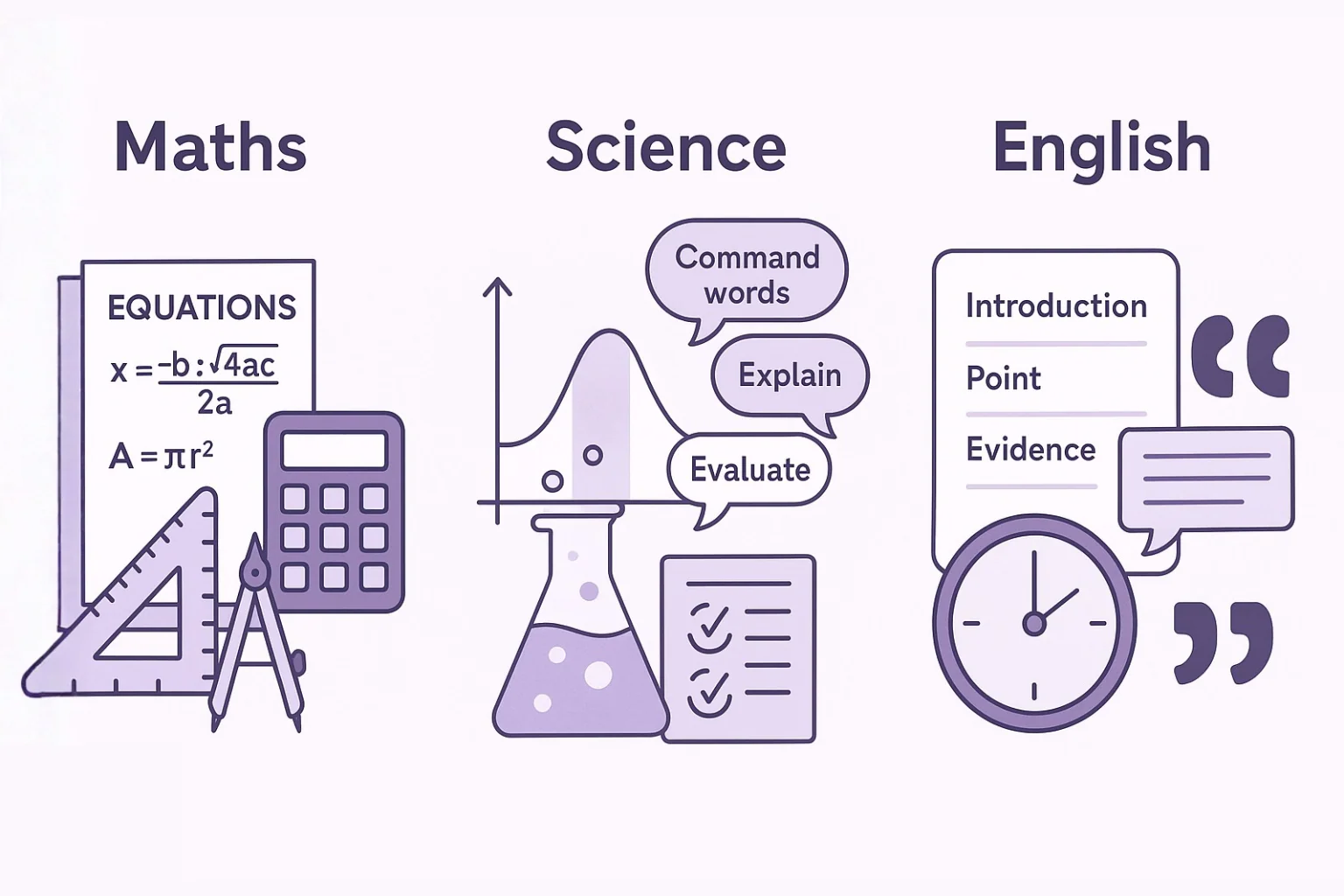
While the general principles apply across subjects, each GCSE subject has its own quirks. Here’s how to get the most out of past papers for maths, science and English. You can apply similar ideas to history, geography, languages or other subjects.
Maths Past Papers
Maths is perhaps the subject where past papers are most valuable, because exam technique and practice play such a big role in success. From early in Year 10, work through individual questions by topic (e.g. algebra, geometry, statistics), then progress to full papers. When practising:
- Show your working: Examiners award method marks even if the final answer is wrong. Write each step clearly and include units. It’s good practice to underline key numbers or highlight diagrams.
- Use both calculator and non‑calculator papers: Non‑calculator papers test mental arithmetic and number sense; calculator papers assess algebraic manipulation and problem‑solving. Practise both to build confidence.
- Review formulas: Keep a formula sheet handy and practise deriving formulas from memory. Many papers provide a formula sheet, but knowing when and how to use each formula saves time.
- Practise unfamiliar contexts: Some questions combine multiple topics or present real‑life scenarios. Don’t skip them; they develop your ability to apply knowledge flexibly. Past papers are particularly good for these cross‑topic problems.
Science Past Papers
Science GCSEs (biology, chemistry, physics and combined science) test knowledge and application. Past papers help you understand how to structure longer answers and use scientific terminology. To maximise your score:
- Learn command words: Words like describe, explain, compare and evaluate signal the depth of answer needed. Describe usually means state what happens, while explain requires linking cause and effect using scientific principles.
- Practise diagrams and data analysis : Science papers often include graphs, tables or apparatus diagrams. Use past papers to practise interpreting these accurately and describing patterns.
- Use mark schemes to learn key terms: Examiners look for specific vocabulary. If your answer is correct but lacks the right term, you may not receive full marks. Make a list of common keywords from mark schemes and learn them.
- Check for practical skills: Some papers include questions on experimental techniques or evaluation. Use past papers to practise writing method, variables, control factors and safety precautions.
English Past Papers
For English language and literature, past papers help you understand what examiners expect in essays, comprehension and creative writing. Unlike science or maths, there are no definitive “right answers,” but there are still clear criteria.
- Practise planning: For essays, spend a few minutes planning before you write. Identify key points, evidence and quotes. Past papers reveal common themes and question types, which helps you brainstorm quickly.
- Develop analysis skills: Mark schemes and examiner reports show how top‑level responses analyse language, structure and form. Compare your essays to exemplar answers to see how to integrate quotes and analysis smoothly.
- Work on timing: In the exam, you’ll need to write multiple essays or responses in a limited time. Use past papers to practise writing clear, concise answers under time pressure. Don’t forget to leave time to check spelling and grammar.
- Explore unseen texts: Many English language papers include unseen passages. Past papers are invaluable for practising reading these quickly, identifying the writer’s techniques and structuring your response.
Where to Find GCSE Past Papers
The best places to find authentic past papers are the exam boards themselves. Each board makes papers and mark schemes freely available on its website. You can also ask your teacher or tutor for past papers tailored to your course. Here are a few sources:
- Exam board websites: Search for AQA, Edexcel/Pearson, OCR or WJEC past papers and navigate to the GCSE section. You’ll find exam papers and mark schemes sorted by year and subject.
- School and library resources: Many schools provide collections of past papers and may even organise revision sessions based around them. Local libraries often carry revision guides and exam practice books.
- Topic‑specific question banks: Websites that categorise past paper questions by topic are excellent when you want to practise a particular area. They combine questions from multiple years and boards, offering ample material.
- Tutoring platforms: At RS Remote Tutoring, our tutors have curated libraries of past papers, examiner reports and practice questions for every subject. Students who book a free consultation receive access to our resource hub as part of their personalised learning plan.
Supporting Your Child with Past Paper Revision
Parents often ask how they can help their children use past papers effectively without taking over their revision. Here are some practical steps:
- Create structure: Work with your child to build a realistic revision timetable that includes regular past paper sessions. Balance these with time for content revision and breaks.
- Set the scene: Provide a quiet, comfortable space free from distractions. Make sure your child has all necessary equipment and access to mark schemes.
- Discuss progress: After each paper, talk about what went well and what was challenging. Encourage your child to identify next steps rather than focusing solely on scores.
- Offer encouragement: Celebrate effort, not just grades. Even a small improvement in timing or structure is progress. Remind them that mistakes are an important part of learning.
- Know when to get help: If your child consistently struggles with certain topics or exam techniques, consider enlisting support. Our experienced tutors can provide targeted guidance and feedback.
Insights from Our Expert Tutors
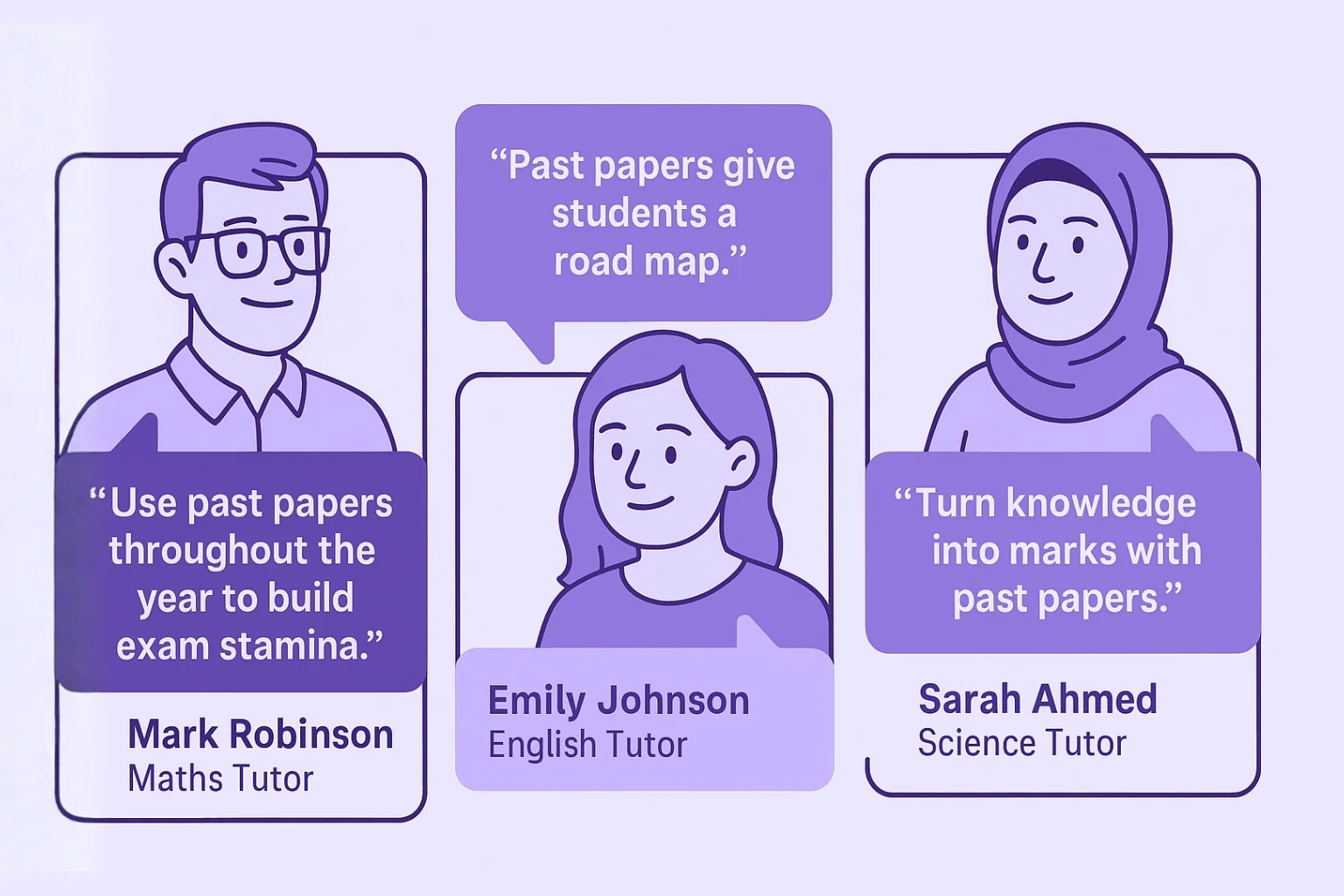
Our team of tutors have helped hundreds of students navigate GCSE exams. Here’s what they say about using past papers effectively:
Mark Robinson (Maths Tutor): “The biggest mistake I see is students saving past papers for the last week. We use them throughout the year to build exam stamina. For one Year 11 student who wanted to jump from a 5 to a 7, we started with topic‑based questions in October and gradually moved to full papers by spring. By identifying weak areas early, he could focus his revision. When the final exams came, he was unfazed by the timing and achieved a grade 8.”
Emily Johnson (English Tutor): “Past papers give my students a road map. We look at past essay questions to practise planning introductions, developing arguments and analysing quotes. One of my students initially wrote beautiful essays that didn’t answer the question. Working with past papers taught her how to read the prompt carefully and plan her response. Her mock grade went from a 6 to a 9.”
Sarah Ahmed (Science Tutor): “In science, past papers show how to turn knowledge into marks. Many students memorise facts but struggle to apply them. By working through past paper questions together, we focus on command words like describe versus explain, practise drawing labelled diagrams and emphasise the importance of using key vocabulary. I once had a student who kept losing marks for forgetting units. After weeks of timed practice with past papers, she developed the habit of including units automatically and improved her grade by two levels.”
Real Student Stories
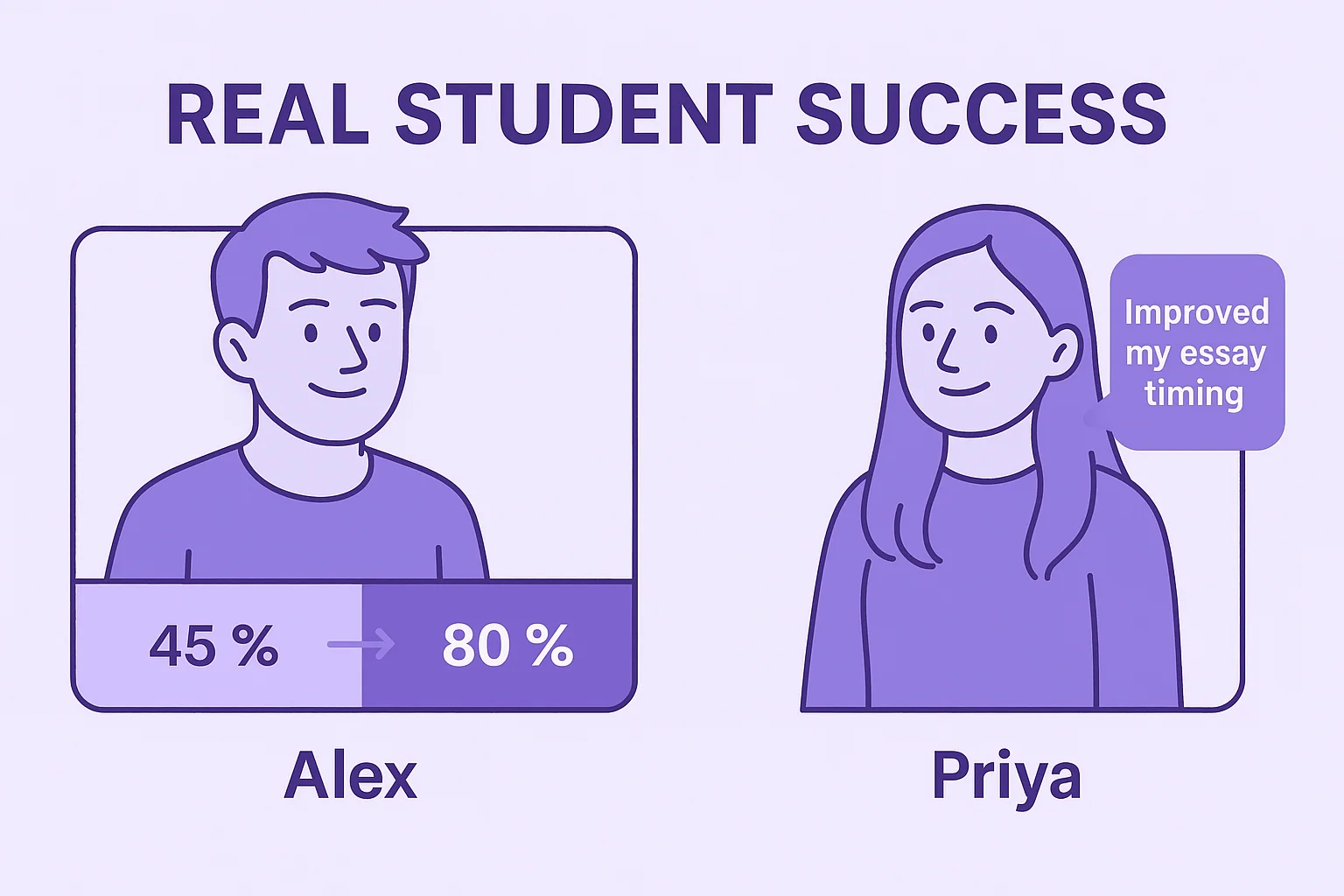
One of our Year 11 students, Alex, began revising with little structure. He spent hours re‑reading notes but panicked when faced with unfamiliar exam questions. We introduced past papers early and taught him to practise under timed conditions. After each paper, Alex and his tutor analysed errors and created a plan for targeted revision. Over six months, Alex’s scores rose from 45 % to over 80 %. More importantly, his confidence grew. “Past papers showed me what exams were really like,” he says. “By the time the real thing came around, it felt like just another practice paper.”
Another student, Priya, loved English literature but hated timed essays. She struggled to organise her thoughts and often ran out of time. Working with past paper essay prompts and planning frameworks, Priya practised writing concise introductions, structuring her arguments and using quotations effectively. In her final exam, she finished with ten minutes to spare and achieved the top grade.
Frequently Asked Questions
Are past papers suitable for learning new content?
Past papers are best used after you’ve learned the material. They test your understanding and application. If you don’t yet know a topic, use textbooks and revision guides first, then practise past paper questions to reinforce learning .
How many past papers should I do?
There’s no magic number. Aim for steady practice throughout Year 11, gradually increasing frequency closer to the exam. Many students find one past paper per week a good pace in early spring, then two or three per week in the final month.
Should I memorise mark schemes?
No. Mark schemes show you what examiners look for, but questions change each year. Use mark schemes to understand the structure and required vocabulary, not to memorise answers.
Where can I find past papers for different subjects?
Visit the official exam board websites (AQA, Edexcel, OCR, WJEC). They provide papers and mark schemes free of charge. Some schools, libraries and tutoring platforms offer curated collections organised by topic and year.
Do I need a tutor to use past papers effectively?
Many students use past papers successfully on their own, but a tutor can accelerate progress by pinpointing weaknesses, explaining mark schemes and teaching exam techniques. Our tutors provide structure, accountability and personalised feedback that can make a significant difference.
Conclusion
Using GCSE past papers effectively is one of the smartest strategies students can adopt. Past papers help you understand exam formats, practise time management, identify gaps and build confidence. They shouldn’t replace learning the content, but when combined with targeted revision and guidance from teachers or tutors, they’re a powerful tool for maximising your score. Start early, practise regularly, analyse your mistakes and use the mark schemes to improve.
If you feel stuck or want tailored support, our expert GCSE tutors at RS Remote Tutoring are here to help. We offer personalised online sessions, provide curated past paper resources and teach exam techniques that turn revision into results. Book a free consultation today to see how we can support your GCSE journey.

Raja specializes in Physics and Maths, with over 5 years of experience. He offers KS2, KS3, and GCSE Science and Maths lessons. He graduated from one of the top universities in the UK.