

We often hear a lot from students about the stressful week they had exams going on, whether the students are appearing in GCSEs or any other exams. Studying for an exam is exhausting and at the same time a challenging task. A stressful environment is often linked with the preparation week, but you know what the quiet, fun fact is, the pressure which is created after bearing this exhausting week. Pressure often increases when results do not turn out to be the way expected that.
Every Year, Students fall short of the expected grades in GCSEs and the highest failing ratio in delves in the most reputable subjects, nothing more than the two corner pillars, English and maths, losing themselves directly hit by the GCSE Resit Policy. For many of the newbies, the strategy is quite confusing, and they often feel themselves on the verge of discomfort and discouragement.
But what does this actually mean for the students? How is it really impactful, and how do parents navigate the challenges in this phase with their child?
Jump to Section
What is the GCSE Resit Policy?
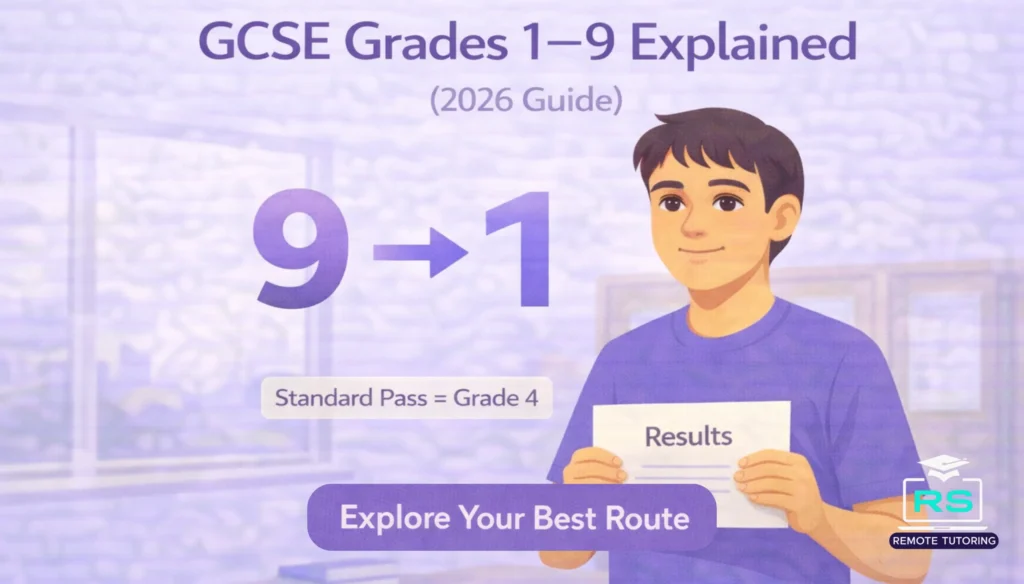
The GCSE Resit policy is the framework, composed of the rules which describe how students who do not actually achieve a minimum Grade 4 in English and Maths continue studying these subjects and again attempt the exam. This Policy submerges the students aged from 16 up to 18 already gaining full-time education, facilitating that learners often encompass fundamental skills before moving ahead.
Under this Existing framework:
- Students who achieve Grade 3 in GCSE maths or English should study again and are allowed to retake the exam.
- Students gaining Grade 2 or below may be allowed to study Functional Skills instead of fully relying on the institutions.
The Policy implies the future career prospects as both subjects are considered the most important life skills.
Regardless of the rules, Policy implies and gives a fair, leading chance to the students to encounter the standards rather than criticising the students for their low performance.
Why the GCSE Resit Policy is Important
GCSE resit policy holds significant importance, and it truly matters in practical life. It matters in several ways, such as:
- Earning Patterns
- Ability for Pursuing Higher Education
- Career Opportunities
- Health and safety
Given these lifelong significant effects, policymakers make up the most fundamental point, stating that giving students a chance to reappraise in English and Maths. But reappearing and reviving an exam is not easy; students often struggle, especially those who have already faced disadvantages.
When these Resits Are Held
Re-exams are held twice a year:
- In November, students can only resit for maths and English
- Summer exam series, which includes GCSE exams, including the Resits
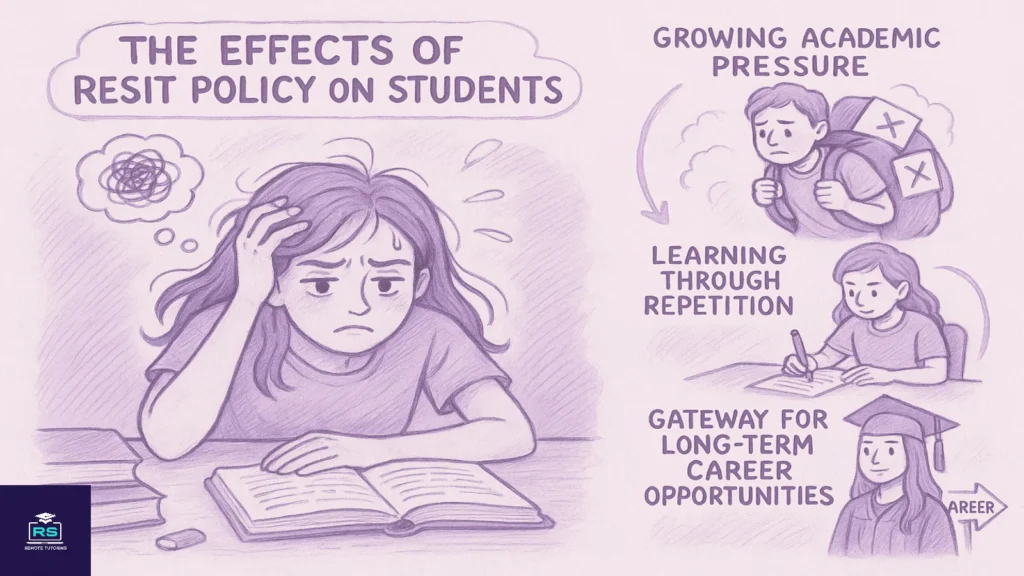
The Effects of Resit Policy On Students
As mentioned before, appearing in exams is quite a challenging task. The following impacts are outbrusted
Growing Academic Pressure
The notion of resitting an exam is an overwhelming task; students mostly drown in the world of fear and anxiety. The idea of studying again adds more to the stress level, exhaustion and self-doubt. To add fuel, Reappearance is not the punishment but a path towards nurturing skills that are essential for lifelong achievements. These results are also necessary for students. The average performance rate of students is significantly better than the first attempt as they realise more of the exam style and patterns.
Learning through Repetition:
We often hear that practice makes a man perfect, the same like rigorous practice and consistency are the ultimate key to success. Most Students lacked formal practice during their first attempt, which adversely affects them. The Reappearing period gives them enough time to cope with their mistakes, identify the areas needing more attention and conceptual clarity and improve the subject through maturity and proper focus.
Gateway for long-term career opportunities
Resitting in English and Maths, the corner pillars of the GCSE unlock the doors for various opportunities, if passed with flying colours:
- Strengthening University Application
- Increases value in the job market
- Adding another layer of confidence in the students
- Getting entry into other competitive fields
The Effects Of Resit Policy On Parents
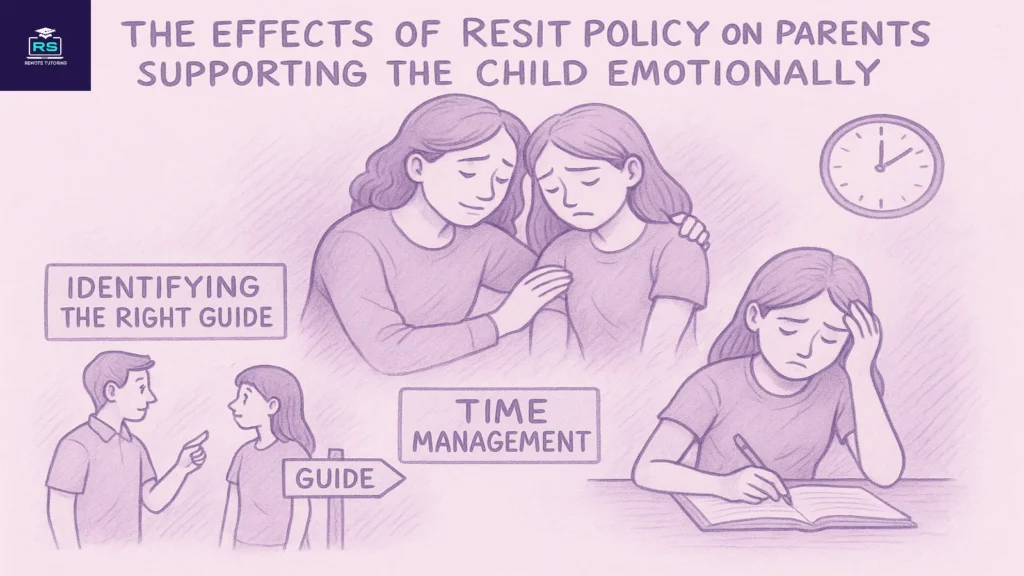
Parents often struggle more financially and emotionally when supporting a child through GCSE resits. Understanding this framework helps them reduce stress and guide their children’s prospects.
Supporting the Child Emotionally:
Students often feel ashamed and demotivated for not achieving the desired grade. This is the duty of parents to support them emotionally and motivate them. Parents play a crucial role in uplifting their child’s morale, encouraging confidence and getting them back on track.
Successful students often quote that their reappearing year was the transformation in their journey, as it taught them consistency and resilience.
Identifying the Right Guide
Each student is different from every other. Traditional classroom teaching methods may not work for everyone. Identifying the right support system is utmost necessary, which usually parents do. Parents often find alternative methods, such as:
- Remote Tutoring One-on-One session
- Study guides
- Helpful apps
- Past papers
Online tutoring has become a widely accessible tool because it allows students to learn at their own pace through personalised training.
Time Management
Resit students get themselves trapped with new coursebooks during their revision. Parents can help them tackle these tasks through
- Making timetable
- Balancing Study routines
- Practice exam session
- Weekly targets
What should Students Know Before appearing
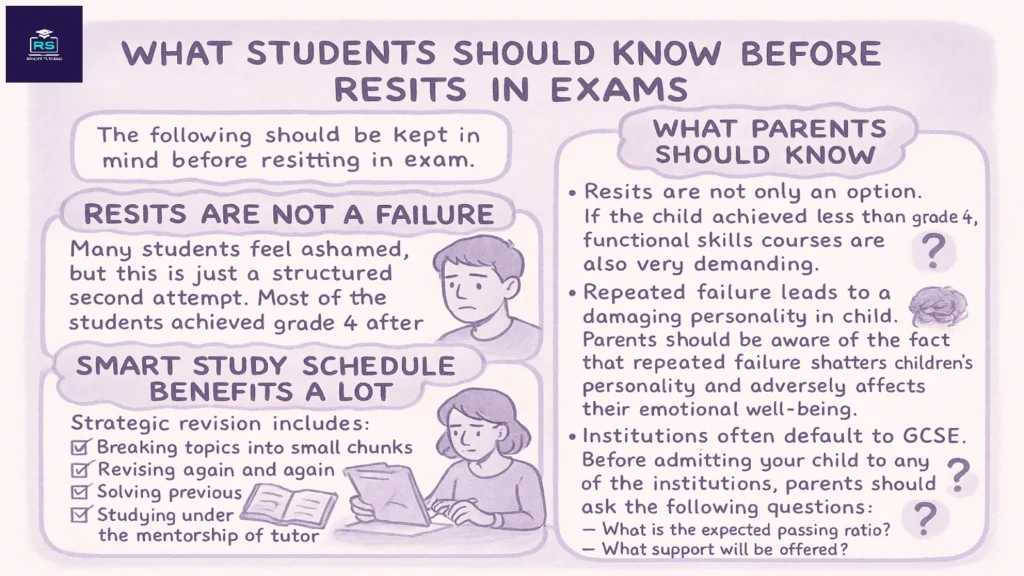
The following should be kept in mind before resitting in Exam:
Resits are not a failure.
Many students feel ashamed, but this is just a structured second attempt. Most of the students achieved grade 4 after appearing.
Smart Study Schedule Benefits a lot:
Strategic revision includes:
- Breaking Topics into small chunks
- Revising again and again
- Solving previous past papers
- Studying under the mentorship of the tutor
- Taking feedback over time
What Parents Should Know:
Resits are not only an option.
If the child achieved less than a grade, the functional skills courses are also very demanding.
Repeated Failure leads to a damaging personality in a Child
Parents should be aware of the fact that repeated failure shatters children’s personality and adversely affects their emotional well-being.
Institutions often default to GCSE.
- Before admitting your child to any of the institutions, parents should ask the following questions?
- What is the expected passing ratio?
- What support will be offered?
FAQS
What courses can students opt in for GCSE Resits?
There are various options; the most common options for GCSE are reappearing in English and Maths. However, students can go for a functional skills qualification in which the passing ratio is higher than that of GCSE.
Which Students often struggle the Most?
Students relying on key notes and cramming fail. Because the exam needs resilience, consistency and conceptual clarity.
Final Thoughts
Resit policy is not just a framework but a life-changing opportunity for those who want to regain their desired grades. While the initial phase is quite challenging for both students and parents but the system gives them a pathway for better prospects
With the right support, especially through structured and organised remote tutoring, students can turn their resits into the gateway for unlimited access to opportunities.

Raja specializes in Physics and Maths, with over 5 years of experience. He offers KS2, KS3, and GCSE Science and Maths lessons. He graduated from one of the top universities in the UK.



1 Comment
[…] minimum requirements: Government policy requires students without a grade 4 in English language or maths to continue studying these […]