

In the fast-paced world, where every landscape is evolving rapidly, whether it’ss educational or technological dynamics, everything is evolving with certain changes. The educational landscape is undergoing dramatic changes, which are becoming more beneficial for students in terms of preparing and revising. The revolutionary shift from traditional classroom learning to the hybrid and online tools has made and reshaped the students preparing for GCSE exams, where consistency, revision and discipline are of the utmost demands. GCSE online revision has transformed the way students perceive things.
Online education has made access to a wide range of study material, quizzes and notes, which are the uplifting tools that boost GCSE revision. As more students are inclined towards using digital tools, online resources, practising past papers and tutoring support, the demand and rise of Online GCSE revision best practices has grown. Remote or hybrid revision is incredibly effective, engaging and at the same time manageable and flexible, but when it is approached with the right strategies and right guidance.
Without an organised and structured framework, the digital media is far more dangerous and becomes a tool of distraction, disturbance and ineffective reading.
Jump to Section
A clear Understanding of GCSE Revision in the Hybrid/Online Era
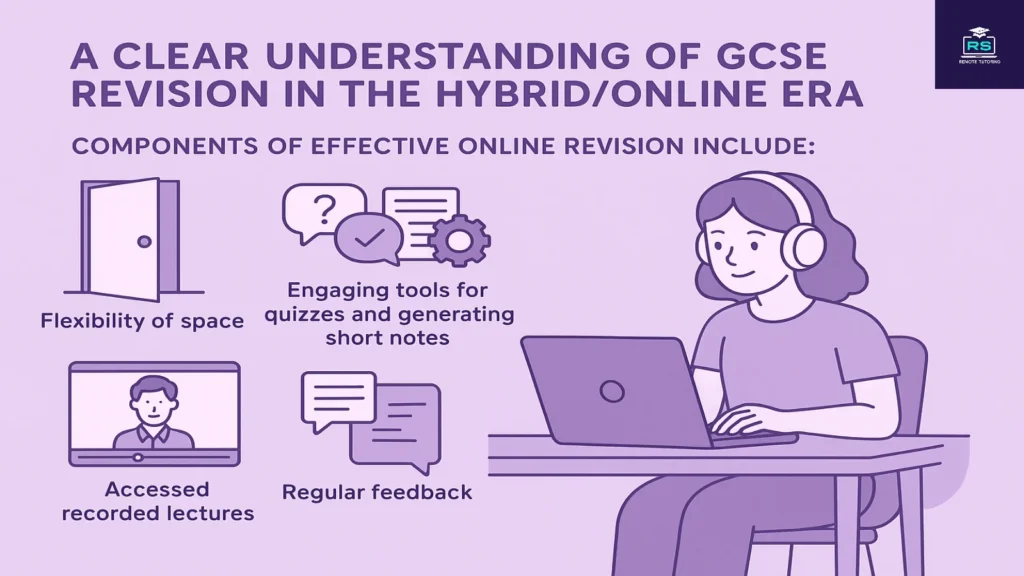
Hybrid and online suits best in the rapidly growing world, as both approaches combine traditional methods of learning in combination with evolving technology. The key to feasibility in online dynamics is access to resources anytime, anywhere. Students can access resources anytime, review through online videos, use interactive quizzes and seek tutoring support. However, all these benefits require effective management and consistency to revise these digital tools.
Components of Effective Online Revision Include;
- Flexibility of space
- Engaging tools for quizzes and generating short notes
- Accessed recorded lectures
- Regular feedback
- Online exam stimulation
The increased flexibility comes with a lot of responsibility, which is why GCSE revision best practices are becoming essential.
Why online GCSE Revision is getting more Normalised These days
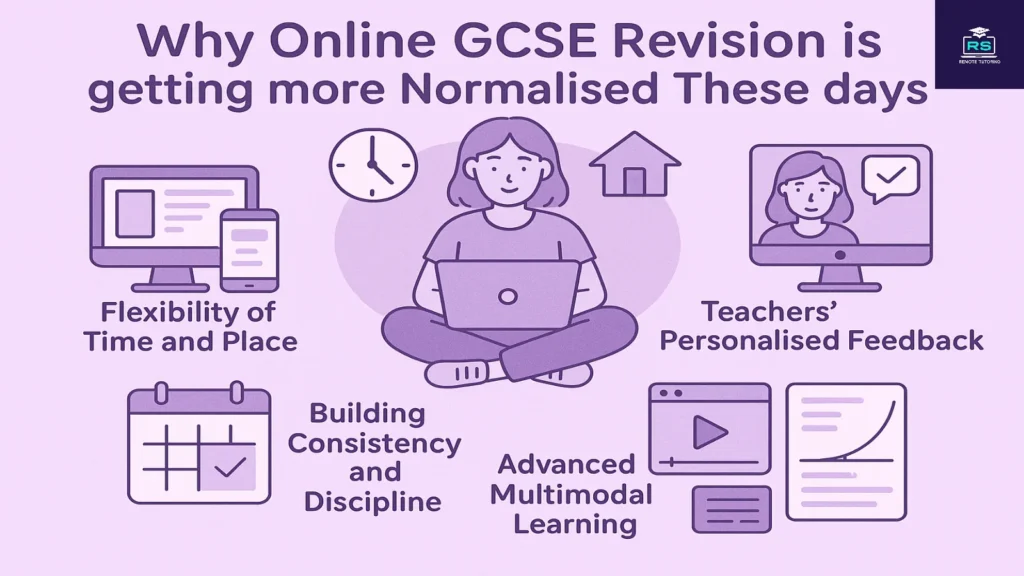
Everything occurs due to several reasons. There are several reasons why GCSE online models are evolving and rapidly growing these days.
- Flexibility of time and Place:
Students often struggle with managing the time and places when it comes to the revision of exams, whether GCSE or any other exams. With the use of online, digital tools, students can access information from anywhere, anytime, without the hindrance of space and time.
- Teachers’Personalisedd Feedback.
Feedback is utmost necessary when it comes to preparing for exams; constantly getting personalised feedback helps to overcome mistakes. Through the use of online digital resources, students can actively receive feedback from tutors.
- Building Consistency and Discipline:
Consistency is utmost necessary and marks a significant step towards success. Through the use of online varied resources, Students can review their missed lessons and which helps them to stay on track.
- Advanced Multimodel Learning:
The learning capacity of students varies from one another. Some students learn through just visuals, some want proper lectures and notes, while others learn just through hearing. Digital media provides interactive visuals, flash cards, and informative podcasts, valuing every type of student.
Online GCSE Revision Best Practices: What Actually is more helpful and Beneficial
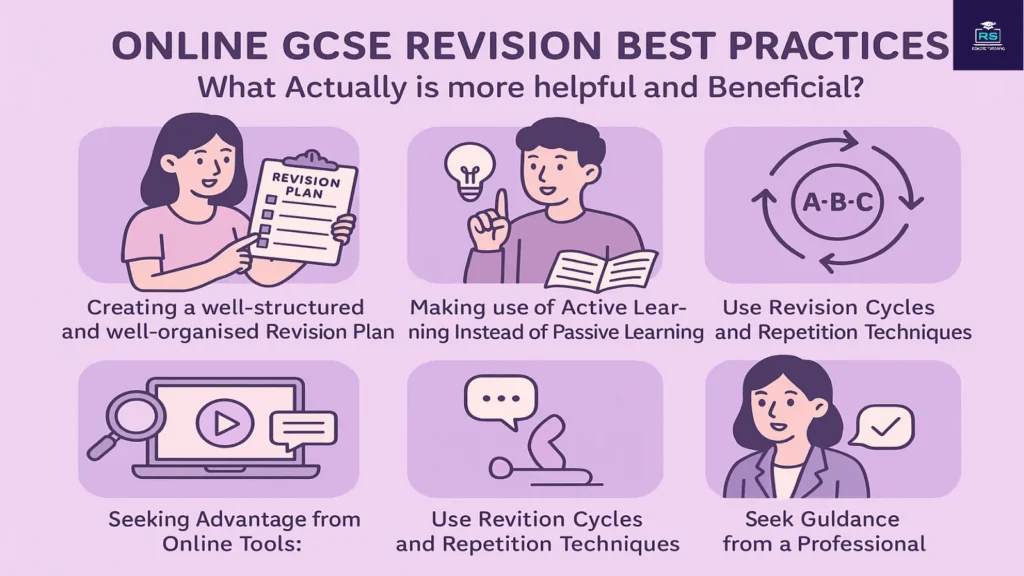
The following are the practical strategies that help students to mould the digital tools into their weapons of success.
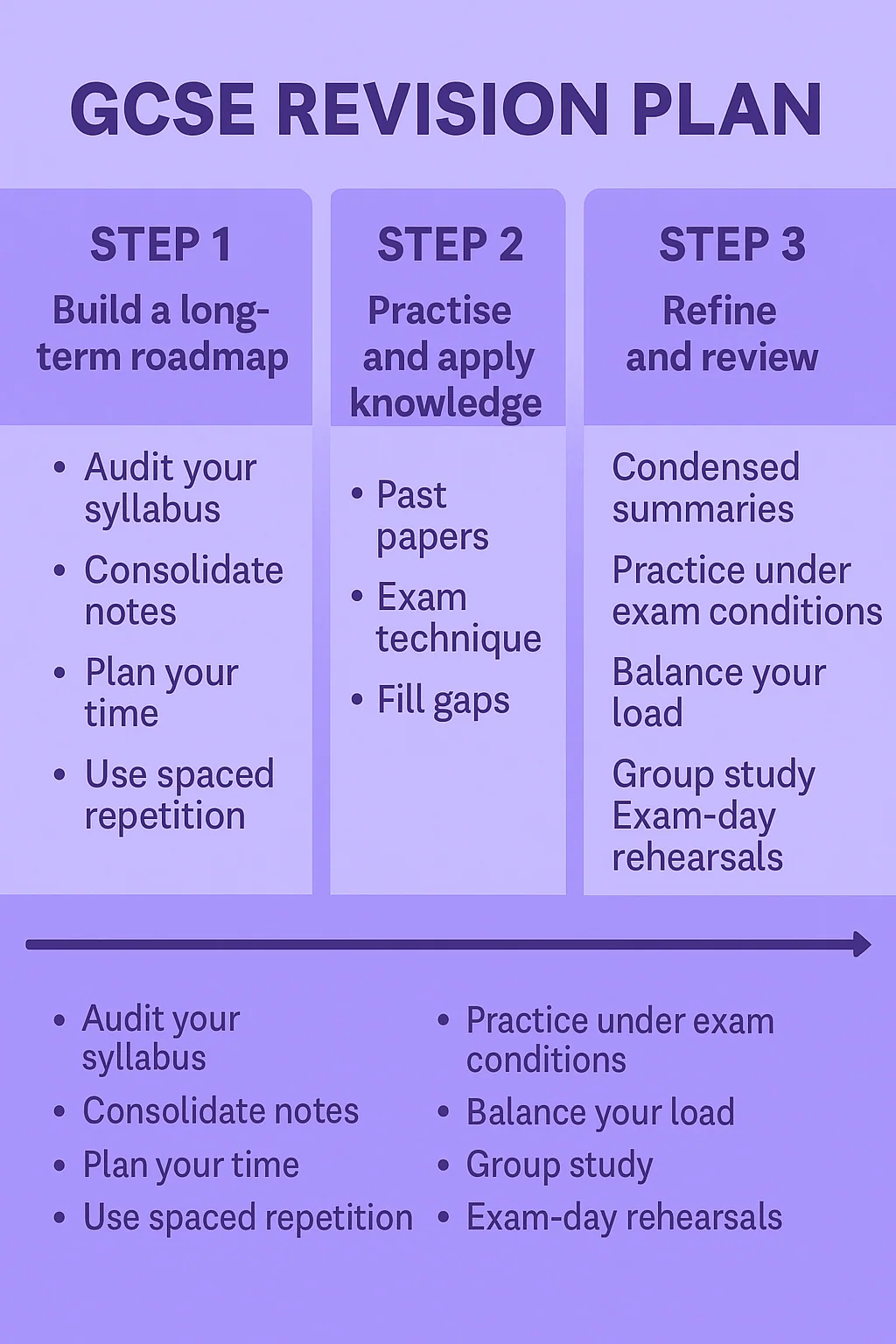
- Creating a well-structured and well-organised Revision Plan
Without a structured and well-organised revision plan, revision is not effective, and at the same time, it becomes overwhelming and inconsistent. Several tips and tricks help students create a well-organised revision plan for effective learning.
- Break Subjects into small, manageable bits.
- Use Online tools such as Notion or Google Calendar for further assistance
- Schedule regular small, mini breaks that help to regain and revive energy
- Prioritise the challenging areas first
- Add a small mock session to further enhance your revision
This structured and revised plan helps students to boost their revision with full consistency and discipline.
- Making use of Active Learning Instead of Passive Learning
Most students rely on re-reading material instead of actively using it. Use these effective methods to shift your learning from passive learning to active learning to boost your GCSE revision plan.
- Creating short summaries of the learned lesson
- Using flashcards
- Writing practices for improving exam practice
- Learning through teaching a concept to someone else
Active recall and constant repetition are the proven formula for ultimate success.
- Seeking Advantage from Online Tools:
Digital tools offer a wide range of helpful materials more interactively and engagingly, apart from traditional learning. There are a lot of online tools there for help, just needed the right guidance to uplift the success.
- BBC Bitesize offers rich summaries.
- Seneca Learning offers interactive learning sessions.
- Pearson Revise offers expert support specifically tailored for GCSE exams
- CGP books are a significant tool for the GCSE learning environment
The Ultimate Key is consistency; these tools are just guiding the path towards success.
- Use Revision Cycles and Repetition Techniques
Making the time for revision sessions is utmost necessary and prevents cramming and boosts long-term understanding.
A simple, weak revision and repetition cycle includes
- DAY 1-3: Study a new topic
- DAY 4: Revise through sticky notes and flashcards
- DAY5: Practice Past Paper Questions
- DAY 6 and 7: revise and recall
- Seek Guidance from a Professional
Many students struggle while using online tools because of a lack of professional guidance and support. Online tutoring helps to bridge the gaps by helping and offering.
- One-to-one personalised support
- Conceptual clarity
- Weekly revision Schedule
- Uplifting confidence through motivation
A structured online tutoring platform helps the students to stay on track and understand different topics.
Common Pitfalls in Using Online Tools
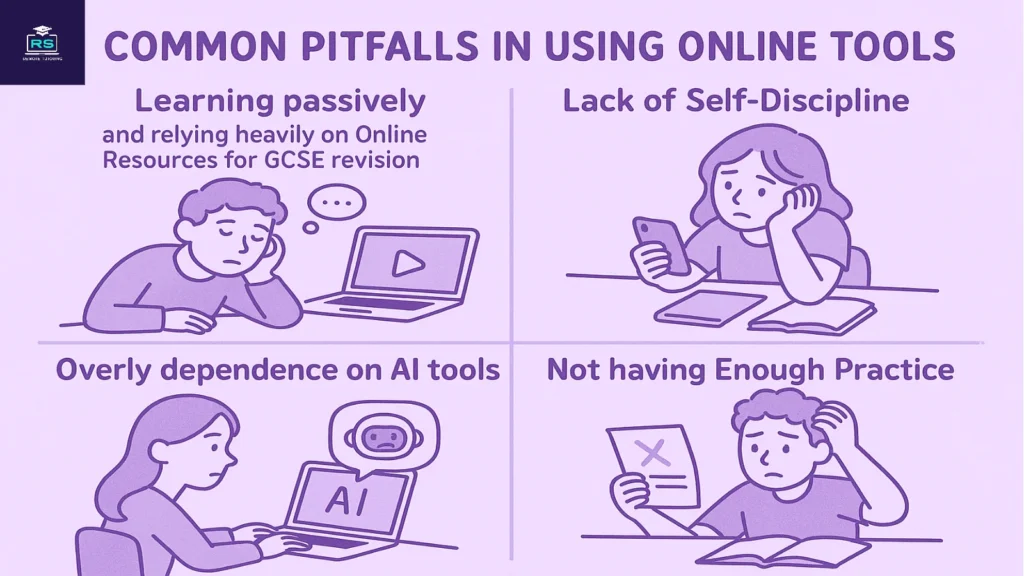
As everything is bound to have advantages and disadvantages. Similarly, even with the greatest access to online tools, there are several mistakes that students make that even realising and become the ladder of failure.
- Learning passively and relying heavily on Online Resources for GCSE revision
Many students just listen to the lesson without applying real-world knowledge. Use Recall methods to make your learning more effective and engaging.
- Lack of Self-Discipline:
Flexibility can turn to chaos and disruption. Working consistently, following a strict study schedule, can avoid the imbalance.
- Overly dependence on AI tools:
All platforms are very much beneficial and effective, but only when used in the right direction. Use AI for explanation, not memorisation.
- Not having Enough Practice:
Understanding and learning theoretical knowledge is necessary, but what comes here is the utmost practice of past papers. Students mostly avoid practising the papers, which leads to disruption.
Hybrid Revision:
Hybrid revision means making use of both online and traditional learning. This approach is often the balanced one because it merges and combines both ways of learning, giving the students a well-rounded preparation. Hybrid strategies combine
- Textbooks and study material
- Paper-based practice exams and online quizzes
- Study session and independent learning
This perfect blend helps to retain the information in the best possible and engaging way.
How Parents Support their Children during GCSE Online Revision
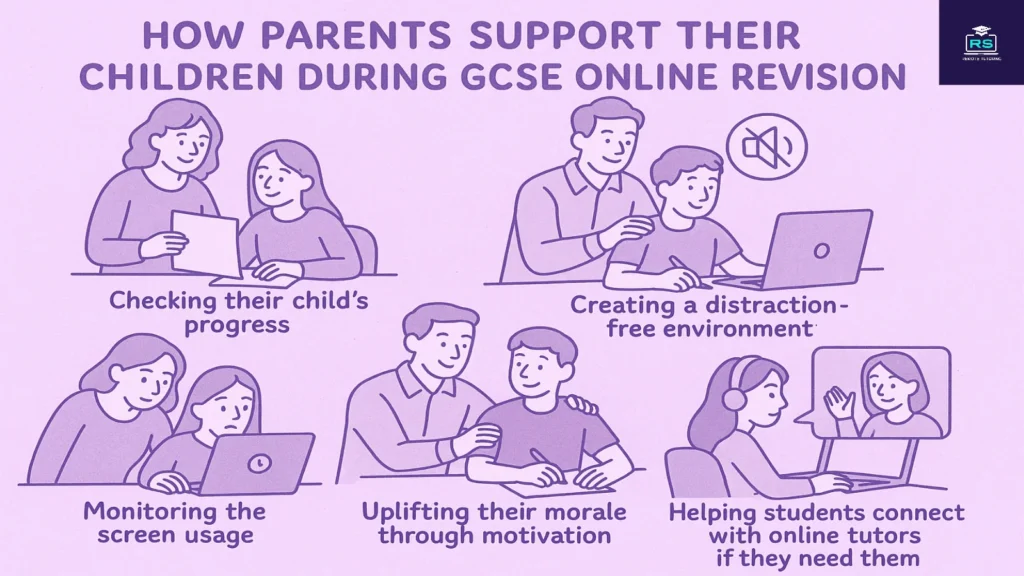
Parents’ guidance is utmost necessary and plays a major role in making the child’s learning more effective and engaging.
Parents can assist
- Checking their child’s progress
- Creating a distraction-free environment
- Monitoring the screen usage
- Uplifting their morale through motivation
- Helping students connect with online GCSE tutor if they need them
A home full of support is foremost necessary and enhances the digital skills, making a positive impact on the grades themselves.
Final Thought
Online and hybrid learning are not just temporary trends; they are the future of education. With the right structure, tools, motivation, and guidance, students can excel in their GCSE exams and develop skills such as independence, digital literacy, and critical thinking. By following online GCSE revision best practices from creating structured plans and using active learning techniques to avoiding distractions and practising past papers, students can turn digital revision into their greatest advantage.
Success in the online GCSE era comes down to one thing: Using technology wisely, not passively. With discipline and smart strategies, the online world has become the most powerful revision tool for GCSE students today.

Raja specializes in Physics and Maths, with over 5 years of experience. He offers KS2, KS3, and GCSE Science and Maths lessons. He graduated from one of the top universities in the UK.

1 Comment
[…] days are gone when students were totally relying on textbooks, notes and cramming sessions. Now the GCSE revision with the advancement of technology is taking a 3360-degree turn. Digital and visual learning tools, […]