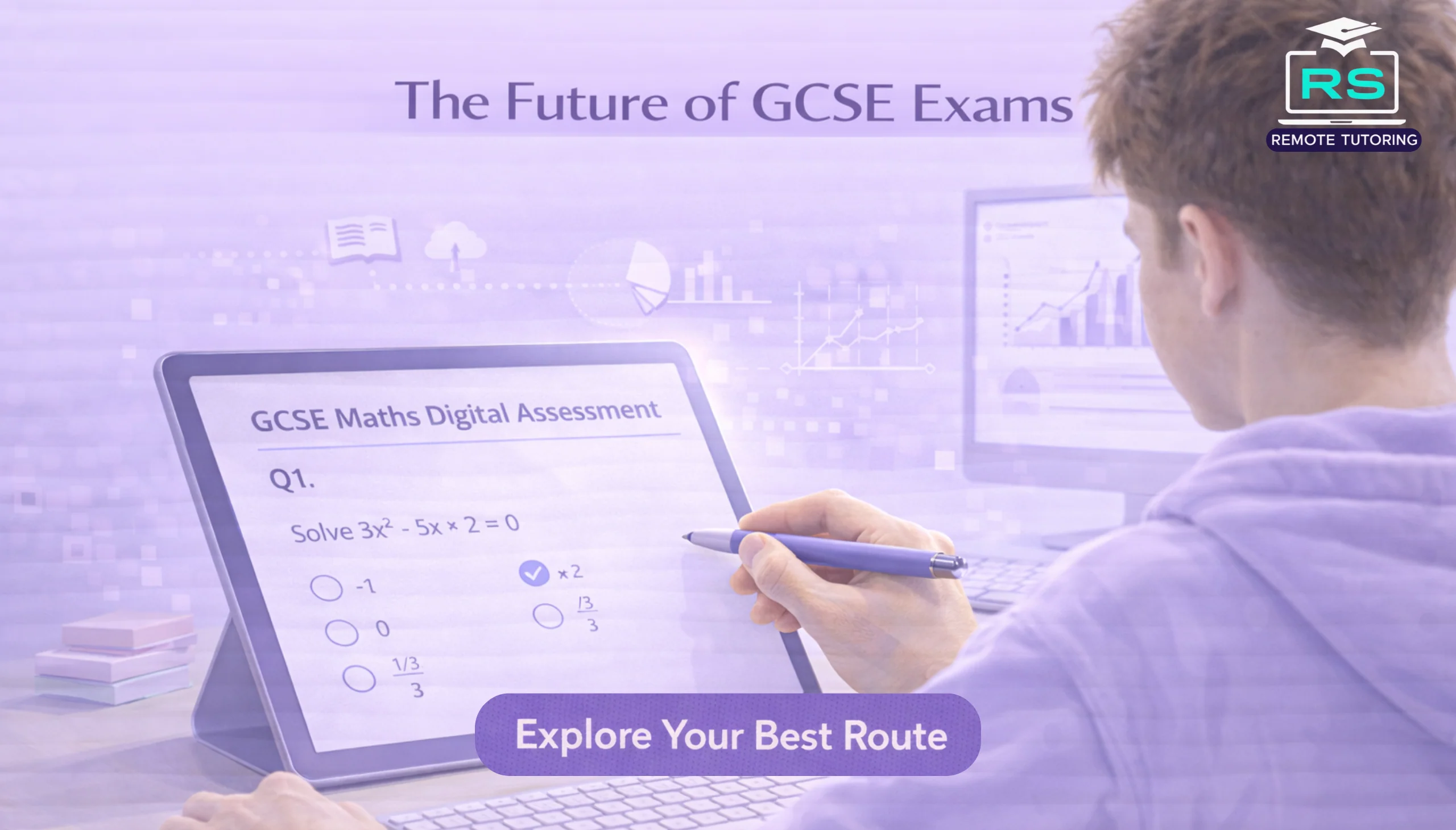
The traditional GCSE exams methods remained unchanged over decades, the traditional rules of fixed exams, pen and papers under rigid examination ha;ls have tied the future of many of the students but with the advancement sin eerie field, the world is undergoing the decisive shift, the future of GCSE is also going to change with the integration of emerging technology. The fundamental shift after learning from the outbreak of pandemic has led to the evolution of digital assessing framework.
The transition is not very simple or rapid but just about replacing the exams but is more than that. It is the system eliminating the vast transfusion of how students are accessed , how teachers prepare learners, how marks are awarded and how students are judged ensuring fairness and accuracy. As educators, teachers and policy makers explore the digital accessing tools, students and parents should also fully understand what this future looks like and how to prepare for it.
The below guide will explain the future of GCSE exams through digital assessments, examining the opportunities, challenges and implications for the students, schools and tutoring industries.
Jump to Section
Understanding Why GCSE is moving towards Digital Assessments
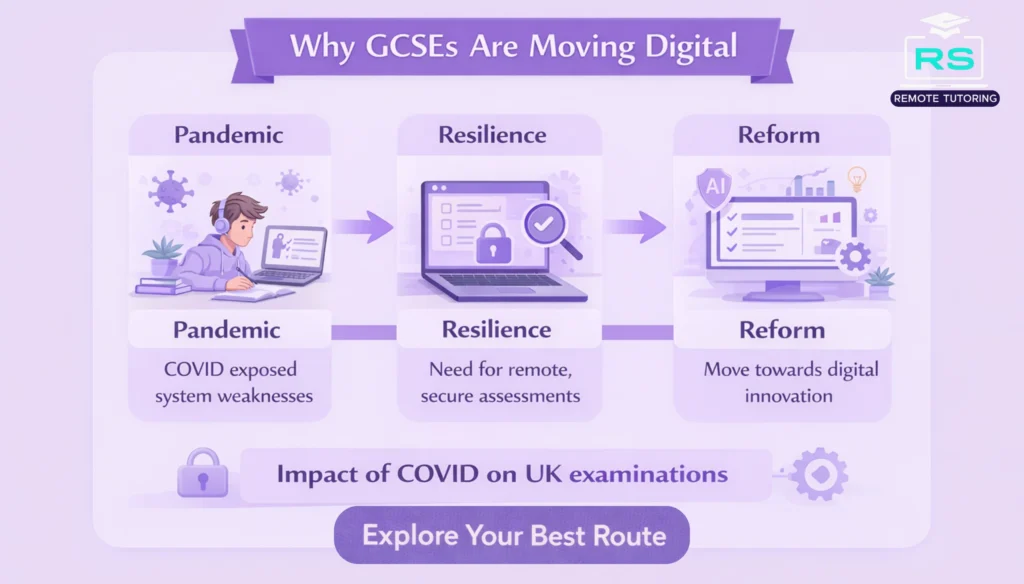
The question tremendously circulates among parents and teachers that why the traditional GCSE is moving towards digital Assessments.Understanding the reasons why the shift occurred is extremely important. The following is going to explain which factors lead to the decisive shift.
Lessons Learned from Pandemic
COVID-19 pandemic exposed the fragility of the traditional examination system. Every institution suffered whether it was the educational industry or the health institutions.The closure of schools, cancellation of examinations and totally reliance on teachers accessed grades exposes the emptiness of the traditional education system. This highlighted the need for flexible and resilient educational assessment models.
Digital assessments often looks
- Remote delivery capabilities
- Secure online testing environment
- Reducing the dependency on educational sectors
The advantages lead to the policy makers to re-think and replace the traditional assessing environments to the digital assessing tools which are modern in the chaotic world.
Integration of Digital tools in the Environment
In today’s fast paced world, students are much more inclined towards learning the things which are encapsulated via technology.
- Online revision platforms
- AI practice tools
- Virtual classrooms and homework practices
Accessing students digitally and integrating today’s artificial intelligence, creates alignment between both learning and assessment, reflecting in better worldly skills.
Demand for more Fair and Justified Assessment
The rapid shifting of the world , leads to a rethink that students need more to be accessed with fair and justified assessing tools. GCSE assessments enable them to:
- Adaptive questioning
- Data-driven evaluations
- Assessment of problem solving processes, not just final answers.
The shift actually supports fair outcomes for diverse learning styles.
Understand Digital GCSE Assessments
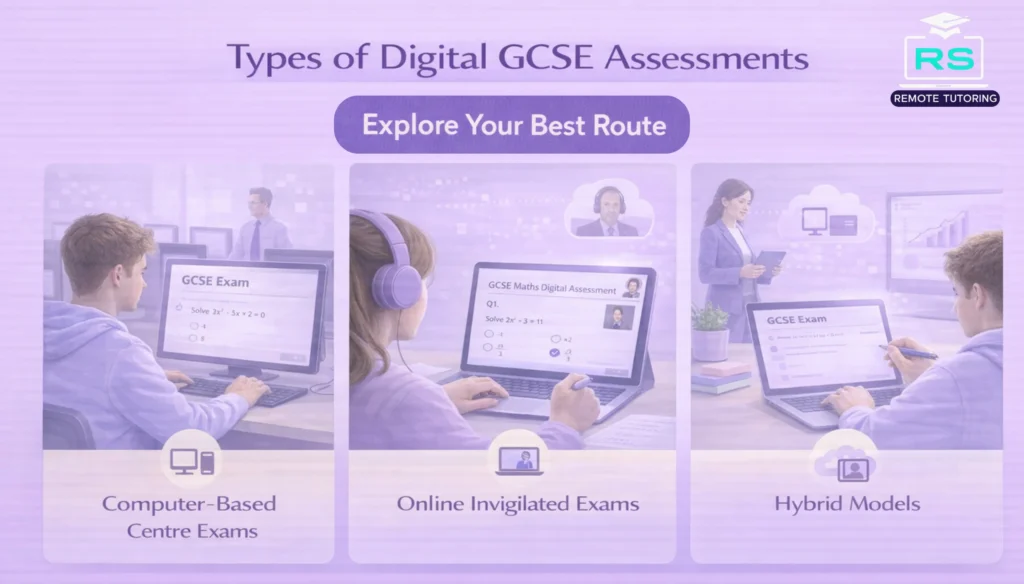
Digital Assessments are gaining much more importance in today’s era. These involve delivering, completing and marking exams using secure digital platforms rather than paper scripts. These assessments integrate;
- Computer based exams in examination centers.
- Online assessments with invigilation softwares.
- Also integration hybrid models combining both digital and written components.
One important thing is to note that digital exams do not mean easier exams but the exams which are judged and accessed smartly.
Key Important Components of the Future Digital GCSE Exams
The following will explore future GCSE exams key features which are encapsulated under the fine umbrella term of digital assessments.
Adaptive Assessment Technology:
Digital exams are throughout made adaptive , questioning difficulty in real time scenarios. Digital assessments as they are adaptive to the environment holds significant importance. There are several key benefits, which includes;
- More accurate measurement of ability
- Reduced exam anxiety
- Improving the differentiation between grade boundaries
Adaptive testing allows the examiners to access the depth of student’s understanding instead of focusing on cramming.
Questions Formatted beyond Multiple Choice:
The traditional methods of GCSE examination include multiple choice questions but the digital assessment evolved and has the pattern of exams involving the rich questions that are beyond the multiple choices. Digital exams allows for
- Typed explanations and short responses
- Step by step problem solving
- Integration of graphs
The given points illustrate the explanation beyond the memorization and more focus on application and reasoning.
Automated and AI Assisted marking:
As human examiners remain essential and sometimes students feel that marking is deliberately unjustified, but the digital assessments involve
- Marking the objective questions instantly
- Reduce remarking biasness
- Highlights the mistakes for review
The digital assessments leads to the
- Faster results
- Greater consistency
- Decrease administrative cost
For difficult subjects such as science and maths, digital and automated AI marking leads to accuracy
How Digital Exams will Reshape Student’s Preparation
The persistent question arises how the digital assessments will change the student’s preparation. The world is rapidly changing and the rise of digital assessments are consistently reshaping the future. The following will explain how these will reshape the entire history.
Shift from Cramming to Skills Development:
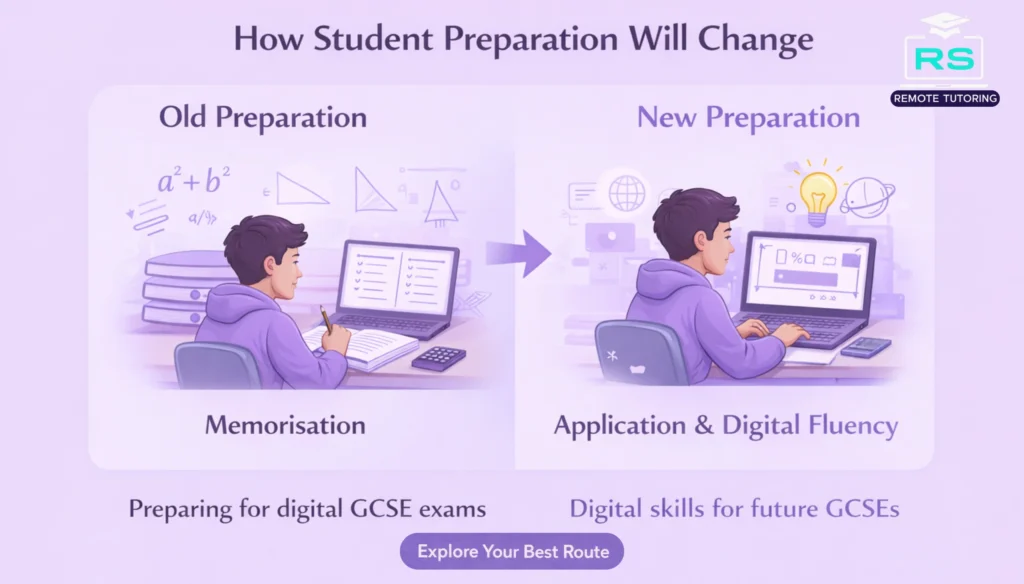
The consistent focus on application and reasoning assessments have evolved the shift from mere memorization to skill development. Digital assessments involve;
- Analytical thinking
- Digital literacy
- Time management screens
Student’s needs to focus on
- Practicing questions on screens
- Develop typing skills to effectively manage time
- Learning how to structure the computational response.
Increased Data Driven Revisions:
Digital assessments involve detailed performance analysis. These includes;
- Topic level Weakness
- Time management insights
- Accuracy and consistency patterns
This enables personalized revision strategies, especially when supported and guided by expert tutors.
Impact on Teachers and Students
Digital Exam assessments with thor benefits impact teachers and students in different ways.
Reduced Administrative Burden:
Digital exam assessments decrease the administrative burden.
- Paper handling
- Manual invigilation logistics
- Answer script distribution and storage
All become excessively easy and feasible.Insturctors and teachers can now focus more on teaching and learning rather than exam administration.
Excessive need for Teachers Literacy:
To ensure success in the digital economy, institutions must focus on teacher’s digital literacy and their training. Schools should invest in
- Staff training
- Infrastructure upgrade
- Cyber security measures
Digital GCSEs are as professional and time taking. The safety measured should be ensured to get desired success.
What this Change of GCSE Exam Means To Parents
Parents are one of the important pillars that thoroughly work in the success of digital GCSEs assessments. Parents must adapt and support strategies by;
- Encouraging Digital Practices at home
- Supporting healthy Screen habits
- Taking help from expert tutors with digital assessment models.
Understanding the format early can reduce anxiety and last minute panic.
Role of Artificial Intelligence in the Future GCSE landscape
Artificial intelligence has gained a lot of importance but the question arises how it will change the evolving landscape of the future GCSEs.
AI will not replace the teachers or examiners but it will enhance
- Feedback quality
- Revision efficiency
- Progress tracking
Through these benefits students will increasingly interact with
- Intelligence practice platforms
- Adaptive mock exams
- Instant performance analysis
The future GCSEs ecosystem will be hybrid, data driven and learners centered.
FAQS
Are digital exams reliable and fair?
When properly implemented, digital exams offer greater consistency, accessibility, and accuracy than traditional methods.
Are digital GCSE exams easier than paper exams?
No. They assess the same standards but through more advanced and varied formats.
Will all subjects move to digital assessment?
STEM subjects are likely to lead the transition, with humanities following in adapted formats.
Will GCSE exams become fully online?
Not immediately. A hybrid model is more likely, with gradual expansion of digital components.
Final Thoughts
Digital GCSE assessments are not a passing trend, they are the next evolution of secondary education assessment. While challenges exist, the potential benefits for fairness, flexibility, and skill-based evaluation are immense.For students, early exposure to digital assessment formats will be a competitive advantage. For parents, understanding this shift enables better support. And for education providers and tutors, adapting now means leading tomorrow.
The future of GCSE exams is digital, and those who prepare today will succeed tomorrow.

Raja specializes in Physics and Maths, with over 5 years of experience. He offers KS2, KS3, and GCSE Science and Maths lessons. He graduated from one of the top universities in the UK.