
Sitting GCSE exams in the UK can feel like a marathon: months of revision culminate in a few hours under timed conditions. Success requires more than memorising facts; you must read questions accurately, plan your responses and manage your time wisely. In the UK, where education competition is high, mastering exam technique can make the difference between grades. This guide of ours offers practical strategies, drawn from education experts and exam boards, to help you tackle any GCSE question with confidence.
Jump to Section
Understanding What the Examiner Wants
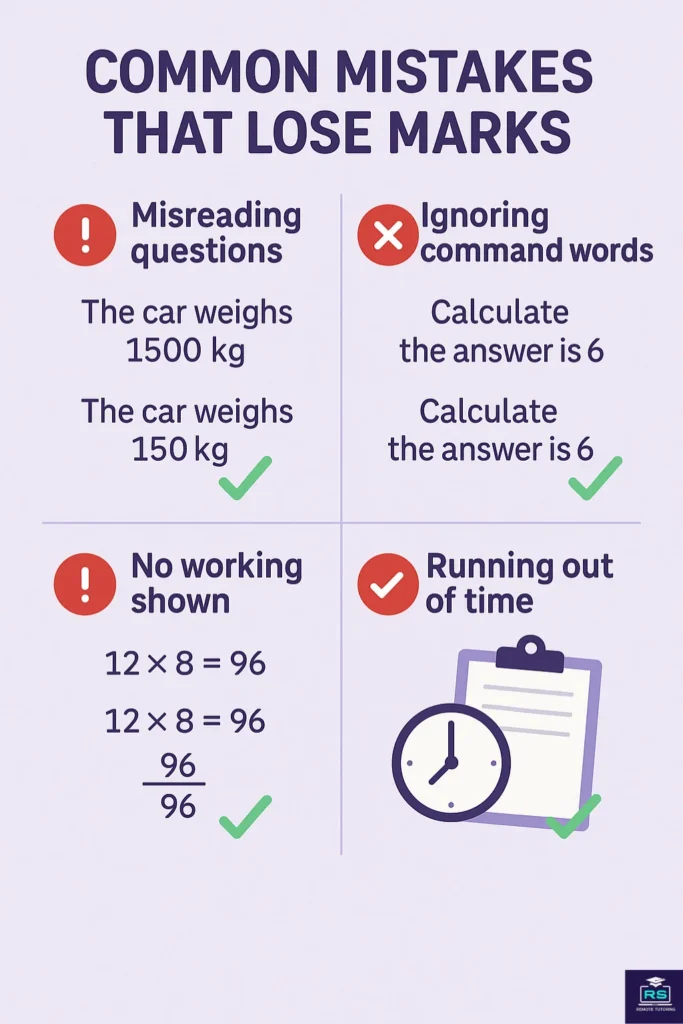
Before you write a single word, you need to understand exactly what the question is asking. Exam questions use instruction words such as analyse, evaluate, compare and describe to signal the type of response required. It is important to spot these instruction words, identifying key concepts in the question and recognising relationships between ideas. Failing to respond to all instruction words means you could miss out on marks.
Decoding Command Words

A handy way to decode questions is to learn the common command words:
- List/State/Give: recall facts without elaboration.
- Define: provide the precise meaning.
- Describe: give a detailed account; think of it as the step after listing.
- Analyse: break down information into parts and explain relationships.
- Evaluate/Discuss: present arguments for and against, draw conclusions.
- Explain: provide reasons why something happens, often requiring examples.
Pro Tip: Create a flashcard deck with command words and their meanings; review them weekly so you can quickly interpret exam questions.
Unpacking Multi‑Part Questions
Questions sometimes contain two instruction words such as “describe and evaluate.” Each part needs attention. Failing to address both commands means you lose marks because the marks are split between the two tasks. Always underline both command words to remind yourself that two separate actions are required.
Planning Is Half the Battle
Exams reward clarity of thought and structure. Rushing to write without a plan increases the risk of irrelevant waffle and missing key points. Effective planning involves the following steps:
- Read the entire paper first. The Best Schools study tips recommend spending the first five to ten minutes reading the paper, noting the mark allocations and deciding the order of questions. Choose questions you are most confident about first to build momentum.
- Highlight key words. Use the BUG method: Box the command word, Underline important keywords and Go back over the question to make sure you understand it. This simple technique helps prevent misreading and ensures you address all aspects.
- Create a mini plan. For long-answer questions, jot down bullet points or use a simple structure like PETAL (Point, Evidence, Terminology, Analysis, Link). In the case of essay questions, Justin Craig recommends starting with a clear introduction outlining your argument, then following your plan to develop each point, and ending with a conclusion.
- Allocate time. Divide your exam time by the total marks. The University of Reading suggests a rule of thumb: for a three‑hour exam with four essay questions worth 25% each, spend around 45 minutes per question (5 minutes planning, 35 minutes writing, 5 minutes checking). Keeping to a “one minute per mark” guideline helps ensure you finish all questions.
- Stick to your plan but be flexible. If you suddenly recall a useful fact midway through writing, add it to your plan and incorporate it later. That way, you won’t forget it and your response remains structured.
Answering Different Types of Questions

GCSE papers include a variety of question styles from multiple choice and short‑ answers to extended essays and problem-solving questions in GCSE science and maths. Tailoring your technique to each question type increases your marks.
Multiple Choice and Short‑Answer Questions
- Read carefully: Ensure you understand exactly what is being asked; misreading a negative or conditional phrase can lead to incorrect answers, especially in Modern Languages or Business.
- Manage time: Work quickly but don’t rush; if uncertain, mark your best guess and move on to avoid spending disproportionate time on a question worth one mark.
- Check units: In maths and science, always state units correctly.Students often lose marks for not converting units or not rounding answers properly.
Structured and Data‑Response Questions
These questions, common in sciences, geography and economics, typically allocate marks for specific steps. To maximise marks:
- Show your working: Even if your final answer is wrong, demonstrating the correct method can earn marks. Showing work is required to get full marks.
- Use the data provided: Geography and science questions often include graphs or case study data. Use this information alongside your own knowledge, markers expect you to refer to it.
- Don’t leave blanks: If unsure, attempt the question; partial answers can pick up marks.
Extended Response and Essay Questions
For long‑answer questions in subjects like English Literature, History and Religious Studies:
- Structure your response: Use frameworks such as PEEL (Point, Evidence, Explanation, Link) or PEELER (adding Evaluation and Return to question). The CIRL blog recommends teaching students response frameworks and modelling strong vs. weak answers.
- Prioritise relevance: Don’t include everything you know. The importance of prioritising relevant evidence and avoiding content dumps. Start with your strongest point and justify it with precise examples.
- Conclude effectively: Summarise your argument, link back to the question and avoid introducing new information in the conclusion.
Problem‑Solving Questions in Maths and Science
- Read the question twice: Identify what is given and what is required. Highlight key numbers and units.
- Plan your method: Write down formulas or concepts you need before plugging in numbers. Showing your method can earn partial credit.
- Check your answer: Verify that your solution makes sense (e.g., positive values where necessary). Use the ACUTE checklist, Assumptions, Calculations, Units, Truth (did you answer all parts?). Explain your reasoning to review your work.
Managing Your Time and Stamina
Exam success isn’t just about knowledge; it’s about staying calm and using your time efficiently.
Before the Exam
- Sleep and nutrition: Avoid last‑minute cramming. Best Schools advises stopping revision 90 minutes before bed, getting a good night’s sleep and eating brain foods like eggs or fish. Avoid energy drinks which can cause a crash.
- Pack your kit: Ensure you have pens, pencils, a calculator, water, your student ID and any required texts or equipment. London schools often require clear pencil cases; check your exam board’s rules.
- Arrive early: Being early reduces stress and gives you time to settle. In London, factor in potential Tube delays or bus cancellations.
During the Exam
- Prioritise questions: Tackle the questions you can answer easily first to build confidence. Don’t worry about following the order presented.
- Monitor your timing: Keep a watch or use the clock in the exam hall. Sticking to your pre-planned time allocation avoids the risk of rushing the last questions.
- If stuck, move on: Don’t let a difficult question derail your timing. Mark it and come back later, as suggested by the Best Schools guide.
- Check your work: Use remaining time to correct spelling, grammar, calculations and ensure you’ve answered the questions asked. Never leave early.
After the Exam
When the exam ends, take a moment to decompress. Don’t dwell on what you might have missed. Use the experience to adjust your approach for the next paper.
Revision Strategies to Build Exam Technique
Good exam technique starts long before you enter the hall. Here are proven revision methods:
- Active recall and spaced practice: Instead of passively rereading notes, test yourself with flashcards, quizzes and retrieval exercises. Spacing out sessions strengthens memory.
- Past papers and mark schemes: Working through past papers under timed conditions helps you become familiar with question styles and timing. Check your answers against the GCSE mark scheme to see how examiners award marks.
- Know the specification: For each subject, download the specification and turn it into a checklist. This ensures you cover all topics and can tick off your progress.
- Mix problem types: In GCSE maths, practise mixed-topic papers to improve problem‑solving skills. For English, practise annotating unseen extracts and planning essays. For sciences, review required practicals and practise extended responses.
- Teach others: Explaining concepts to a friend or family member solidifies your understanding and reveals any gaps.
Applying Exam Technique in London
Being based in London brings unique factors to consider:
- Exam centres: Most students sit exams at their school, but if you’re a private candidate, choose centres accessible via the Tube or bus. Book early; spaces at London centres fill quickly.
- Noise and distractions: London’s hustle can make study spaces noisy. Use libraries like the British Library or the Southbank Centre for focused revision. Noise-cancelling headphones can help at home.
- Seasonal advice: GCSEs take place in May/June, when London weather can vary. Plan for rainy journeys or heatwaves; staying dry and cool keeps you comfortable and focused.
- Daylight hours: In late spring, London sees up to 16 hours of daylight. Use this to your advantage, study in natural light to boost concentration.
Frequently Asked Questions
How to answer exam questions in GCSE?
Read the question carefully, underline the command words and keywords, plan your response, and allocate time based on marks. Use frameworks like PETAL for essays, show your working in maths and science, and check your answers before submitting.
What’s the hardest GCSE to pass?
Difficulty varies by student. Subjects like maths, physics and languages often rank as challenging due to abstract concepts and problem‑solving questions. However, strong exam technique and targeted revision can make any subject manageable.
How to get 9s in all GCSEs?
Achieving top grades requires consistent effort: master the content, practise past papers, learn effective exam technique, and adopt active recall and spaced repetition. Seek feedback on your practice answers and refine your skills over time.
How to improve GCSE exam technique?
Focus on understanding command words, planning your answers, managing time and practising under exam conditions. Use past papers, consult mark schemes and review examiner reports to avoid common pitfalls. Teach exam literacy explicitly, as recommended by educational researchers.
How to answer exam questions 1
This search term may refer to the first exam question. For any question, read it thoroughly, highlight key words and allocate time accordingly. Start with easier questions to build confidence and always check your answers before finishing.
How to answer GCSE exam questions effectively PDF
Many schools and boards provide PDF guides. For example, identify command words, planning answers and paying attention to spelling and grammar. Use such guides as part of your revision.
How to answer GCSE exam questions effectively AQA
AQA exams often have varied question types and multiple papers per subject. Their own guidance emphasises reading questions carefully, planning extended responses and keeping to time. Use AQA mark schemes to understand how marks are awarded.
Expert Exam technique to Pass GCSE Exam
Effective exam technique includes reading instructions, allocating time per mark, planning responses, showing working, prioritising questions and checking work. Practise these skills during revision, not just in the exam hall.
Where to get Exam questions and answers PDF?
Schools and universities provide PDFs detailing command words, example questions and answer structures. Collect these resources from your teachers or exam board websites. Knowing different question types (multiple choice, structured, essay) helps you tailor your approach.
How to answer an examine question?
Whether in GCSE English, maths or science, always link your answer back to the question. Avoid writing everything you know, choose relevant information, provide evidence and explain your reasoning. For essay questions, use structured paragraphs and a clear conclusion.
Choosing the right exam technique early can transform your GCSE performance. If you’re based in London and want personalised support, our experienced tutors can assess your strengths, develop a tailored revision plan and practise exam questions with you. Contact us today to start your journey to exam success.
Raja specializes in Physics and Maths, with over 5 years of experience. He offers KS2, KS3, and GCSE Science and Maths lessons. He graduated from one of the top universities in the UK.



1 Comment
[…] and compare, so answers are written for marks rather than just written out. Our breakdown of how to answer GCSE exam questions digs into those command words, and free resources like BBC Bitesize are handy for checking topic […]