
GCSE Natural Subject. Quite a new term, some students will often feel excitement, rush due to the addition of the New Subject in the curriculum. The introduction of this new subject is one of the finest developments in the educational landscape. For many years, educators, instructors and students have expressed their desire to introduce subjects that will explore many areas such as the natural landscape, the system, threats, history, and future.
As with the fine introduction of this subject, students have the opportunity to explore wide areas covering their desires and deeply relevant to modern challenges like biodiversity, climate change, sustainable development and conservation. But as this is the new subject, many questions arise regarding its preparation.
How to cover the syllabus, what kind of skills do we need, and how can parents support their children in this regard? Whether you are a student planning to opt for natural history or you are a parent wanting your child to study this emerging subject, this guide is for you.
Jump to Section
Why Natural History is an Emerging Subject
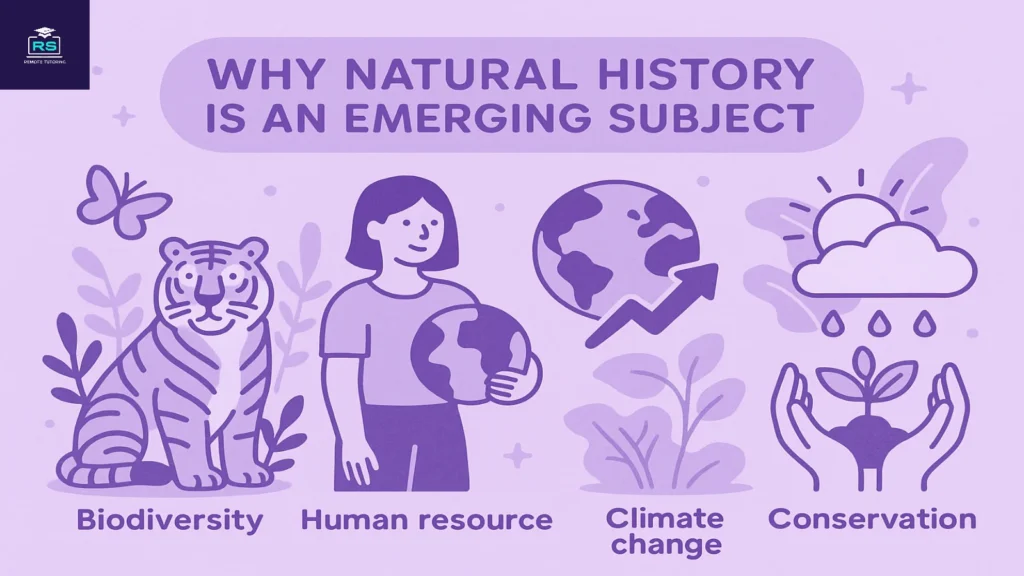
Natural history is not another science subject like the classic trio of biology, science and chemistry; it is much more than that. It is the bridge between subjects like biology, physics, Geography, and history. It enhances the students’ capabilities to look closer at the world around them to observe, analyse, interpret and question the physical and biological landscape that occurs around them. In the fast-paced world, where environmental know-how is essential for everyone, GCSE falls perfectly at this moment. Students opting for this subject gain crucial knowledge in the fields of
- Biodiversity
- Human resource
- Climate change
- Conservation
Opting for he subject and preparing for natural history is not just about exams and grades, but about understanding on a deeper level, the world through a critical lens, interpreting and becoming a member of conservation around the environment.
How to Prepare for the New GCSE in Natural History: A Step-by-Step Guide
As this is a New emerging Subject, Students may often feel overwhelmed and anxious about where to begin and how to start this subject. Following is the effective step-by-step guide to prepare for the GCSE most emerging subject.
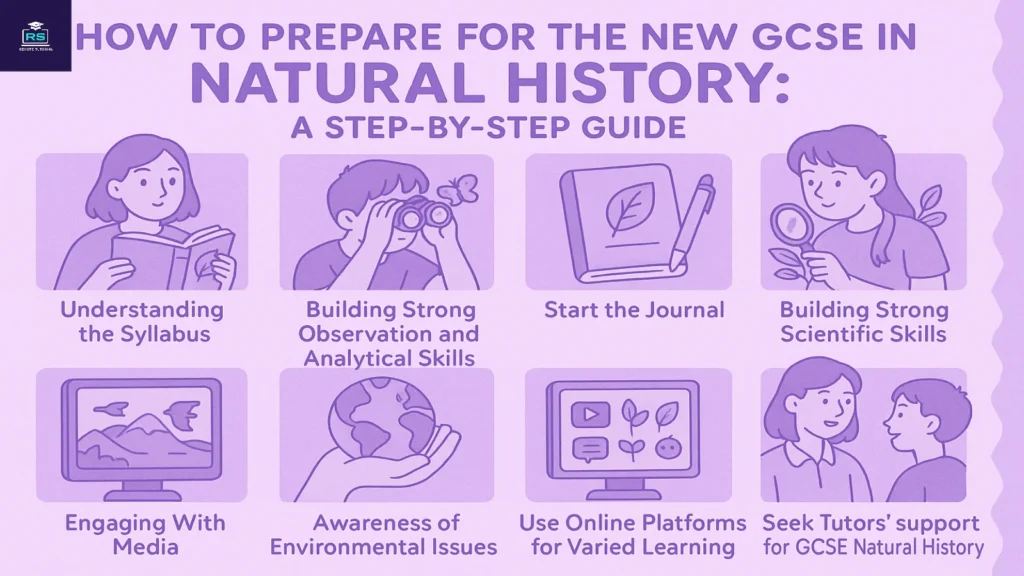
Understanding the Syllabus
Understanding the subject syllabus is the most crucial aspect in the preparation. Although the Subject is new, the outlines shared by the institution refer to key themes.
Habitat Identification
This specific theme covers habitat, food chain, and different dynamics in population and ecosystem. Students explore these key areas to develop their clarity and enhance their Knowledge.
Species Identification
Alongside the habitat, students also explore key areas related to species such as plant species, animal species, and a bird species, which are an integral part of the ecosystem.
Climate Change
Students learn and investigate key areas related to climate change, global warming, and initiatives that are taken for conservation and sustainability.
Adaptation and Natural Patterns
This key theme refers to the exploration of areas such as biological and natural history, including fossils, natural selection and environmental shifts that occurred across decades.
Impact of Humans on the Natural World
The Subject also examines the Key themes, the most important the Homosapiens’s impact on the natural world. From Industrialisation to deforestation and pollution, students learn to analyse how actively humans shape the environment and the Ecosystem.
Build Strong Observation and Analytical Skills
Every history, whether human history or natural history, demands noticing and observation rather than theoretical Knowledge
- To build strong analytical Skills
- Spend time outdoors observing the surrounding species, colour, and shape of the patterns.
- Learn to compare Species based on their size, movement and behaviour.
The observations, the more the student grasps the fieldwork.
Start Journals
Journaling helps in many ways; students organise their thoughts and track patterns in the environment. Use the journal for recording.
- Plants growth
- Weather changes
- Evolving habitat
- Birds are changing their habitat
These are not small success tips; these are the foundations that directly align with how students will be assessed.
Why Build Strong Scientific Skills
Natural history is not the typical subject like the classic trio, biology, physics and chemistry. It requires a deep understanding of scientific terminology to reflect the observations. They need to thoroughly understand
- Biological terminologies
- Food chain and food web concept
- Ecosystem Balance
- Data Analyzation and Data Interpretation
- Environmental Balance
These Skills help immensely in the theoretical coursework needed for the exam.
When to Engage With Media
To make learning more fun, students should engage in content, read and watch the content that helps build clarity in their field. The following is helpful content that students may watch and read to enhance their knowledge about the subject.
- BBC Planet Earth
- Life on Earth
- Blue Planet
- Nature’s Voice
- BBC Earth Podcast
- Wilding by Isabella Tree
- Field Guides like the Collins Birds Guide
These Helpful resources spark curiosity and real-world awareness, perfectly aligning with the preparation for the exams.
Awareness of the Environmental Issues
History is deeply connected to the ongoing and current events. Students should start looking for
- Climate change news
- Reports on Biodiversity
- Protection Efforts for Local Habitat
- Changes in Environmental Policy
Use Online Platforms For Varied Learning
There are different platforms that offer a wide range of nature courses, including;
- National Geographic Education
- BBC Bitesize Environmental pages
- Wildlife identification apps
These resources help students to build the roots in the specific subject and make it easy to build the foundations of the subject before even starting the course.
Seek Tutors’ support for GCSE Natural History New Subject
As this subject is emerging and totally new for the students, professional support is utmost necessary for cracking this subject. Professional guidance is utmost necessary and can help in several ways.
- Building strong foundational knowledge
- Improving scientific writing
- Strengthening foundational scientific concepts
- Aiding in practical observation and Fieldwork
FAQS
What is the new GCSE subject about?
The new subject focuses on ecology, ecosystem, environmental impacts and biological sciences.
How can students prepare when the official syllabus is released
Students can prepare through observation, analytical skills, exploring geological knowledge and building strong roots of the subject
Is this subject preferred for the students inclined towards practical learning
Yes, absolutely, this subject covers all hands-on activities that are helpful for students who prefer practical learning.
Can tutoring help with this subject?t
Professional guidance can help students easily crack the subject. With the right guidance and support, students can cover everything which this subject demands.
Conclusion
The new emerging subject is way more than an academic qualification. It is a pathway for the students to reconnect with the natural world. Preparation of this subject does not demand expensive tools or fancy textbooks. The students just have he nautical and observing mind. With the right preparation, observing and analytical skills, students can easily tackle this subject with full confidence and excitement.

Raja specializes in Physics and Maths, with over 5 years of experience. He offers KS2, KS3, and GCSE Science and Maths lessons. He graduated from one of the top universities in the UK.