

The question that whether GCSE grades matter hovers over the UK students like a persistent fog, the brain is like the scrambled egg where everything seems confusing and overwhelming. The announcement of the GCSE result brings moments of both joy and fear.The set of numbers and letters determine future success and failure of the students. But do these grades matter for the university or future prospects? The questions are always tangled in the minds of both parents and students: does hard work matter for future needs? Or are the grades over emphasised , exaggerated in the education curriculum and are the total verdict of the continuous growth?
The official answer is YES, because GCSE grades often matter but not in a simple way they are portrayed or they are often exaggerated. Their importance varies by day, depending on the pathways, prospects and contextually dependent.
The fine guide offers a balanced and more realistic nuanced perspective on how GCSE grades affect employment opportunities , career growth, university admission and long term career progression, while also delving into common assumptions and pitfalls.
Jump to Section
What GCSEs Grades Actually Represents
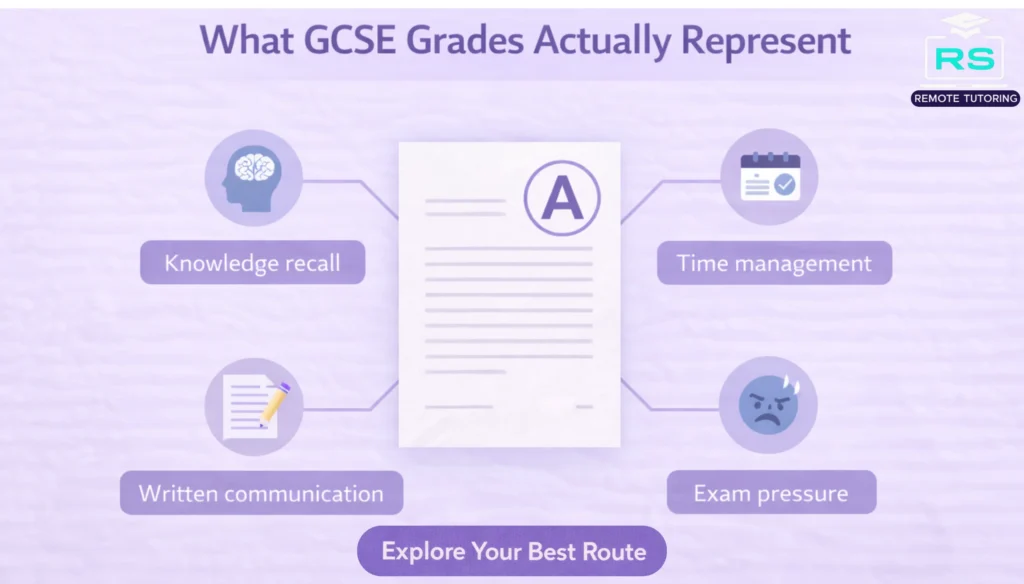
GCSEs exams are basically designed to access
- Subject command
- Abilities of Knowledge
- Literary skills
- Decoding students ability to work under timed condition
- Students skills in management tasks
GCSE is basically the standardised academic qualification, the set of designed rules , a key important certificate the student earns during the initial years of the education that is the biggest reason that companies and employers seek the GCSE as the most prominent tool for accessing students ability.However, GCSE grades are not the indicator of the student’s key intelligence abilities , learning abilities or deep imparted knowledge but these reflects the students performance under the specific set of circumstances and under the timid condition.
Do GCSE Grades Matter for University

The fine guide will answer the most specific question , entangled in the minds of students and parents during the preparation phase of the students.
GCSE As Entry Requirements:
For most UK universities, GCSE is the first marking edge and the good grades in the exam marks as the edge for most of the accomplished students. But one thing to note is that these are not the final decision markers.
Mostly Universities technically look for ;
- GCSE English Language which is of utmost necessity and required by almost all universities.
- GCSE Mathematics which is mostly needed for STEM education , economics, business, and social sciences areas.
- GCSE Science, The classic Trio which is required to get admitted in the fields of nursing, dentistry, medicine and psychology.
If the students fail to fit into the minimum requirements despite the strong A grade , they might not be enrolled in their specific desired field.
Competitive Universities and Courses
For high competitive institutions such as Oxford, Harvard , Russell group universities and courses such as
- Medicine
- Law
- Dentistry
- Economics
- Engineering
GCSE grades carry more weight. Admission officers usually use grades to enrol high achievers in thor top ranked institutions.
They mostly use grades in order to
- Compare candidates from different schools
- Identify the academic consistency and resilience
To illustrate this with an example, the candidate with mostly 8 and 9 grades may appear more competitive and highly consistent than the students with several grade 4s , despite the predictions suggesting that both students have the A grade.
GCSEs are not highly viewed in isolation, instead contextual data such as school background, socioeconomic factors are increasingly important.
DO GCSEs Matter Less than A levels
Getting an A level is the hughes edge for the students wanting to get desired enrollment into thor dream universities. However,
- Weak result of GCSEs limit the course offerings
- Strong GCSEs strengthen the application process
To compose, GCSEs are the set borderline while, the grade A signifies the outcome.
Do GCSEs Grades Matter for Jobs

This is typically a question , often more associated as all desired grades are for the prominent role in the public sector. How the grades impact the future career prospects, does they really impact , if they do so , then what are the outcomes.
GCSEs and entry level Jobs
For early career applicants , GCSEs are only formal applications employers seek and can only access. Many of the formal job listing undoubtedly requires.
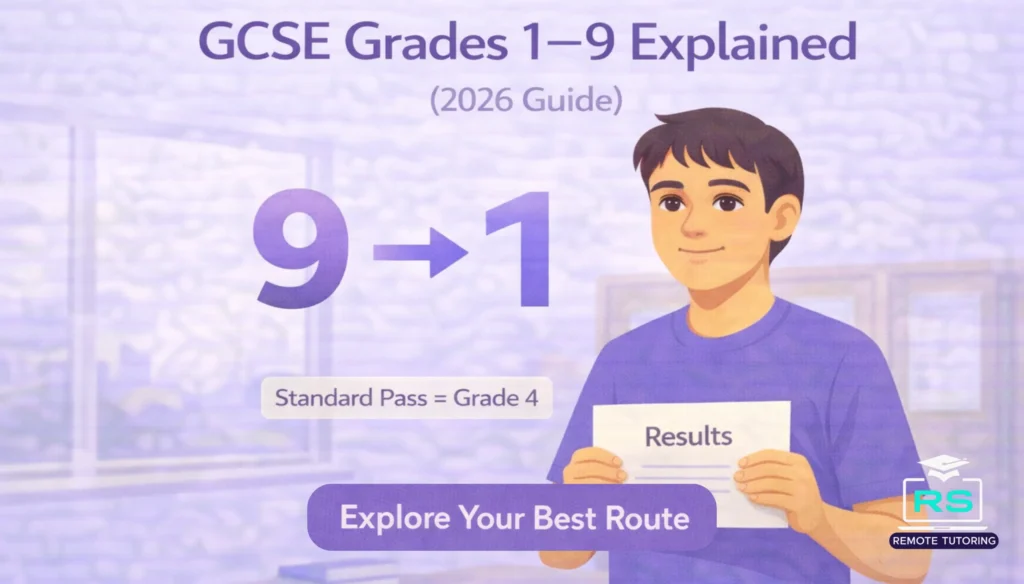
GCSE maths and English standardized passed it means passed with grade 4. Formal certificate as the evidence for that student encompassing basic communication skills.
This is most evident and required for:
- Apprenticeships
- Retail management jobs
- Public sector jobs
- For HR and Administrative roles
GCSEs matter practically and immediately.
GCSEs in Competitive Market
GCSEs exam applications are required for before the screening text particularly if applying for the roles in
- Fiance
- Economics
- Accounting
- Law
The reason for early application is because the fields are mostly competitive and a large number of students want to be enrolled as the competitive edge they provide. Several reasons include:
- They provide a long term academic record
- Helps in filtering larger pool applicants
- Also helps to negotiate the consistency performance of the students
However, beyond the academic outreach, GCSEs outweigh degree classifications, internships and special abilities once the students reach the interview stations.
Long Term Career Outreach
As the career progress takes the charge, the role of GCSEs drops sharply.After the degree, Professional qualification outreach and innumerable work experience they employers mostly seeks
- Skills
- Performance
- Leaderships abilities
- Abilities to foster innumerable tasks easily
- Elasticity and adaptability to the environment
Until the students reach their mid career , GCSEs grades become highly irrelevant until and unless specific job employers require for legal reasons.
Do Companies/Institutions really care for the GCSEs specific grades?
This is the most uplifted debate, do the employers really care about the phenomenal performance of the student at GCSE level. The answer to this thoughtful debate is that employers mostly care about
- Standardized Passes not the perfection
- English and Maths are more obligatory and standardised pass is required in these subjects
- A Certificate providing an Evidence that the student possess strong communication skills
Although Grade 9 is marked as highly efficient and impressive but it won’t outweigh
- Poor interview performance
- Lack of relevant experience
- Lack of interpersonal skills
In Practical fields, GCSEs are highly used as screening tools not as th decision markers.
The Psychological Weight of the GCSEs Grades
The reason a very thoughtful importance is given to the GCSEs because
Students sit at the exams
- At a very young age
- Often without a thoughtful carer clarity
- And it’s the time of high academic and emotional pressure
And the situation often leads to
- Anxiety
- Fixed mindset thinking
- Fear of long term failure
A very important point for both parents and students is that GCSEs are not just the vital important career step, it’s not the only blue point, or the actual destination , there is a way more than that.
How GCSEs Grades Fix into the Bigger Picture

GCSEs are not just the set designed grades but they are the:
- Foundational blocks, not the entire whole structure
- They are of utmost importance but replaceable with other career prospects
- Context dependent not the absolute markers
The strong foundation of the GCSEs marks the initial stages easy and feasible. Weak GCSEs require alternative strategies but do not close the doors permanently.
FAQS
Can I still go to university with low GCSE grades?
Yes. Many universities offer foundation years, contextual offers, or accept vocational qualifications. Resitting key subjects is also an option.
GCSEs grades matter outside the UK?
They may matter for international university applications but are usually converted into equivalent grades. Employers abroad focus more on degrees and experience.
Are GCSEs more important than work experience?
Early on, yes. Later, no. As soon as you gain relevant experience, GCSEs lose significance
Final Thought
GCSE grades do matter but not forever, and not in isolation. They influence:
- Early academic progression
- Initial job opportunities
- Competitive university applications
But they do not define intelligence, ambition, or future success.Education and careers are built through consistent effort, adaptability, and long-term growth, not a single exam result.
- If your GCSEs are strong, use them as a stepping stone.
- If they are weak, use them as a learning point not a limitation.
Your future is shaped far more by what you do next than by the grades you already have.

Raja specializes in Physics and Maths, with over 5 years of experience. He offers KS2, KS3, and GCSE Science and Maths lessons. He graduated from one of the top universities in the UK.




2 Comments
[…] more students than any other transition in school. As for how long these grades follow you around, it depends almost entirely on university, since most employers stop asking after your first proper […]
[…] are the hardest and toughest exams students face for the first time. Most students align their future goals with the GCSEs good grades, It is important to note why the GCSEs are most […]