
AQA GCSE Physics Past Papers & Equation Sheet 2026
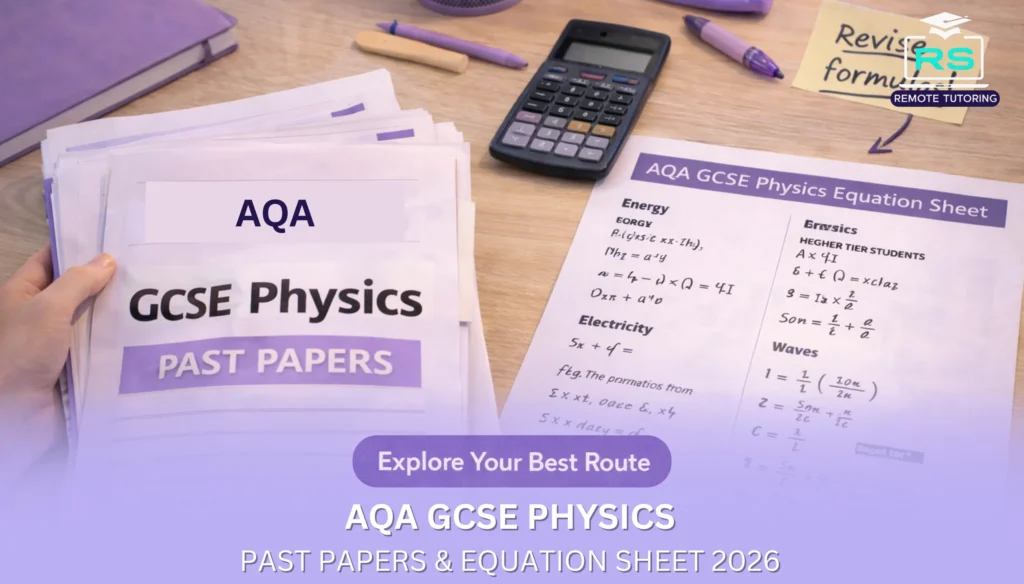
The jump from Year 10 to GCSE Year 11 can feel daunting, especially when you’re faced with two full physics papers and a long list of formulae. AQA GCSE Physics (8463) is one of the most popular physics courses in England and is widely taken by students across London and the wider UK. With new exam timetables and support materials being announced for 2025‑2027, many parents and students are asking: What do the 2026 physics exams look like? and How can past papers and the equation sheet help me succeed? This comprehensive guide explains the structure of the AQA GCSE Physics exam, demystifies the equation sheet, and shows you how to make the most of past papers. We’ll also answer common questions about the 2026 exam series and provide practical revision tips tailored to students in London and across the UK. Overview of the AQA GCSE Physics Exam Exam Structure: Paper 1 and Paper 2 AQA Physics (course code 8463) is split into two equally weighted papers. Each paper lasts 1 hour 45 minutes, is available in both Foundation and Higher tier, and carries 100 marks, representing 50 % of the GCSE. The papers are structured as follows: Both papers use a mix of multiple‑choice, structured, short answer and open response questions. Students must sit both papers in the same tier (Foundation or Higher). Each exam includes a section with calculation questions, which is where the equation sheet comes into play. Foundation vs Higher Tiers Knowing which tier you’re sitting helps tailor your revision: Higher tier students should master algebraic rearrangements and be ready for extended calculations, while Foundation tier students should focus on core concepts and effective use of the equation sheet. What Is the AQA GCSE Physics Equation Sheet? AQA provides an equation sheet for GCSE Physics and Combined Science exams. This document lists selected physics equations in both words and symbols and indicates which equations apply only to Higher tier (shown in bold). The equation sheet is not a complete formula list: it covers the more challenging equations that students often find hard to remember. You still need to know many basic equations and all relevant units by heart. However, the sheet means you don’t have to memorise every formula, instead, you must learn how to use them. What’s on the Equation Sheet? According to AQA’s guidance: 2025–2027 Update: Formula Sheets Included! After the disruption caused by school closures, the Department for Education decided that students taking GCSE Physics and Combined Science do not need to memorise formulae. As a result, full equations and formulae sheets will be provided in the 2025, 2026 and 2027 exams. AQA confirms that the 2025 sheet remains the same as the one used in 2024 and will be continued through 2026. This applies to: This support will remain until at least 2027, so you can confidently use the published equation sheet for revision and practice. Why Provide an Equation Sheet? AQA and Ofqual stress that physics is about applying concepts, not rote learning. The equation sheet aims to: Keep in mind that the equation sheet doesn’t include units; you must still know them, and you should be comfortable rearranging formulae. How to Use the AQA Equation Sheet Effectively Having the equation sheet is an advantage only if you know how to use it. Here are pro tips drawn from educational experts and examiners: Why Past Papers Are Your Best Friend What Are Past Papers? Past papers are previous exam papers published by the exam board. They come with mark schemes and, in some cases, model answers and video solutions. They provide an authentic taste of exam format, question style and difficulty. For AQA Physics, there are two main sets of past papers: These are available for both Foundation and Higher tiers, typically from the 2018 to 2024 exam series, plus specimen papers and practice sets. Many revision sites also offer model answers and video solutions, which are invaluable for understanding how marks are awarded. How to Use Past Papers Also Read Our Other Guide on How to Use GCSE Past Papers to Maximise Your Score Revision Strategies for AQA Physics 2026 Create a Revision Plan Divide your revision into three phases: Focus on High‑Yield Topics Based on examiner reports and mark patterns, some topics yield more marks: Make sure you also cover smaller topics like Space physics (only Physics Separate, not Combined), which often forms a few high‑mark questions. Use Multiple Revision Resources Stay Healthy During Revision Balance is important. Schedule breaks, exercise and sleep. In London, take advantage of daylight hours by revising with natural light, especially in spring when the sun returns. Use winter evenings for quieter study sessions and keep a warm drink on hand. Also Read Our Other Guide on GCSE Online Revision Best Practices | Hybrid Study Support Frequently Asked Questions Conclusion and Next Steps AQA GCSE Physics in 2026 is about understanding the exam structure, knowing how to use the equation sheet, and practising with past papers. The equation sheet reduces memorisation, but success comes from deep comprehension and application. Start early, revise systematically and make use of all available resources. Ready to boost your physics grade? We offer a complete set of AQA past papers, model answers and revision notes, plus expert online tutors based in London and around the UK. Contact us today to book a free consultation and download your 2026 equation sheet. With the right support and practice, you’ll approach exam day with confidence. RajaRaja specializes in Physics and Maths, with over 5 years of experience. He offers KS2, KS3, and GCSE Science and Maths lessons. He graduated from one of the top universities in the UK.
GCSE Grade Boundaries 2026 All Boards & Subjects – AQA, Edexcel, OCR, Eduqas & CCEA
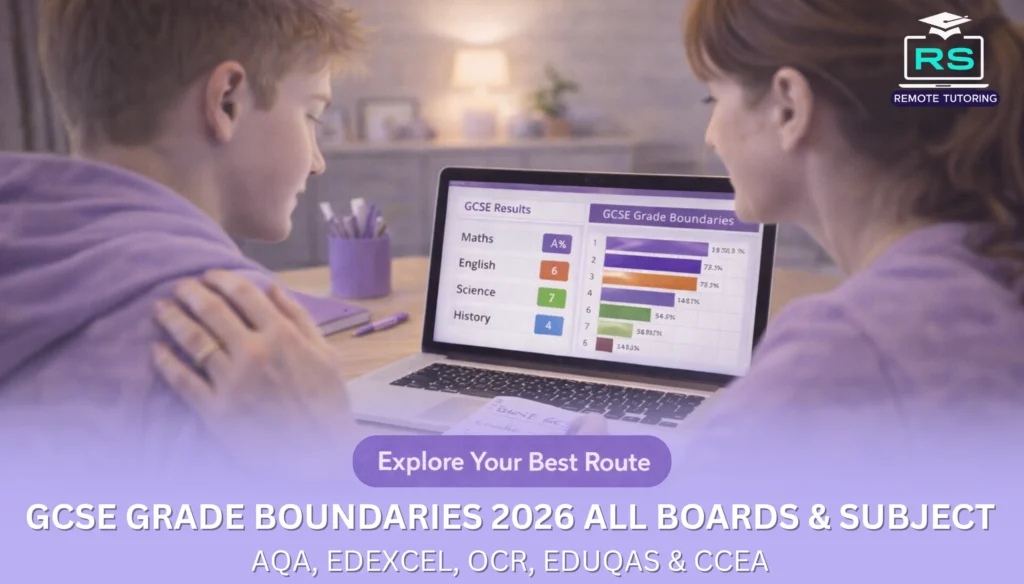
Understand how GCSEs are graded can feel confusing, especially when the phrase “grade boundaries” starts appearing around results day. Grade boundaries are the minimum number of marks students need to achieve a particular grade in each subject. They convert raw exam scores into the 9‑1 grades used in England. The boundaries change every year because exam papers vary in difficulty; if a paper is harder, boundaries fall, and if a paper is easier, they rise. In this guide,e we demystify the process for 2026, summarise typical raw marks by exam board and subject, and answer common questions about next summer’s grade boundaries. What Are GCSE Grade Boundaries? Grade boundaries are set by exam boards after all the papers have been marked. During a process called awarding, senior examiners review the overall performance of the student cohort and compare the papers with those from previous years. They adjust the mark thresholds to reflect the difficulty of each paper, ensuring that students aren’t unfairly penalised or advantaged. This process helps maintain consistency from year to year, so a grade 7 in 2026 represents the same standard of achievement as a grade 7 in previous years. The grading system uses numbers 9 to 1 instead of the old A* to G grades. Grade 9 is the highest, grade 4 is a standard pass (comparable to the bottom of old grade C), and grade 5 is a strong pass (roughly top of old C/low B). Grade 1 is equivalent to the bottom of the old G. For subjects like Combined Science, students receive two adjacent grades (for example, 9-9, 9-8, 8-8, etc.), reflecting that the qualification counts as two GCSEs. How Grade Boundaries Are Set Why Do Grade Boundaries Change? Exam boards design papers to a similar level of difficulty each year, but small variations in difficulty are inevitable. To keep standards consistent, grade boundaries shift up or down to reflect those differences. For example, if a maths paper is harder than expected, the mark needed for a grade 4 may drop to ensure that the same proportion of students achieve a standard pass. Conversely, an easier paper may see boundaries rise. When Are Grade Boundaries Released? Grade boundaries are usually published on the morning of results day. In 2026, GCSE results day falls on Thursday, 20 August 2026, and boards such as AQA, Edexcel, OCR, Eduqas, and CCEA will release their boundaries at 08:00. Students receiving results in January (resits or vocational awards) can check boundaries on the relevant release dates (for example, OCR releases January results on 11 March and 19 March 2026). Will GCSE Grade Boundaries Be Higher in 2026? Because grade boundaries depend on exam difficulty and how students perform, it’s impossible to say whether they will be higher or lower than in 2025. After the disruptions of the pandemic, boards aim for stability and comparable outcomes. Historical data show that boundaries typically vary by only a few marks year‑to‑year; for instance, the difference between a grade 5 boundary in maths may be within 5 to 10 marks between series. The best strategy is to focus on understanding the specification and practising past papers rather than worrying about boundaries. Formula and Equation Sheets for 2026 In response to pandemic learning disruptions, the Department for Education decided that students do not need to memorise formulae or equations for GCSE maths, physics and combined science in 2025 to 2027. Candidates will be provided with formula sheets for these subjects. This support material will continue for the May/June and November 2026 exams. It may make some questions slightly easier, but grade boundaries will adjust accordingly. Understanding Grade Boundaries by Exam Board Below we summarise typical raw mark thresholds based on the 2025 summer series, which provides a useful benchmark for 2026. Remember that boundaries may shift slightly in 2026, but these examples illustrate the range of marks typically needed for each grade. For simplicity, we show boundaries for GCSE Maths, English Language and Combined Science. (All marks are out of 240 unless otherwise noted.) AQA Grade Boundaries (2025 Benchmark) Subject & Tier Grade 9 Grade 8 Grade 7 Grade 6 Grade 5 (Strong Pass) Grade 4 (Standard Pass) Grade 3 Notes Maths (Higher) 219 191 164 130 96 63 46 Out of 240. Maths (Foundation) 188 160 119 79 39 — — Boundaries for grades 5–1 (grade 4 approx 79). English Language 131 121 111 100 95 86 78 Out of 160. Combined Science (Trilogy) Higher 314 274 238 203 168 133 108 Out of 420 (two equal marks across two papers). Combined Science (Trilogy) Foundation 258 228 198 168 138 108 78 Students receive a double grade (e.g., 6-6). Why choose AQA? AQA is the largest exam board. Its papers use straightforward language and a clear progression of difficulty. The board offers a broad range of subjects and provides detailed specifications and plentiful past papers. Edexcel Grade Boundaries (2025 Benchmark) Subject & Tier Grade 9 Grade 8 Grade 7 Grade 6 Grade 5 Grade 4 Grade 3 Notes Maths (Higher) 217 186 156 121 87 53 36 Out of 240. Maths (Foundation) 175 144 105 67 29 — — Grade 4 ~67 marks. English Language (Specification A) 148 135 122 110 96 82 68 Out of 160 (approx values). Combined Science (Higher) 311 273 236 200 165 128 97 Out of 420. Combined Science (Foundation) 263 233 202 171 140 109 78 Out of 420, grades were awarded as pairs (e.g., 5-5). Why choose Edexcel? Edexcel, part of Pearson, is known for structured exam papers and clear mark schemes. It offers a wide subject range and runs international GCSEs (IGCSEs). Maths, sciences and business are particular strengths. Questions often involve data analysis and require careful interpretation. OCR Grade Boundaries (2025 Benchmark) OCR papers are marked out of 300 for maths rather than 240. We provide scaled marks to compare with other boards. Subject & Tier Grade 9 Grade 8 Grade 7 Grade 6 Grade 5 Grade 4 Grade 3 Notes Maths
When You Should Start Online Tutoring: A Guide to Parents and Students.
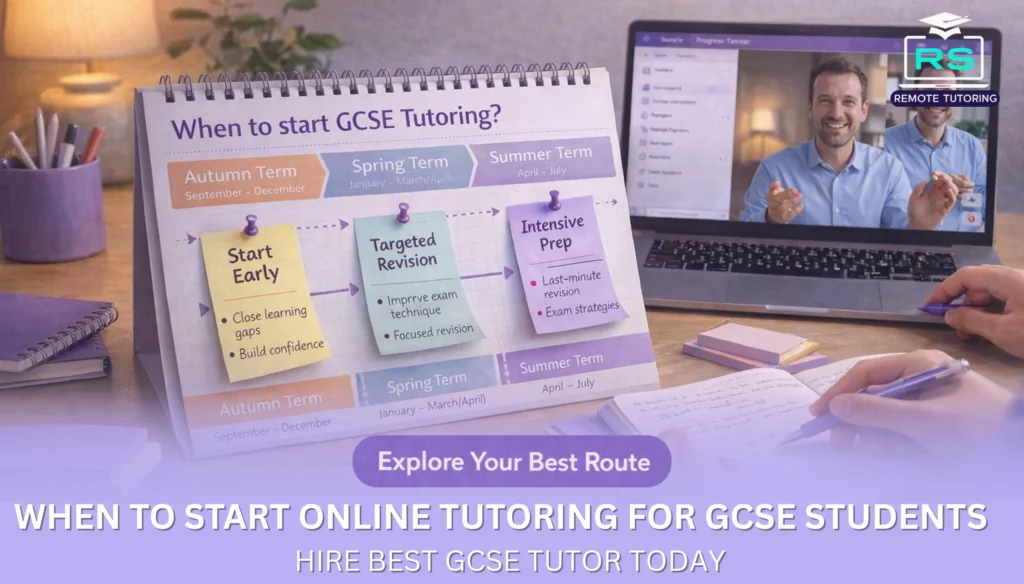
Tutoring is one of the most feasible approaches when students are not learning or more often school teachers are not getting aligned with the student’s needs. GCSE exams often require a lot more hard work , consistency and strategic techniques. The first two are undoubtedly depending on the students’ will but the strategic techniques are not solely achieved by the students hence an extra guide is needed so that students can achieve their desired success. In 2026, especially in the developed country like the UK, mostly every one is busy with their life, in such an environment parents often feel online GCSE tutoring is more feasible meeting the requirements of thor dull and chaotic lives. But the most consistent question is asked mostly by the parents and students that The truth that is supported by the educational research states that timing of the online tutoring significantly impacts academic outcomes, student confidence and long term attainment. Starting too late can undoubtedly lead to playing catch ups. However, starting strategically early can transform the better results and reduce academic stress. The following guide is extremely tailored for parents and the students especially for the people operating in the UK and are really worried about when they should start their child’s online tutoring. Why Timing is Crucial for Online Tuitions Effectively managing time is the utmost responsibility of the students aiming for the GCSE exams. The GCSE exam is not just the name of hard work but it often involves a blend of consistency, discipline and tim management, so students should be critical about their timings. Educational studies consistently show that early intervention improves learning retention and prevents academic gaps from widening. According to the findings of Educational Endowment Foundation, structured small groups and one to one tuitions can significantly lead to progress gains especially when implemented before the academic decline becomes severe. Online tuitions in Uk are not just remedial books but they severe three cor purposes; Understanding of each when these are applied is the key to the desired success. Term by Term Guide: When it is most beneficial to Start Online Tuitions The below guide explains when starting an online tutoring delivers the best making the most beneficial outcomes the student is in need of. The UK’s academic year is divided into three main streams; Each term presents unique opportunities and academic pressure in their own way. Autumn Term: The best Phase of the Academic journey The autumn term sets the tone for the entire year. Research on learning trajectories states that early academic establishment and patterns often predict the end of the performance. The parents should strongly consider staARarting the online tutoring if; Online tutoring is way more feasible when started in the autumn season because; Research in cognitive studies consistently shows that s[aced earning over time can significantly boost your motivation and improves retention compared to last minute cramming. Starting tutoring in the autumn allows for structured revision cycles before the exam season. For the most GCSE and A level students this is one of the most overlooked yet most powerful time to getting started with the online tuitions Spring Term: As the UK educational curriculum revolves around three terms, the spring term is best for targeted improvement and exam strategy. By the time January approaches, academic realities are mostly clear and students are aware where they are lying. This phase is also curricula because mock exams are often set during the phase and adjustment can be made on the basis of the grades students achieved in the mock exams. Online tutoring during the spring term becomes essential if: Data from the UK secondary school indicates that structuring tutoring between mock exams and the final exams significant;y increases grade progression probability particularly when tutoring focuses on the exam skills rather than re-teaching the entire syllabus. Spring tutoring is mainly focused on; For the students studying the year 11 and the yr 13, this phase is very much crucial as this phase is the last effective window for the grades improvement without getting drawn into the well of anxiety and overwhelmed behavior. Summer Term: The critical exam and the Transition phase Summer term is the most crucial and the critical phase in the student’s academic life. Summer terms carry two different meanings depending on the group. If you are in your exam year then this requires intensive revision. And for the lower year students summer term is the peak preparation phase for the next academic stage. Start with the online tuitions in Summer only if: Research reports that students can lose up to these two months of academic progress during long holidays. Strategic summer tutoring prevents this decline and builds readiness for the upcoming academic year. For primary students especially summer is deals for; And for GCSE and A level students, summer tutoring can prepare them for; Age Based Break Down: When Online Tutoring Makes the Most Impact. The impactful tutoring not only depends on the term factors but age is also important. It shows which students and how many years can easily tackle another guidance apart from the schooling. Primary School students aging from 1-6 For the students who are under the year 6, start tutoring if; Different research scholars clearly mention that literacy gaps forms below age 11 are harder to close later. Early tutoring is the road for building extreme confidence. Key Stage students: aging from 7-9 Age 7-9 is the crucial stage for the students and this age is often underestimated. Ideal time to start tutoring is the year 8 or the early year 9 because GCSE foundation subjects start from here. Starting Online tuition in the UK before the GCSE courses formally begin prevents from sock during the year when students are actually sitting for the GCSE exams. GCSE: Students Aging from year 10-11 Gcse years is the most common stage parents are in need to consider tutoring support. Best starting points are; Getting started with your online tuition at the year 11
How To Choose The Right Online GCSE Tutor: A Guide to Parents and Students.

GCSE exams are no longer based on utmost traditional practices, instead the education system undergoes the decisive shift and a whole transformation occurred in the world of GCSE examination. GCSE exams are the most difficult ones, the myths are often tied that these can not be easily passed with the high grades. Student’s success is mostly tied with passing with desirable grades in the GCSE exam but some of them fail due to their weak strategies while some go down because of their luck. Tutoring support is very much necessary in order to receive high quality output. Choosing the online platforms are as much necessary but what counts is choosing the right Online GCSE tutor. Choosing the right online GCSE tutor is not just a luxury but a strategic choice. As GCSE exams paved the way to the university pathways, apprenticeships, and long term career direction. The quality of tutoring support can significantly shape a student’s failure. However, with the hundreds of platforms, freelance tutors, and online academies claiming to offer the improved guaranteed results . The persistent question arises in the minds of the parents about how to choose the right support for their child. The in depth guide explains how to choose the right Online GCSE tutor, using research backed insights, measurable insights and practical evaluation strategies that will help parents to choose the right support for thor child. Understanding Why the Right Online GCSE Tutor Matters More than Ever Before directly moving towards the qualities of the best online tutor, it is necessary to understand why choosing the right tutor is very much important. GCSE performance basically impacts: Research in cognitive psychology states that personalised information clearly improves attainment more effectively than general classroom teaching, particularly when feedback is immediate and well organized. Online tutoring has evolved with the advancement in today’s world, the utmost important tool that basically reshapes the entire structure of the student’s preparation phase. Online platforms are tailored to offering; Choosing the Right Support For Your Child The following guide encapsulates the information that one must navigate before choosing the online tutor, because you are not just choosing another teacher but the one that will lead your child to receive the success he once desired to get. Clarify the Academic Goals Before Searching The first and foremost important step is to clarify the academic goals of your child. Before searching for the tutor, Ask yourself the following; Is the student: The strategy required to fill each gap is different. Similarly, online tutors must understand your exact different Boards specifications easy or hard, such as: Each board has a unique marking scheme and relies on different patterns and structures. A tutor who is unfamiliar with the board may teach the content correctly but not in the format that exam earns the marks. Another important clarification is the timeline of exams. Ask yourself the following; Is tutoring starting: Urgency changes the teaching approach dramatically. Setting the c;lear goals and answers to the questions leads to the avoidance of the vague responses and helps the tutors to change the methodology in the clear and defined way. Look Beyond Qualification: Evaluate the teaching Methodology and Expertise Qualification is the element explaining how much you worked hard while expertise and the teaching experience may refer to how much you learned in the desired field. Choosing the tutor just based on the qualification is not the strategic choice. Instead, look for the expertise and the teaching evaluation that are the most important skills needed to achieve the desired output. When evaluating a tutor, assess their subject mastery. Ask yourself the following; Do they: Another important element to focus on is the proven experience because GCSE results are all about teaching methodology and strategic studies.Ask the tutor the following; Furthermore, focusing on the teaching methodology is another important element to focus on. It is evident from the research that High performing tutors do not just delivery the lecture, they teach; Parents should note that tutors who are just relying on the content and delivering their lectures are undoubtedly doing the half time job. Match the Tutor to the Student Learning Style Before confirming the tutor, firstly match the tutor’s methodology to the learning style of the student. It is very important to note that academic compatibility matters the most. A brilliant tutor who does not match your child compatibility is not the fine choice for your child. Consider whether your child is; The ultimate job of the tutor is to adapt the tone,and style knowing the needs of the students in order to match their compatibility. In order to know that trail sessions are very much necessary to know where both are lying. Access the Online Tutoring Platforms Itself The tutor’s effectiveness also depends on the learning platforms they are using. Always look for; It is important to know that technology should enhance the structure, not complicate it. Asking the Right Interview Questions: Parents should be aware of knowing that they are not just choosing the tutor but the helping guide that will unravel the hidden talent and abilities of your child, while boosting their confidence and delivering the motivation. Ask the following; The tutor’s clarity speaks the unsaid truth and also sparks how much professionalism the tutor holds. Signs that should not be Avoided The following should be avoided as they speak up to the warning that the person you are hiring is not the right support for your child: It is important to get the clear ideas that academic growth speaks up the long term performance and strategy not the promise . Benefits of Hiring A High Quality Tutor Studies in academic intervention highlights that personalised tutoring can; Students receiving the consistent targeted feedback performs better than those relying in traditional classrooms. But only when the right support that is tutoring is structured and organized. Parental Role In GCSE Tutoring Success Parents plays the crucial role in the online GCSE tutoring.Parents should; And avoid: It is important
How To Set A GCSE Realistic Target with An Online Tutor: Research Driven Guide For Both Parents and Students
GCSE exams encompass a wide variety of techniques that should be mastered in order to achieve the desired grades.Most students fail not because of lack of knowledge but because they are not masterfully skillful in handling the techniques that are required by the GCSE exams. Setting realistic targets is one of the most powerful steps a student can take towards academic success. Yet, many families fall into one of two traps: setting goals that are low or unrealistically high which are undoubtedly leading to burnout and anxiety. As most of the students are opting the online education because of its feasibility and flexibility and with the rise of GCSE online tutoring, students have now access to personalized academic planning which is data driven, strategic and achievable. The following in depth guide explores how to set realistic GCSE targets with an online tutor, using researched oriented insights from cognitive science, educational psychology, and UK assessment framework. Why Setting Realistic GCSE Targets Matter the Most: Before directly diving into the steps that should be inculcated when setting a realistic timeline with your online tutor, it is necessary to understand why setting strategic targets matters more than ever. The office of the qualification and Education Regulations oversees the GCSE grading in England using the 9-1 grading system. Because the grading system shifts annually based on the national performance, targeting settings must go beyond wishful thinking because it requires ana;ytical thinking, analysis, evidence and strategies. Research in educational psychology further suggest that: There is where a strategic and online tutor becomes utmost essential. GCSE Targets Guide for Parents and Students The following explains the steps that should be integrated in order to make the realistic target with the professional online tutor to make your preparation according to the desired success. Start With Baseline Assessment: Not the Surface level Guesswork. The first and foremost obligatory step is to analyze the student’s current level. Before moving towards setting the goals it is necessary to investigate that the goals which are being targeted are achievable by the students. A professional online will; For example; Studies on the formative assessments suggest that students improve more when feedback given identifies the gaps rather than just labelling the general performance. Online tutoring platforms such as ours RS remote tutoring track the performance data over time, something that is missed in the traditional classroom environment which struggle to personalise at scale. Understanding the GCSE grading system framework: Another important step in setting the targeted goals is understanding deeply the grading system.Most students get misunderstood by the grading system of one of the most difficult exams in the UK. The grading system that is suggested by the UK government states that; Understanding deeply the grading system allows the students to set the targets that deeply aligns with; Additionally, one important thing to note is that tutor must encompass information of the exams students are giving for example, tutors should be aware of the exam board specification such as Each board encompasses different styles in questions, writing styles and examination techniques. Realistic targets must reflect the student’s specific boards. Apply Smart Goal Framework to GCSE Planning: Setting small and smart goals is the ultimate key to achieve the desirable success. Long term goals can be easily achieved if and only if the student is consistently completing his everyday or small goals. The SMART framework is the abbreviation of Specific, Measurable, Achievable, Relevant, and Time bound that is widely used in performance psychology. With an expert online tutor, GCSE targets should look like; “I will improve from Grade 5 to Grade 7 in English Literature by mastering unseen poetry analysis and improving essay structure within six months.” Not the student uttering; “I want Grade 8 in English.” These are the vague targets students should set clear and target goals in order to avoid mistakes and reduce the chance of failure or low marks. This works because; Research from goal setting theory further states that performance is ultimately improved when goals thoroughly focus on the process mastery, not just the grades outcomes. Identifying the External Constraints and Life Style Factors GCSE success is the blend of balancing extra curricular activities and in depth and focused preparation. A realistic GCSE target must consider; Research states that academic pressure without recovery time leads to cognitive fatigue and reduced performance. An effective online GCSE tutor helps to build; Targets must be ambitious yet sustainable that can be easily achieved by the average student. Align Targets With Long Term Career Applications GCSE targets should not merely focus on getting the higher tier grades in the examination but it should also reflect the long term career applications. If a student aims to pursue This approach is clearly beneficial as students clearly foresee their future aligning with their career goals. Scheduling Regular Review Points: Goal setting is not just a one time event. High performance tutors add the students conduct; Online platforms in the Uk make it easier through; Common Mistakes When Setting the GCSE Targets The following mistakes are often made by the students when setting the clear target for their most important exams. Research states that personal growth and confidence cannot be achieved through consistent comparison based targeted approach. Why GCSE Online Tutoring Improves the Targeted Accuracy Online GCSE tutoring has several advantages especially when it comes to targeted learning and setting clear goals for the preparation of the exams. When structured properly and strategically, online tutors turn vague targets into clear and structured ambitious achievements. How Parents Support Realistic Target Settings Parents play a vital role in supporting realistic target learning. They helps by; Research states that supportive engagement improves attainment more than strict performance pressure. FAQs Final Thoughts Setting realistic GCSE targets with an online tutor is not about limiting ambition, it is about structuring it intelligently. When targets are: Students gain confidence, reduce anxiety, and significantly improve performance.Online GCSE tutoring offers a powerful combination of personalised instruction, performance analytics, and flexible scheduling,making realistic goal-setting not just
Best Online Platforms For GCSE Tutoring

The GCSE landscape is changing with rapid advancement in technology. Almost every parent is shifting towards Online GCSE tutoring to make their child more confident as online tutoring revolves around flexibility and feasibility. In the fast paced landscape, where almost each and every parent is really concerned about which platform is much more beneficial when it comes to online turing. As the technological landscape is rapidly changing around the world, it is really obligatory to know each and every aspect of platforms to give your child a proper and secure environment so that they can achieve their desired success. The platform you choose for your child really impacts your child’s education, engagement, academic performance, knowledge retention and even the parents satisfaction.With ,ore students preparing for the GCSEs exam in Uk through online platforms, tutors must ensure thor virtual classrooms is not just functional but extremely optimized for the exam success. This guide provides research based in depth comparisons for the most affected platforms used widely across the virtual tutoring academies that are Zoom, Microsoft teams, Specialized tour tools and Virtual Classroom software, while also exploring their strength, weaknesses and strategic implementations so that it may help the tutors to use the right platforms in order to get a more nuanced perspective of the students. Understand Why the Selection of the Platforms Matters the Most Before diving into what exactly the most used virtual platforms offer and what is the most preferable by the parents and the students it is necessary to understand why the selection of the platforms matters the most. Research in the digital environment suggests that interactive learning systems significantly improve cognitive processing and memory retention compared to memory retention. Exam focused tutoring especially GCSE Science, Maths and the English requires: Structured platforms are very much necessary because poorly chosen platforms can result in; Therefore, platform choice directly influences the learning outcomes. Zoom For GCSE Tutoring Zoom is the widely recognised platform that is used interchangeably by many of the tutoring websites and ultimately many of the tutors. It has widely become one of the most widely adopted virtual tools and it is recognised for good reasons. These includes: Live White Board and Live Annotation Students who prefer online tutoring mostly in the UK, they are in need of seamless experience. It means that teachers should be aware of using white boards and making the learning more engaging. Zoom often meets the standards of the students, as for the subjects such as GCSE Maths, Physics, Chemistry and even essay structuring in English requires the ability to: The integration of the above mentioned points is very much necessary and essential in order to make learning more nuanced and creative. Zoom whiteboard truly replicates the traditional classroom experience, delivering the same standard as student is expecting because GCSE preparation time period is very much exhausting for the student and if the lectures and tutoring support is not being delivered the way students expected, it further creates a lot of further problems for the students.Research further suggest that visual and simultaneous explanation increases problem solving accuracy especially in the STEM subjects. Screen Sharing For Exams Walkthrough Screen sharing is another important tool that is served by the zoom online platform. Teachers are often in need of displaying the information in order to make the learning more engaging and creative. Through the use of this element tutors can; With the Integration of the above mentioned points, tutors can perfectly foster exam oriented tutoring where students must understand the examiners expectations. BreakOut Rooms Breakout rooms are another important element that is offered by the zoom online platform but it is mostly beneficial for the group tutoring. For small groups GCSE tutoring, break out rooms allows; Break out rooms are further important in creating a friendly atmosphere among the students and teachers. Studies show that collaborative problem solving increases conceptual understanding by reinforcing the explanation skills. Limitations of Using zoom Zoom is an important online platform but while its sporting importance as widely recognised online learning platform but is lacks certain points such as: Zoom is primarily the communicative platform, it is not the full tutoring management system. Zoom can be most beneficial for as it suits most to the following: Microsoft Teams for Structured Online GCSE Tutoring Microsoft team is another widely used platform but unlike Zoom it is more than a video platform, It is totally a collaborative workplace. It basically combines: The combination of the above mentioned points makes the Microsoft teams as powerful for the tutor that are totally relying on structured and organisational framework. The Microsoft team provides a lot of benefits when used for academic purposes. Assignment and Homework Integration Microsoft team allows structured tutoring support. Team allows tutors to; For the students preparing GCSE in advance , tracking of the record, homework checking improves accountability for the exam readiness. Research further encapsulates that structured homework improves exam performance by reinforcing spaced learning. Integration of One Note Class Notebook Integration of one note class homework is very much necessary as it allows; The integration of the following improves cumulative learning which is very much crucial for the GCSE preparation. Limitations Of The Teams Although Microsoft team is a platform that can be excessive used for the preparation of the GCSE exams but it further lacks at the following points; Team is very much beneficial for; Specialized Tutors Tools and Virtual Classrooms Software Beyond Zoom and teams, the specialized virtual tools and the other softwares are very much in demand for the online and structured tutoring. These includes the virtual classrooms tools with; Built-in whiteboards optimized for maths: Unlike general virtual platforms these are built with dedicated educational architecture. Understanding Why Dedicated Tutor Improves the Outcomes With the use of well resourced online platforms it is very much necessary that the tutor must be dedicated in order to receive the desired outcomes. The dedicated tutor can; Data Driven Progress Tracking Advance tutor tools provides; Research in educational psychology consistently states that data
Signs Your Child Needs an Online GCSE Tutor in UK

The globalized world has taken a 360 degree turn, transforming each and every aspect of life. In the fast paced world everything is looking for the means of comfort and flexibility, virtual tuitions are becoming very much common. In today’s landscape children are expected to grasp the difficult topics quickly, perform trends well in the examination and develop independent study skills at a very early age. As everyone is well informed that classrooms provide the foundational study landscape, neglecting the needs of the individual learning gaps.This is the point where RS remote tutoring and many other platforms becomes significantly beneficial. Online tutoring is not just like a second or back up option but it is the strategic academic tool backed by research and measurable outcomes. But before referring to or hiring an online tutor the persistent question arises when it becomes strategically important to hire one. How to know, what are the signs that our cold needs an extra online tutor to fill the learning gaps left empty by the school. If you are wondering that your child needs more time or professional support, this guide will help you recognise the clear signs that help you indicate your child may benefit from the early structured online tutoring approach. Why Identifying the Early Signs Matters the Most Before exploring the signs theta sparks to the idea that the child is in need of the expert and strategic online tutor. It is important to understand why identifying these signs matters the most. Research from the Education Endowment foundation shows that targeted one to one tuition can accelerate the learning progress by up to 3-5 additional learning months over the academic year. The key factor is the early interventions. Identifying the signs is utmost necessary as when learning signs are left unreso;ved and unsolved this may leads to; Online tutors provide one to one extra support with boosting the student’s confidence and uplifting their morale so that they can give thor exams with full confidence. Signs that Your Child Needs An Online Tutor The following will explain the signs that spark the idea that the child is in need of expert guidance which is only offered by well trained, experienced online GCSE tutors. 1. Consistent Drop In Grades Despite Tremendous Efforts: One of the foremost signs that parents should hire an online tutor is that students coincidentally are making efforts but not getting their desired grades. Consistency is the key to success but doing efforts smartly is the ultimate key for success. A temporary low score is totally normal. However, sustained decline in the performance grades is not normal; this reflects deeper conceptual gaps. This may usually refers to; According to the studies aligned with education research, students often underperform due to lack of examination techniques, gaps in the structured development not due to lack of intelligence. Our expert tutors at Rs remote tutoring helps; 2. Homework Tasks Excessively Long Another important sign that indicates that a child is in need of an online tutor is that they take too long to complete the homework. If one hour of homework turns into three hours of consistent struggle this is the strong indicator that your child may need a structured approach. Extended homework time may reflect; Educational psychological research states that insufficient study time often stems from inefficient and ineffective strategies rather than laziness. Online effective tutoring helps in this regard in a way; Uplifting the following strategies may help the students to get their desired success. 3. Increase Anxiety Around Specific Subjects: GCSEs exams are the most important ones in the lives of students because they are the stepping stones towards their success journey. While taking and preparing for the GCSEs students often feel overwhelmed especially showing extreme anxiety and stress towards difficult subjects. Ask the following; Does your child: The following speaks of the emotional signals of academic stress. Research suggests that academic stress significantly impacts students’ well being long term motivation. When students repeatedly experience confusion without resolution, anxiety develops. And this is the sign you should consider seriously an expert online tutor providing one to one support. As like us, at RS remote tutoring our expert tutors we provides: 4. Difficulty in Transitioning between the Academic Stages: Some students feel it is really difficult to transition from the academic stages. Research suggests that transitional academic gaps significantly affect long term attainment. Online and structured tutoring is very much necessary at lat at this level because it; Passive Revision Methods Students who are preparing themselves for their GCSEs exam are often relying on the traditional methods of revision, especially revising notes again and again, which according to them is the formal revision strategy that will turn their efforts into the tremendous reward but they are lacking at the most important phase because passive revision won’t work this time. Effective revision methods includes; A trained and effective tutor used these evidence based revision techniques and integrated them into structured lesson plans to make them more effective. Over Reliance on Parental Support: Another sign indicating that a child is in need of the tutor is that child is over relying on parental support. If the parents finds their self in; This is the point where the child is wanting professional assistance. Parents provide emotional encouragement and the well trained tutor provides curriculum aligned instructions. Online tutor at RS remote tutoring restores the balance by; Gifted But Under Challanged Every student encompasses a different level of abilities and talents. Tutoring is not just delivering the lectures, it is about unleashing the students’ talent and giving them enough motivation to use the talent in public spaces. High performing children may; Research indicates that children showing enrichment significantly enhances long term academic development. An online tutor can; Why Online Tutoring Is Highly Effective Today Online tutors are more in the tida’s market because everyone is in need of flexible and feasible tutoring support offering guidance and helping students achieving their desired success. Modern Online tutoring provides;
What Parents Should Ask Before Hiring an Online Tutor

In the fast paced world, advancements in the field of technology have grown significantly important. The advancement in technology has also led to the growth of online education in the students transforming the student’s academic support. The primary education is marked by the foundational learning skills of the GCSEs and A levels students preparing for high stakes exams, online tutoring has become the significant and powerful solution. Before hiring the online tutor the key questions should be asked . One important mistake that parents make is to ignore asking the question and hire the tutor and then realize some of the pitfalls and encounter certain important problems that can be neglected. Research in education psychology suggests that the quality of the tutor- student relationship, structured approach, and progress monitoring is the far more important prediction suggesting the success of the students. Hiring the right tutor requires asking the more important question in ordr to get the better idea and needs of tutor and students. This in depth guide will walk through exactly what parents should ask as an online tutor before hiring for their child while also explaining why each question matters most. Understand Why Asking Right Questions Matters the Most While Hiring Online Tutor Before exactly moving towards the guide what to ask to an online GCSE tutor, it is obligatory to understand why it matters. Studies on private tutoring effectiveness suggest that students benefit most when; Without clarity on the following elements, tutoring can become one of the most extensive homework supervision rather than targeting academic intervention. It is important to note that parents are not just hiring the subject expertise, you are investing in a learning strategy. What to ask before hiring the Tutor The following will explain what to ask before hiring the tutor for your child because it is the matter of success, students are investing in a lot more of thor success therefore choosing critically is the utmost demand. What is Your Qualification and Teaching Experience The first and foremost question is about the qualification. The parents should be aware of what the tutor has studied, what the area of expertise is , in which subject the tutor has done specialization. Another thing to understand is that solely relying on the qualification is not a good step because knowledge does not guarantee teaching ability, experience should also be preferred. Research differentiates between content knowledge and pedagogical knowledge, pedagogical knowledge refers to the ability to explain concepts in a way students understand. Parents should ask; It is important to note that the Stronger answers includes; Experience with specific syllabi is extremely important for the exam based subjects where marking schemes and examiners expectations matters a lot. How Do You Assess a Student’s Current Level? Another important question to ask to the tutor is how they know the current level of the students. How they access the students’ needs and what strategies they should adopt in order to meet the students’ needs. Effective tutoring begins with diagnosis Educational research emphasises on the importance of formative assessment which includes identifying strengths and weaknesses before designing the instructions. Ask the tutor; Without assessment it is difficult to understand on which level students are lying on and tutoring becomes generic. A structured tutor will; A tutor neglecting the mentioned steps may also lack the systematic structured approach. What is Your Teaching Methodology? Before hiring the tutor it is important to ask what is the teaching methodology of the tutor. It is important for the tutor to understand that every student is different and learns differently. Cognitive sciences highlights the importance of; As tutor the following questions; Strong and effective tutor will answer; Parents should clearly understand that they should avoid such tutors who simply mention and focus on reading notes and relying on passive recall. Effective tutoring is interactive, not thoroughly lesson based. How Do You Prepare Students For Exams? A very important question to ask the tutor before hiring for your child is how they prepare students for the exams. It is very important to ask as preparing students and making them understand the exam techniques is very much important as the content and knowledge of the subject. Ask the following; This is a very critical question because research claims that students clearly understand the examiners expectations. Strong tutors; A key important note to understand is that a tutor who clearly focuses on the theory and ignores the exam techniques may limit the score improvement. How Do You Build Students Motivation and Confidence? GCSE exam years are marked by extreme stress and anxiety, students are in utmost need of confidence and motivation, here the guidance of an effective tutor is required who uplifts the students confidence and boost the morale so that students do not feel overwhelmed and anxious. Ask the tutor; Strong answer of tutor will encompass; Tutoring should empower the students and reflect the independent mindset, not the dependent one. What is Your Calculation and Payment Policy? Asking before hiring about the payment policies is as important as asking about the qualification and experience. And this is where professionalism matters the most. Asks the following; Transparency prevents misunderstanding and further builds trust. Always look for; Always avoid vague financial arrangements. Can we have the Trail Session? A trial session is very much necessary as it clearly makes up the mind of the parents of whether to hire the tutor or not. A trail session allows evaluation of; Encourage your child to always share how they felt after the demo session. Comfort and rapport always influence the learning outcomes of the students. If the tutor refuses the trail sessions without any further explanation it is important to consider it carefully. Signs You Have Found The Right Tutor: The following will explain how to know that you gave your child success in the right hands. You will notice; A right tutor will feel like the right academic partner, not just the person who delivers lectures daily. FAQS Final Thoughts Choosing
Benefits of GCSE Online Tutoring Vs In Person GCSE Tuition: Which Is Right For GCSE Students
GCSEs require extreme consistency and hard work which is no longer dealt with by the individual student. Tutors are the ones providing ultimate support and guidance, these are not the individuals who just delivered the lectures, dealt with the academic related queries but the ones which are utmost in the hardest face with the students. The way students prepare for GCSEs have drastically changed the entire preparation theme of the students. Students are in utmost need of the tutors whether they are in person or the virtual tutors because of the changing landscape of GCSEs. Once, In person tuitions were in ultimate need and in person tuitions were extremely encouraged. But with the changing landscape of the world online tuitions have gained a lot of importance. And automatically emerged as a powerful alternative which is driven by technology, changes in learning psychology and the need for flexibility in the student’s life. Parents and the students now face an important persistent question, Is online GCSE tutoring better than In person? Or still traditional face to face tuition holds an edge? The following blog post explores in depth comparison of online tuitions and In person tuitions analysing the outcomes, accessibility, cost, engagement, and long term academic benefits. Rather than simply explaining the advantages and disadvantages we will explore how and each model works so parents and students can make informed decisions based on wholly evidence not assumptions. Understand the Two Modes of GCSE Tutoring: Before simply unleashing the pros and cons of the two sides of GCSE tutoring it is very important to understand what these two modes are. What is Online Tutoring: Online tuitions uses digital platforms such as Zoom, Google meet and the dedicated learning portals to deliver live, one to one or small group sessions The session often includes; Modern online tutoring is not marked by passive learning hence it is structured, interactive and highly organised. What is In Person Tutoring: In person tutoring typically takes place in, In person tuitions usually encompass physical presence, printed material and direct interactions. This is the traditional model which is often entrusted for decades and remains popular among families who value face to face communication. The guide for the Complexities of the Both Modes: The following will explain which mode is highly inclined towards which factor exploring the benefits and disadvantages of each. Academic Effectiveness: What Does Research Say? One of the most questions that is mostly asked by the parent is whether online tuition is effective or not? To answer the question. Learning Outcomes in Online Tuitions: Research explains that online tuitions can match and in some cases exceed traditional learning outcomes, particularly when lessons are structured and interactive.Key reasons includes; For GCSE students syllabus completion and exam mastery matters a lot more than route attendance; this precision is a major advantage. Learning Outcomes in In Person Tuition: In person tuitions benefits who The physical classroom environment can increase accountability, especially for younger students. However, learning effectiveness heavily depends on travel consistency, tutor quality, session continuity which are not always guaranteed. Flexibility and Time Efficiency: Flexibility and time efficiency is one of the ultimate needs of every parent and students seeking the ultimate guidance for GCSE preparation. Online Tuitions: True name of Flexibility Online tutoring allows students to; For GCSE tutors, students juggling with revision, coursework, mocks and personal commitments personalised time efficiency is utmost important. Effectively managing time directly translates to academic performance. In-Person Tuitions: Structured but Rigid In person tuitions are no doubt highly structured but they encompass rigidity. In person tuition offers fixed schedules, which can be helpful for the students who are in need of routine and discipline. However, this structuralised approach comes up with limitations, which includes; For exam year students, even small disruptions, can compound over time. Effectively managing time is the ultimate ladder for success. Personalization and Subject Coverage: Personalised feedback and the subject coverage is one of the first and foremost priority of the students, which is done in different ways in both modes. Personalisation In Online Tutoring: Online tutoring is marked by the extreme personalization.Online turions excels in extreme customization. Tutors can; This level of precision is utmost important in difficult subjects such as GCSE Maths, Sciences and English, where targeted practice matters more than simply coverage. Personalization in In Person Tuitions: In person tuitions can also personalize the lesson planning and tailor the lesson requirement to the needs of the students.But they are limited because of: Customization heavily depends on the individual experience rather than the support system. Cost Effectiveness and Value for Money: Cost effectiveness is the ultimate important factor that shifts the entire narrative of choosing online tuitions or the in- person, face to face tuitions. Online Tuitions: Lower Overheard and Higher Value With the increase in the advancement of the chaotic world, the whale is more looking for feasibility and less cost factor. The Online tuitions are costing less because; Parents are not just paying for an hour of teaching but they are investing in long term academic tools. In-Person Tuition: Higher Costs, fewer Extras In person tuitions are highly expensive because these typically includes; With the high cost, In person tuitions are offering less extra classes for the students because of thor fixed schedules and limited space.But this is still worth choosing but offering limited long term per session. Parental Involvement: Explaining the gains and weaknesses of the students is the utmost job of the tutor. Online Tuition: Clear Progress Tracking Pn;ine tutoring involves clear progress tracking of the students with regular feedback explaining the loss and gain of their chi;d to maintain accountability. Online platform such as ours RS remote turing involves parents to receive; In-Person Tuitions: Limited Visibility In contrast to the online tuitions, In person tuitions offers limited visibility, parents mostly rely on verbal feedback which is mostly delayed allowing instability and inconsistency. FAQS: Final Thoughts: Which Is the Better Choice? The debate between online GCSE tutoring and in-person tuition is no longer
Balancing GCSE Revision With Extracurricular Activities

GCSEs are one of the hardest and toughest exams that one undergoes in order to get the desired opportunities in life. But taking this hardest exam requires a lot of hard work, consistency and patience. Balancing the GCSE exam with the extra curricular activities is the hardest task that one encounters. One one side GCSE exams influence sixth forms, college enrollment and future career paths. On the other hand extracurricular activities such as sports, music, debating, volunteering all play a crucial role in building confidence, discipline, clarity and a well rounded profile. The persistent question comes along the way whether students should give a total of their time to the GCSE studies or they should also focus on their extra curricular activities. But the important part is if the student chooses the studies then the question arises how to tackle both without burnout, guilt or failing behind academically. The guide explores the science strategies and real world system that will help students to revise strategically while also continuing outside the classroom. Why Balancing GCSE Revision and Extra Curricular Activities are Important: This is often the culture of the society that during the preparation period it is utmost necessary for the students to thoroughly focus on the academic skills rather than wasting time on the outdoor activities.Most Students and Parents assume that sacrificing extracurricular activities will automatically improve GCSE grades but this is false hope. Neglecting the outdoor activities ultimately turns the academic studies into burnout, exhaustion and overwhelmed behaviour. Psychological research suggests that during the extremely sensitive situation of the preparation period studies should be balanced in order to get the desired success. The Benefits of the Extra curricular activities: At the mean time the outdoor activities might seem time wastage to the students or parents, but these hold ultimate cognitive benefits. Well structured extracurricular activities leads to; Those students who are actively involved in moderate extra curricular activities often show higher academic engagement than those who solely focus on revision. The ultimate goal of every student and parent should be strategic balance not elimination. Why Most Students Struggle to Balance Both: Before actually understanding how ultimately to fix the problem it is necessary to understand why it is often hard for students to balance between both. Poor Time Visibility: Most students underestimate how efficiently they use their time. They are completely drowned into the long revision schedule rather than fully understanding how it actually takes a long time. They are not aware of; This leads to unrealistic schedules and panic. Inefficient Revision Methods: Another key important obstacle that comes along the way is the unrealistic or vague revision schedule. Many students revise for long hours using low impact methods. They mostly rely on; These revision strategies make the revision more time consuming in which students always feel extra curricular activities as an ultimate hindrance. All or Nothing Thinking: Another failure that comes along the way of the students is that they are totally relying on All or Nothing thinning. For example they re usually uttering; If I revise properly, I must quit football If I keep listening to the music my grades will ultimately suffer. Believing in such types of myths students are always the prey of anxiety, failure and overwhelmed behaviour. Restructuring the Approach; Quality over Quantity: Balancing GCSE with extra curricular activities is all about shifting and transferring the mindset. Ultimately the key lies in understanding that effective revision is not about studying long hours or just sitting on the table and endlessly revising your notes. Top Students rarely revise all day. Instead they undergo the following steps; Two focused hours of study often outperform five unfocused hours because quality beats the quantity. The quiet smart efficiency endlessly creates time for extra curricular activities without even compromising on the academic involvements. How To Balance Extra Curricular Activities and the Study Schedule: The following guide explores how to balance between the two without solely focusing on one or neglecting the other. Audit Your Weekly Time: The ultimate starting point of your journey is firstly understanding how much time efficient;y set for the revision. One important thing to note is that a balance cannot be created until and unless you are very clear about your desired goals. Conduct a 7 days audit. Students are obliged to unravel the time they operate the following; Tracking the time limit of the following ultimately reveals the following; The role of parents and tutors in the following process is that they can review the audit together in order to be satisfied. Prioritizing Subjects Strategically and Smartly: GCSE exams are a true mixture of hard and easy subjects and not all the subjects require equal time for studying. Students should prioritise the subjects based on the following; To illustrate the following with the example; This can ultimately make the time usage effective and frees time for extra curricular activities for the students and makes the revision comfortable and feasible for them. Integrate Revision Around Extracurricular Activities: The most successful combination students make is integrating the engaging activities along with their revision strategies navigating the burnout and anxious practices. Examples includes; Extra curricular activities days should heavily focus on; Integrating the following allows avoiding mental overload. Adjusting Extracurricular Activities, Not thoroughly Eliminating It: The key to success is modulation , not ultimate removal or elimination. Students should focus on adjustment not highly focusing on ignoring the pathways which leads to building confidence, clarity and discipline in life. The smart modulation strategies includes; The highly maintained routine will protect mental health and reduce academic stress. Avoiding the Burnout Trap: Burnout is the most common reason why most students encounter failure in GCSE exams. The signs includes; Extracurricular activities when balanced correctly with the studies often act as the buffer against burnout. The Role of Parents in Supporting the Balance: Parents are the key guiding light in the dark and lost lives of students. The role and support of parents is ultimately important because parents are key