The Grade boundaries are very much essential for the smooth conduct of the examination. Understanding GCSE grade boundaries is the most important phase for parents, learners and instructors before the examination. The results day often deals with the scores the students got, but the real story lies behind how these scores are set, why they change and how they impact academic growth.
With the increase in technology, everything in the GCSE is undergoing drastic shifts. With a sudden increase in the competition, adjustments in syllabus and curriculum are all influencing the assessment modes, GCSE grade boundaries in 2026 will still have an effect in shaping outcomes and results. The guide will help with everything that is important to know and how to prepare for the exam strategically and effectively.
Jump to Section
Understand GCSE Grade Boundaries
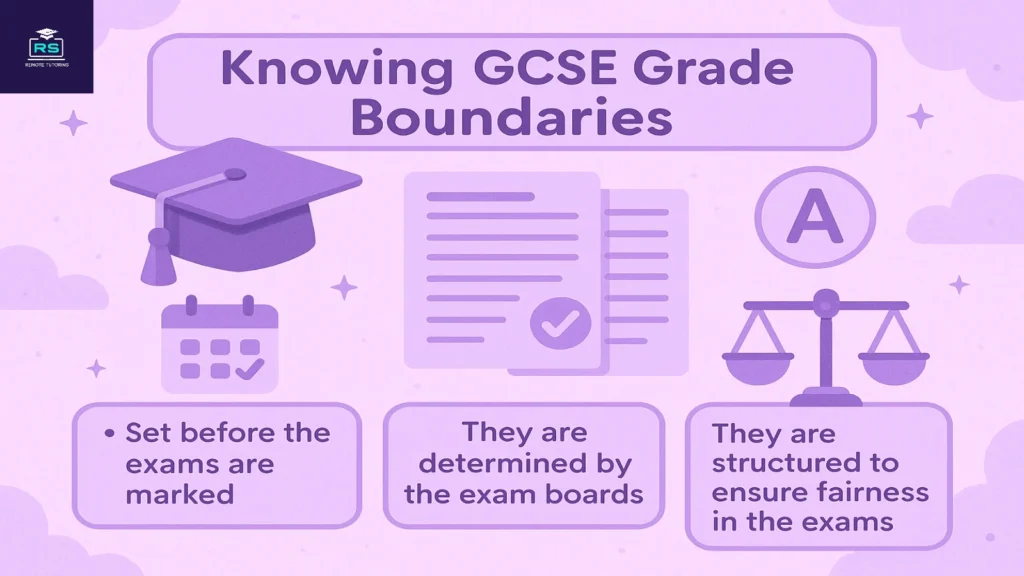
Understanding the setback of the GCSE grade boundaries is of utmost importance. GCSE grade boundaries are the required marks that are needed to pass the exam in the specific subject and exam. These are the
- Set before the exams are marked
- They are determined by the exam boards
- They are structured to ensure fairness in the exams
From the above-mentioned points, it is evident that GCSE exam date and boundaries evolve every year, even if the syllabus of the subject remains unchanged.
Why GCSE Grade Boundaries Change Every Year
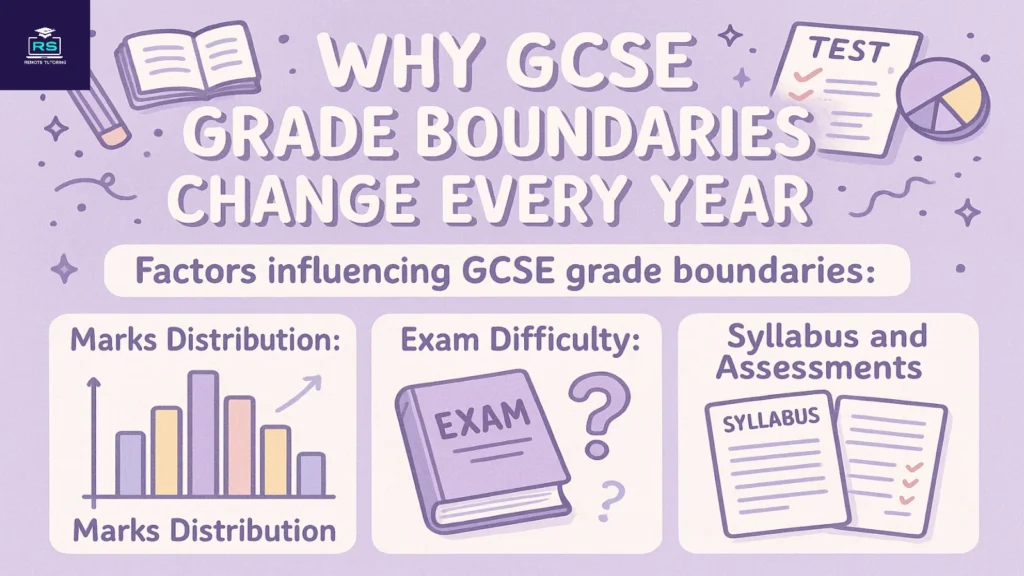
Grade boundaries are not stagnant; they change every year because exams vary in difficulty. Exam boards adjust boundaries to ensure consistency in national performance standards.
Factors Influencing GCSE grade boundaries
Key factors influencing GCSE grade boundaries are
Marks Distribution:
Marks’ distribution is of utmost importance. How students perform across the country helps determine whether grades cut off should remain or undergo changes.
Exam Difficulty:
If the exam is difficult to tackle and the difficulty level is high, GCSE exam boundaries should be lowered. If the exam is much easier than expected, boundaries may be increased.
Syllabus and Assessments changes
The GCSE examination landscape is evolving rapidly. The changes in syllabus and formatting assessments can also affect the marking strategies.
GCSE exam Boundaries: Expectations in 2026
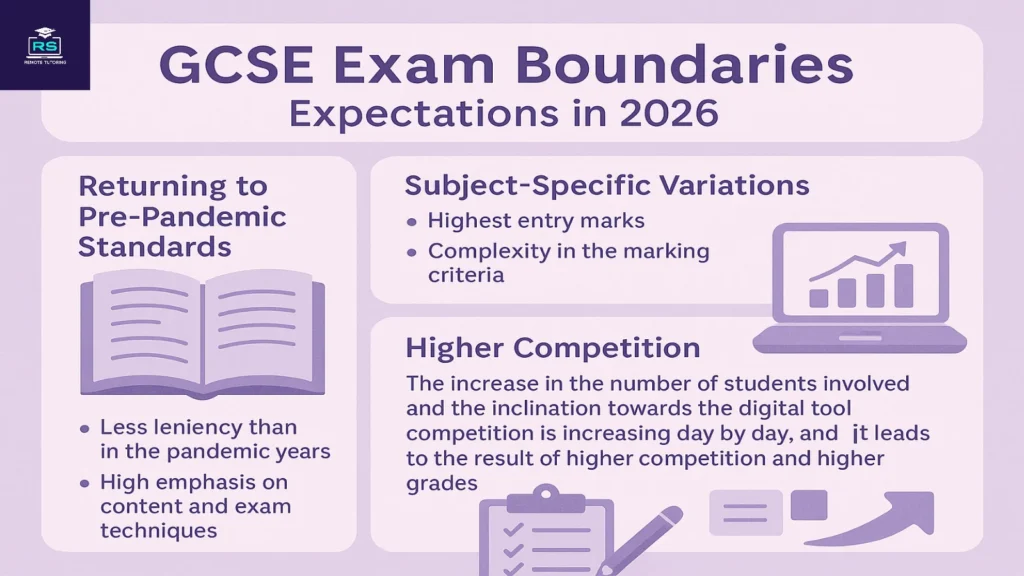
While exact GCSE boundaries grade boundaries for 2026 will be exactly after exams are marked, current trends and suggestions reveal the following predictions:
Returning to Pre-Pandemic standards:
Most of the exam boards have opted for he transition strategy and are now working heavily on the grading systems that were used previously before the pandemic. This shaft ssuggeststhat:
- Less leniency than in the pandemic years
- High emphasis on content and exam techniques
Subject-specific variations:
Every subject is heavily different, a nd the marking criteria depend on the subject specification. GCSE Subjects such as Maths, Science and English show the most noticeable changes and fluctuations because of
- Highest entry marks
- Complexity in the marking criteria
Higher Competition:
The increase in the number of students involved and the inclination towards the digital tool competition is increasing day by day, and it leads to the result of higher competition and higher grades.
How GCSE grade boundaries reflect the Final Grades
The final examination grade depends on
- The mark the student scored
- The grade boundary set for the paper
- The combined assignment, which includes coursework such as practical, speaking tests
This can be reflected because, for example;
- 70 marks might be set for Grade 7 in one year
- The same 70 marks can be set for Grade 6 or Grade 8 for another year.
Therefore, it is important to note that just focusing on the target grade is not just important; it is significantly important to understand the GCSE grade boundaries as well.
How Students can Revise Smartly for GCSE exam with grading boundaries in Mind:
The most important thing to note is that GCSE grade boundaries are evolving every year. It is very important to note that revising everything strategically is a significantly smarter way to achieve the grade of your choice.
Aiming Above the Minimum:
Students should always focus on aiming high. The wise step is to always target marks above 10- 15% of last year’s boundaries. To stay safe from fluctuations.
Focusing on Marking Criteria
Understanding how examiners award marks and check papers significantly boosts the exam scores. Many students fail and achieve low grades not because of low content or knowledge, but due to:
- Incomplete explanations
- Missing command words
- Not understanding the Question clearly
Focusing on High-Yielding Topics:
Not every topic requires your energy, and not every topic is equal. Prioritise high-yield topics, focus on key areas.
- The topics which are already tested
- Topics which include structured, clear and wise explanations
- Key areas, which include method marks
The fine approach helps students to stay resilient and consistent even if grade boundaries reflect slight changes.
How Parents can Support their Child Strategically and Effectively:
After learning professional support, parents’ support is much needed during GCSE preparation. The preparation phase is one of high anxiety and restlessness. When it comes to GCSE grade boundaries, parents also feel overwhelmed and anxious when GCSE grade boundaries are blamed.
Strategic helppack includes:
- Encouraging learners’ consistent effort rather than focusing on perfection
- Thoroughly understanding the fact that grade boundaries affect the national performance, not the personal failure
- Supporting time management strategies and examination techniques
When parents understand how GCSE grade boundaries work, it is much easier and feasible for students to tackle the task.
Common Myths About GCSE boundaries
The following myths are tremendously revolving around GCSE exam boundaries.
Myth: If the exam is hard, everyone gets a higher grade
The hard grade may reflect lower performance, but the grade still depends on relative performance.
Myth: Teachers are well aware of boundaries
This myth is most common that teachers are well aware of grade boundaries in advance, but it is not true. The truth i,s no one is aware of boundaries until the day arrives.
Myth: Boundaries only matter for totop-achievingtudents students
But the fact is that boundaries affect each type of student, whether the high-achieving one or the average student.
FAQS
What are GCSE grade boundaries?
GCSE grade boundaries are the minimum marks needed to achieve each grade in a subject for a specific exam year.
Do all exam boards use the same grade boundaries?
No. Each exam board sets its own GCSE grade boundaries based on exam difficulty and student performance.
How should students prepare despite uncertain grade boundaries?
By aiming above past boundaries, mastering exam technique, and focusing on consistent performance across all papers.
Conclusion
GCSE grade boundaries reflect the grades, but play a significant role in determining the result, nd the boundaries are something which students cannot control. But the things which can be controlled are the preparation strategies and confidence.
If learners are preparing for GCSE in 2026, they must align with these steps.
- Strong fundamentals outperform prediction.
- Exam technique matters as much as knowledge.
- Aiming higher than the boundary provides security
When approached correctly, GCSE grade boundaries become a guide to performance, not a source of fear. Focus on what you can influence and let your preparation speak louder than the cut-offs.

Raja specializes in Physics and Maths, with over 5 years of experience. He offers KS2, KS3, and GCSE Science and Maths lessons. He graduated from one of the top universities in the UK.