
GCSE exams in 2026 run across May and June, with the first paper scheduled for 4 May 2026 and the final paper on 26 June 2026. Results will be released on 20 August 2026. The move towards digital exams means that many assessments will still look familiar but will be taken on a screen, with features such as bookmarking questions, entering special characters via a toolbar and no internet access. To succeed, students need a structured online revision plan, access to high‑quality digital resources, regular practice with past papers and emerging digital formats, and a focus on wellbeing. This guide walks you through everything you need to know to prepare for GCSE 2026 exams online.
Jump to Section
Why prepare for GCSE 2026 exams online?
The 2026 cohort sits their exams during a period of rapid change. The introduction of digital assessments means that some subjects may be tested on a computer. At the same time, students will sit the conventional written papers across a tight six‑week window. Preparing online helps learners adapt to both formats. It enables them to access interactive resources, practice typing responses, take mock exams under realistic conditions, and receive targeted feedback from remote tutors.
In this guide we explore the exam schedule, show you how to build a flexible online revision timetable, recommend subject specific digital resources, explain how to practise with past papers and on‑screen assessments, and provide wellbeing strategies. Whether you’re a student or a parent supporting a learner, this article will help you prepare for GCSE 2026 exams with confidence.
Understand the GCSE 2026 exam landscape

Before you dive into revision, it’s important to know what you’re working towards.
Key dates for GCSE 2026 exams in England
- Exam period: The GCSE timetable spans May and June 2026. Exams for all exam boards like AQA, Edexcel, OCR, WJEC and CCEA occur during this window.
- First exam: Monday 4 May 2026. Historically this is English or science.
- Last exam: Friday 26 June 2026. Late June often hosts language and vocational papers.
- Results day: Thursday 20 August 2026. Students receive GCSE results and progression decisions are made.
Staying on top of provisional timetables is vital. Exam boards release draft schedules months in advance, allowing you to plan revision around exact paper dates, entry deadlines and internal assessment due dates. Always confirm final dates with your school in case of changes.
Digital exams – what is changing?
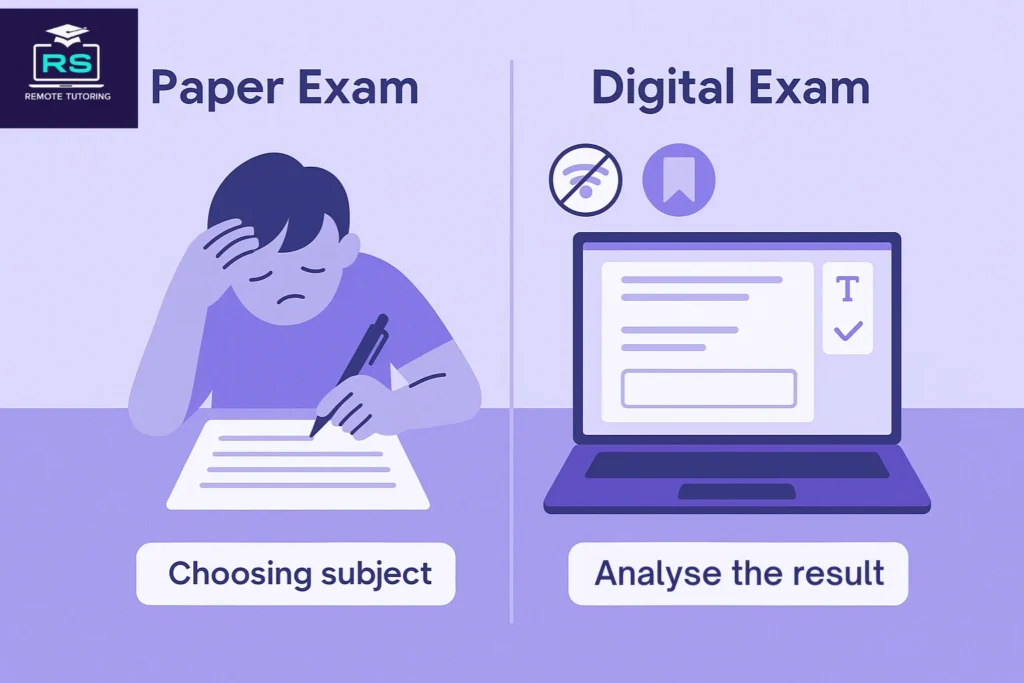
AQA, Pearson and other boards are piloting digital exams in selected subjects from 2026. According to AQA, digital exams will largely replicate traditional papers, students will see the same questions, but presented on a screen. They can bookmark pages, return to questions, and use toolbars for special characters. Internet access, spell check and auto‑correct are disabled. The marking process and roles of examiners and invigilators remain unchanged.
Digital exams offer several benefits:
- Inclusivity and accessibility: On‑screen exams can be adapted for students with additional needs and may reduce handwriting fatigue.
- Development of digital skills: Preparing for and sitting digital exams builds competence with typing, navigation and onscreen problem‑solving.
- Environmental impact: Less paper usage contributes to sustainability and allows instant access to results.
If your subject will be sat on screen, practise using the exam boards’ digital demos. They mimic question navigation, input fields and timer functionality and help you become comfortable before the big day.
Exam boards and tiers
Most GCSE subjects are offered by multiple exam boards. For 2026 the main boards in England are AQA, Edexcel (Pearson) and OCR. Each board covers the same subject content but uses different question styles and mark schemes, so it’s important to know which board you will sit. Many subjects also have two tiers:
- Foundation tier (grades 1–5): emphasises core topics and is suitable for students aiming for passes up to grade 5.
- Higher tier (grades 4–9): includes more challenging content and allows access to grades 4–9.
Ask your teacher or tutor which tier you will take. Choosing the right tier ensures your revision matches the level of difficulty you will encounter.
Build an effective online revision timetable
An organised study plan is the cornerstone of effective exam preparation. Digital tools make it easier than ever to map out your time and track progress.
Start early and set realistic goals
Begin revising at least three to six months before your exams. For the 2026 series this means starting no later than late 2025 or January 2026. Early revision prevents last‑minute cramming and provides ample time to identify gaps.
Break your goals down into weekly and daily targets. For example:
- By the end of February: complete first round of notes and summaries for core subjects.
- By the end of March: finish all topic‑based revision and start timed exam practice.
- By the end of April: complete two full sets of past papers for each subject.
- May to June: focus on exam technique, mixed‑topic practice and wellness.
Use digital planning tools
Try these online tools to organise your revision:
- Calendar apps: Google Calendar, Outlook or mobile calendars allow colour‑coded blocks for each subject. Set reminders for daily study sessions and exam dates. Many synchronise across devices.
- Task management apps: Tools like Trello, Notion or Todoist break study goals into manageable tasks. Create boards for each subject, with lists for notes, past papers and exam practice.
- Revision timetable generators: Several websites generate printable revision timetables based on your subjects and exam dates. These can be imported into your calendar.
Pro tip: Don’t overschedule. Aim for 45‑minute study sessions with 10‑minute breaks. Incorporate days off and leisure time to avoid burnout. Revision quality is more important than quantity.
Balance subjects and priorities
Spend more time on challenging subjects or those with higher grade weightings. Identify topics you struggle with and allocate extra sessions. Equally, maintain regular review of subjects you find easier to keep knowledge fresh. A balanced timetable reduces anxiety and ensures no subject is neglected.
Effective online revision techniques for GCSE 2026
Not all study methods are equal. The following techniques are proven to boost retention and exam performance when preparing for GCSE 2026 exams online.
Active recall and spaced repetition
Passive reading or watching videos has limited impact. Active recall involves retrieving information from memory. Use flashcards, self‑quizzing apps, or write down everything you know about a topic without looking at notes. Combine this with spaced repetition, reviewing information at increasing intervals to strengthen long‑term memory.
Interleaving and mixed‑topic practice
Rather than revising one topic at a time, interleave different topics within a study session. For example, spend 20 minutes on algebra, then 20 minutes on geometry and 20 minutes on probability. Mixing topics improves your ability to switch thinking quickly, which mirrors exam conditions where questions move across themes.
Practice under timed conditions
Simulating exam conditions builds familiarity with the pressure of limited time. Set a timer for the same length as the real exam paper. Sit in a quiet room, remove distractions and complete the paper without pausing. Afterward, mark your answers and review errors.
Use mark schemes and examiner reports
Exam boards publish mark schemes and examiner reports after each exam series. Mark schemes show how points are allocated and highlight keywords or phrases that earn marks. Examiner reports explain common mistakes and how top answers look. Reading these after marking your practice papers helps you refine technique.
Make the most of digital resources
The internet offers a vast range of interactive tools for GCSE revision:
- Video tutorials: Platforms like YouTube and specialist sites offer concise explanations, worked examples and animations. Use them to clarify difficult concepts.
- Interactive quizzes and games: Apps such as Quizlet, Kahoot and Seneca Learning turn revision into engaging quizzes with instant feedback.
- Revision podcasts: Listening to subject‑specific podcasts while commuting or exercising reinforces content.
- Virtual whiteboards: Tools such as Bitpaper allow you to write maths and science problems online and collaborate with peers or tutors.
Pro tip: Avoid multitasking during digital study. Close unnecessary tabs, silence notifications and use full‑screen mode to maintain focus.
Subject‑specific preparation online strategies
Each GCSE subject requires a tailored approach. Here’s how to prepare effectively for the major subjects tested in 2026.
Mathematics
Mathematics is assessed in three papers: one non‑calculator and two calculator papers. For Edexcel, OCR and AQA, the first paper is on 14 May 2026, the second on 3 June and the third on 10 June. To prepare online:
- Interactive practice questions: Use online banks of GCSE questions filtered by topic and difficulty. Many sites provide step‑by‑step solutions to help you learn methods.
- Graphing and algebra tools: Software like Desmos and GeoGebra lets you visualise functions, plot graphs and test algebraic transformations.
- Adaptive practice: Some platforms adapt to your performance, increasing difficulty as you improve. They identify weak areas and provide extra practice.
- Digital calculator practice: Familiarise yourself with the scientific calculator permitted in exams. Practise entering expressions and using functions (e.g., trigonometric, statistical) quickly.
Science (Biology, Chemistry and Physics)
Science exams include multiple papers across May and June. For example, Biology Paper 1 is on 12 May 2026. Online strategies include:
- Simulations and animations: Websites such as PhET Interactive Simulations model scientific phenomena (e.g., forces, circuits, atomic structures) and help visualise concepts.
- Digital flashcards: Create flashcards for key terms, formulas and processes. Use spaced‑repetition apps to schedule review sessions.
- Virtual labs: Some platforms offer virtual experiments, allowing you to practise procedure and analysis when physical labs are unavailable.
- Past paper question banks: Practise past exam questions by topic and compare your answers to mark schemes. Pay attention to command words like “describe”, “explain” and “evaluate”.
English Literature and Language
English exams test reading, writing, analysis and creative skills. Papers will run in May and June (e.g., English literature paper 1 on 11 May 2026). Preparation tips:
- Read widely: Beyond set texts, read a variety of literature, journalism and poetry to enhance vocabulary and analytical skills.
- Online annotation tools: Use PDF annotators or note‑taking apps to highlight themes, motifs and language techniques in set texts. Write brief analyses in the margins.
- Essay planning and writing practice: Use word processors for practice essays and timed responses. Focus on structure: introduction, development of ideas and conclusion. Use online grammar and style checkers for feedback.
- Speak and listen: Record yourself reading and analysing passages; play back to identify improvements. For spoken assessments, practise with peers or tutors via video call.
Humanities and Languages
For subjects like history, geography and modern languages:
- Timeline and map tools: Digital timelines and interactive maps help visualise historical events or geographical features. Create your own using presentation software.
- Language learning apps: For French, Spanish or German, use Duolingo, Memrise or similar apps for daily vocabulary practice. Listen to native speakers via podcasts and films.
- Essay planning frameworks: Humanities essays benefit from clear structure. Use mind‑mapping tools to organise points and evidence before writing.
- Practice listening and speaking: For languages, practise listening to audio clips and record your responses. Some exam boards now test listening online; practise with your own headset and microphone.
Vocational and creative subjects
Courses like art, design technology, computer science and music involve coursework or controlled assessments. Online preparation includes:
- Portfolio development: Use digital portfolios (e.g., Google Sites, WordPress or specialised art platforms) to document and reflect on your projects.
- Coding practice: For computer science, practise programming tasks on platforms like Repl.it or Codewars. Familiarise yourself with pseudocode and flowcharts.
- Music composition software: Use digital audio workstations (DAWs) to practise composition and listening skills.
Practise with past papers and digital exams
Practising past papers is one of the most effective revision strategies. It helps you familiarise yourself with exam structure, question wording and timing. For GCSE 2026, incorporate both traditional past papers and digital practice.
Where to find past papers
Exam boards publish past papers and mark schemes on their websites. Your school or tutor can also provide them. Aim to work through at least two complete sets for each subject, ideally more.
How to use past papers effectively
-
Simulate exam conditions
Find a quiet space, set the correct time limit, and sit the paper without notes.
-
Mark accurately
Use official mark schemes to score your answers. Identify where you lost marks and why. Pay attention to how many marks each question is worth. Often there are clues about the number of points you need to make.
-
Review and relearn
Look up topics where you lost marks. Create mini‑notes or flashcards to address those gaps. Schedule a second attempt at similar questions to ensure you’ve improved.
-
Track progress
Keep a log of scores and topics. This helps you spot trends and adjust your revision plan.
Preparing for on‑screen assessments
As AQA notes, digital exams will look like familiar papers but on a screen. Take advantage of online demo exams to practise navigation, bookmarking and typing. Key tips include:
- Get used to reading long texts on screen: Eye strain can be an issue. Increase screen brightness and take regular breaks.
- Practise typing responses: Use a standard keyboard (not your phone) and practise typing essays and short answers quickly. Learn keyboard shortcuts (e.g., Ctrl+C to copy, Ctrl+V to paste) to save time.
- Learn navigation tools: Digital exams allow bookmarking pages and returning to questions. Practise using these features to flag difficult questions to revisit later.
- Disable autocorrect and internet access: Digital exams block external resources, so practise without them to replicate conditions.
- Prepare for special characters: For languages, use the on‑screen character toolbar to insert accents or symbols quickly.
Manage stress and maintain wellbeing
Revision can be intense. High levels of exam stress were reported in previous cohorts, with more than half of students finding exams difficult to cope with. Use these strategies to maintain balance while preparing for GCSE 2026 exams:
Build healthy habits
- Sleep: Aim for 8–10 hours of sleep each night. Consistent sleep patterns improve memory and concentration.
- Nutrition: Fuel your brain with nutritious foods: whole grains, fruit, vegetables, lean proteins and omega‑3 fats. Stay hydrated by drinking water throughout the day.
- Exercise: Physical activity reduces stress and boosts mood. Take a 30‑minute walk, run, cycle or do a home workout daily.
- Mindfulness and relaxation: Practise mindfulness, breathing exercises or gentle yoga to calm nerves. Apps like Headspace or Calm provide guided sessions.
Maintain a positive mindset
- Set achievable goals: Break your revision into small milestones and reward yourself when you achieve them.
- Focus on effort not perfection: Acknowledge mistakes as learning opportunities rather than failures.
- Stay connected: Talk to friends and family about your progress and feelings. Sharing anxieties reduces pressure.
Ask for help early
If you’re struggling academically or emotionally, reach out to teachers, counselors or tutors. They can offer guidance, resources and reassurance. Early intervention prevents issues from escalating.
Common mistakes to avoid
- Cramming at the last minute: Relying on intensive revision in the final weeks leads to stress and poor retention. Start early and use spaced repetition.
- Passive revision: Simply reading notes or watching videos is ineffective. Engage actively through quizzes, practice questions and teaching others.
- Ignoring exam board differences: Each board uses different question phrasing. Practise with materials specific to your board.
- Neglecting digital exam practice: If your subject is going digital, failing to practise on‑screen can cause panic on the day. Use demo exams to familiarise yourself with the format.
- Overworking without breaks: Marathon study sessions are counter‑productive. Schedule regular breaks and take care of your wellbeing.
FAQs: Preparing for GCSE 2026 exams online
When should I start revising for GCSE 2026?
Begin revising at least three to six months before your exams. Starting early gives you time to cover all content, practise exam techniques and adjust your plan as needed. For the 2026 series, aim to start serious revision by January 2026.
Do I need to practise digital exams if my subject isn’t going on screen?
It’s still worth trying a digital demo. On‑screen exams may expand in the future, and digital practice improves typing skills and familiarity with navigation tools. However, prioritise past papers in the format you will sit.
How many past papers should I complete?
Aim for at least two complete sets of past papers per subject. If time allows, complete more. Focus on papers from the past three years to ensure they reflect current specifications.
Can I revise entirely online?
Yes, but incorporate varied formats. Use digital flashcards, quizzes, videos and forums for active learning, but also handwrite notes and practise extended answers to replicate exam conditions. Blending online and offline methods creates robust understanding.
Is online tutoring worth it?
Online tutoring offers personalised support, flexibility and access to specialist teachers without geographical constraints. Tutors can help you plan your revision, explain complex topics and provide feedback on practice papers. Many students find that online tutoring increases confidence and improves grades.
How do I cope with exam nerves?
Plan well in advance, practise under timed conditions and maintain healthy habits. Talk to someone about your worries and use relaxation techniques. Remember that some anxiety is normal and can even enhance performance.
Final thoughts
Preparing for GCSE 2026 exams online is a journey that requires planning, discipline and resilience. By understanding the exam calendar, embracing digital exam formats, creating a structured timetable and using interactive resources, you will build the knowledge and skills you need to succeed. Don’t neglect your mental health; balance your study with sleep, exercise and downtime.
Ready to take the next step?
At RS Remote Tutoring we specialise in online GCSE preparation. Our tutors tailor lessons to your exam board, support you through digital and paper‑based assessments and help you build confidence. Whether you need help with maths, science, English or other subjects, we’re here to guide you every step of the way.
Book a free consultation today and discover how our expert tutors can help you excel in your GCSE 2026 exams. Your success starts now.
Raja specializes in Physics and Maths, with over 5 years of experience. He offers KS2, KS3, and GCSE Science and Maths lessons. He graduated from one of the top universities in the UK.