Every student has felt that stomach‑fluttering mix of nerves and anticipation as exam season approaches. Parents, too, know the strain of watching their child wrestle with revision timetables, practice papers and the ever‑present pressure of GCSEs. The stakes feel high because these qualifications open doors to A‑levels, apprenticeships and future careers. When mistakes happen. whether through a misplaced decimal point or a blank essay page, it can feel like all that hard work has been wasted. This guide walks you through the most common missteps students make before, during and after their GCSE exams and shows how online tutoring for GCSE can help learners avoid them.
Jump to Section
Understanding the Structure of GCSE Exams
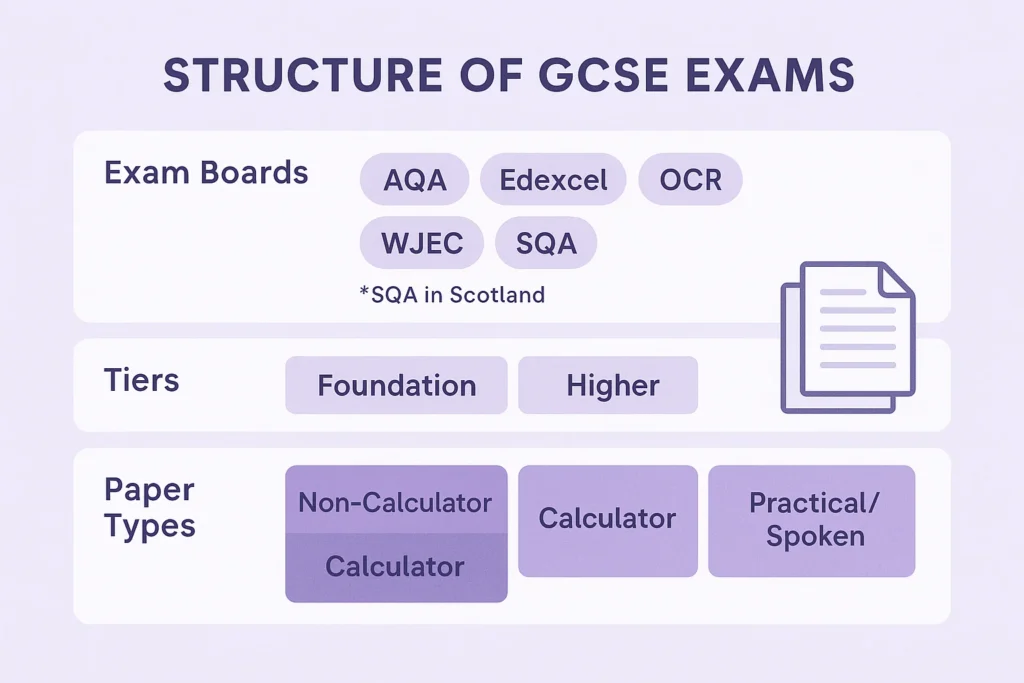
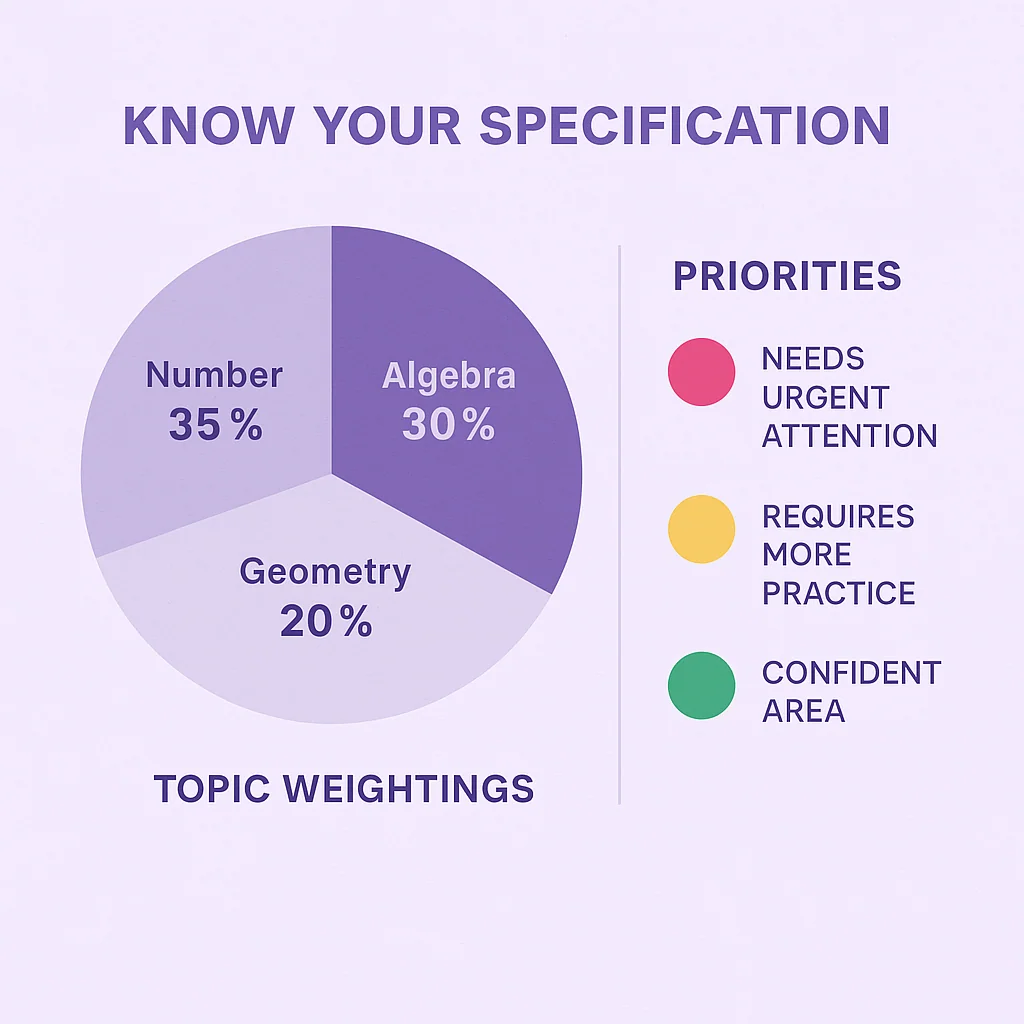
Before diving into common pitfalls, it helps to understand how GCSE exams are structured. The UK uses several exam boards, AQA, Edexcel/Pearson, OCR, WJEC/CBAC and SQA (in Scotland for National 5 and Higher Maths). Each has a slightly different specification, but all are designed to assess the same broad curriculum. Students usually sit three papers: a non‑calculator paper and two calculator papers in maths, while subjects like English and sciences are assessed through a mix of reading/writing papers and practical or spoken components. There are two tiers, Foundation (grades 1–5) and Higher (grades 4–9). Your teacher will advise which tier is appropriate based on predicted grades and confidence. It’s crucial to read the specification and understand how much of each topic will appear on the exam, for example, number and algebra carry more weight than geometry and statistics in many maths papers.
Exam Board Differences and Tier Choice
While the content overlap is large, exam boards arrange topics differently. For example, Edexcel uses a 240‑mark system for maths, whereas AQA’s papers are marked out of 80 each. Some boards include more context‑based questions (WJEC), while others emphasise multiple‑choice questions. Knowing your board helps you practise with the right past papers and mark schemes and prevents the mistake of revising the wrong style of questions. Choosing the correct tier also matters; students aiming for grades 7–9 sit the Higher tier, where the questions can be more challenging but allow higher grades. Those on the Foundation tier should remember that they cannot score above grade 5 but will not face the trickiest algebra or trigonometry.
Why Deadlines Matter
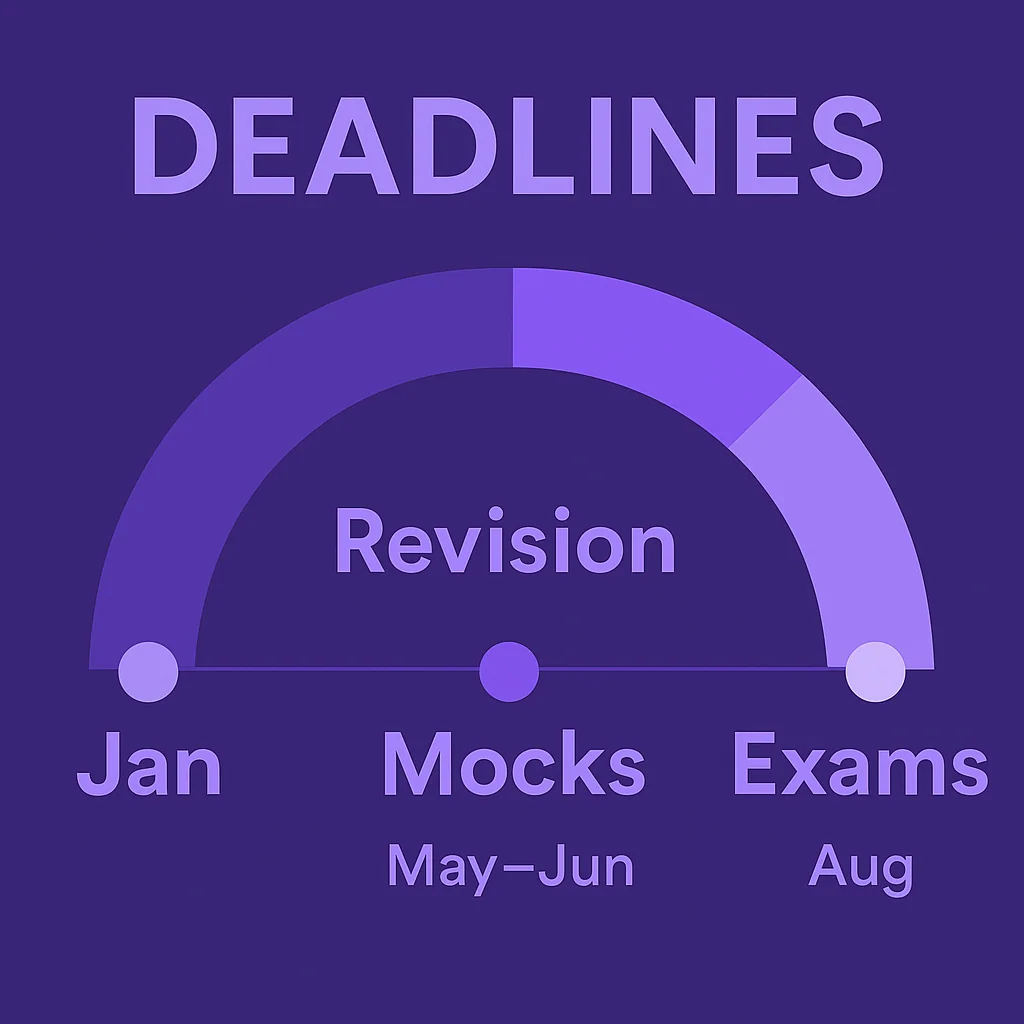
GCSE exams take place in May and June each year, with results published mid‑August. Revision should begin months before this – leaving it too late encourages cramming and increases stress, a mistake many teachers and tutors see every year. Starting early allows time for consolidation, spaced repetition and self‑testing, which are proven to improve memory and understanding. It also leaves room for unexpected setbacks – illness, family commitments or simply topics that take longer to master.
Common Mistakes During Revision
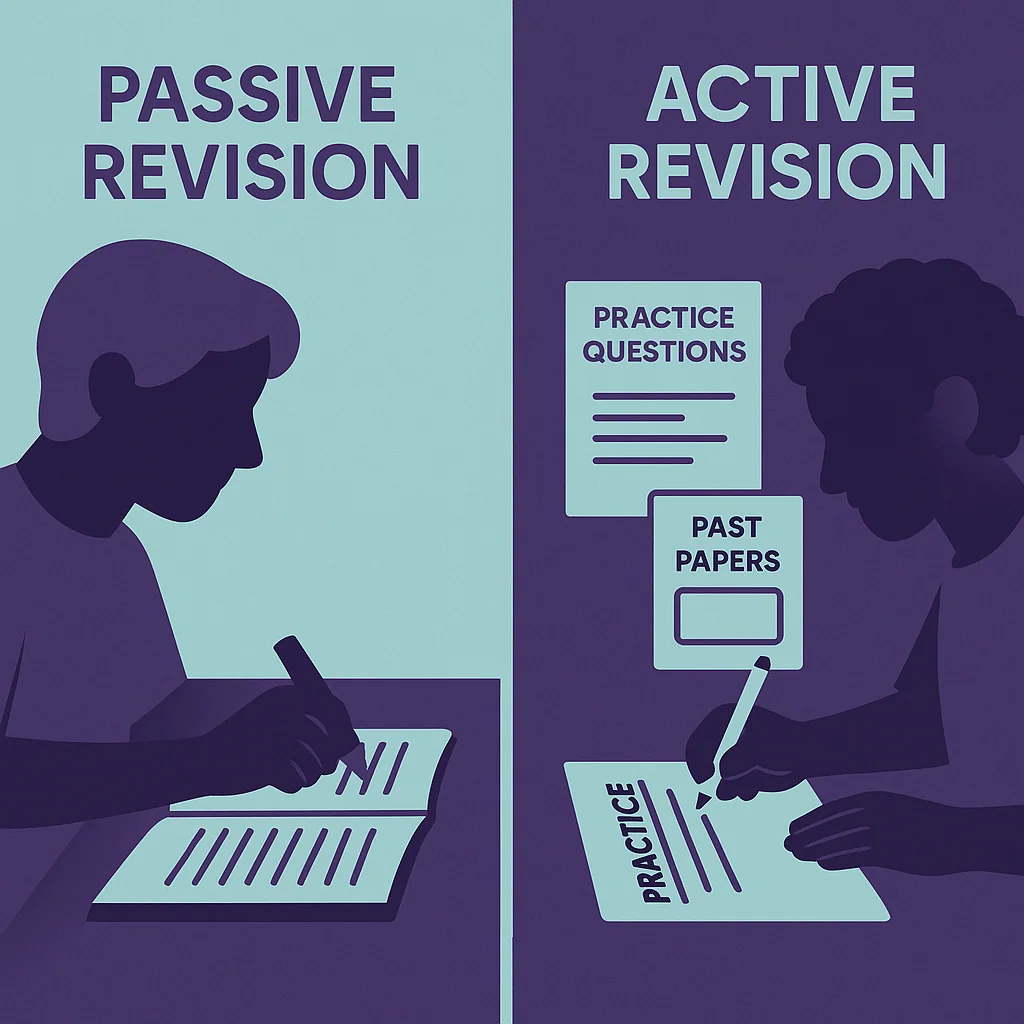
Revision is where many students stumble, not because they lack ability but because they choose ineffective methods. Here are the main pitfalls tutors see, along with strategies to avoid them.
1. Passive Revision
Simply reading notes or highlighting textbooks feels productive, but it rarely leads to deep learning. Research and tutor experience suggest that active practice – answering questions, teaching concepts to someone else, or writing from memory – works far better. One educational coach notes that many students think revision is passive and boring, expecting information to “magically transfer into their brains.” Instead, learners should engage as active participants, testing themselves and reflecting on feedback.
How to avoid it: Turn your notes into flashcards or questions, then cover the answers and test yourself. Use practice questions after each revision session to check understanding. Mind maps and diagrams are excellent for visualising how topics connect. Try explaining a concept aloud, if you can teach it clearly, you’ve learned it.
2. Making Unrealistic Plans
Some students create meticulous revision timetables with every minute scheduled. When one topic overruns, the whole plan collapses, leaving them feeling like failures. Others leave all their revision to the last week and then cram, which research shows leads to poor recall and higher stress.
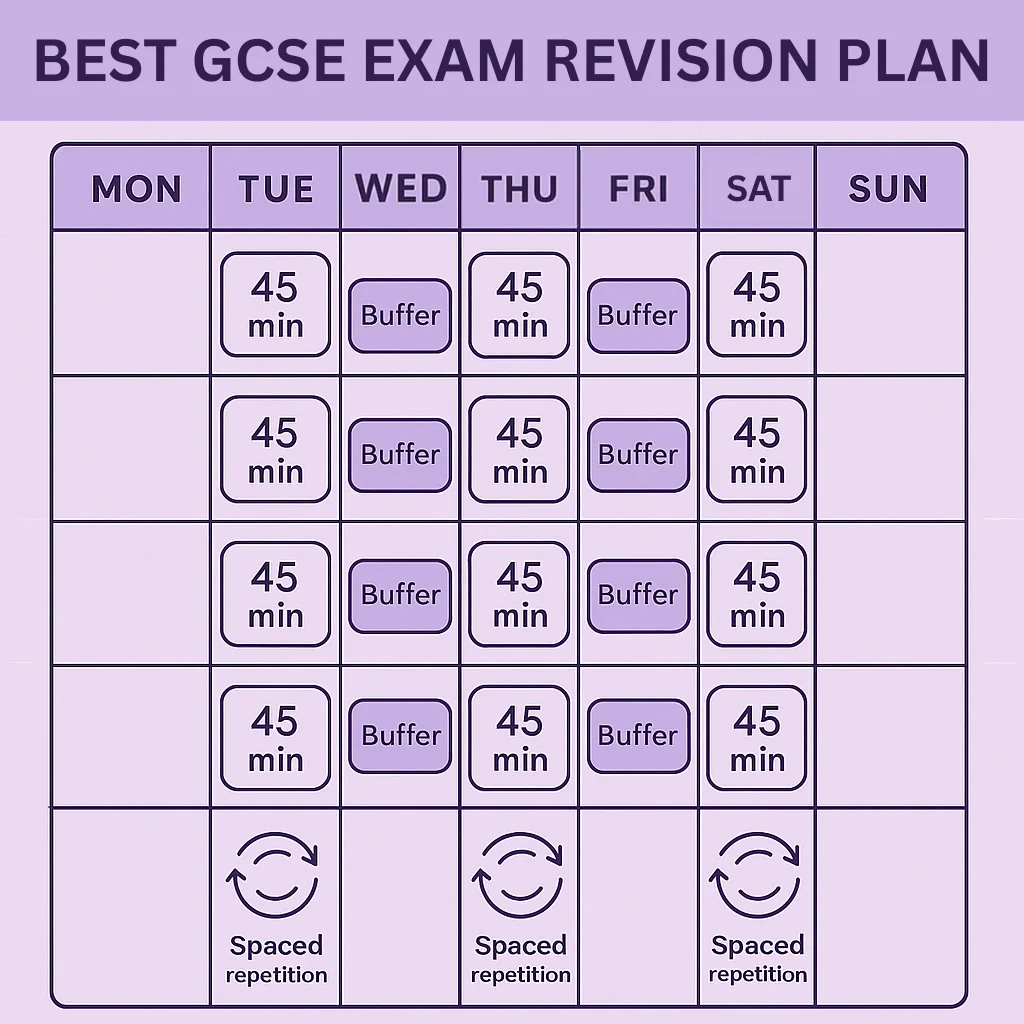
How to avoid it: Build flexibility into your schedule. Break tasks into 45‑minute blocks with 10‑ to 15‑minute breaks. Aim for regular, consistent practice rather than marathon sessions. Identify topics by difficulty and weight in the specification, then allocate more time to those that need improvement. Plan buffers so a missed session doesn’t derail the week.
3. Revising Without Knowing the Specification
Many pupils revise every topic equally without understanding which ones carry the most marks. An experienced tutor from Open Study College pointed out that students often miss the connection between what the exam is actually testing and the learning objectives. Not understanding exam requirements means you could spend hours on low‑mark content while neglecting high‑value topics.
How to avoid it: Download your exam board’s specification and mark schemes. For each topic, note the percentage of marks it receives. Create a “traffic‑light” list – topics in red need urgent attention, amber require more practice and green are confident areas. Revisit this list every couple of weeks to see how your weaknesses shift.
4. Reading Notes Without Testing Yourself
Continuously re‑reading notes may feel comfortable but seldom reveals whether you truly understand the material. Without testing yourself, you don’t know how quickly you can recall facts or apply formulas under pressure.
How to avoid it: After reviewing a topic, write down three or four questions relating to it, take a break and then answer them from memory. Use online quizzes or create your own flashcards to encourage active recall. Follow up by checking your answers against the mark scheme.
5. Looking for Shortcuts
Powerful AI tools can summarise notes or generate answers, but relying on them too much undermines your subject knowledge. One tutor warns that using AI to summarise notes could miss important points or misinterpret a crucial concept needed for the exam.
How to avoid it: Use AI and online resources as supplementary tools. For example, to clarify explanations or generate extra practice questions but always verify information against your textbook and the specification. Real learning comes from processing information yourself and practising retrieval.
6. Cramming
Trying to fit all revision into a few nights before the exam may seem efficient, but it usually leads to fatigue and poor retention. Teodora Ciobanu, an online tutor, notes that trying to “cram it all” is detrimental; it raises stress levels and can even make you forget information faster.
How to avoid it: Use spaced practice: revise a topic, revisit it a week later, then a month later. Spread your practice over weeks or months instead of squeezing it into days. The brain needs time to consolidate information during sleep, so give yourself that opportunity by planning ahead.
7. Studying Alone Without Support
Revision doesn’t have to be a solitary struggle. Study groups help keep you accountable and give you the opportunity to teach concepts to peers, a proven way to deepen understanding. Working completely alone can also lead to procrastination or a false sense of progress.
How to avoid it: Join or form a study group. Schedule “study dates” with classmates to review topics, share questions and explain concepts. If you prefer individual help, consider online tuition, where a qualified tutor provides structured support. As one of our English tutors, Emily Johnson, observes, “When students work with a tutor, we can spot misunderstandings early and adjust the pace before small errors become bigger gaps.”
Common Mistakes During the Exam
Exam day brings its own set of challenges. Here are frequent pitfalls our tutors notice and practical strategies to prevent them.
1. Not Reading the Question Carefully
The most frequent exam mistake is misreading the question. Students often answer the question they wish had been asked rather than the one on the paper. For instance, in a maths paper, they might calculate area when the question asks for perimeter, or in English literature they write an essay that barely references the given extract.
How to avoid it: When you first open the paper, underline key words such as “show,” “explain,” “compare” or specific numbers and units. Look at how many marks the question is worth, a one‑mark question needs only a short statement, not an essay. Our maths tutor, Mark Robinson, advises his students to read each question twice: once to grasp the problem and again after writing their answer to ensure they’ve addressed every part.
2. Answering the Wrong Question
Related to misreading is the mistake of answering a completely different question. This often happens in essay subjects when students prepare an essay on a favourite theme and try to shoehorn it into an unrelated prompt.
How to avoid it: Plan your essays. Spend a few minutes sketching a rough outline on the exam paper or a blank page. Check that each point answers the question. Our English tutor Emily Johnson recalls a student who lost marks because he memorised an essay on prejudice but wrote about it even though the question asked about fate. After practising short essay plans with her, his grades improved dramatically.
3. Running Out of Time
Many pupils start by tackling difficult questions or writing long answers to early questions and then run out of time for later ones. Marks pile up quickly on shorter questions, so leaving them until the end can cost dearly.
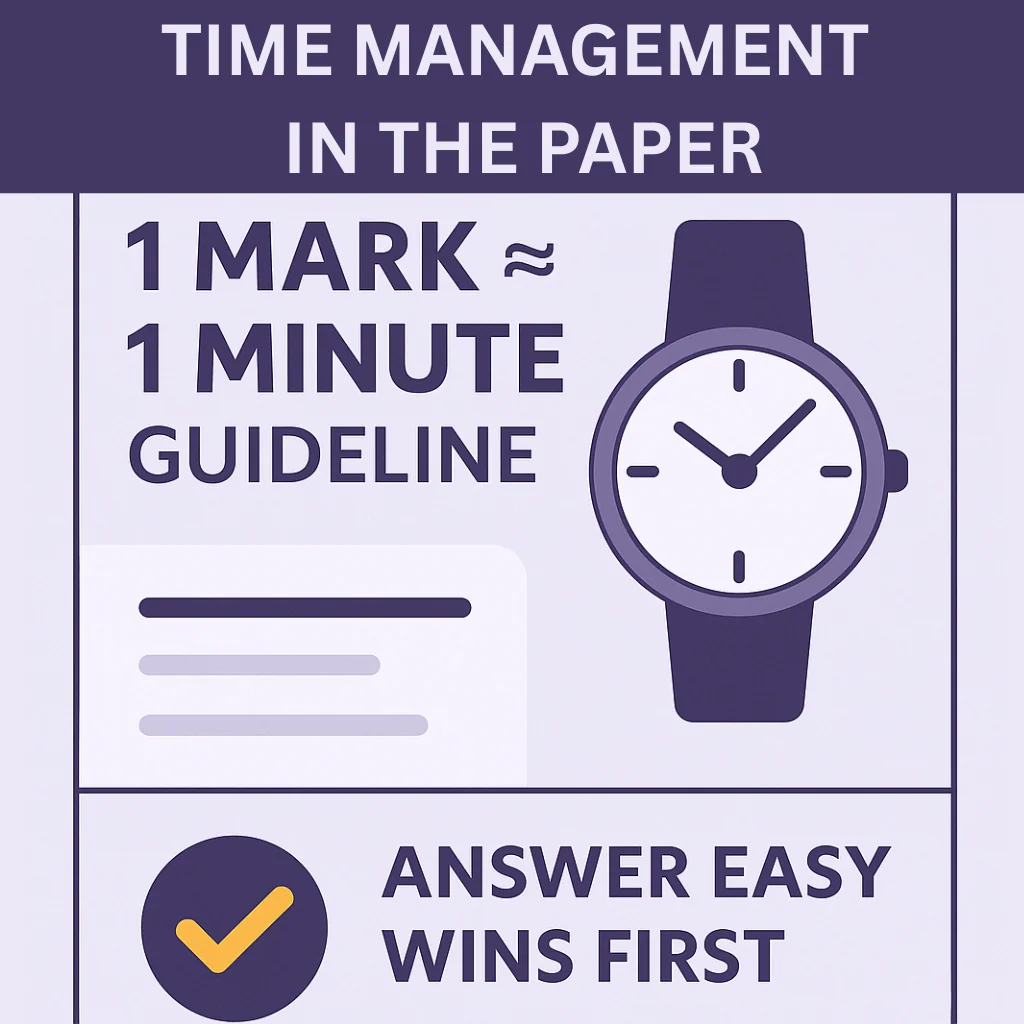
How to avoid it: Allocate time based on marks – if a paper has 80 marks and lasts 90 minutes, aim for roughly one mark per minute with a few minutes spare. Start with the questions you know well to build confidence and secure easy marks. Leave more challenging or multi‑step problems for later. Our science tutor Sarah Ahmed tells her students to wear a simple wristwatch and glance at it after each page to stay on pace.
4. Not Showing Your Working
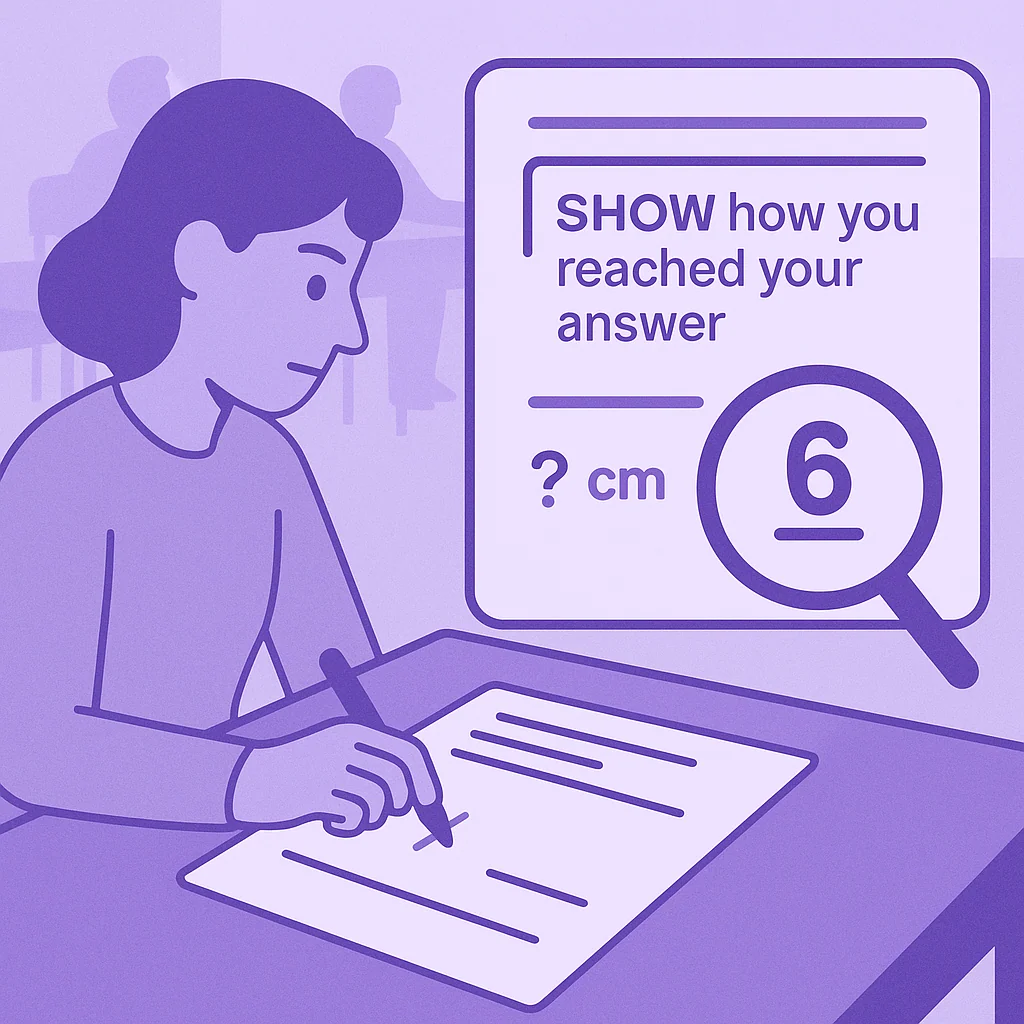
In maths and science, method marks are awarded even if the final answer is wrong. A common mistake is to perform calculations mentally or on a calculator and write only the final number. Examiners cannot award marks for unseen steps.
How to avoid it: Write each step of your working, including intermediate numbers and formulas. Even if your final answer is incorrect, you may still receive marks for correct methods. Using correct notation and units shows understanding and can rescue marks on trickier questions.
5. Leaving Questions Blank
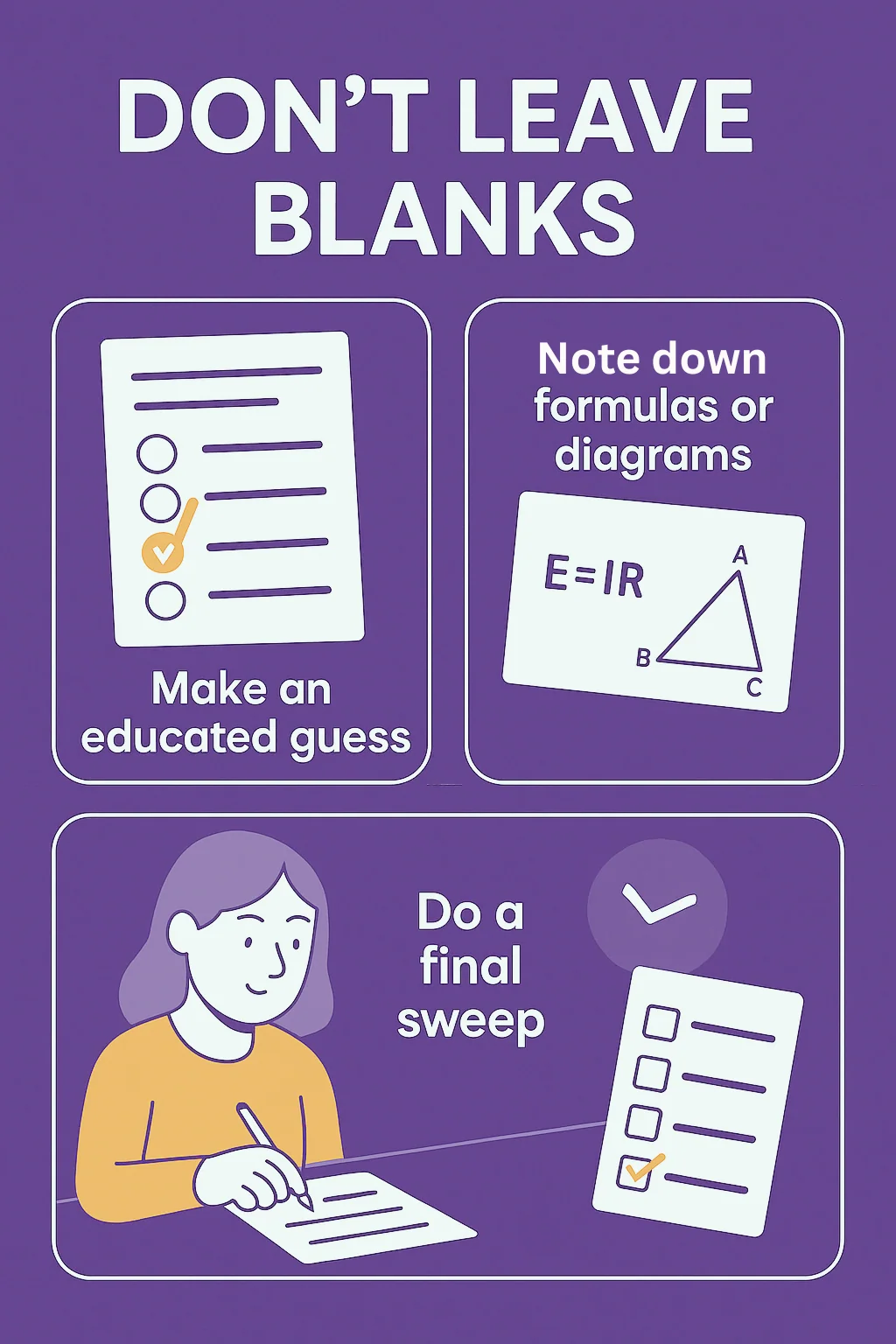
Blank answers guarantee zero marks, whereas even a guessed answer on a multiple‑choice question might score points. Some students think it is better not to write anything if unsure; others forget to answer all parts of a multi‑step question.
How to avoid it: Attempt every question. For multiple‑choice, eliminate options you know are wrong and make an educated guess. In written questions, jot down any relevant formulas, facts or diagrams – you may pick up method marks. At the end of the paper, flip through to ensure no pages have been skipped.
6. Poor Spelling, Grammar and Presentation
Messy handwriting, missing units or sloppy spelling can cost marks, especially in subjects like English language, history or science where clarity is important.
How to avoid it: Practise neat, legible handwriting during revision. Leave space between questions to allow for corrections. Always include units in science and maths answers and double‑check that decimal points are clear. In essays, use paragraphs, full stops and capital letters correctly.
7. Leaving the Exam Room Early
Sometimes students finish early and decide to leave the exam hall. They forfeit valuable time to check calculations, add examples or clarify explanations.
How to avoid it: Stay until the end. Use any extra time to re‑read questions, check your calculations and grammar, and ensure you’ve written something for every question. Our tutor Sarah Ahmed notes that even a single mark found during checking can shift a grade boundary.
Mistakes That Happen After GCSE Exam
What happens after the exam can be almost as important as what happens during revision and in the exam hall.
1. Not Reflecting on Performance
After mock exams or past papers, some students simply accept their grade and move on without analysing errors. They might repeat the same mistakes because they never discover why they lost marks.
How to avoid it: Go through your marked papers with a teacher, tutor or study buddy. Identify whether mistakes were conceptual misunderstandings, misreading of questions or calculation errors. Create an action plan to address each type of error. Reflection not only prevents repetition but also boosts confidence as you see your progress over time.
2. Ignoring Feedback
Teachers and tutors provide feedback for a reason. When students ignore comments on their work or fail to implement suggested improvements, they miss opportunities to grow.
How to avoid it: Keep a feedback log. For each piece of work, record the main strengths and areas to improve. Before starting a new assignment or paper, review relevant feedback so you can apply it. Online tutoring sessions are recorded on our platform, so students and parents can re‑watch explanations and ensure recommendations are followed.
Mistakes Parents Often Make
Parents play a significant role in supporting their children through exams. However, some well‑intentioned actions can hinder rather than help.
1. Overloading With Additional Work
Some parents purchase numerous workbooks or insist on extra practice every evening. Excessive workloads can lead to burnout and anxiety. As one tutor notes, revision should be balanced with relaxation to avoid stress.
Better approach: Encourage quality over quantity. Provide a quiet space, help your child create a sensible timetable and celebrate consistent effort. Check in regularly but avoid hovering over them.
2. Taking Over the Revision
When parents try to “teach” their child or correct all their work, they may create dependency. Students need to develop independence and problem‑solving skills.
Better approach: Ask your child to explain what they have learned; if they struggle, encourage them to seek help from a teacher or tutor. Praise their ability to articulate concepts rather than simply providing answers.
3. Underestimating Mental Health
Exam stress can trigger anxiety and impact sleep, appetite and mood. Some parents view these signs as laziness or lack of discipline rather than recognising them as stress responses.
Better approach: Check in on your child’s well‑being. Encourage breaks, exercise and social activities. If stress becomes overwhelming, seek support from school counsellors or healthcare professionals. Our tutors are trained to spot signs of burnout and recommend coping strategies.
Is Online Tutoring for GCSE Worth It?
One question we hear repeatedly is whether online tutoring for GCSE makes a difference. The short answer is yes, but only if the tutoring is high quality and personalised.
How Online Tutoring Helps Students Avoid Mistakes
- Personalised assessment and planning: Our tutors begin by identifying strengths and weaknesses, then tailor lessons to fill knowledge gaps and deepen understanding. Diagnostic exercises ensure time is focused where it’s needed most.
- Structured revision schedules: Tutors help students create realistic timetables with spaced repetition, ensuring that revision is consistent and manageable.
- Exam‑specific practice: Sessions include work on past papers, timed questions and mark scheme analysis. Tutors explain how to break down complex problems, interpret command words and manage time. This builds familiarity and reduces surprises on exam day.
- Homework and feedback: After each lesson, students receive targeted homework to consolidate learning and personalised feedback. Regular homework fosters accountability and continuous improvement.
- Recorded lessons and replay: Our interactive platform records every session, so students can revisit explanations whenever they need, and parents can see how progress is being made.
- Confidence and motivation: Tutors provide encouragement, celebrate small victories and teach stress‑management techniques. This boosts students’ belief in their abilities and reduces exam anxiety.
What Our Tutors Say
Mark Robinson (Maths Tutor): “One of the biggest mistakes I see is students rushing through the question paper and misreading the problem. I teach them to read the question twice and underline the key information. In a mock exam last year, my student Sophie misinterpreted a geometry question and used the wrong formula. Together, we practised drawing quick diagrams and identifying what was being asked. In her real exam, she remembered our drill, corrected her mistake and gained full marks.”
Emily Johnson (English Tutor): “Many students want to write everything they know about a text, whether or not it answers the question. When they plan their essays with a clear introduction, three key points and evidence from the text, their writing becomes sharper and more focused. One student told me he once wrote an entire essay on a theme that wasn’t even in the question. Since then, we’ve practised spending three minutes planning before writing. His essay marks have climbed steadily as a result.”
Sarah Ahmed (Science Tutor): “Running out of time is a common issue. I show my students how to allocate time per mark and to move on if a question is taking too long. In a recent paper, a student froze on a six‑mark question. We rehearsed moving past it, answering the rest, then coming back with a fresh perspective. She finished the paper and still had time to solve that tricky problem, something she wouldn’t have done before.”
Real Student Stories
One Year 11 pupil admitted he once missed the last page of his history exam entirely. He simply didn’t realise there was more. After hearing his story, our tutors now train students to flick through every page of the booklet before starting. Another pupil described spending six minutes on a simple division problem because panic took over. We taught her breathing techniques and how to flag questions to return to later; she now faces difficult questions calmly and efficiently.
Tips for a Smooth Exam Day
- Prepare your equipment: The night before, pack pens, pencils, eraser, ruler, protractor, compass, scientific calculator (with working batteries) and any approved maths sets or formula sheets.
- Arrive early and stay calm: Being on time reduces panic. Use any waiting period to breathe slowly and read the exam cover page carefully.
- Read instructions: Note how many questions you must answer, the marks per question and any restrictions (calculator or non‑calculator). On multiple‑choice papers, cross out options you know are wrong.
- Allocate time wisely: Keep an eye on the clock. If you’re stuck on a question, move on and return later. Always attempt every question and include units where necessary.
- Check your work: Use any spare time to review answers. Make sure you haven’t left blank spaces and that you’ve written your candidate number and name correctly.
- Look after your well‑being: Eat a nourishing breakfast, stay hydrated and take a few deep breaths if anxiety rises. Avoid conversations about the exam with friends afterwards, comparisons rarely help and can increase stress.
Frequently Asked Questions
Is online tutoring for GCSE as effective as face‑to‑face tutoring?
Yes, when delivered by trained professionals. Online tutoring offers flexibility, recorded lessons and access to a wider pool of tutors. Interactive whiteboards, shared resources and digital homework make learning engaging. However, quality matters: look for DBS‑checked tutors with subject expertise and a track record of improving grades.
How early should students start GCSE revision?
Ideally, at least three months before exams. Starting early allows time for spaced repetition and reduces the need for cramming. However, even a late start can be effective if focused on high‑priority topics and active practice.
Can a tutor guarantee top grades?
No tutor can guarantee a specific grade, but personalised tutoring significantly increases the chances of improvement by targeting weak areas, teaching exam techniques and boosting confidence.
What is the best way to use past papers?
Begin by practising individual questions to build familiarity. As exams approach, sit entire papers under timed conditions. Mark your answers with the mark scheme, identify recurring errors and focus your revision accordingly. Past papers reveal trends and common question formats, making them invaluable.
How can parents support their child without taking over?
Provide a quiet, organised study space; help create a realistic timetable; check that revision covers all subjects; and encourage balance with exercise and relaxation. Celebrate effort rather than just results and be available to listen if they feel overwhelmed.
GCSE exams are a significant milestone, but they don’t have to be a source of fear. By understanding the exam structure, avoiding common mistakes and adopting effective revision strategies, students can approach the exam hall with confidence. Parents can support by creating a balanced environment and recognising when professional help might be needed. Online tutoring for GCSE offers bespoke guidance, structured practice and expert insights that can transform revision from a chaotic scramble into a targeted, empowering process.
At RS Remote Tutoring, our dedicated tutors tailor lessons to each student’s needs, provide continuous feedback and instil exam confidence. To discover how we can help your child avoid common pitfalls and maximise their potential, book a free consultation today.
Raja specializes in Physics and Maths, with over 5 years of experience. He offers KS2, KS3, and GCSE Science and Maths lessons. He graduated from one of the top universities in the UK.