

GCSE exam time is the most stressful part of a teenager’s academic life. Students are most fundamentally exhausted when it comes to the preparation and examination phase of GCSE. At this crucial time period, students are always in need of comfort and mental support, which is most importantly provided by parents. Many families struggle to find the balance between encouragement, pressure and motivation. Parent support for GCSE preparation is not just about constant supervision or high expectations; it means uplifting children when they feel low, creating an environment that often feels secure to the learners, offering emotional reassurance and guiding teenagers towards healthy and sustainable study habits.
This guide explores effective, practical, evidence-based strategies and ways parents can provide a nurturing environment to the children going for GCSE, helping them to perform their best while also supporting their mental well-being.
Jump to Section
Why GCSE preparation is Stressful and overwhelming for Learners
GCSE represents the first experience for the children, as this is the first step towards their career growth. The pressure not only comes from the exam itself but also through the word GCSE symbolises the career and future tied to the GCSE. This makes the situation more anxious and stressful.
A student may feel stressed due to
- Fear of failure
- Academic pressure from School or Social Media
- Uncertainty about grade boundaries
- Lack of confidence
Truly understanding the emotional turmoil of the student going for GCSE is the first and foremost obligatory step for parents’ support for GCSE exam success.
The Parents’ Duty: Supportive and Non-Supervisory
One of the most serious mistakes that parents make is becoming the second teacher of their child. Parents should know that teachers are here to guide and prepare learners according to the GCSE exam schedule. The role of parents should be to promote a stress-free and pressure-free environment so that students find peace while fighting with endless chaos in their minds. Involvement is important; over-monitoring can lead to an increase in anxiety and shatter confidence.
The role of effective Parents includes
- Guiding the child rather than reinforcing the strict routine
- Encouraging students’ performance rather than criticising them
- Supporting the efforts rather than perfection
Teenagers perform best when they are trusted and understood.
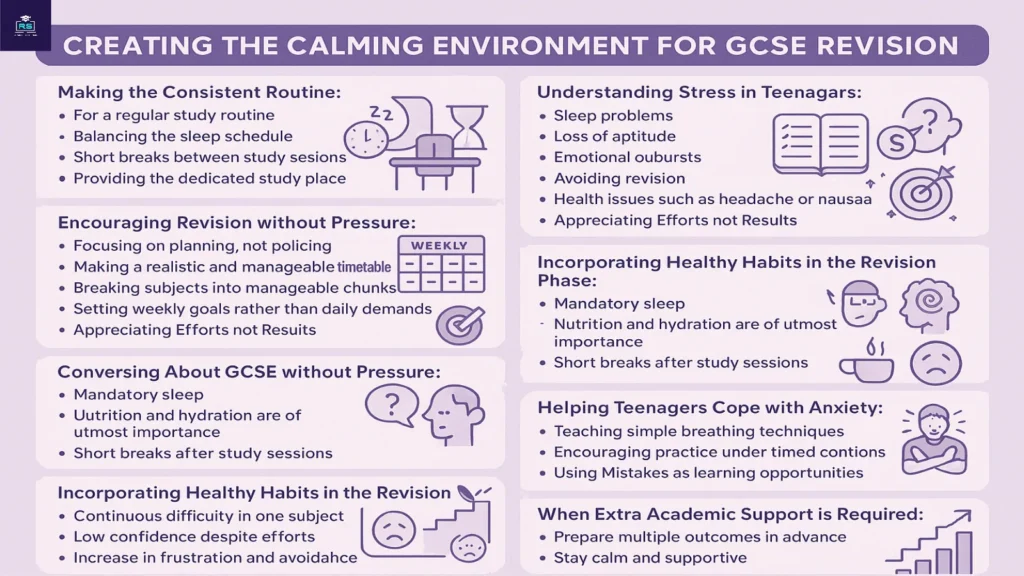
Creating the Calming Environment for GCSE Revision
A supportive, nurturing and calm environment is very much necessary, a nd it significantly reduces stress, making the preparation easier and stress-free.
- Making the Consistent Routine :
Students do not feel anxious if their preparations are structured and well-organised. Parent should encourage their children
- For a Regular study routine
- Balancing the sleep schedule
- Short breaks between study sessions
Consistency reduces anxiety because teenagers benefit from organisation, not rigidity.
- Providing the Dedicated Study Place:
A quiet and well-organised area is of utmost importance to make learning more satisfying and encouraging. The place does not need to be perfect, but it should be free from distractions and interruptions.
This practical step by parents is the cornerstone for effective GCSE preparation.
Encouraging Revision without Pressure:
Encouraging GCSE revision schedules without pressure should be the key role of parents. The question comes to the minds of parents: How do I make sure they are revising without wasting time?
This can be done through;
- Focusing on Planning, not Policing:
Parents should help teenagers through
- Making a realistic and manageable timetable
- Breaking Subjects into manageable chunks
- Setting weekly goals rather than daily demands
Once the plan is made, step back because trust builds confidence.
- Appreciating Efforts not Results:
Parents should encourage and praise small efforts, consistency and improvement rather than mock exams alone. This again builds confidence and reduces the fear of failure.
Understanding Stress in Teenagers:
Stress is not always obvious. Some teenagers become overly ambitious, heavy perfectionists. Common signs of stress include;
- Sleep problems
- Loss of aptitude
- Emotional outburst
- Avoiding Revision
- Health issues such as headache or nausea.
Parents’ utmost support for GCSE includes helping their children to overcome stress and anxiety and dealing with empathy,n ot discipline.
Conversing About GCSE without Pressure
Talking about GCSEs can unintentionally lead to high anxiety and fear of expectations. During this situation, what helps the most is
- Asking open-ended questions such as How are you feeling about revision
- Listening carefully to the learner’s situation without immediately responding with solutions
- Normalising stress as a temporary experience
Mistakes to Avoid
- Comparing the children with their peers
- Threatening consequences of the low grades
- Constantly inquiring about the revision progress
Learners are in need of reassurance and emotional safety that their worth is not defined by their failure.
Incorporating Healthy Habits in the Revision Phase
Parents should incorporate healthy habits in the revision phase for students that protect both performance and well-being. The healthy habits include;
- Mandatory Sleep:
Every human being needs almost 8-9 hours of sleep. Sleep deprivation increases memory retention and increases anxiety and fear.
- Nutrition and Hydration are of utmost importance:
A balanced meal is extremely important for a healthy lifestyle. Regular hydration improves concentration and mood. This is the most overlooked aspect of [parent support of GCSE exam preparation.
- Short Breaks after Study Sessions:
Small Breaks after long hours of study are of utmost obligatory, which often works in reducing stress, preventing burnout and improving focus for a long time.
Helping teenagers cope with Anxiety:
Exam anxiety is highly manageable with the right support and guidance.
Parents can help through this task by;
- Teaching simple breathing techniques
- Encouraging practice under timed conditions
- Using Mistakes as learning opportunities
Parents should avoid using such phrases you will be fine, instead they should validate feelings while offering reassurance and emotional safety.
When Extra Academic Support this Required:
Sometimes, stress does not come from exams or preparation; it comes with academic gaps. Several signs that reveal that extra support is required:
- Continuous difficulty in one subject
- Low confidence despite efforts
- Increase in frustration and avoidance
Tutoring revision courses may help to reduce stress and polish it positively.
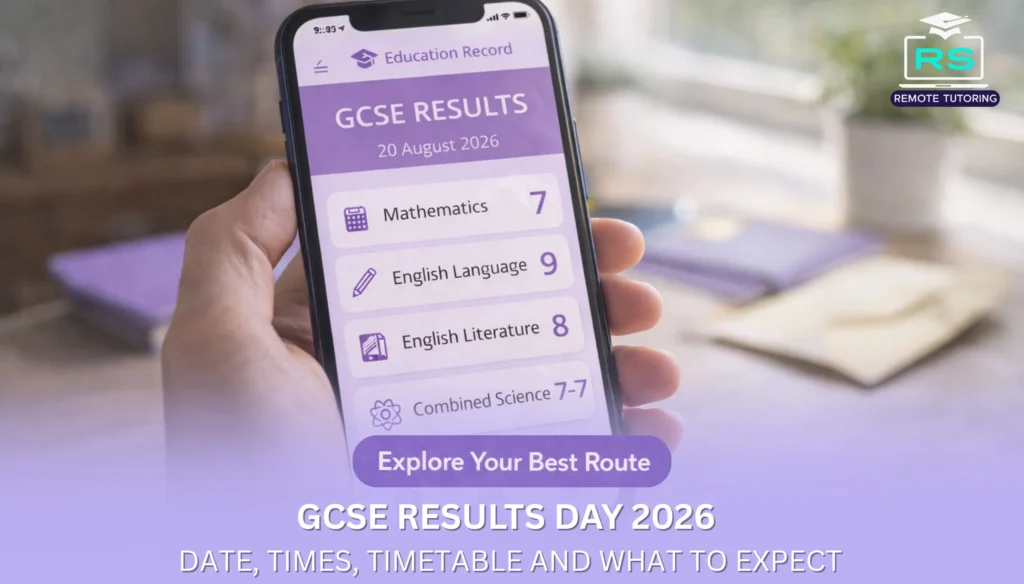
Result Day: Supporting without Stress
Result day is one of the most stressful days in the life of a teenager. The day is emotionally intense despite the outcomes.
Parents should
- Prepare multiple outcomes in advance
- Stay calm and supportive
- Focusing on next steps rather than fully blaming and making them feel disappointed.
Even if results are not up to the mark, there are always many pathways; communication makes everything easy, reduces fear and builds resilience.
Benefits of Stress-Free Parental Support:
Teenagers who feel supported rather than pressurised are
- More confident and developed coping skills
- Maintain a healthy relationship with learning
- Builds academic independence
Effective and Strategic Parent support for GCSE exam preparation benefits not only exam performance but also builds mental confidence and well-being.
FAQS
How can parents reduce GCSE exam stress at home?
By maintaining routines, encouraging breaks, promoting sleep, and avoiding constant academic pressure.
Is stress during GCSEs normal?
Yes. Some stress is natural, but ongoing anxiety or physical symptoms may need extra support.
How can parents reduce GCSE exam stress at home?
By maintaining routines, encouraging breaks, promoting sleep, and avoiding constant academic pressure.
Finale Thoughts
GCSEs are an important milestone, but they are not the final measure of a teenager’s potential. The most powerful tool parents can give to their children is to stay calm and consistent. When parents focus on wellbeing, communication, and trust, teenagers are more likely to perform well, ot because they are pressured, but because they feel supported.
Effective parents’ support for GCSE exam preparation is not about pushing harder. It is about standing beside your teenager, reducing stress, and helping them believe in their ability to succeed.

Raja specializes in Physics and Maths, with over 5 years of experience. He offers KS2, KS3, and GCSE Science and Maths lessons. He graduated from one of the top universities in the UK.


1 Comment
[…] The confidence signals to look for include self-belief when tackling difficult questions, less anxiety before exams, greater willingness to participate, and a more positive attitude to the subject overall. Confidence works as a multiplier: a student who stops fearing maths often carries that steadier mindset into science, and into the exam hall itself. We’ve written more about the family side of this in supporting your child through GCSEs. […]