GCSE years are marked by in-depth understanding and endless preparation, often termed as the most demanding phase in secondary education. Most of the students are bound with endless confusion, anxiety and the fear of not getting good grades, which gives rise to the most persistent question across every household in the UK.
Jump to Section
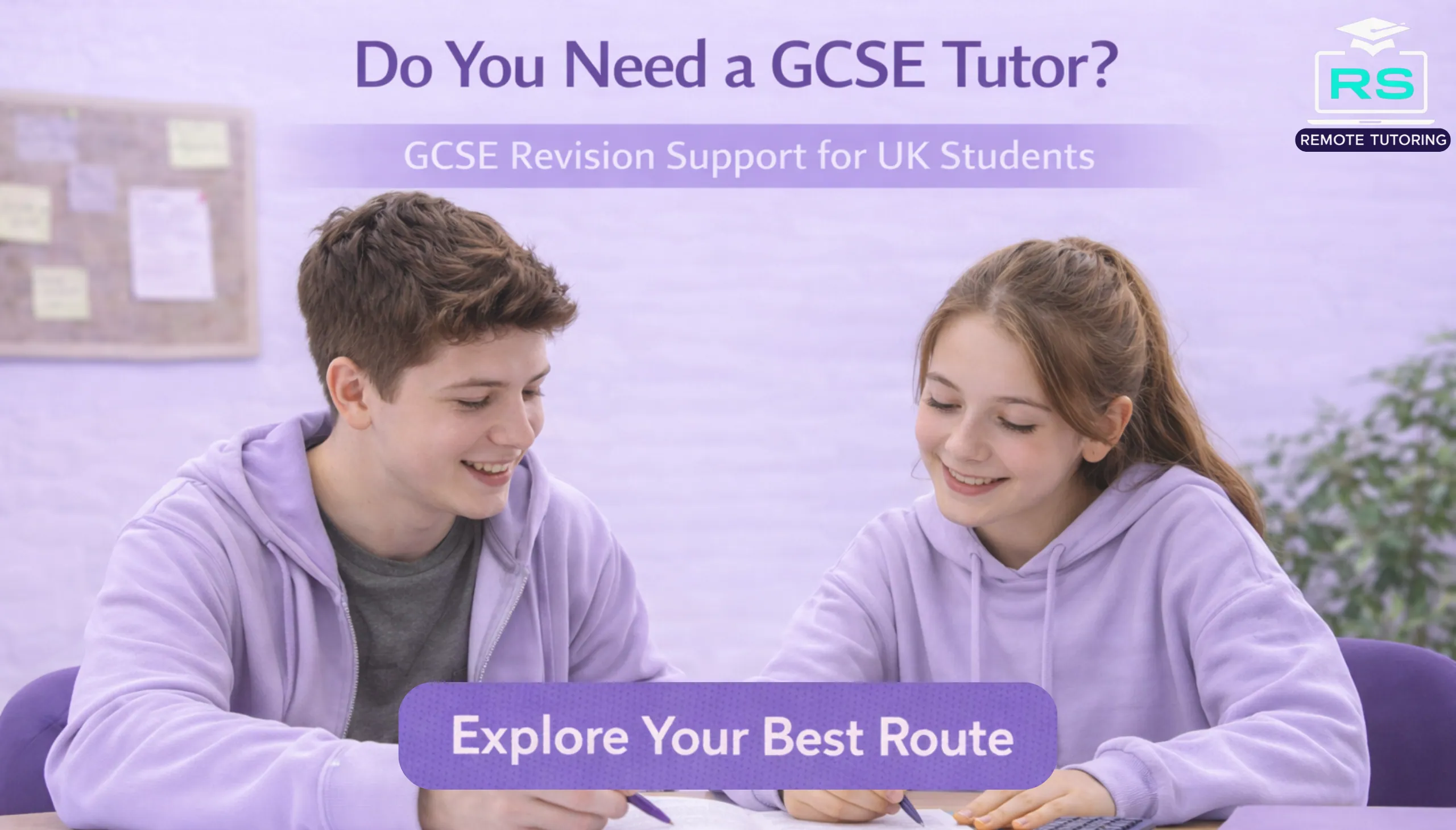
Do the Students Need a GCSE tutor?
The clear answer is not yes or no, because any tuition whether for GCSE or any other exam is not just about failure or intelligence or high grades. It is about consistent struggles, endless support and strategic preparation. After Parents’ undeniable support students often are dependent on their tutors , not just in terms of academics but also seek emotional support through them because tutors are the ones who all made through these struggles in a place to reach where they are now.
This guide will help you understand whether the tutor is obligatory for the students sitting for the GCSE, when it may not be and the impacts that the tutors bring in the academic, grades and long term outcomes of the students.
The Role of the Tutor
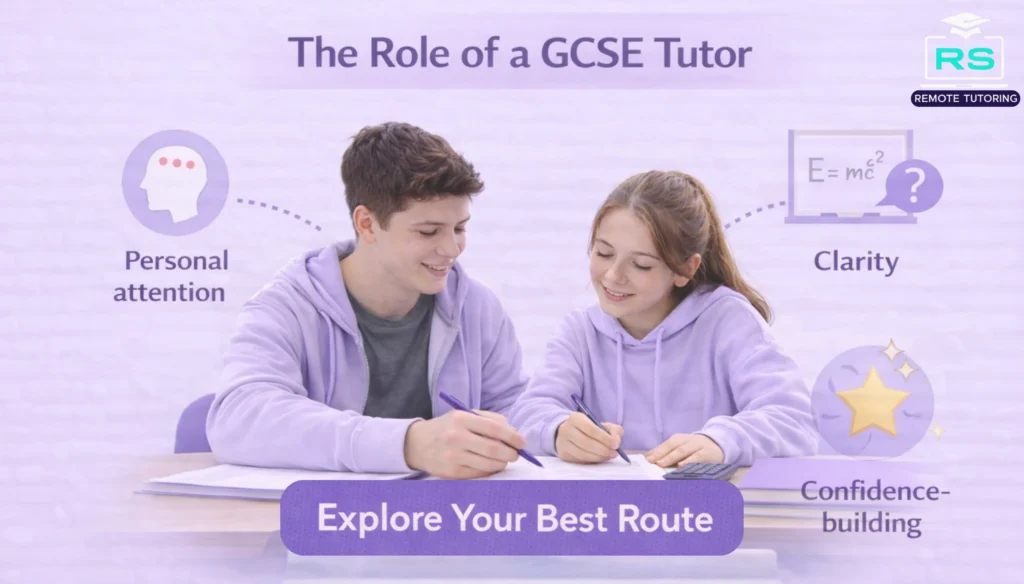
A GCSE tutor is more than an examining person. He is not the one who only guides the students academically , delivers the lectures and meets the endless requirements needed for the GCSEs students in the hectic and thoughtful preparation phase. But the one who brings clarity and confidence in the students lacking their motivation.
The role of effective tutor include:
- Identifying the weak knowledge gaps
- Personalizing learning strategies
- Teaching how to revise effectively
- Building confidence and motivation among the student
Unlike classroom teachers who only reflect 20 to 30 minutes to the students, the tutor’s role is to entirely focus on the learner’s pace, strength and abilities to handle the tasks effectively.
GCSEs: A challenging Exam
GCSEs are the hardest and toughest exams students face for the first time. Most students align their future goals with the GCSEs good grades, It is important to note why the GCSEs are most challenging.
- Strict Marking Scheme
- Timid assessments
- Grades pressure often affecting the future career options
This decisive shift in the lives of students even overwhelms the most capable and genius ones.
The difficulties that students often face includes;
- Difficulty in understanding the exam question
- Poor time management skills
- Failing behind due to exam anxiety or illness or any sort of disruption
- Weak Revision Techniques
- Lack of confidence and motivation
The ultimate role of the tutor is to navigate these challenges, addressing them to the students before turning out to be the most long term academic pressure.
Signs You might need a Tutor
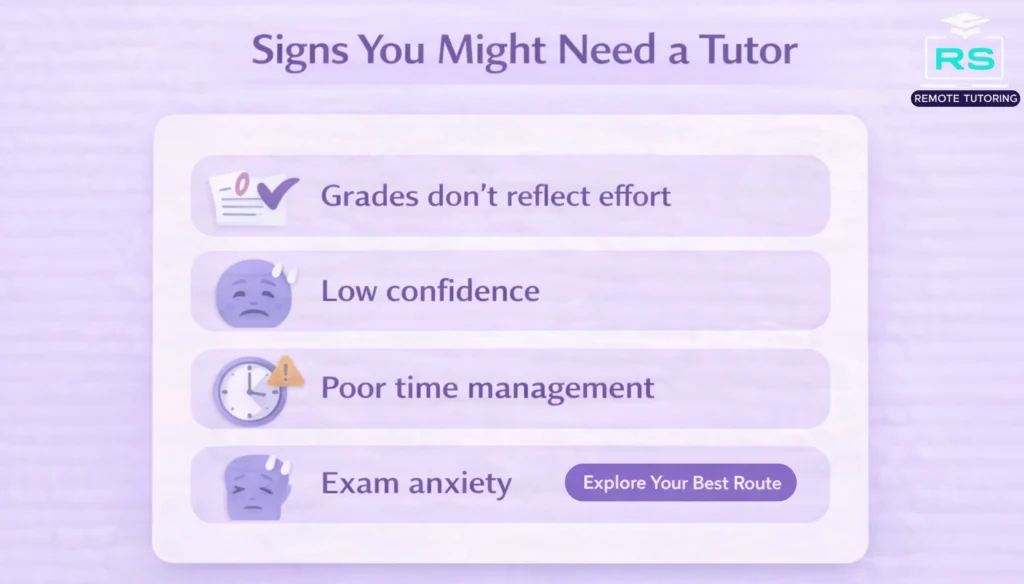
The following signs indicate and reflect that you are in the ultimate need for the tutor. If these signs are relevant to you , it is a warning to hire someone to pass with good grades.
Grades do not Reflect Efforts
One of the most persistent signs that occurs among those who need the tutor but are ignorant of the sign . Grades do not reflect effort, if the child is excessively working hard but still not getting good grades. It is not the lack of effort but the lack of strategy. Common problems include
- Mis interpreting the questions
- Writing with the flow and leveraging irrelevant information
- Weak structures in long responses
- Lack of effective time management skills
A GCSE tutor helps the student to learn how the marks are awarded, not just putting consistent efforts without navigating the outcomes.
Lack of Confidence in Essential Subjects
The most important core essential subjects of the GCSE are
These three are the foundational and core subjects for further education and employment. If a student is struggling in these areas , this can limit their future endeavours.
An expert Online GCSE tutor can provide fine guidance with;
- Explaining the concepts in one to one guidance
- Solving problems step by step.
- Reassuring the students that they can do it while not making them feel judged.
Confidence is the ultimate key , the finite difference between grade 4 and grade 7.
Falling Behind or Missing School Support
Classrooms are often over-saturated with innumerable students , which means that teachers can not always look at each and every student. Teachers often lack as
- Teacher can not always explain the concept again
- Provide personalized feedback.
- Adjust teaching speed according to the student’s pace.
A tutor fills the gap, especially If a student
- Missed lessons
- School is replaced
- Experiencing with learning disruptions
Do the Top Performers Need Tutors?
The high achievers are often mistaken as they are god gifted and the sudden question arises as do they need tutors ? The official sudden answer is yes but in most cases. High Achieving students seeks tutors help through
- Mastering top brand answering responses
- Prepare for competitive sixth forms
- Strengthening university pathways
For most of the competitive pathways such as medicine, law, engineering, every tiny grade matters. A tutor helps students to move from satisfactory to exceptional.
Reasons you do not need a tutor:
Tutoring support is not necessary in some cases. The following reasons illustrate when you do not need a tutor.
- If you are consistently achieving grades
- Strong confidence in exam skills and techniques
- Receives effective and enough school support
- Effective in depth revision skills.
However, confident and intelligent students often need tutors’ support for effective mock revision.
How GCSE tutor Improves Result:
Tutoring is effective in many ways. GCSE tutors support helps students to improve their grades. Tutoring helps grades through:
Personalized Learning:
Through Personalized learning tutors
- Identify the major gaps
- Adapt explanations to the student’s learning patterns
- Avoid wasting time on what the students are already aware of.
The efficient command of the tutors is far more effective than generic revision.
Exam Strategy and Marking Scheme:
GCSE reward only those students whose responses contain;
- Specific phrasing.
- Structured and organized content.
- Precise keywords.
Tutors basically teach to master the skills and pass the exams with flying colors.
Tutors guide through:
- How to decode the specific questions.
- How many main points are needed to make the argument rich.
- What the examiner seeks through.
This whole inside and indepth knowledge is missing in independent revision.
Structured Revision Plan:
A well organized and well structured revision plan is necessary to get your name done in the top high achievers. Mostly students start revision too late or ineffectively.
A very compassionate tutor helps to create
- Realistic Revision timetable
- Topic by topic plans
- Regular progress check
The effective timetable helps to navigate from burnouts and last minute panic.
FAQS
At what point should I consider a GCSE tutor?
Ideally before problems become serious. Year 10 is optimal, but Year 11 tutoring can still be highly effective.
Do GCSE tutors replace school teachers?
No. Tutors support and reinforce school teaching; they do not replace it.
Should I get a tutor for every subject?
Not necessarily. Focus on core or weakest subjects where improvement will have the greatest impact.
Is tutoring only for weak students?
Not at all. Many top-grade students use tutors to refine exam technique and reach grade 8–9.
Final Thought
You don’t need a GCSE tutor because a student is failing. You need one when a student wants to succeed with clarity, confidence, and strategy.
Tutoring is not about dependency, it is about learning how to learn, mastering exams, and reducing unnecessary stress during a critical academic stage.For some students, school support is enough. For others, a GCSE tutor can be the difference between struggling and thriving.
The real question is not “Do I need a tutor?” It is “Would the right support help me reach my full potential?”

Raja specializes in Physics and Maths, with over 5 years of experience. He offers KS2, KS3, and GCSE Science and Maths lessons. He graduated from one of the top universities in the UK.