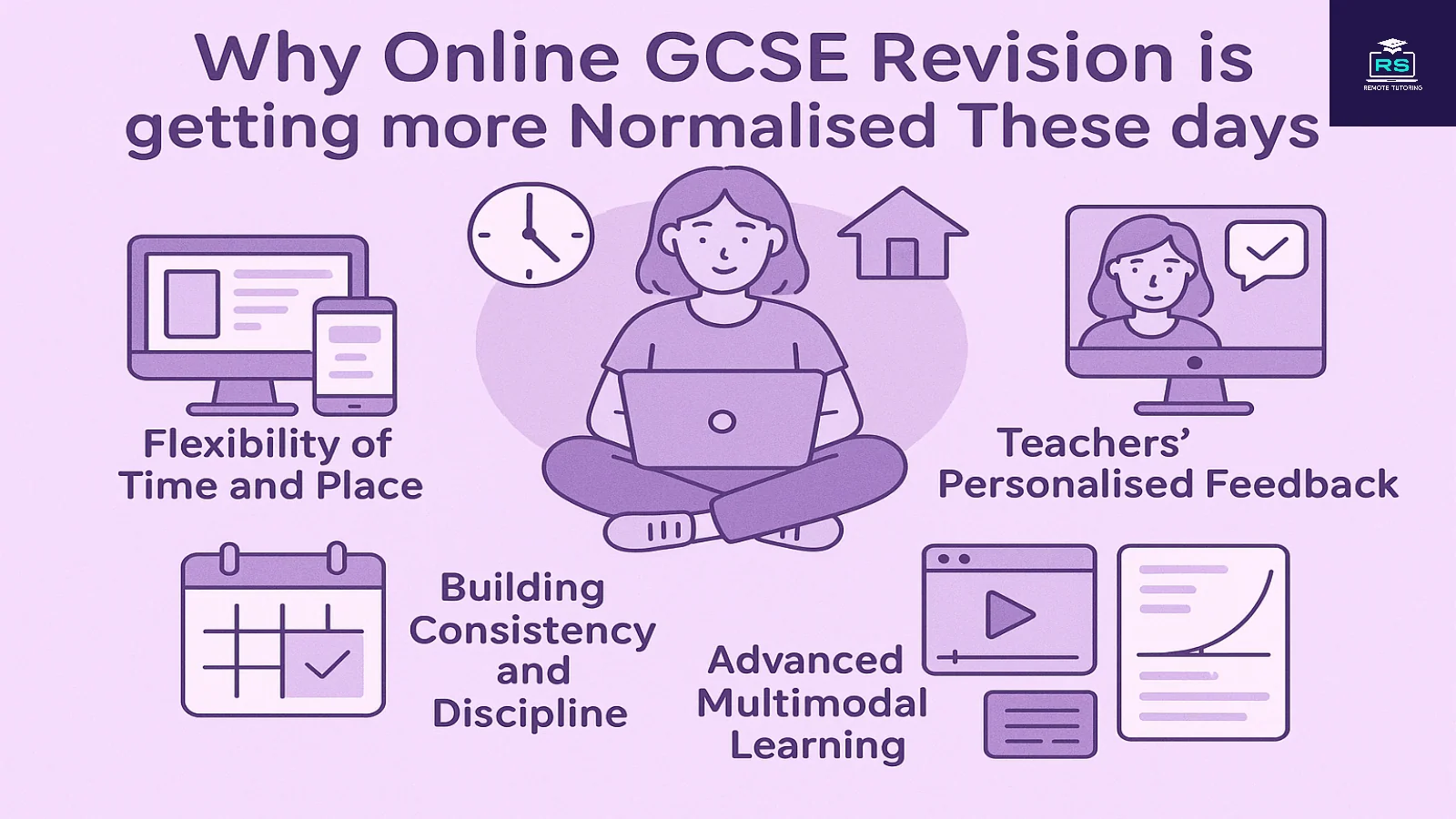
GCSEs are one of the hardest and toughest exams that one undergoes in order to get the desired opportunities in life. But taking this hardest exam requires a lot of hard work, consistency and patience. Balancing the GCSE exam with the extra curricular activities is the hardest task that one encounters. One one side GCSE exams influence sixth forms, college enrollment and future career paths. On the other hand extracurricular activities such as sports, music, debating, volunteering all play a crucial role in building confidence, discipline, clarity and a well rounded profile.
The persistent question comes along the way whether students should give a total of their time to the GCSE studies or they should also focus on their extra curricular activities. But the important part is if the student chooses the studies then the question arises how to tackle both without burnout, guilt or failing behind academically.
The guide explores the science strategies and real world system that will help students to revise strategically while also continuing outside the classroom.
Jump to Section
Why Balancing GCSE Revision and Extra Curricular Activities are Important:
This is often the culture of the society that during the preparation period it is utmost necessary for the students to thoroughly focus on the academic skills rather than wasting time on the outdoor activities.Most Students and Parents assume that sacrificing extracurricular activities will automatically improve GCSE grades but this is false hope. Neglecting the outdoor activities ultimately turns the academic studies into burnout, exhaustion and overwhelmed behaviour. Psychological research suggests that during the extremely sensitive situation of the preparation period studies should be balanced in order to get the desired success.
The Benefits of the Extra curricular activities:
At the mean time the outdoor activities might seem time wastage to the students or parents, but these hold ultimate cognitive benefits. Well structured extracurricular activities leads to;
- Improving the executive functions (planning, focus, self control).
- Reducing exam anxiety and academic stress.
- Build transferable skills such as team work, leadership, resilience.
- Enhance memory retention through mental breaks.
Those students who are actively involved in moderate extra curricular activities often show higher academic engagement than those who solely focus on revision. The ultimate goal of every student and parent should be strategic balance not elimination.
Why Most Students Struggle to Balance Both:
Before actually understanding how ultimately to fix the problem it is necessary to understand why it is often hard for students to balance between both.
Poor Time Visibility:
Most students underestimate how efficiently they use their time. They are completely drowned into the long revision schedule rather than fully understanding how it actually takes a long time. They are not aware of;
- How much extracurricular activities consume time weekly.
- How much rest they truly need.
This leads to unrealistic schedules and panic.
Inefficient Revision Methods:
Another key important obstacle that comes along the way is the unrealistic or vague revision schedule. Many students revise for long hours using low impact methods. They mostly rely on;
- Passive reading.
- Highlighting notes.
- Rewriting textbooks.
These revision strategies make the revision more time consuming in which students always feel extra curricular activities as an ultimate hindrance.
All or Nothing Thinking:
Another failure that comes along the way of the students is that they are totally relying on All or Nothing thinning. For example they re usually uttering;
If I revise properly, I must quit football
If I keep listening to the music my grades will ultimately suffer.
Believing in such types of myths students are always the prey of anxiety, failure and overwhelmed behaviour.
Restructuring the Approach; Quality over Quantity:
Balancing GCSE with extra curricular activities is all about shifting and transferring the mindset. Ultimately the key lies in understanding that effective revision is not about studying long hours or just sitting on the table and endlessly revising your notes. Top Students rarely revise all day. Instead they undergo the following steps;
- Use an active recall method.
- Focusing on the exam style questions.
- Applying the spaced repetition.
- Identifying the weaknesses early.
Two focused hours of study often outperform five unfocused hours because quality beats the quantity. The quiet smart efficiency endlessly creates time for extra curricular activities without even compromising on the academic involvements.
How To Balance Extra Curricular Activities and the Study Schedule:
The following guide explores how to balance between the two without solely focusing on one or neglecting the other.
Audit Your Weekly Time:
The ultimate starting point of your journey is firstly understanding how much time efficient;y set for the revision. One important thing to note is that a balance cannot be created until and unless you are very clear about your desired goals. Conduct a 7 days audit.
Students are obliged to unravel the time they operate the following;
- School hours.
- Homework.
- Revision.
- Extracurricular Activities.
- Travel time.
- Screen time.
- Sleep.
Tracking the time limit of the following ultimately reveals the following;
- Hidden time drain.
- Overestimated revision hours.
- Underestimate leisure time.
The role of parents and tutors in the following process is that they can review the audit together in order to be satisfied.
Prioritizing Subjects Strategically and Smartly:
GCSE exams are a true mixture of hard and easy subjects and not all the subjects require equal time for studying. Students should prioritise the subjects based on the following;
- Current performance gaps.
- Coursework vs exam weightage.
- Upcoming assessments.
- Subject difficulty.
To illustrate the following with the example;
- A student having ultimately good command in English may need less time for revision.
- Practical subjects such as Maths or Science need consistent and cumulative practice in order to shine bright.
This can ultimately make the time usage effective and frees time for extra curricular activities for the students and makes the revision comfortable and feasible for them.
Integrate Revision Around Extracurricular Activities:
The most successful combination students make is integrating the engaging activities along with their revision strategies navigating the burnout and anxious practices. Examples includes;
- Heavier revision on non activity days.
- Flash cards or quick revision calls on busy days.
- Light revision before training sessions.
Extra curricular activities days should heavily focus on;
- Maintenance revision.
- Reviewing weak areas.
- Short focused revision sessions often comprising 30-45 minutes.
Integrating the following allows avoiding mental overload.
Adjusting Extracurricular Activities, Not thoroughly Eliminating It:
The key to success is modulation , not ultimate removal or elimination. Students should focus on adjustment not highly focusing on ignoring the pathways which leads to building confidence, clarity and discipline in life. The smart modulation strategies includes;
- Reduce sessions per week temporarily.
- Limited additional commitments close to exams.
- Pausing the competition but keeping practice.
- Switching leadership roles to supporting roles.
The highly maintained routine will protect mental health and reduce academic stress.
Avoiding the Burnout Trap:
Burnout is the most common reason why most students encounter failure in GCSE exams. The signs includes;
- Constant fatigue.
- Reduced concentration.
- Feeling busy but unproductive.
- Loss of motivation.
Extracurricular activities when balanced correctly with the studies often act as the buffer against burnout.
The Role of Parents in Supporting the Balance:
Parents are the key guiding light in the dark and lost lives of students. The role and support of parents is ultimately important because parents are key figures that help the students from feeling burnout and extremely lost. Effective Parental Support includes;
- Encouraging consistency not perfection.
- Valuing efforts as much as grades.
- Avoiding comparison with other students.
- Helping students to explore extra curricular activities that matches their interest.
- Supporting realistic Schedules.
- Respecting the mental health beneficial activities.
Pressure to drop everything often backfires. Parents should encourage the balance between the two in order to make thor child feel secure and safe.
The Role Of Tutor:
Professional guidance can transform the balance. GCSE Tutors are the guiding star, they do not only teach but transform the students personality in a way more developed and focused. A professional tutor can;
- Help students create personalized revision pans.
- Reduce unnecessary workload.
- Identify the Subject Specific weaknesses.
- Improve the revision efficiency.
The targeted Support often frees up the significant im for extracurricular activities.
Long Term Benefits of Maintaining Extracurricular Benefits:
In the fast paced and chaotic world colleges, universities and employers are often looking for:
- Effective time management.
- Leadership.
- Commitments.
- Personal development.
These are all skills which can be ultimately gained from extracurricular engagement. Students who often balance between extra extracurricular activities are;
- Perform better academically.
- Develop stronger coping skills.
- Transition more smoothly into A levels.
Understanding that GCSEs are important but these are not the whole measure of the students capabilities and success.
Final Thoughts:
Balancing GCSE revision with extracurricular activities is not about doing less, it’s about doing what matters most, efficiently and intentionally.Students who learn to balance commitments during GCSEs develop skills that benefit them far beyond exams: resilience, time management, self-awareness, and confidence.
With the right strategies, students do not have to choose between academic success and personal growth, they can achieve both.
Raja specializes in Physics and Maths, with over 5 years of experience. He offers KS2, KS3, and GCSE Science and Maths lessons. He graduated from one of the top universities in the UK.