GCSE exams are the stepping stones for the future, but i was the one thinking that certain thing only happened to me but no when i have passed the stage feel like from my experience that every students, even though the hardworking ones encounter this difficulty Wonder if you have ever spent hours revising only to forget everything a week later, you are not alone. I still remember sitting at my desk, highlighters everywhere, thinking I was being productive. But when it came to recalling anything without my notes in front of me, unfortunately I could not recall, even though I was totally blank at some peaks and some topics seemed unfamiliar.
One thing that becomes clear quite quickly to me during the crucial phase of my preparation journey is this:
GCSE revision is not about how long you study, it is about how well your brain retains information.
That is where the right memory strategies change everything. This guide walks you through memory hacks for GCSE revision that go beyond generic advice, these are techniques that students actually use successfully under real exam pressure.
Jump to Section
How Memory Really Works During GCSE Revision
Before jumping into techniques, it is necessary to understand something simple:
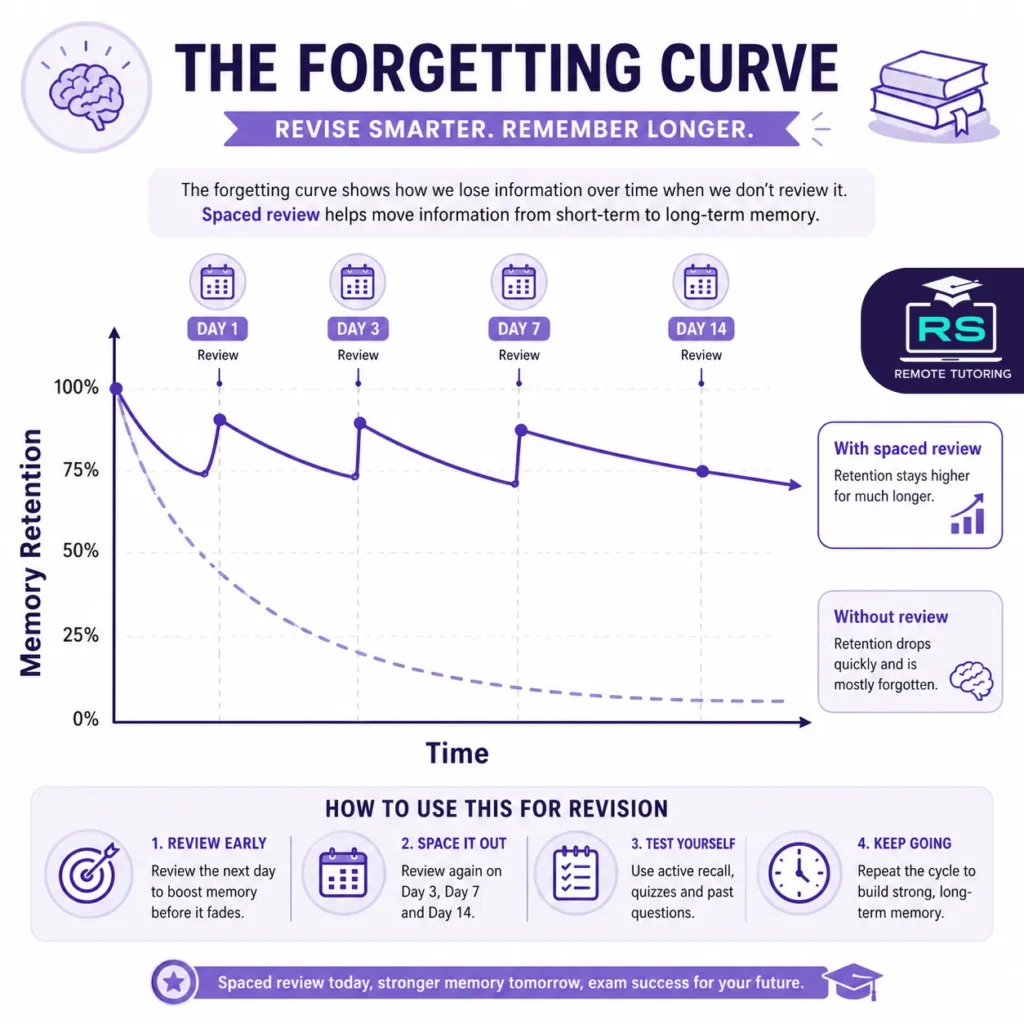
Your brain forgets by default and it is the natural process.This is called the forgetting curve. Unless you actively revisit and use information, it fades quickly.
What made the biggest difference for me was realising that: Revision is not about reading again and again but it is wholly about retrieval.
Once you shift to that mindset, everything changes.
Active Recall: The Most Powerful GCSE Memory Hack
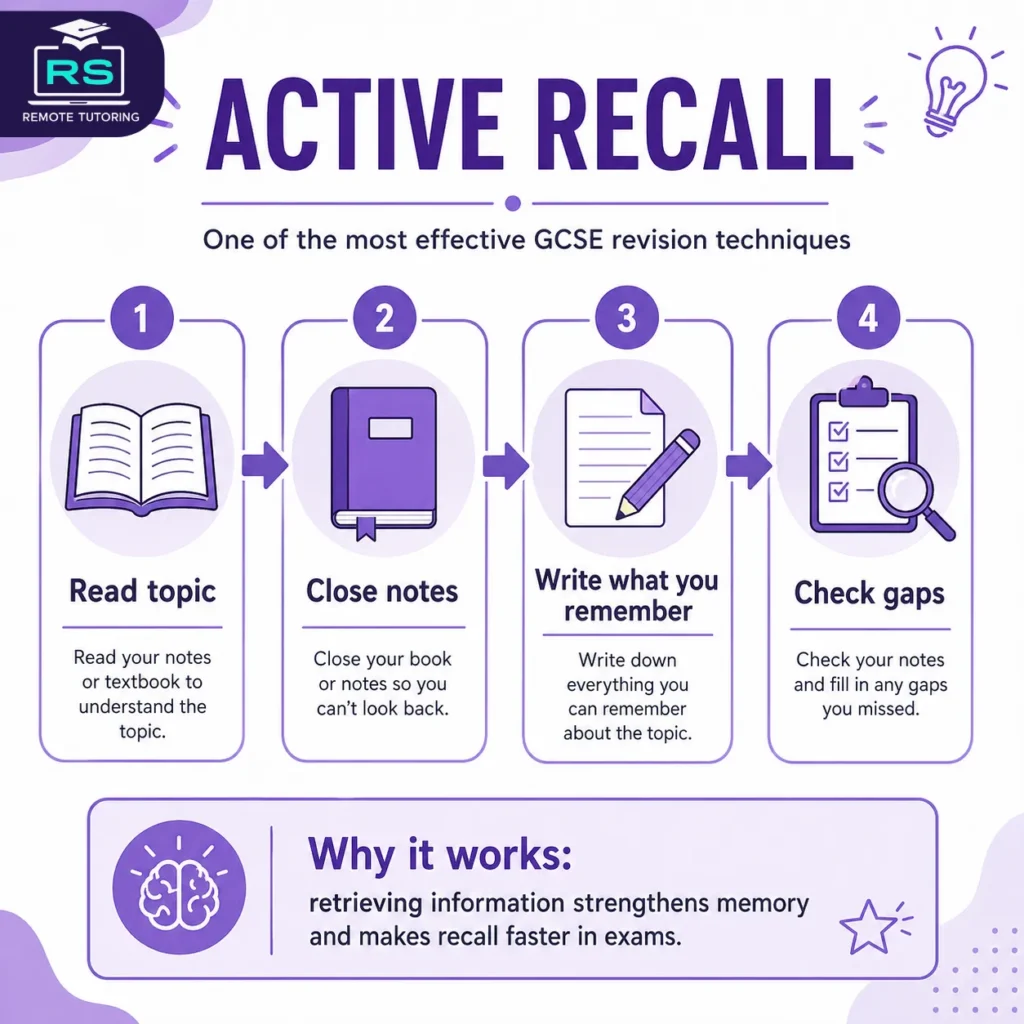
The first and foremost revision technique that I usually recommend is the active recall method. If you only use one technique, make it this.
Active recall means:
- Closing your notes
- Testing yourself
- Forcing your brain to retrieve information
How to use it:
- Read a topic once
- Close the book
- Write down everything you remember
- Check and fill gaps
I remember how uncomfortable this felt at first. It is harder than re reading, but that is exactly why it works. It naturally works because it strengthens neural connections, making recall faster in exams.
Spaced Repetition: Stop Cramming Forever
Another Effective GCSE revision hack is the spaced repetition. One of the biggest mistakes students make is cramming everything in one go.I quickly realised that spacing revision out over days and weeks made information stick naturally.
Simple method can be used which is really much effective;
- Day 1: Learn topic
- Day 3: Review
- Day 7: Review again
- Day 14: Final review
It works because; It interrupts forgetting and strengthens long-term memory.Interleaving: Mix Subjects for Better Recall
Another crucial memory hack that ultimately boosts your GCSE revision is mixing multiple subjects for a better recall process. Instead of studying one subject for hours, mix them.
For Example:
- 30 mins Maths
- 30 mins Biology
- 30 mins English
At first, this feels messy. I did not expect it to work, but it actually improved focus.
Blurting Method: Fast and Effective Memory Test
Another go to strategy is the blurting method; the fast and effective GCSE revision hack especially for the students aspiring for the GCSE in the UK. This became one of our go to strategies.
How it works:
- Study a topic briefly
- Take a blank page
- Write everything you remember
Then compare with your notes. What stood out most for me while using this method is that ;
You instantly see what you do not know, no guessing.
Flashcards, But Use Them Properly
Flashcards are another memory savior but if used properly. They only work if used correctly.
Many students:
- Read them passively
- Flip too quickly
- Do not revisit them
Best approach to rely on is that;
- Use question on one side
- Answer fully before flipping
- Review cards you got wrong more often
From my experience, I still remember digital apps help, but handwritten cards feel more memorable for many.
Memory Techniques That Make Information Stick
Following techniques makes the information more sich, The things i learned from my preparation days, using them makes your information more sticky to your brain.
Association
One of the foremost strategies is the association techniques, Link the new strange topics to something that is totally familiar making them more easy to carry out.
Visualization
Most people are different when it comes to learning, some learn the information in a more specific way , one of my friends easily grasps the information just by listening to the lectures while I was the one waiting for the infographics or the diagram to attain the whole concept. Visualization is another important technique that keeps the information longer.
Chunking
Chunking is another fine strategy that actually works best, this can be done by breaking the large information into smaller chunks so that it can easily be grabbed.One thing I did not expect was how powerful storytelling is, even for subjects like science.
Common GCSE Revision Mistakes to Avoid
One of the most common patterns I have seen is:
- Re-reading notes repeatedly
- Highlighting everything
- Watching videos without testing
These feel productive, but don’t build memory. I genuinely recommend everyone heavily to avoid this trap.
GCSE Specific Advice for UK Students
If you are studying in the UK, timing matters.
Exam Season Reality:
- Exams usually run May to June
- Pressure builds quickly
- Multiple subjects overlap
Seasonal Impact:
- Longer daylight = better study energy
- Warmer weather = more distractions
What helped most was starting early, even light revision months before exams made things less stressful.
How to Make Revision Fun (Without Losing Effectiveness)
Let us be honest, revision is not always fun.But you can make it less painful.
Try these:
- Studying with a friend
- Turning revision into quizzes
- Reward systems after sessions
- Changing study locations
Many students I have spoken to, utter seemingly
Studying in short bursts with rewards works better than forcing long sessions
FAQs
How to make revision fun?
Make it interactive, use quizzes, group study, and short sessions with rewards. Changing environments also helps maintain focus.
What are the best revision hacks for GCSE?
Active recall, spaced repetition, blurting, and interleaving are the most effective methods for long-term memory and exam success.
How to make information last longer in my brain?
Use spaced repetition and test yourself regularly. Revisiting information over time helps transfer it into long-term memory.
Raja specializes in Physics and Maths, with over 5 years of experience. He offers KS2, KS3, and GCSE Science and Maths lessons. He graduated from one of the top universities in the UK.