GCSE is one of the most important exams in the lives of students. Most students tie themselves, their future is totally bound with success in the exams. GCSE failed can feel devastating. Result day is often marked by anxiety, stress and fear. One moment, suddenly it feels like the future has collapsed.And students started asking themselves in the state of depression, asking Have I ruined Everything? Will I Ever get enrolled in College? What will people think?
Understanding the key important focus is that failing GCSE is not the end of education, career, or life. In fact thousands of well known educators, Professionals, entrepreneurs, and graduates failed one or more GCSEs and still went on achieving as high as they have ever imagined.
The following blog will explore exactly what to do next, the real options that help to achieve high even after failing the most demanding and prestigious exam and how this turns a setback into a strategic setback.
Jump to Section
Understanding What Does Failing A GCSE Actually Means?
Before panicking, before making yourself feel anxious it is very important to understand who is considered a failure in the GCSE exam. To understand clearly what actually is a pass.
- Grade 4 is standard pass
- Grade 5 is a strong Pass
- Anything below Grade 4 is considered a failure.
But here is the focal point. Failing one or even several GCSEs does not mean you have failed education altogether.
Most colleges, sixth forms, employers, institutions and training providers seeks;
- Your Overall Profile
- Your attitude and improvement
- Whether you are willing to retain or resit for the exams.
After Failing GCSEs: What To Do Next
The following will explore what are key important steps and what are the valid options to do even if you failed the GCSE.
Do not Panic: Give Yourself Perspective
It is very normal for every student sitting for GCSE to feel disappointed and depressed when encountering failure. They feel embarrassed, overwhelmed and anxious. But reacting emotionally can lead to rushed decisions . It is very important to be strategic and emotionally mature when encountering such situations. The following points should be remembered.
- GCSE is one stage, not the whole ladder. The Success in not marked by failing the one subject
- Education systems are also designed with second chances
- Many students significantly perform better when they retake the exams.
At this crucial stage, the job is not to make your self heavy hearted or judge yourself but to choose the right option.
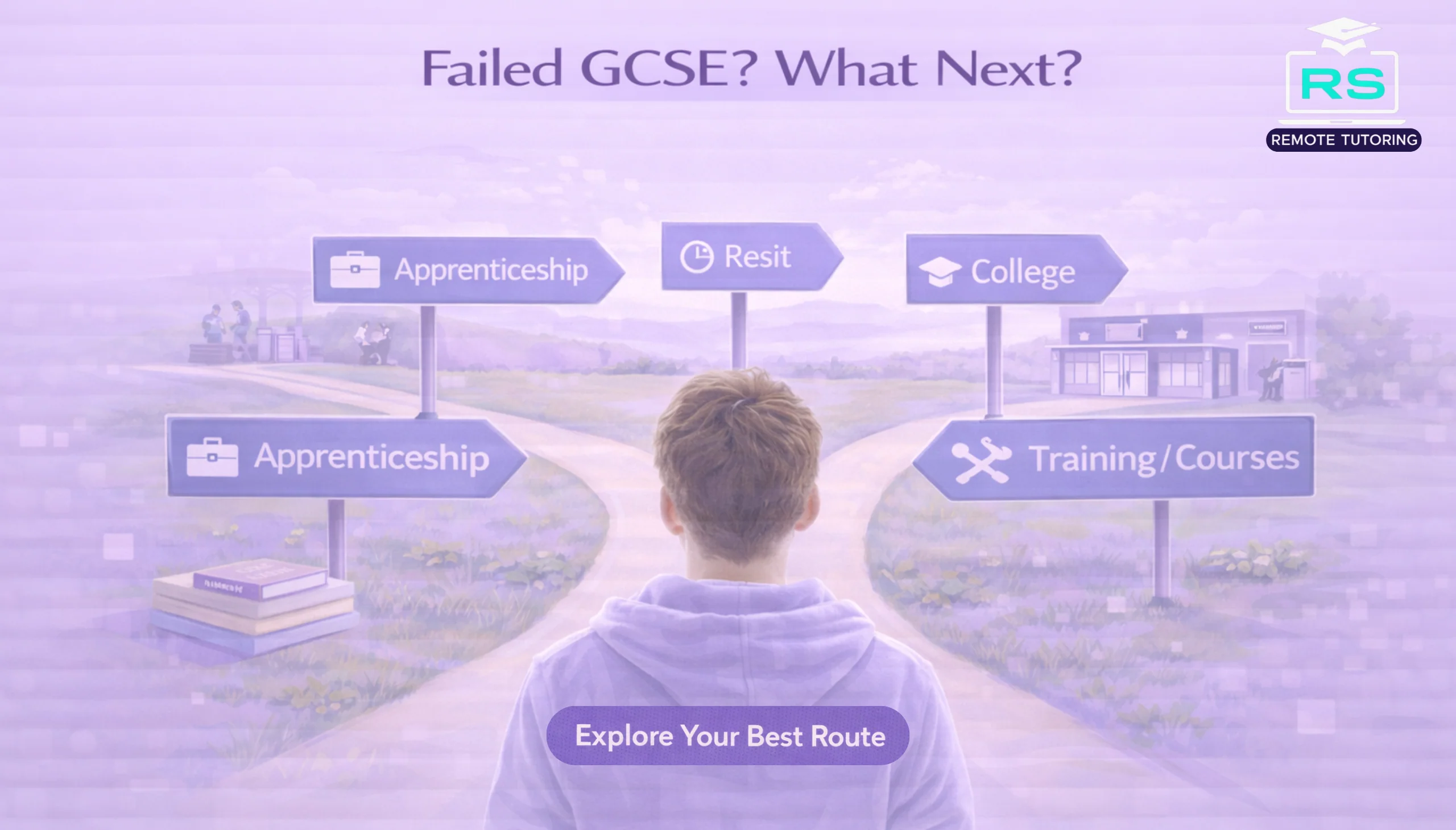
Resit For GCSE: The Quiet Common Option
Resitting GCSE is the most common option that students choose when they encounter failure in the most trusted path , the GCSE examination. Another significant myth that is often tied with the rest is that students feel overwhelmed and their brain revolves only around one path: what people will think? The most hard working student is again appraising in the GCSE exam. It is important to understand that Students should actually consider Resits if:
- You just missed the grade 4
- You struggled because of poor revision strategy, anxiety or lack of support
- You need Maths or English for enrolling in further study or work.
GCSE Maths matter more than ever because they are required by each and every company so if students fail in the most demanding subject Resiting is the quite common option.
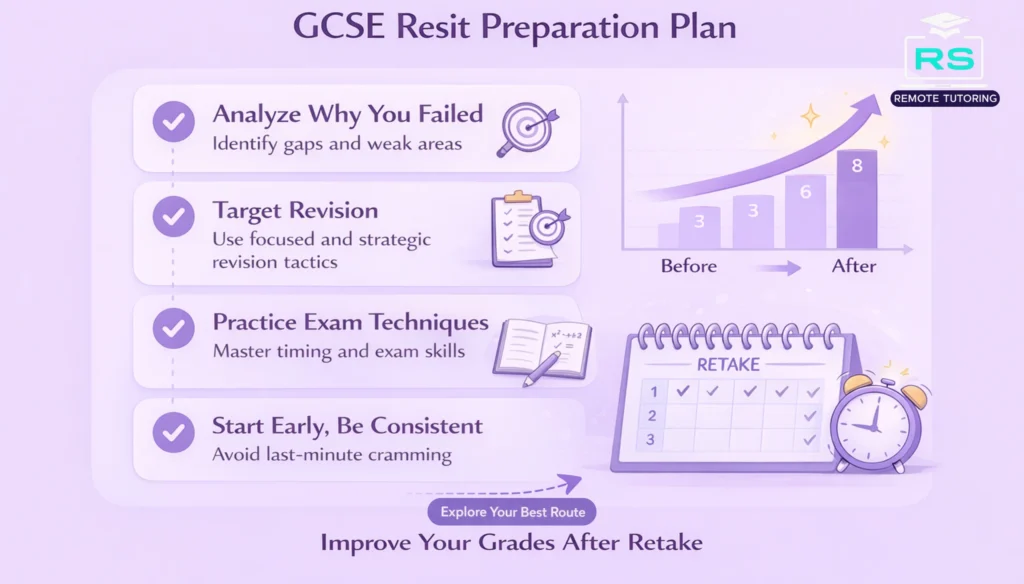
The Following will explore how to resit successfully without performing the past mistakes;
- Identify why you failed ( Analyse the key gaps, weaknesses and important areas to focus on)
- Use Targeted Revision Strategy not the general Revision tactics.
- Focus on mastering exam techniques, not just content
- Start early, do not wait for the right exact moment.
Many students jump to higher grades while sitting for Resitts, with the write approach and guidance.
Get Enrollment In College or Sixth Forms with Conditions
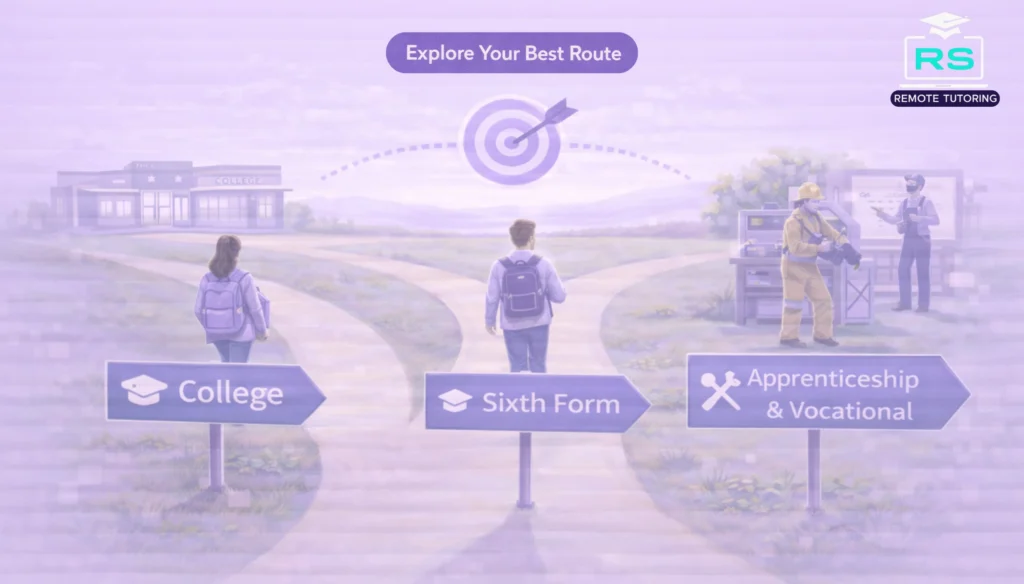
Another path that can be chosen even if you failed the exam, is getting admission in college or sixth forms with certain conditions, because failing the GCSE can not simply block you from college. Many Colleges offer;
- Conditional entry
- GCSE retakes programmes alongside level 2 or level 3 courses.
- Foundations or transitional years.
To further explain with the example;
- The students can get enrolled in the vocational course while still resisting Maths and English.
- Some sixth forms allows entry with strong performance in other subjects
Getting admitted to college keeps you moving and making progress without getting back because of failure.
Choose Vocational Qualification:
GCSEs are not the only route to success. The World is beyond the GCSEs success. Vocational qualification focuses on practical skills, course work and real world applications. Some fine alternatives includes;
- BTECs
- T Level
- Apprenticeship linked qualification
These options are valid and ideal for those of;
- Student struggle with exam pressure
- Students are already aware of career directions
- Students are much more inclined towards practical training.
Many vocational Courses still allow for resit while also resuming the new enrolled courses.
Apprenticeships: Learn, Earn and Make Progress.
Apprenticeship is another wide career option and they are seemingly powerful alternatives when traditional exams are not the student strength. Before choosing the wide career option, it is necessary to understand why apprenticeships work.
- Student will earn while learning
- Gain real job experience
- Many organizations and employers support GCSE resits during the training period.
Entry requirements vary from institution to institution and not many of the employers seek GCSE full passes, especially at intermediate level.
This option is valid for those who are;
- Motivated
- Career focused
- Ready to be a part of structural world environment
Understanding Why Most Students Fail GCSE:
Gcse exams are not just exams based on intelligence and hard work. Though Intelligence and hard work is the ultimate need, using the intelligence and hard work in a strategic and smart way builds the gap between high Achieving Student and the failed one.
Common reasons for failing includes;
- Poor Revision Strategy
- Lack of guidance
- Burnout
- Learning style mismatch
- External pressure
Once the common reasons of failure are addressed, the improvement becomes mandatory.
How to Avoid Failing Again: Building A Smart Strategy
In order to avoid disruption and obstacles in the progress. Building a smart plan which is focused and strategic is utmost necessary. If the student is continuing, retaking the exam the following are utmost necessary.
Focus on;
- Active Reasoning
- Targeting the Weak Topics
- Consistently studying with proper focus
- Feedback based learning
By focusing on these areas, one can masterfully create an impact but creating the long term impact needs proper guidance. With the right support and guidance students can statistically perform better in sitting again for exams.
How Failing Seemingly Affects Your Future:
Failing is the part of life but what happens, how failing in one exam affects your Future.
The short term impacts include;
- The failure may limit six forms options
- May require resits or alternative pathways.
But failure is not just bound to appearing again for an exam or simply choosing other career options. The long term impacts includes;
- Universities care about Level 3 and Level 4 courses
- Employers prioritise skills, experience and attitude
Failure might seem the end at the start but it is unlocking several other pathways which are unknown to many.
FAQS
Can I still go to university if I fail my GCSEs?
Yes. Many universities accept students who passed GCSEs later through resits or alternative qualifications, especially if you perform well at Level 3.
How many times can I resit a GCSE?
There is no official limit. You can resit as many times as needed.
Will employers care if I failed GCSEs?
Most employers care more about current qualifications and skills. Once you pass later or gain experience, early failures matter far less.
Can I retake GCSEs online?
You can study online, but exams must be taken at an approved exam centre.
Final Thoughts:
Failing your GCSEs hurts, but it doesn’t define you. What defines you is:
- Whether you give up or regroup
- Whether you repeat mistakes or learn from them
- Whether you see this moment as failure,or feedback
With the right plan, support, and mindset, many students come back stronger, more focused, and more successful than before.If you’re willing to take action now, this “failure” could become the turning point that finally puts you on the right path.

Raja specializes in Physics and Maths, with over 5 years of experience. He offers KS2, KS3, and GCSE Science and Maths lessons. He graduated from one of the top universities in the UK.