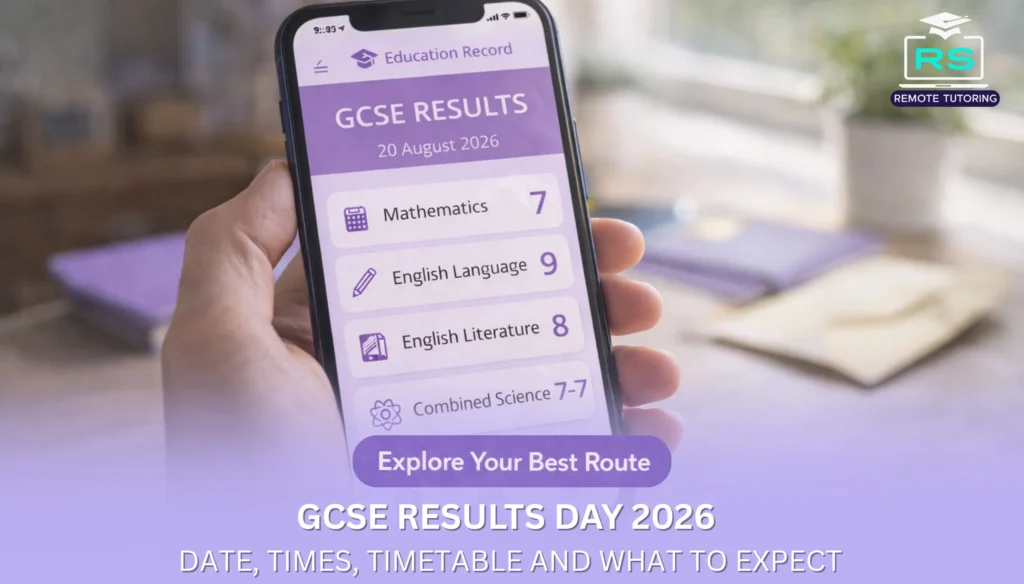
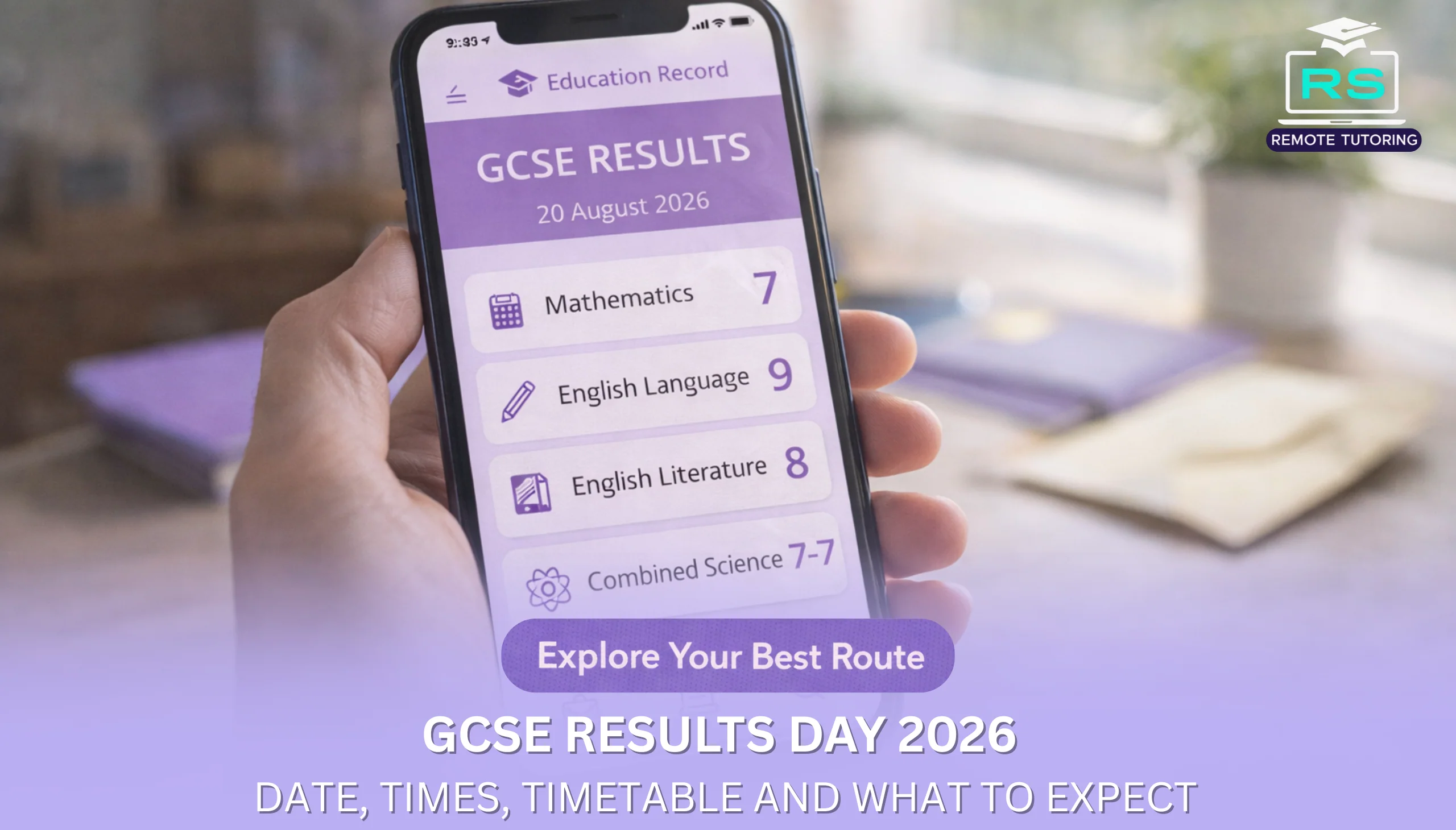
Waiting for GCSE results can be nerve wracking, but knowing the key dates and what to expect can make the whole experience smoother. GCSE results day 2026 is confirmed for Thursday 20 August 2026. Schools will receive the marks a day earlier (Wednesday 19 August) and exam officers will have access to results from 12:01 am, while students can pick up their envelopes from about 8:00 am. An Education Record app will make digital results available nationally at 11:00 am.
In this guide you’ll find everything you need to know: how to collect your GCSE results, how to interpret your grades, what to do if things don’t go to plan, and answers to common questions. We’ll also shared practical tips for students and parents in London and across the United Kingdom, including local weather advice, travel considerations and next steps after results day.
Jump to Section
Key Dates and Timetable for GCSE Results Day 2026

Important Dates
- Wednesday 19 August 2026: schools receive GCSE results electronically; exam officers can access grade boundaries from 12:01 am.
- Thursday 20 August 2026: GCSE results day for students. Schools open from around 8:00 am; students can collect results in person.
- Thursday 20 August 2026 at 8:00 am: results slips can be handed to students and grade boundaries published.
- Thursday 20 August 2026 at 11:00 am: the Education Record app updates; students can view results digitally.
- January 2026: GCSE resit results from November 2025 were released on Thursday 8 January 2026; the same pattern will likely apply to November 2026 resits in January 2027 (check your exam board for confirmation).
Exam Season and Timetable Reminders
GCSE exams will take place from early May to late June. The first exam is scheduled for Monday 4 May 2026, and the last exam for Friday 26 June 2026. Maths papers for Edexcel, OCR and AQA run on 14 May (Paper 1), 3 June (Paper 2) and 10 June (Paper 3). English Literature and English Language papers occur between 11 May and 21 May. Science exams are scattered throughout May and June, with Combined Science usually in late May and early June. Understanding this timetable helps students plan revision and appreciate when results will arrive.
Got Your GCSE Results? Let’s Plan the Right Next Step
Whether your child is preparing for GCSE 2027, considering a resit or wants to improve a particular subject, our expert tutors can help. Book a free 30-minute one-to-one assessment to discuss their current grade, target grade and the support they need.
How to Get and Read Your GCSE Results
Collecting Results in Person
Most students go into school on results day to pick up a sealed envelope. Schools typically open their doors from 8:00 am to 10:00 am, though some invite students at specific time slots to avoid overcrowding. You’ll need to show a form of ID (such as a student ID or passport) before receiving your envelope. Bringing a charged phone means you can call family and share the news, and keep photo ID in case the school requires additional confirmation.
Pro tip: If you want privacy, arrive early when fewer people are around; if you prefer sharing the experience with friends, go later when more students will be there. Whatever you choose, take your time opening the envelope, emotions run high and teachers are on hand to talk things through.
Getting Results Online or by Post
Can’t collect results in person? Schools often email or text results, and some exam boards provide secure online portals. From 2026, the Education Record app allows students across England to access their GCSE results digitally at 11 am. However, headteachers still encourage students to collect the paper envelope for the in‑person support, especially if you need advice or have questions.
If you’re away on holiday, you can arrange for a parent, guardian or trusted friend to collect your results. They must bring a signed letter of authorisation and a copy of your ID. Results posted out usually arrive within one or two working days; confirm your school has your correct address well ahead of time.
Understanding Your Results Sheet
Your results sheet lists each subject and the grade you achieved using the 9 to 1 scale. Grades 9–1 correspond to the old A*–G system: grade 9 equates to a high A*, grade 4 is equivalent to a low C (standard pass), and grade 5 is a strong pass. If you see a U (ungraded) you did not achieve the minimum standard.
The sheet may also include your component marks (for each paper), although your overall grade is based on the combined total. Grade boundaries are published on results day; they show the minimum marks needed for each grade and help interpret how close you were to the next level. For example, AQA publishes grade boundaries at 8:00 am when results are released.
Preparation Tips for Results Day
Take Care of Yourself
Results day can be stressful. Getting a good night’s sleep and eating normally in the days leading up to results day, and sharing any worries with parents or trusted adults. Taking a walk or doing something relaxing the night before can help you stay calm.
Plan Your Travel
In London and many parts of the UK, August weather can be changeable. Check the forecast the night before and plan your travel accordingly. Public transport may be busy during the morning rush, so leave extra time to get to school. Bringing a bottle of water and a light jacket can help you stay comfortable while waiting.
Decide Who You Want With You
Consider whether you want to open your results alone, with family, or with friends. Many students prefer to share the moment with a parent or guardian; others find strength in celebrating with peers. There is no “right” choice; think about what will make you feel supported. Schools may limit how many people can accompany you, so check their guidelines.
Have a Backup Plan
It’s wise to discuss different scenarios, what you’ll do if you meet your target grades, and what to do if you don’t. Talk to teachers, parents or a guidance counselor about your options. Preparing a list of phone numbers for your chosen sixth form, college, apprenticeship provider or training organisation will allow you to act quickly if you need to confirm or adjust your plans.
Got Your GCSE Results? Let’s Plan the Right Next Step
Whether your child is preparing for GCSE 2027, considering a resit or wants to improve a particular subject, our expert tutors can help. Book a free 30-minute one-to-one assessment to discuss their current grade, target grade and the support they need.
What Happens If You’re Unhappy With Your Results?
Appeals and Clerical Checks
If your marks are lower than expected, don’t panic. There are processes in place to review your grades. First, speak to your subject teacher or exams officer to understand the breakdown of marks. You can request a review of marking from the exam board. This may involve a re‑mark or a clerical check. If the review finds that your paper was marked incorrectly, your grade can go up or down. Appeals must be submitted through the school by a specified deadline (usually within three weeks of results day).
Resits
English Language and Mathematics can be retaken in November if you need to secure a pass for further education. Other GCSE subjects can be retaken the following summer. Discuss retakes with your teacher, as sometimes improving a subject may be more beneficial than resitting multiple exams.
Alternative Pathways
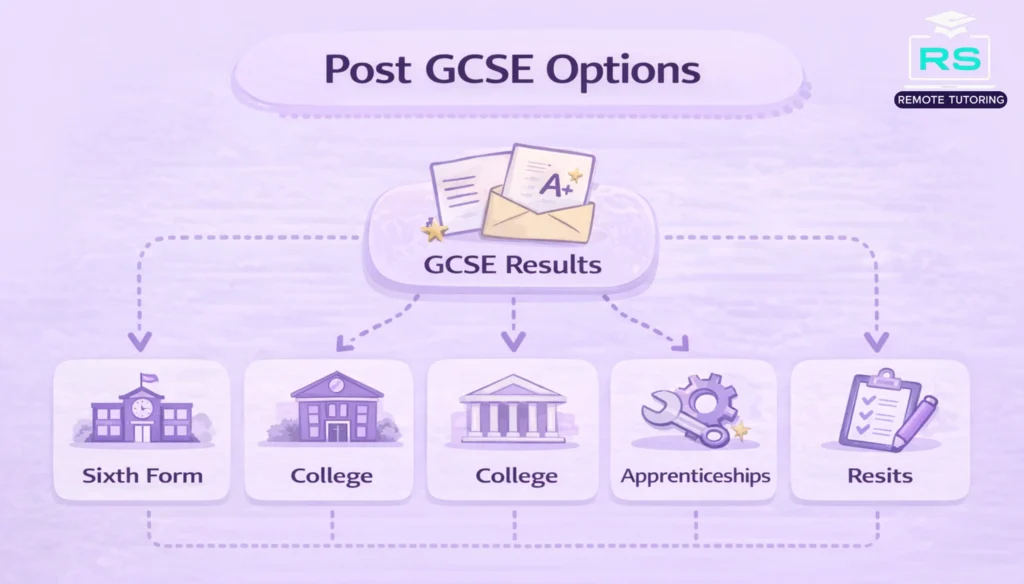
If you didn’t get the grades required for your chosen sixth form or college, consider alternative qualifications such as BTECs, T Levels or apprenticeships. Many post‑16 courses are available in London and across the UK, offering practical, vocational training or a different academic route. Private candidates can also arrange to resit GCSEs through exam centres.
Digital Results: The New Education Record App
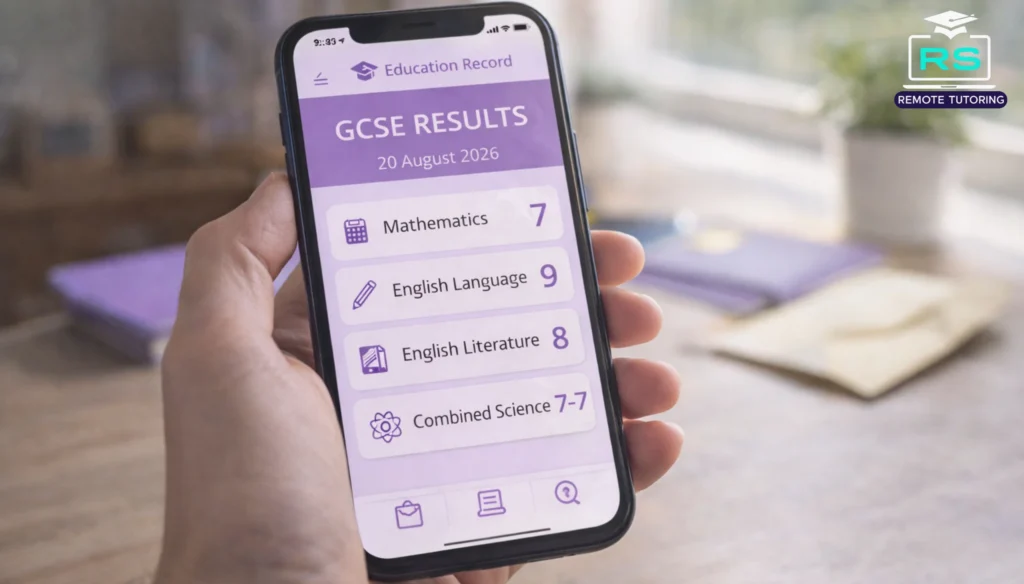
From summer 2026, a national education record app will allow GCSE students in England to access their results digitally. The pilot with 95,000 pupils in Greater Manchester and the West Midlands proved successful; students could download results at 11:00 am and store a digital record for future job or education applications. The Department for Education estimates the rollout will save schools administrative costs and provide young people with instant access to their results.
However, the app will not update until 11 am on results day, three hours after results are available in person. Headteachers encourage students to still come into school to experience the supportive atmosphere and receive advice. Parents should ensure their child has access to a smartphone or tablet if they plan to use the app; charities have raised concerns that digital access must be inclusive.
GCSE Results Day for Wales, Northern Ireland and Scotland
Although GCSEs follow the same 9 to 1 grading scale across England, Wales and Northern Ireland, each nation has its own awarding organisations and procedures.
- Wales (WJEC/Eduqas): Welsh schools receive results on Wednesday 19 August and students collect them on Thursday 20 August. Students can also view results via the Welsh Government’s online portal.
- Northern Ireland (CCEA): Results day is the same date, Thursday 20 August 2026 and schools often release results from 8 am.
- Scotland: Students take National Qualifications rather than GCSEs. National 5, Higher and Advanced Higher results are released on Tuesday 4 August 2026.
Predictions for GCSE Results Day 2026
Grade Boundary Trends
Grade boundaries adjust yearly depending on exam difficulty. In recent years, boundaries have stabilised following the disruptions of 2020 to 2021, but they can still change slightly. For example, AQA’s 2025 higher mathematics grade boundary for a grade 4 (standard pass) was 63 marks out of 240; grade 9 required 219 marks. Edexcel’s boundaries were similar, with grade 4 requiring 53 marks and grade 9 requiring 217 marks. We can expect 2026 boundaries to be published at 8:00 am on results day.
While some news outlets may speculate that 2026 boundaries will be higher due to improved exam preparation, Ofqual’s student guide reassures that it is no more difficult to achieve a grade from one year to the next; the standard of work needed to achieve a particular grade in 2026 will be comparable to 2025. If exams are perceived as harder, grade boundaries are likely to be lower to ensure fairness.
Impact of Formula and Equation Sheets
Maths, Physics and Combined Science exams will continue to include formula and equation sheets until at least 2027. This reduces the burden of memorising formulas and may slightly affect grade boundaries, as examiners focus on application rather than recall. However, units and some equations are still expected to be known.
Weather and Travel Predictions
August in the UK typically brings mild to warm weather, though showers are possible. London temperatures average 18 to 23 °C with about 7 hours of daylight. If results day coincides with a heatwave, bring water and dress lightly; if rain is forecast, bring a waterproof jacket or umbrella. Summer train and tube services can be busy, and some rail lines operate reduced schedules due to maintenance, so check updates before you travel.
After Results Day: Next Steps
Sixth Form and College Entry
If you meet the entry requirements for your chosen sixth form or college, celebrate! Contact the school or college to confirm your place. If your grades are lower than expected, you may still secure a place on an alternative course or a different subject combination. Speak to admissions tutors and explore bridging or foundation courses.
Apprenticeships and Vocational Routes
Apprenticeships allow you to earn while you learn and are available in fields ranging from digital marketing to engineering. Many London employers advertise apprenticeship vacancies shortly after results day. Use the Find an apprenticeship service on GOV.UK and check local council websites.
Re-sits and Private Candidates
If you plan to retake a GCSE as a private candidate, you’ll need to register at an approved exam centre. Registration deadlines for November resits are usually in early October; fees range from £150 to £300 per subject. Private candidates in London should book early, as spaces fill quickly.
Mental Health and Wellbeing
Remember that exam results do not define you. It’s normal to feel anxious or disappointed if you don’t meet expectations. Talk to family, friends or a counsellor, and explore resources from charities like YoungMinds and Mind for support. Celebrate your achievements and keep perspective; there are many routes to success.
Top Tips for Results Day
- Check school communications: Confirm the time and location for collecting results, and ask whether parents or guardians can accompany you.
- Bring essential items: ID, a pen (to jot down notes), your mobile phone, and, if possible, a printed copy of your candidate number.
- Dress comfortably: August weather can be unpredictable. Bring layers, water and a snack to stay comfortable while you wait.
- Arrive early: If you want a quiet moment, arrive when the doors open. This helps avoid long queues and gives you time to speak with teachers privately.
- Stay calm: Take deep breaths before opening your envelope. Remember that teachers are there to support you no matter what.
- Plan your next steps: Prepare contact details for colleges, universities or apprenticeship providers in case you need to discuss your results and options.
Conclusion
Need help making sense of your GCSE results or planning your next step? Our experienced GCSE tutors and advisors are on hand to provide personalised guidance. Whether you’re considering resits, exploring sixth form options or applying for apprenticeships, we can help you create a roadmap for success. Contact us now for a free consultation and take the next step with confidence!
Frequently Asked Questions
What date do GCSE results come out in 2026?
Students will receive their GCSE results on Thursday 20 August 2026. Schools and colleges get the results a day earlier (19 August) and can release them to students from 8:00 am on the 20th. Grade boundaries and provisional results are also published at that time.
What did Kate Middleton get in her GCSEs?
The Princess of Wales (formerly Kate Middleton) is reported to have achieved 11 GCSEs at Marlborough College and then went on to secure three A‑levels, grades A in Maths and Art and a B in English. Exact GCSE grades have not been publicly confirmed, but she consistently demonstrated strong academic performance.
What are the easiest GCSE subjects?
Perceived difficulty varies by student, but subjects often considered less demanding include Art & Design, Drama, Food Preparation & Nutrition, Media Studies and Physical Education. These courses typically involve coursework or practical assessments, allowing students to spread work over the year. However, every subject requires dedication, and you should choose options that align with your interests and career aspirations. What is “easy” for one student may be challenging for another.
Are GCSEs changing in 2026?
The core 9 to 1 grading system will remain the same in 2026. However, exams in Mathematics, Physics and Combined Science will continue to include formula and equation sheets until at least 2027. The Department for Education is also rolling out a national Education Record app to allow students to access their results digitally from 2026. No major structural changes to GCSE content or assessment have been announced for the 2026 series.
Is 70 % a good mark in GCSE?
Yes. A 70 % score usually sits in the grade 7 to 8 range depending on the subject and exam board, which equates to an A or high B under the old system. Grade boundaries vary each year based on exam difficulty. In 2025, for example, AQA higher mathematics required 96 marks out of 240 (40 %) for a grade 5 and 219 marks (91 %) for a grade 9. So 70 % is generally considered a strong performance.
Do parents go with kids to collect GCSE results?
There is no requirement for parents to attend results day, but many students choose to have a parent or guardian with them for support. Schools sometimes restrict the number of visitors in the results hall due to space, so check in advance. It’s up to the student; some prefer to open their results privately, while others appreciate having family present.

Raja specializes in Physics and Maths, with over 5 years of experience. He offers KS2, KS3, and GCSE Science and Maths lessons. He graduated from one of the top universities in the UK.