Facing a summer of GCSE exams can feel like preparing for a marathon. Between 6 May and 28 June, Year 11 students sit dozens of papers across multiple subjects, and it’s easy to become overwhelmed by revision, timetables and equipment lists. From experience, I know that feeling organised and calm before you walk into the exam hall makes a huge difference. In this guide, I’ll share practical steps you can take weeks before your exams, the night before and on the morning itself to help you know exactly what to do before GCSE Exams so you stay on top of everything and perform your best.
Jump to Section
Four Weeks Before: Build Your Revision Routine
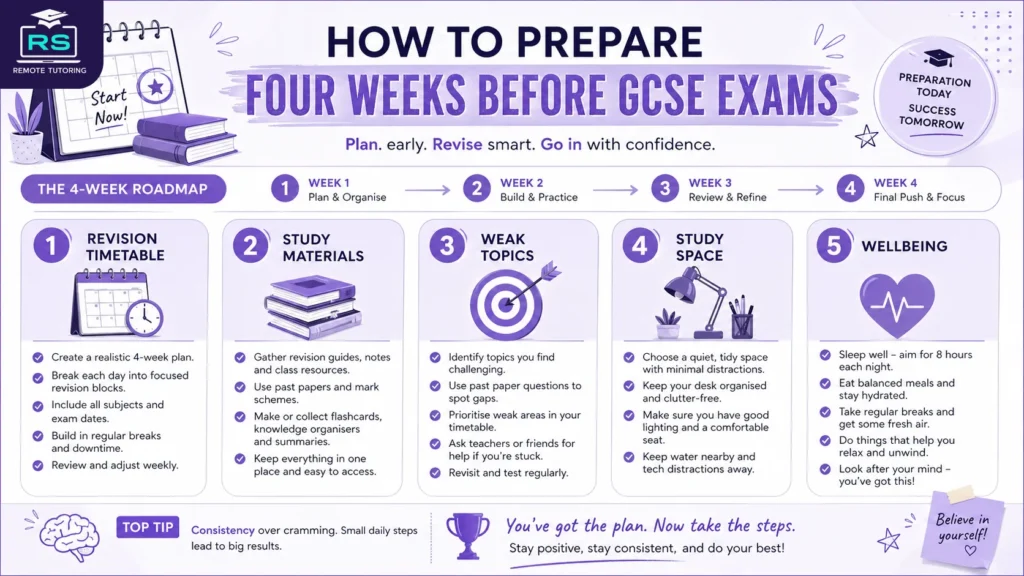
In the month leading up to your first GCSE paper, good planning will make everything feel more manageable. Save My Exams stresses that creating a revision timetable, gathering materials and looking after yourself are key parts of early preparation. Here are ways to put those ideas into practice:
- Finalise your revision timetable. Aim to start at least four weeks before your first exam. Block out sessions for each subject, including rest days. Use spaced repetition and active recall techniques to strengthen memory and avoid last‑minute cramming. Make sure you include time for past papers and mark‑scheme practice.
- Gather all your materials. Collect revision guides, class notes, flashcards, past paper booklets and any online resources. Having everything to hand prevents procrastination and helps you focus.
- Identify weak topics. Use mock‑exam feedback or mark schemes to spot areas that need extra attention. Spend more time on these subjects early on so you’re not panicking later.
- Set up a dedicated study space. Choose a quiet area with good light and minimal distractions. Stock up on pens, highlighters, sticky notes and spare paper. A tidy desk and a wall calendar showing exam dates can make revision feel more structured.
- Look after yourself. Good nutrition, sleep and breaks are part of effective study. Keep healthy snacks nearby, stay hydrated and build short walks or exercise into your timetable. In my experience, a brisk walk after an intense revision session clears your mind and improves concentration when you return.
If revision feels overwhelming, RS Remote Tutoring can help you organise your topics, practise past papers and build confidence before each paper. Contact us for one‑to‑one online GCSE tutoring.
One Week Before: Check the Details and Practise Exam Skills
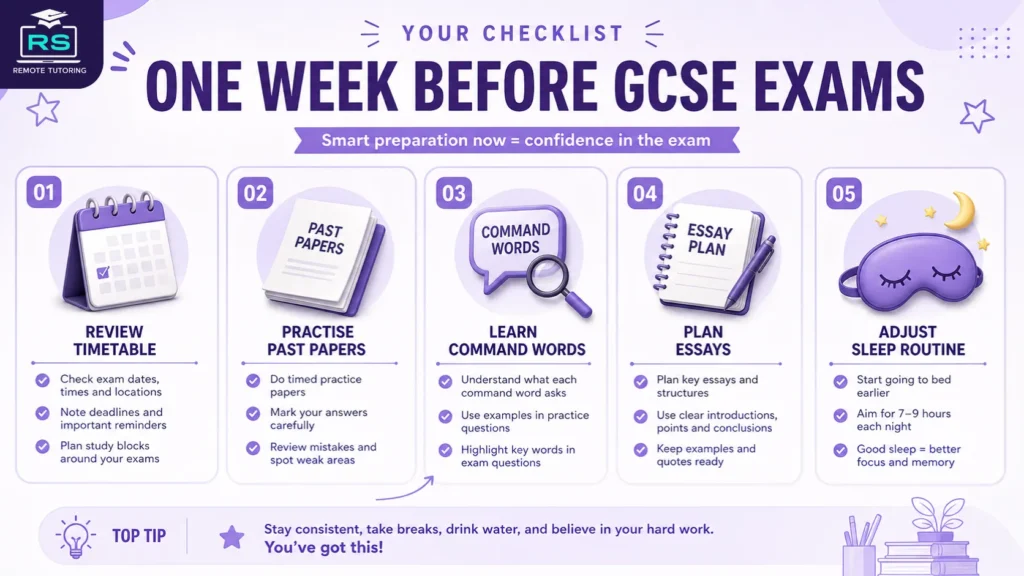
As exam day approaches, shift your focus from learning new content to consolidating what you already know and getting comfortable with exam formats.
- Review your exam timetable. Double‑check the date, time and location of each paper. Know whether it’s a morning or afternoon session and allow extra time for travel. The British Council reminds candidates to review their Statement of Entry and exam schedule one month before the exams; apply the same principle for GCSEs by keeping your timetable somewhere visible.
- Practise with past papers. Do timed papers under exam conditions. This helps you learn how long to spend on each question and what examiners expect. In the Soham survival guide, students are encouraged to practise exam questions and learn to unlock their memory. Write out full answers, mark them using official mark schemes and note where you lose marks.
- Learn command words. Examiners expect you to respond correctly to words like “describe,” “discuss,” “calculate” and “evaluate”. The survival guide lists common command words and emphasises reading questions carefully. Make a mini‑glossary to remind yourself what each word requires.
- Plan essay responses. For essay‑based subjects, practise planning answers. In the exam, spend a few minutes outlining the introduction, key points and conclusion, examiners may award marks for well‑structured plans.
- Adjust your routine. Start going to bed and waking up at the same time you’ll need on exam days. This trains your body clock and reduces fatigue. Limit caffeine in the afternoon and avoid staying up late to revise.
The Night Before: Prepare Calmly, Don’t Cram
The evening before a GCSE paper should be about calm preparation rather than frantic studying. Both Save My Exams and PMT Education emphasise packing your bag, checking details and getting enough sleep. From experience, what you do the night before can set the tone for exam day.
- Double‑check your exam details. Confirm the time, location, paper code and any special instructions. Set multiple alarms so you’re up in plenty of time.
- Pack your bag. Lay out your clothes and pack everything you need:
- Transparent pencil case: Many schools require clear cases.
- Black pens (at least two): Most boards only allow black ink.
- Pencils, ruler, eraser and sharpener: For diagrams and graphs.
- Scientific calculator: Ensure it works and is allowed for the paper.
- Geometry set: Compass and protractor for Maths and Science.
- Water bottle (label removed): Stay hydrated.
- Photo ID and candidate number: Some schools require this.
- Tissues or glasses: For comfort and unexpected spills.
Consider packing a light snack such as a banana or cereal bar if your exam is long or spans lunchtime.
- Avoid last‑minute cramming. Briefly review flashcards or notes to refresh key facts. Starting new topics or staying up late can leave you tired and anxious.
- Look after yourself. Have a nourishing evening meal and relax. PMT suggests herbal tea, light exercise or a warm bath to unwind. The survival guide recommends pampering yourself and trying some relaxation exercises.
- Get a good night’s sleep. Aim for at least 7–8 hours. If you can’t sleep, rest in bed and practise deep breathing or a body‑scan meditation. Put your phone away, blue light disrupts sleep and scrolling can increase stress.
The Morning of the Exam: Stay Calm and Focused
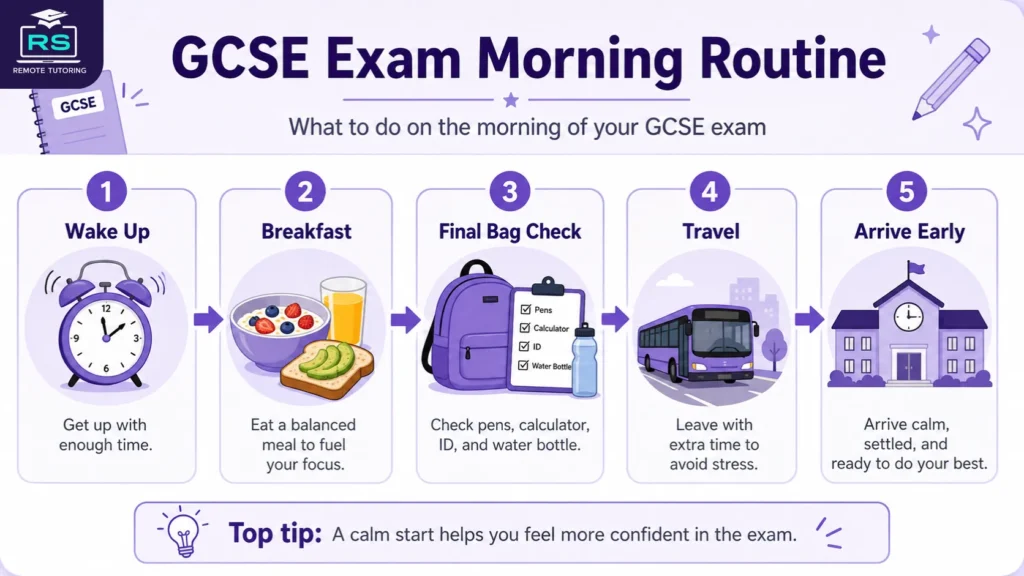
Exam morning can be tense, but a few simple habits will help you start strong. The BBC Bitesize article offers practical reminders: check your details, arrive early, have breakfast and take the right equipment.
- Wake up early. Give yourself extra time to eat, get dressed and travel. A rushed morning increases anxiety. Stick to the wake‑up time you’ve been practising.
- Eat a balanced breakfast. Choose foods that release energy slowly, such as porridge with fruit, eggs on toast or yogurt with nuts. Avoid too much sugar or caffeine, which can cause jitters. Hydrate with water; you can sip it during the exam if allowed.
- Do a final check of your bag. Ensure your transparent pencil case and other essentials are packed. Check your candidate number and seat location again. I still remember the relief of knowing I had everything before leaving the house.
- Arrive early. Plan to reach school or the exam centre at least 30 minutes before the start. Some schools ask students to be there an hour early. If you arrive super‑early, use the time to review key points or simply breathe and relax. Always have a Plan B for transport in case buses or trains are delayed.
- Stay relaxed. Talk with friends, but avoid conversations about what you haven’t revised. Use breathing exercises to calm nerves. Remind yourself that one exam does not define your future.
What Not to Do Before an Exam
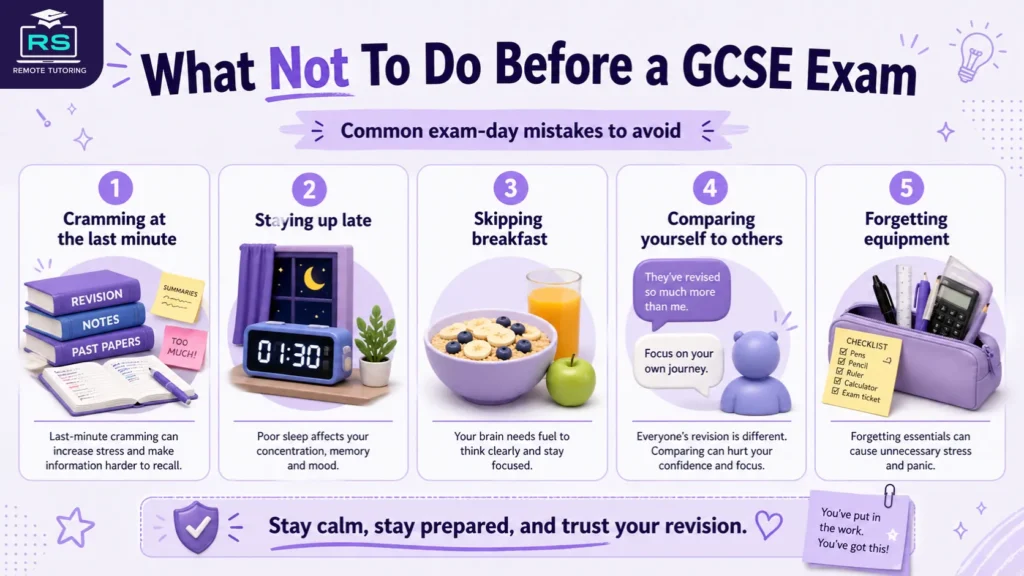
Knowing what to avoid is as important as knowing what to do:
- Don’t cram new topics. Learning new material the night before rarely sticks and increases anxiety. Focus on consolidating what you know.
- Don’t stay up late. Lack of sleep affects memory, concentration and problem‑solving.
- Don’t skip meals or rely on energy drinks. Skipping breakfast can cause low blood sugar and fatigue. Energy drinks may give a quick boost but often lead to crashes and jitteriness.
- Don’t compare yourself to others. Everyone revises differently. Concentrate on your own plan and progress.
- Don’t ignore logistics. Failing to check your exam room, candidate number or equipment increases stress. Double‑check everything.
Revising Without Panicking
Keeping a clear head during revision is crucial. Here are techniques to help you revise effectively without burning out:
- Use active recall and spaced repetition. Test yourself frequently rather than simply reading notes. Flashcards, quizzes and practise questions help information stick. Spread revision over several weeks rather than cramming at the last minute. Apps like Anki or the Leitner system can be useful.
- Set achievable goals. Break tasks into small, manageable chunks. For example, “Complete Biology past paper 1 by 5 pm” rather than “Revise Biology”. Reward yourself after completing each task (a snack, a walk or an episode of a show).
- Rotate subjects. Switching between subjects keeps your brain engaged and prevents boredom. Use a colour‑coded timetable to ensure you don’t neglect any subject.
- Teach someone else. Explaining a topic to a friend or family member is one of the best ways to check your understanding. The survival guide suggests discussing new ideas with a friend and explaining concepts out loud.
- Manage procrastination. Use techniques like the Pomodoro method (25 minutes of focused work followed by a 5‑minute break). If you’re stuck, start with a 5‑minute task to build momentum.
- Stay mindful of stress signals. If you feel anxious or overwhelmed, pause and practise deep breathing or take a short walk. Remember that small breaks improve productivity.
Managing Stress and Anxiety
Exam stress is normal, but persistent anxiety can hinder performance. To stay calm:
- Prioritise sleep. Aim for seven to nine hours each night. Stick to a consistent bedtime and wake‑up time.
- Eat well. Choose complex carbohydrates, lean proteins and plenty of fruits and vegetables. Avoid excessive caffeine or sugar, which can spike anxiety. A balanced diet supports concentration and stamina.
- Exercise and take breaks. Moving your body releases endorphins that reduce stress. Go for a walk, do stretching or practise yoga during revision breaks.
- Talk about it. Share your worries with someone you trust, a parent, teacher, tutor or friend. Simply talking can lighten the load.
- Practise relaxation techniques. Deep breathing, progressive muscle relaxation and mindfulness can calm your nervous system. PMT’s breathing advice suggests focusing on your breathing and practising body‑scan meditations. The BBC article also recommends breathing exercises to stay grounded.
- Be kind to yourself. Not every revision session will go perfectly, and not every exam will feel easy. Accept that mistakes are part of learning and move forward.
Feeling anxious? RS Remote Tutoring offers supportive tutors who can guide you in your GCSE last minute revision through tricky topics and teach stress‑management techniques so you feel calmer heading into each exam.
Staying Motivated During a Long Exam Season
GCSE exams stretch over almost two months. Maintaining momentum across numerous subjects can be challenging, especially when friends finishing earlier may start enjoying summer. To stay motivated:
- Celebrate small wins. Each completed paper is a step closer to summer. Mark off each exam on a wall chart.
- Alternate hard and easier subjects. Planning a challenging paper next to a favourite subject can keep morale high.
- Visualise the end goal. Think about the freedom and opportunities your results will bring, college courses, apprenticeships or A‑levels. Reminding yourself why you’re studying helps you push through tough days.
- Stay connected with friends. Study groups can make revision more social. Encourage each other and share resources.
- Take care of your hobbies. Don’t abandon sports, music or other interests completely. Short sessions doing something you love can re‑energise you.
Avoiding Common Exam‑Day Mistakes
Many mistakes in exams stem from nerves or poor planning. The Soham survival guide’s action checklist for the exam room provides useful dos and don’ts:
- Read the paper carefully. Spend a few minutes reading instructions and underlining key words. This reduces the risk of misinterpreting questions.
- Allocate your time. Divide the total exam time by the marks available to see how long to spend on each section. Wear a watch (if allowed) and check it against the exam room clock.
- Start with questions you know. Building confidence early helps when tackling harder questions later.
- Show your workings. You can earn marks even when the final answer is wrong.
- Leave time to check. Aim to finish with at least five minutes spare to review your answers.
- Manage blank moments. If your mind goes blank, don’t panic. Move to another question and come back later.
- Write legibly. Examiners can’t award marks they can’t read.
Making the Most of Exam Skills During the Paper
Beyond avoiding mistakes, effective exam skills can boost marks:
- Plan extended answers. For essays, spend a few minutes planning the introduction, headings, key words, evidence and conclusion. Examiners sometimes award marks for a good plan if you run out of time.
- Follow command words. If a question says “compare”, you must mention similarities and differences; if it says “evaluate”, you need to give evidence and reach a judgement. Keeping a list of command words nearby during revision can help you practise.
- Show your method. In calculations, write each step. Even if the final number is incorrect, method marks add up.
- Use appropriate terminology. In subjects like science and geography, use key terms precisely to demonstrate understanding.
- Stay flexible. If you realise you misunderstood a question, adjust your answer rather than clinging to a wrong path.
Parent Support: Helping Without Pressure
Parents often want to help but worry about adding pressure. From my conversations with parents, the most effective support is practical and emotional:
- Provide a quiet space. Ensure your child has a calm place to revise without interruptions. Help them create a revision timetable and respect their study times.
- Offer healthy meals and snacks. Balanced food boosts energy and concentration. Having dinner ready at a set time adds structure.
- Encourage breaks and sleep. Remind your child to rest and step away from screens. Share in light exercise or a walk together.
- Listen without judgement. Ask open questions about how revision is going. Avoid phrases like “You must get a 9” or “When I was at school…”. Instead, reassure them that you’re proud of their effort.
- Be flexible. During exam season, household routines may need to adapt, maybe by adjusting chores or allowing more quiet time.
Between Exams: Balancing Rest and Revision
When exams span several weeks, use the gaps wisely:
- Take a short break after each paper. Go for a walk, listen to music or enjoy a hobby. The survival guide recommends revising only points you’re unsure of between exams. Resting helps your brain process information and prevents burnout.
- Review the next subject. Once you’ve had a break, skim the specification or your revision notes for the next exam. Identify any last‑minute topics to refresh.
- Don’t dwell on completed exams. Resist the urge to discuss answers in detail with friends; it can increase anxiety. Focus on what you can change, the upcoming papers.
- Maintain routine. Continue going to bed and waking up at consistent times to keep your body clock steady.
Recovering After a Difficult Paper
There will be exams that don’t go as planned. Whether a paper felt harder than expected or you ran out of time, it’s important to move forward:
- Acknowledge your feelings. It’s normal to feel disappointed or frustrated. Talk to someone you trust.
- Avoid obsessing over mistakes. You can’t change the paper, and grade boundaries vary year to year. Focus on preparing for the next exam.
- Do something relaxing. Exercise, a hobby or time with friends can reset your mood. A change of scene helps you regain perspective.
- Revisit your revision plan. Check what’s next, adjust your timetable if needed and start fresh the next day.
Conclusion: You’ve Got This
GCSE exam season is intense, but with the right preparation you can walk into each paper feeling calm and ready. Start early, organise your revision, take care of your wellbeing and keep perspective. I still remember how reassured I felt when I had my bag packed the night before and arrived at the exam hall knowing I’d done everything I could. Trust your preparation and remember that no single exam defines you.
If you or your child would like personalised guidance throughout exam season, RS Remote Tutoring offers one‑to‑one online GCSE tutoring. Our experienced tutors help students organise revision, practise exam skills and manage stress so they can approach each paper with confidence.
What to do Before GCSE Exam FAQs
What should parents do during GCSE exams?
Provide a calm environment, encourage healthy routines and listen to your child’s concerns without adding pressure. Offer practical help like making nutritious meals, checking exam timetables and giving lifts to the exam centre. Celebrate effort and progress rather than focusing solely on grades.
What should I do before a GCSE exam?
Prepare a few weeks early with a structured revision timetable that covers every subject. Gather your study materials, practise past papers and learn exam command words. The night before, check your exam details, pack your equipment (pens, pencils, calculator, ID, water bottle), avoid last‑minute cramming and get a good night’s sleep. On the morning, eat a balanced breakfast, arrive early and stay calm.
What are the hardest GCSE subjects?
The perception of “hardest” varies by student. Many find GCSE Physics, Chemistry, Maths and Modern Foreign Languages challenging because they require both conceptual understanding and application. However, your personal strengths and interests matter most; some students find languages easier than sciences. Focus on identifying your weaker topics early and allocate more revision time to them.
What should I do if I only have one night to study for a GCSE exam?
If you’re very short on time, prioritise high‑yield topics. Use mark schemes and past papers to see which areas frequently appear. Create a quick summary sheet of key facts, formulas or quotes. Avoid trying to learn everything; instead, aim to understand the main concepts. Pack your bag, set an alarm and get some sleep, you’ll perform better well‑rested than if you stay up all night.
Is 70 % a grade 7 in GCSE?
Grade boundaries vary by exam board, subject and year. A percentage score like 70 % does not always correspond to a specific grade. Exam boards such as AQA, Edexcel, OCR and WJEC set grade boundaries after exams are marked. It’s best to consult the board’s published boundaries for each exam session.
Is a grade 7 at GCSE good?
Yes. On the 9‑1 grading scale, a 7 is equivalent to an old grade A. It demonstrates strong understanding and is well above a pass (grade 4). Universities and sixth‑form colleges often consider grades 6–9 to be good, depending on the subject and course requirements.
What is the 2/3, 5/7 study rule?
This guideline suggests studying subjects in proportion to the number of exams or papers you’ll sit. For example, if you have two science exams and three English literature papers, you might allocate revision time in a 2:3 ratio. Similarly, the 5/7 rule recommends dedicating five days of revision to harder subjects and two days to easier ones each week. These rules can be useful starting points but should be adapted to your strengths and weaknesses.
What should I revise the night before a GCSE exam?
Focus on refreshing key facts, formulas or quotes you’ve already learned. Skim through your summary notes or flashcards and look at the structure of the exam paper so you know what to expect. Avoid starting new topics or heavy cramming; instead, aim for light, confidence‑building revision.
What should I eat before a GCSE exam?
Eat a balanced breakfast containing complex carbohydrates (e.g., oats, whole‑grain bread), protein (e.g., eggs, yogurt) and fruit. Avoid high‑sugar foods and energy drinks, which can lead to spikes and crashes. Drink water to stay hydrated. For afternoon exams, have a balanced lunch and a light snack shortly before the exam starts.
What should I do if I panic during an exam?
Stop and take a few deep breaths. Remind yourself that feeling anxious is normal and that you can still perform well. If your mind goes blank, move on to another question and return later. Drinking a sip of water can also help. During revision, practise relaxation techniques so you can use them in the exam hall.
How do I stay motivated during GCSE exam season?
Set small, achievable goals and reward yourself when you reach them. Rotate subjects to keep things interesting, study with friends for mutual support and visualise the benefits of your results. Keep up with hobbies and physical activity to maintain balance. Remember that each exam completed brings you closer to summer.
Raja specializes in Physics and Maths, with over 5 years of experience. He offers KS2, KS3, and GCSE Science and Maths lessons. He graduated from one of the top universities in the UK.
1 Comment
[…] If the recovery cycle needs repeating, repeat it. Two 30-day cycles between January and May, with a structured plan for the final run-in to the exams, is a genuinely strong position, whatever December’s results letter […]