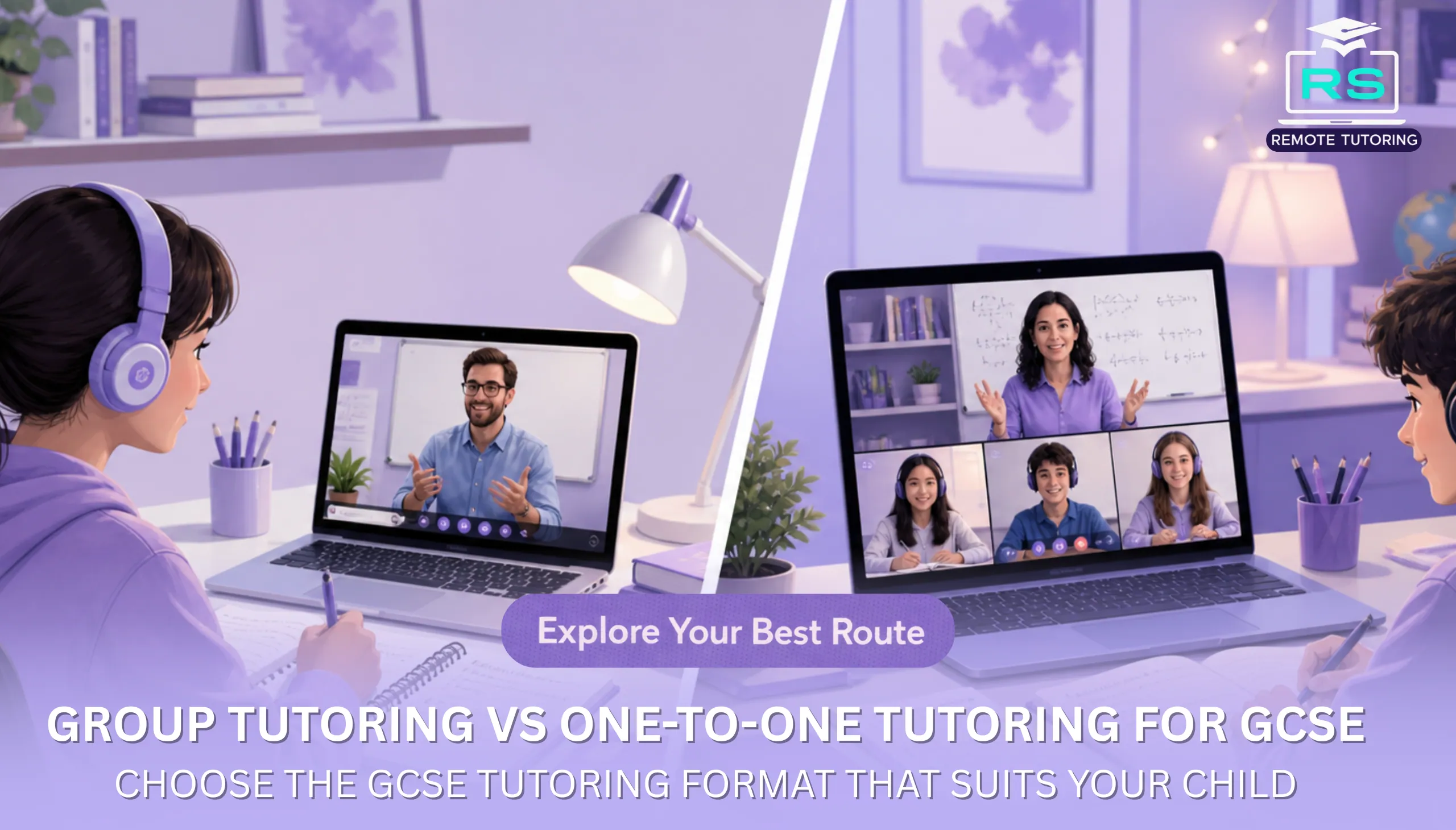
Tutoring is misunderstood in today’s world. When students seek to approach for extra guidance, people might think they are weak and need extra support but this is not the case. Even the most hardworking and the talented students seek extra guidance for the smooth flow of their preparation. When parents and students start looking for support during GCSE preparation, one question comes up almost immediately: Should you go for group tutoring or one-to-one tutoring? I have worked with both formats extensively, teaching students preparing for GCSEs online, and one thing becomes clear quite quickly:
What often surprises parents is how differently students respond to each format, not just academically, but emotionally and socially. This is another proud moment for the teacher when students respond the way, it seems like reward for the unlimited efforts is received.
I still remember one student who struggled badly in one to one sessions but improved dramatically once placed in a small group. And then another who shut down completely in a group but thrived individually.
So instead of giving a generic answer, this guide walks you through what actually happens inside these sessions, what works, what doesn’t, and how to choose the right path.
Jump to Section
What Is Group Tutoring Especially for GCSE Online Learning?
Before unraveling the truth that which one works best, let us discover what actually both support seeks to tackle. Group tutoring involves a small number of students (typically 3 to 6) learning together in the same session. In online GCSE tutoring, this usually means:
- Shared virtual classroom (Zoom, Google Meet)
- Interactive whiteboards
- Collaborative problem-solving
- Structured lesson plans
From experience, one thing I did not expect early in my tutoring career was how much peer presence changes student behaviour. Students who are quiet in school sometimes open up more in small groups online, especially when they realise others are struggling with the same topics.
Actually this is the quiet difficult to understand that what What works exactly Well in Group Tutoring
- Peer learning: Students explain concepts to each other further boosting their confidence level.
- Healthy competition: Students unlocking the hidden truth behind motivation and efforts further adding a touch of consistency in their preparation phase.
- Confidence building: “I’m not the only one confused”, in group sessions, even the less confident people understand that it’s okay to be the next slower in the race. Many people start from zero.
- Cost-effective: Group tutoring is one of the most effective for families, as it does not need an extra tutor’s efforts further making it cost friendly for the parents.
Where Group Tutoring Struggles
GCSE group sessions are none without the challenges. Some struggles may emerge such as;
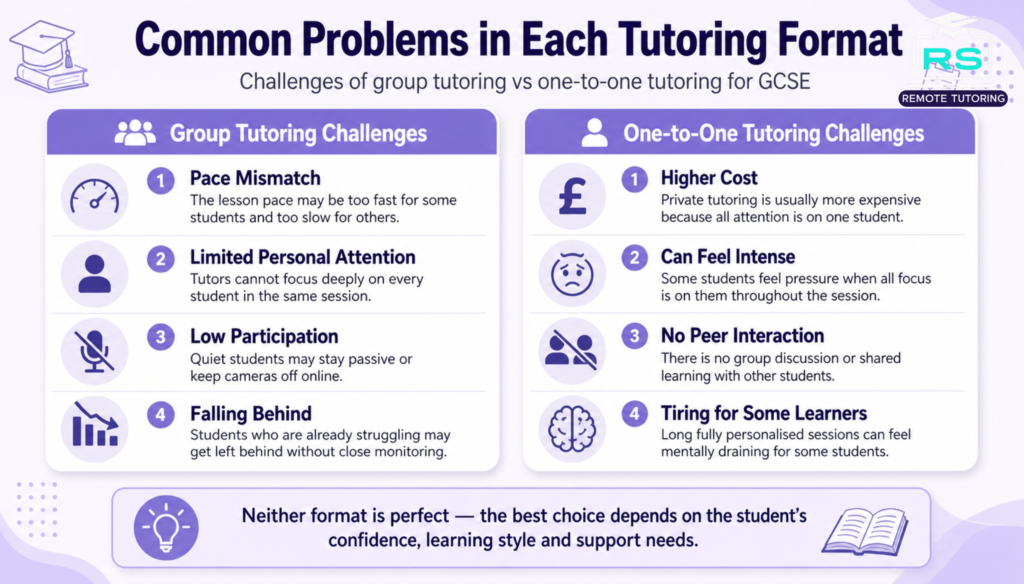
- Students can hide (camera off, minimal participation)
- Pace may not suit everyone
- Limited personalised attention
One of the most common patterns I have seen is:
Students who are already slightly behind tend to fall further behind in groups unless the tutor actively manages engagement.
What Is One to One Tutoring?
One-to-one tutoring is exactly what it sounds like, a fully personalised session between tutor and student.This is where:
- Every minute is focused on one student
- Lessons adapt instantly
- Weak areas are targeted deeply
From experience, what made the biggest difference for many struggling GCSE students was the ability to pause and ask questions without hesitation. One to one sessions are hily beneficial as they totally revolve around;
- Fully personalised pace
- Immediate feedback
- Deep focus on weak areas
- Strong tutor-student relationship
But the GCSE one to one sessions also serves some of the limitation, such as;
- Higher cost
- Can feel intense or tiring
- No peer interaction
Interestingly, some students actually find one-to-one sessions more stressful because all attention is on them.
Group Tutoring vs One-to-One Tutoring: The Real Differences That Matter
Let’s go beyond surface-level comparisons.
Learning Pace
- In Group session learning is totally fixed or semi-flexible pace
- While One-to-One sessions are completely flexible
Students who need time to process concepts often benefit more from one-to-one.
Engagement
- In Group sessions engagement highly depends on group dynamics
- One-to-One sessions as the attention is highly inclined towards the student so the engagement consistency is high
I have seen sessions where group energy lifts everyone, and others where silence dominates.
Confidence
- Group sessions heavily work on building the social confidence of the student.
- One to One sessions builds academic confidence
What stayed with me most was how students in groups often said:
I finally realised others struggle too.
Cost
- Group tutoring serves one of the ultimate benefits as it is cost effective.
- One-to-one tutoring sessions are highly tailored according to feasibility of the student so these offers premium pricing
For many families, this is a deciding factor.
Results
Here is the honest answer: Both sessions can produce excellent GCSE results, but only when matched to the right student.
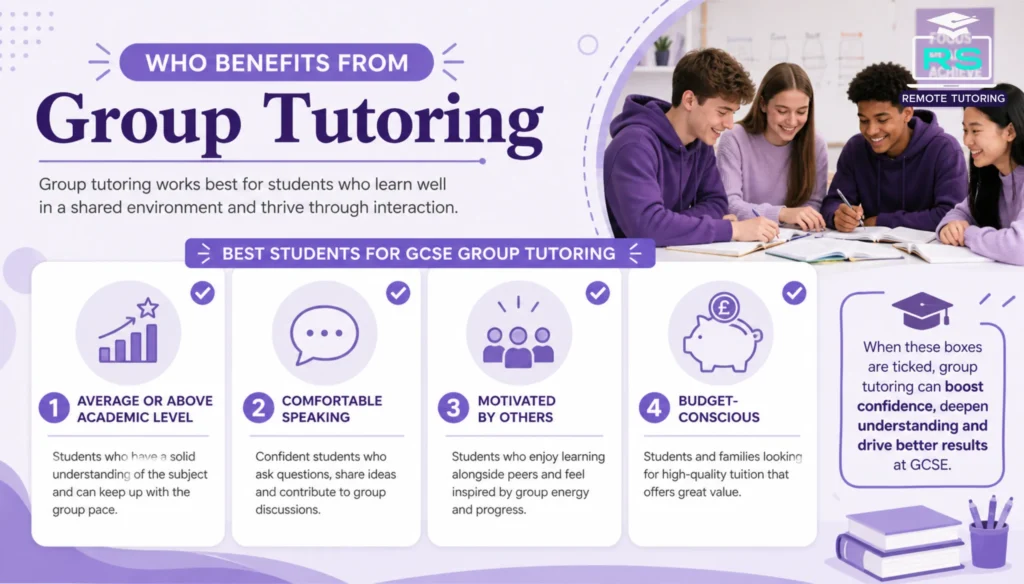
When Group Tutoring Works Best
Group tutoring is highly effective when:
- The student is average or above average academically
- They are comfortable speaking in small groups
- They benefit from discussion and interaction
- Budget is a concern
I would genuinely recommend group tutoring for students who:
- Need motivation more than deep remediation
- Learn well by observing others
When One-to-One Tutoring Is the Better Choice
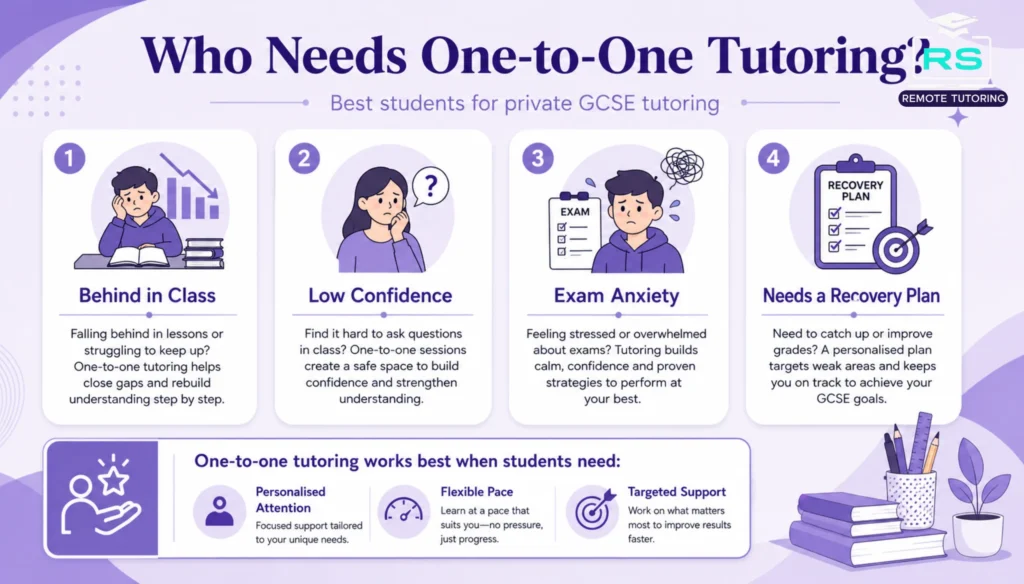
One-to-one tutoring becomes essential when:
- The student is significantly behind
- They lack confidence asking questions
- They need structured recovery plans
- Exam anxiety is high
Students often do not realise how much they benefit from: Having someone fully focused on their specific gaps
Online GCSE Tutoring: What Changes the Decision?
Online learning introduces new factors, as it is highly inclined towards the use of emerging technology.
Attention Span
- Group sessions can lead to passive listening
- One-to-one keeps students accountable
Camera Behaviour
- Many students turn cameras off in groups
- This reduces engagement significantly
Tech Comfort
- Some students thrive online
- Others disengage quickly
From experience:
The tutor’s ability to manage online energy matters just as much as the format.
Common Mistakes Parents usually Commit
Choosing Based Only on Cost
Cheap group sessions don’t help if the student isn’t learning.
Assuming “More Attention equals Better Results”
Not always true, some students perform better socially.
Ignoring Personality Fit
Learning style matters more than people expect.
Practical Decision Framework
Ask these 5 questions to make a well informed decision.
- Is the student behind or on track?
- Do they ask questions confidently?
- Do they learn better alone or with others?
- Is the budget flexible?
- Are exams close?
If most answers point to independence then the final inclination should be to group session for the GCSE preparation but. If most point to support than obviously it is the one-to-one
FAQs
Is group tutoring effective for GCSE students?
Yes, group tutoring can be effective for GCSE students who are already at a reasonable level and benefit from peer interaction. It helps build confidence, motivation, and collaborative learning, but may not suit students who need intensive support.
Is one-to-one tutoring better for GCSE exam preparation?
One-to-one tutoring is often better for GCSE preparation when a student is struggling or needs targeted improvement. It allows personalised pacing, focused revision, and immediate feedback.
Which is cheaper: group or one-to-one tutoring?
Group tutoring is generally more affordable because the cost is shared among students, while one-to-one tutoring is more expensive due to personalised attention.
Can online group tutoring be as effective as in-person?
Yes, online group tutoring can be effective if sessions are interactive and well-managed. However, student engagement and participation play a critical role in its success.
How do I choose between group and private tutoring?
Choose based on the student’s learning style, confidence level, academic needs, and budget. Students needing personalised help usually benefit more from one-to-one tutoring.
Final Thoughts
If there’s one thing I’ve learned over the years, it’s this: The format does not actually guarantee success, the fit does. I’ve seen students fail in one-to-one and succeed in groups. And I have seen the exact opposite. What matters most is:
- Understanding the student
- Matching the format
- And adjusting when needed

Raja specializes in Physics and Maths, with over 5 years of experience. He offers KS2, KS3, and GCSE Science and Maths lessons. He graduated from one of the top universities in the UK.