
Open a typical Year 11 revision timetable and it looks impressive. Neat colour-coded blocks, every subject squeezed in, a rainbow of good intentions. Then you watch what actually happens: the student spends the week on the subjects they already like and quietly skips the ones that scare them. A pretty timetable isn’t the same as an exam-focused GCSE study plan, and the gap between the two is where marks go missing.
That gap is exactly what a good tutor closes. The Education Endowment Foundation, which reviews what genuinely improves results, rates feedback among the highest-impact approaches in education, linked in its Teaching and Learning Toolkit to around six months of extra progress over a year. A generic timetable gives a student none of that. A tutor-built plan is built around it.
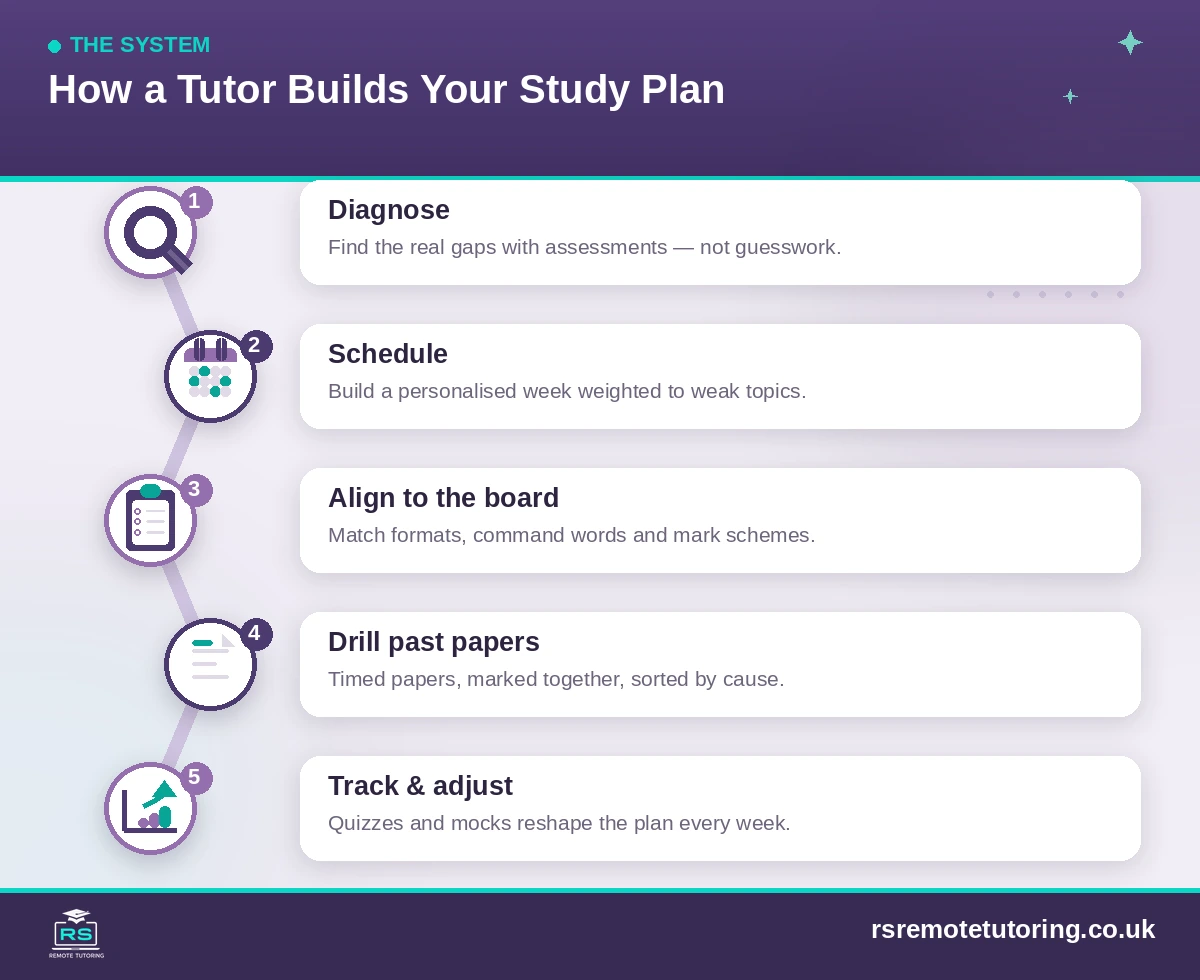
So a real study plan isn’t a grid of hours. It’s a system: diagnose the gaps, schedule around them, match the exam board, drill past papers, and adjust as the grades move. Here’s how tutors put that together, step by step.
Jump to Section
Why isn’t a generic revision timetable enough?
A generic timetable tells a student when to sit down, but not what to fix. It spreads time evenly across strong and weak topics, rewards busywork over real learning, and ignores the exam board’s specific demands. Exam-focused plans do the opposite: they target weaknesses and marks.
Left to their own devices, most students fall into three traps. They revise what they already know because it feels good, they lean on passive re-reading, and they leave real exam practice until far too late. A plan that doesn’t actively design those traps out will let them back in every single week.
What does an exam-focused GCSE study plan actually include?
An exam-focused plan combines five things: a diagnostic of strengths and gaps, a personalised schedule weighted toward weak areas, alignment with the exam board specification, structured past-paper practice, and regular progress checks. Hours are just the container; these five elements are the content.
Miss any one of them and the plan wobbles. A schedule with no diagnosis is guesswork. Past papers with no feedback loop just repeat the same mistakes. The point of a tutor is to keep all five working together rather than leaving a stressed teenager to assemble them alone.
How does a tutor start with a diagnostic assessment?
Before writing a single timetable, a tutor works out where the student actually stands. That means topic-based assessments, past-paper analysis, quick skills quizzes, and concept checks, not assumptions. The goal is to separate “looks shaky” from “is genuinely weak,” because those need very different amounts of time.
This is where surprises show up. One student understands the Maths but loses marks purely on exam timing. Another knows every historical fact yet can’t structure an essay under pressure. Once the real gaps are visible, the tutor can prioritise the topics that will add the most marks fastest, rather than the ones that simply feel productive. Our guide to how many hours you should study helps set realistic targets once those gaps are clear.
How do tutors design a personalised revision schedule?
A tutor builds the schedule around the diagnosis, giving weak subjects extra time and strong ones just enough to stay sharp. Sessions are short and focused, most experts suggest 30 to 60 minutes with breaks and every week includes review, not just new content. Balance and repetition are the point.
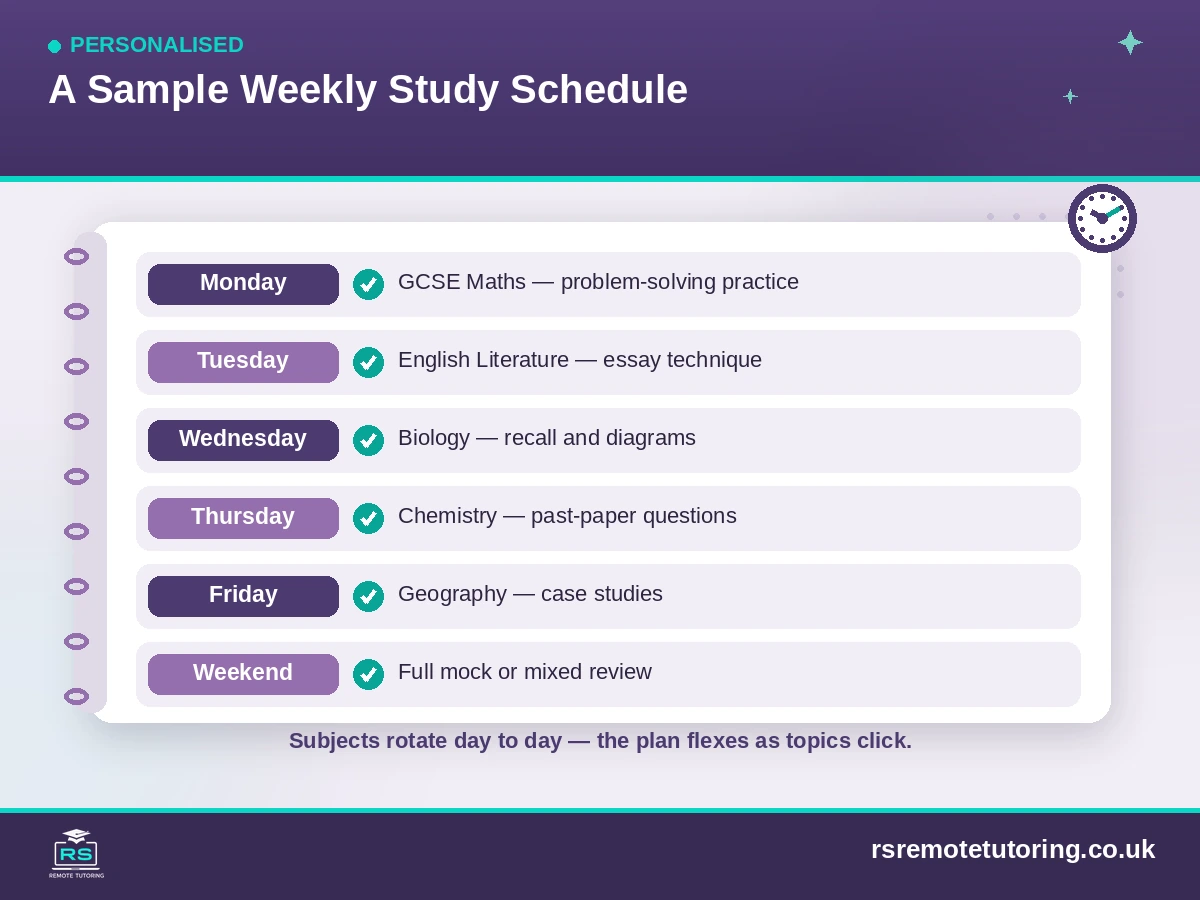
A realistic week might look like this.
| Day | Subject focus |
| Monday | GCSE Maths, problem-solving practice |
| Tuesday | English Literature, essay technique |
| Wednesday | Biology, recall and diagrams |
| Thursday | Chemistry, past-paper questions |
| Friday | Geography, case studies |
| Weekend | Full mock or mixed review |
Notice it rotates subjects rather than blocking one for days, which builds the flexible recall a mixed exam paper demands. The plan also stays flexible, it’s a living document, adjusted as some topics click and others don’t.
How do tutors align revision with exam board specifications?
Tutors map the plan to the student’s actual exam board, because AQA, Edexcel, OCR and the rest use different formats, command words, and mark schemes. Revising the right content in the wrong style still loses marks. Matching the specification means the student practises exactly what the examiner will reward.
This changes how each subject is revised. English rewards analysis and interpretation. Science wants structured explanations and clear working. History turns on argument and evidence. A tutor teaches students to decode command words like analyse, evaluate and compare, so answers are written for marks rather than just written out. Our breakdown of how to answer GCSE exam questions digs into those command words, and free resources like BBC Bitesize are handy for checking topic coverage.
How do past papers fit into the plan?
Past papers are the engine of exam-focused revision, not an afterthought for the final week. They build familiarity with format, timing, and question patterns, and they turn vague knowledge into exam marks. Tutors weave them through the whole plan, not just the end.
A tutor-run past-paper cycle usually runs like this:
- Complete a paper under timed, realistic conditions.
- Mark it together against the official scheme.
- Sort every dropped mark by topic and by cause.
- Feed those weak spots straight back into next week’s schedule.
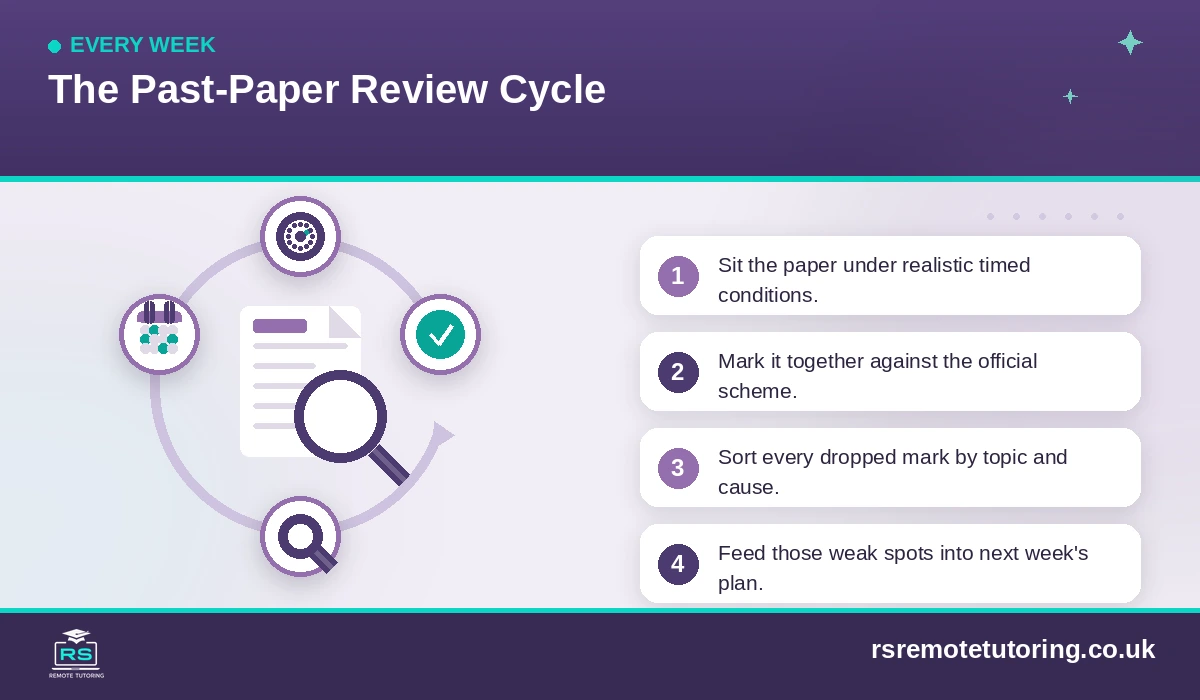
That fourth step is the one students skip on their own. Marking a paper and sighing at the score teaches nothing; sorting the mistakes and acting on them is where grades climb. Our guides on using GCSE past papers and preparing for a mock exam walk through the process in detail.
How do tutors track progress and adjust the plan?
A study plan isn’t fixed; it evolves as the student does. Tutors track progress with weekly quizzes, topic tests, mock exams, and simple progress reports, then adjust the schedule around what those show. A topic that’s now solid gets less time; a stubborn one gets more.
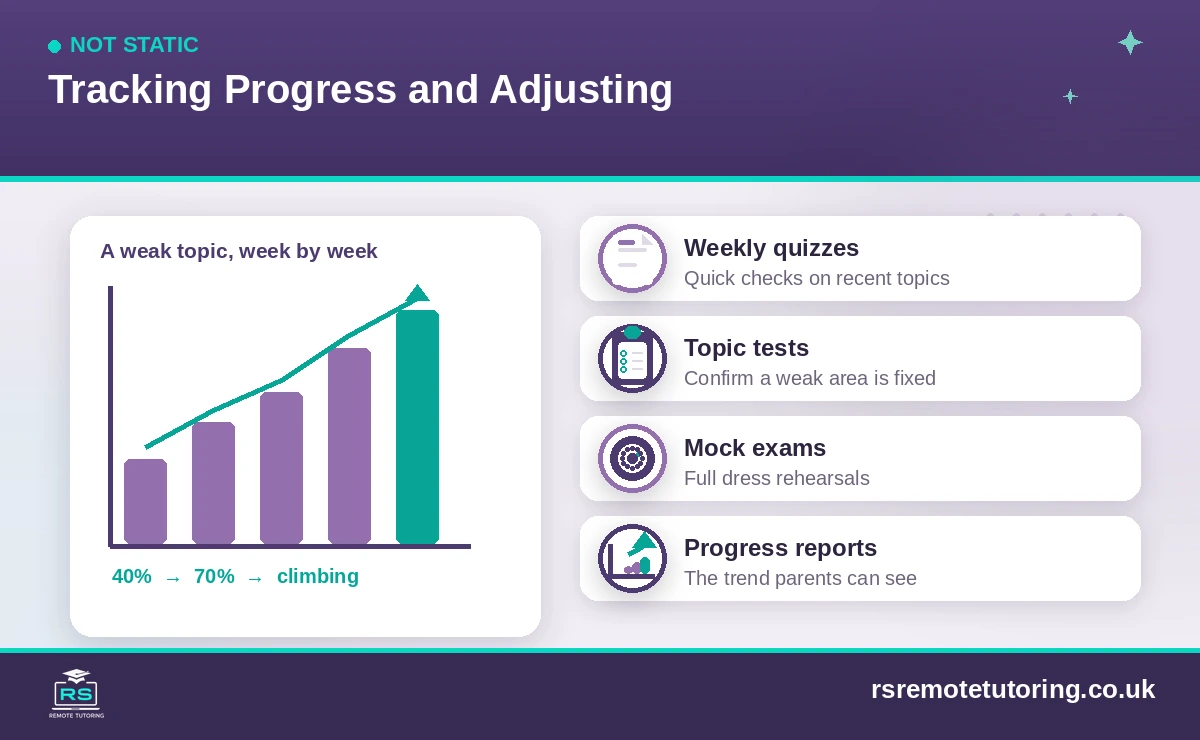
There’s a motivation payoff here too. When a student can see a weak topic climb from 40% to 70% across a few weeks, revision stops feeling like a black hole and starts feeling like it’s working. Reviewing mock feedback with a tutor turns a disappointing paper into a clear list of next moves. Evidence-based methods like retrieval practice, covered in our memory hacks for GCSE guide, sit underneath the whole plan.
Why does online tutoring suit exam-focused planning?
Online tutoring fits this kind of structured planning well because it’s personalised, flexible, and built on constant feedback. Plans are tailored to one student, sessions slot around school, and digital tools, shared whiteboards, quizzes, screen sharing, make it easy to track progress and correct mistakes in real time.
The flexibility matters more than it first appears. A weak topic spotted on Monday can be built into Tuesday’s session without waiting for a classroom to catch up. You can see how our online tutoring and GCSE revision tutors put these plans together, read how it works, or book a free trial to map out your child’s plan in the first session.
How does the study plan change through the year?
The plan isn’t one fixed document, it shifts as the exams get closer. Early on it’s about building habits and filling knowledge gaps. By the spring of Year 11 it tilts hard toward past papers, timing, and exam technique. A good tutor plans that curve deliberately rather than doing the same thing every week.
In Year 10 and early Year 11, the emphasis sits on understanding content and establishing a routine that doesn’t rely on motivation. Around January and February, intensive past-paper work takes over, targeting the weak topics the diagnostics flagged. In the final few weeks, the plan deliberately eases off new material and protects sleep and calm, because a rested brain recalls more than an exhausted one. A tutor reads where a student is and dials each phase up or down to match, so the plan always fits the moment rather than a generic calendar.
Frequently Asked Questions
Are personalised study plans better than generic timetables for GCSEs?
Yes. Personalised plans target weak areas and match the exam board, so revision time goes where it adds the most marks. Generic timetables spread time evenly and often reinforce a student’s existing strengths instead of fixing gaps.
How do online tutors create GCSE study plans?
They start with a diagnostic assessment of strengths and weaknesses, then design a schedule weighted toward weak topics, aligned to the exam board, built around past papers, and adjusted regularly using quizzes, tests and mock results.
How long should GCSE revision sessions be?
Most experts recommend focused blocks of 30 to 60 minutes with short breaks. Shorter, active sessions with regular review beat long, passive ones, and they’re far easier to sustain across a full revision period.
Do online tutors use past papers in their study plans?
Yes, and throughout, not just at the end. Past papers build exam familiarity and timing, and tutor-marked papers reveal exactly which topics and question types need more work before the real exam.
Can online tutoring improve GCSE results?
Structured tutoring with a personalised plan and regular feedback is consistently linked to better performance and confidence. The gains come from targeting the right topics and keeping students accountable between lessons, not simply adding more hours.

Raja specializes in Physics and Maths, with over 5 years of experience. He offers KS2, KS3, and GCSE Science and Maths lessons. He graduated from one of the top universities in the UK.




1 Comment
[…] sessions are aligned to the exam board and a structured revision plan, the sort of plan we cover in how tutors build a GCSE study plan. But grades alone can mislead. Someone climbing from a low baseline to a solid middle grade may be […]