Revision of GCSE maths can feel overwhelming, but with the right strategies, resources and support, you can turn GCSE maths revision for exams into a manageable (and even rewarding) journey. Our guide is designed to hepl you through everything you need to know about revising for maths exams in 2026, whether you are a student facing the GCSE for the first time or a parent seeking to provide the best support.
Jump to Section
How to Do GCSE Maths Revision Before Exam
Exam boards and paper formats
GCSE maths is assessed by several exam boards (AQA, Edexcel, OCR, WJEC and others). Each board has slightly different course content and exam structure, so it’s important to check which board your school uses.
Most boards offer two tiers:
- Foundation (grades 1–5)
- Higher (grades 4–9)
Your teacher will advise which tier matches your ability. Both tiers include a mix of:
- Non‑calculator papers (require mental arithmetic skills)
- Calculator papers (allow calculators; these papers often test algebra and geometry)
- Multiple types of questions: Multiple‑choice, short answer and longer problem‑solving questions.
Know your topics and weightings.
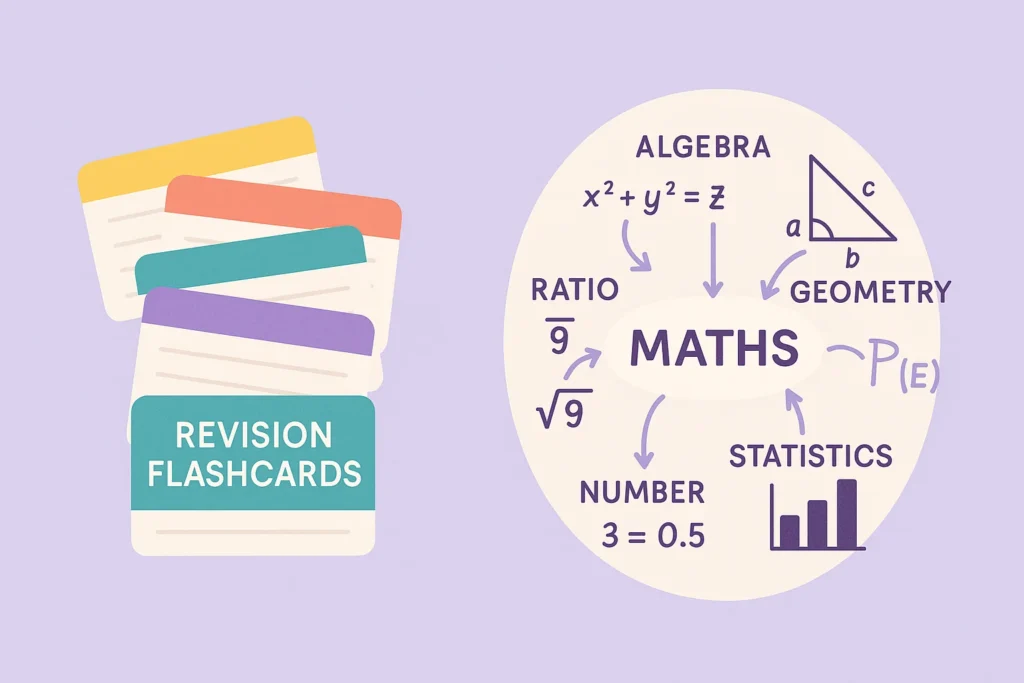
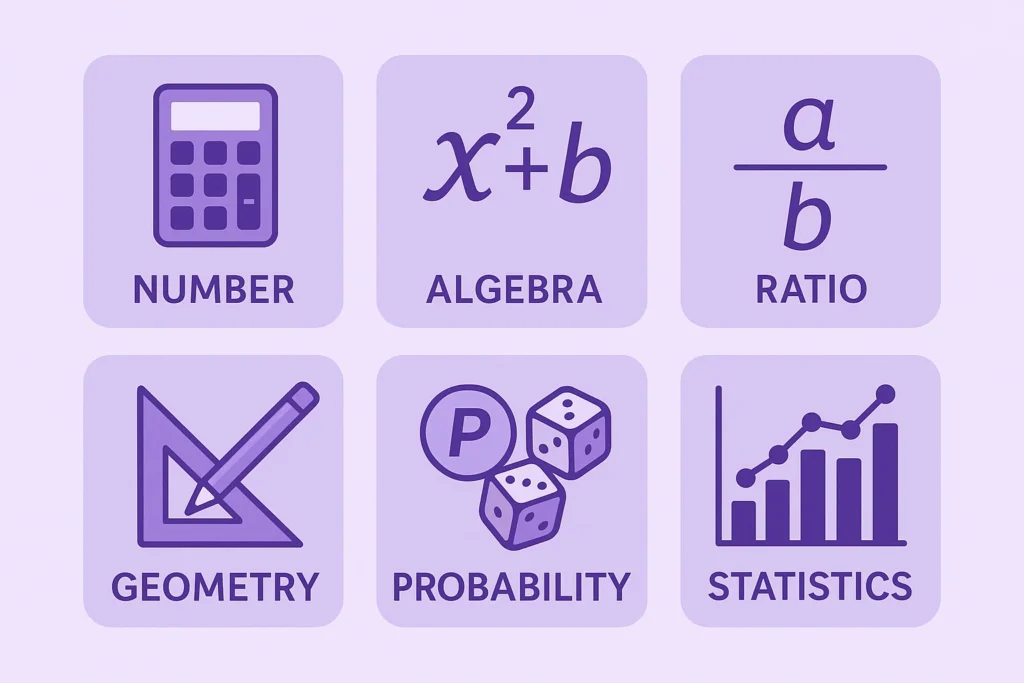
GCSE maths covers six broad areas: Number, Algebra, Ratio and Proportion, Geometry and Measures, Probability and Statistics. Each area carries a different weighting in the exam. Your exam board’s specification details what proportion of the marks comes from each topic – this helps you prioritise gcse maths revision. An experienced teacher or tutor can help you interpret the specification and understand which topics to focus on.
Coursework and internal assessments
Unlike some GCSE subjects, GCSE maths is assessed entirely by exams; there is no coursework. However, your school may run mock exams and internal tests; treat these as opportunities to practise exam technique under timed conditions.
Create an Effective Revision Plan to Prepare for GCSE Maths Exam
Start early and map out your time
It’s easy to put off revision until the last minute, but research shows that spreading out study sessions over time is far more effective than cramming. At least three months before your exam, look at your calendar and block out regular study sessions. Break your revision into manageable chunks. For example, you might study for 45 minutes followed by a 15‑minute break; this keeps your mind fresh and maintains motivation.
Prioritise topics
Once you know the weighting of topics, evaluate which areas you find difficult. Use self‑assessment tools or past test results to identify weak spots. Rank topics by importance and difficulty, then allocate more time to high‑priority topics. Don’t spend all your time on topics you already enjoy; tackling challenging concepts early gives you time to seek help if needed.
Balance revision with other subjects
If you’re also preparing for other GCSEs such as English, science, computer science or religious studies, adjust your timetable so you’re not overwhelmed. Alternate between different subjects to avoid boredom and enhance retention, for example, follow a maths session with some English reading or science note‑taking.
Build flexibility into your schedule
Life happens. Unexpected events can disrupt even the best‑planned revision timetable. Plan buffers in your calendar so that if you miss a session, you can make it up later. An overly rigid schedule can add unnecessary stress; instead, aim for a framework that guides your progress but allows adjustments.
Active Revision Techniques That Work for GCSE Maths
Always Practise, don’t just read
Mathematics is a skill you develop through practice, not through passive reading. One article notes that the only way to revise maths is to do maths. Working through a variety of problems improves problem‑solving ability and boosts confidence. Spend more time answering questions than reading notes or watching tutorials.
Use past papers effectively
Past papers are one of the most powerful revision tools. Doing a paper under timed conditions simulates the exam environment and reveals how well you manage time and pressure. Mark your answers, analyse your mistakes and learn from them. One resource suggests attempting one past paper per week in the months leading up to your exam. Gradually increase the number of papers as the exam approaches.
When working through past papers:
- Start with older papers to build confidence, then move on to recent papers.
- Cover topics across foundation and higher tiers (if you’re sitting the higher exam).
- Focus on exam techniques such as showing your working and writing a clear solution; you can earn marks even if your final answer is wrong.
Mix topic‑focused and mixed‑topic revision.
A helpful approach is to start with topic‑focused revision, pick specific areas with gaps and re‑learn them and then switch to mixed‑topic revision as the exam approaches. Mixed‑topic practice, through full papers or revision mats, prepares your brain to switch between different types of questions quickly.
Embrace technology and online resources.
Interactive platforms and apps can make maths revision engaging:
- Online tutorials (use video platforms to revisit difficult concepts)
- Interactive modules (websites like Khan Academy or My Maths offer exercises and instant feedback)
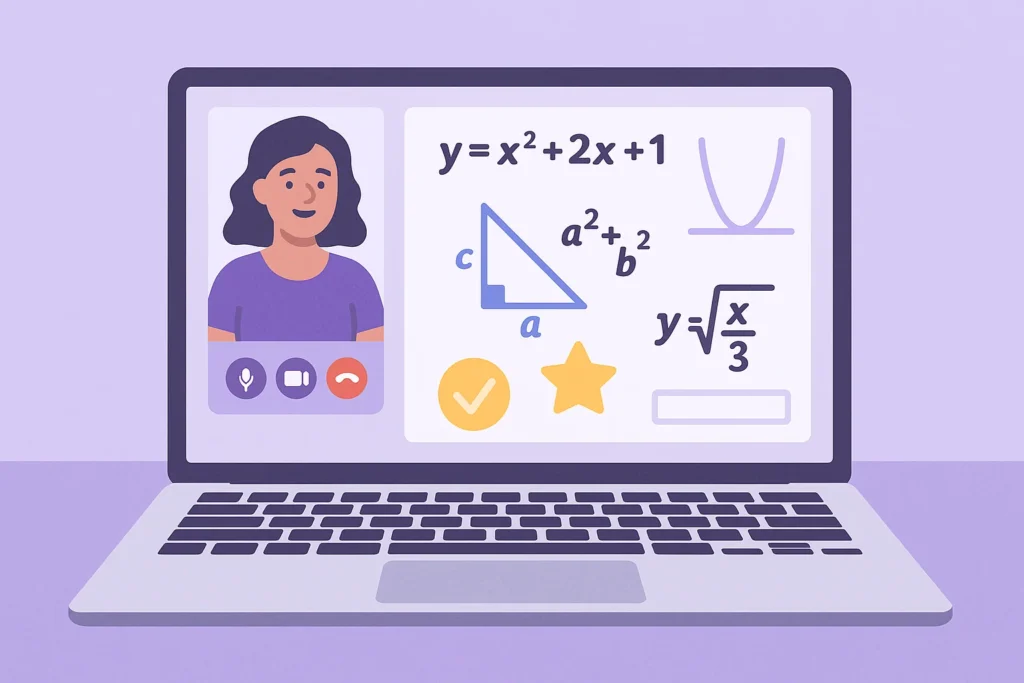
- Virtual whiteboards and practice quizzes: Many resources provide diagnostic quizzes that highlight misconceptions and provide targeted practice.
Master Scientific Calculator for GCSE Maths Exam Help
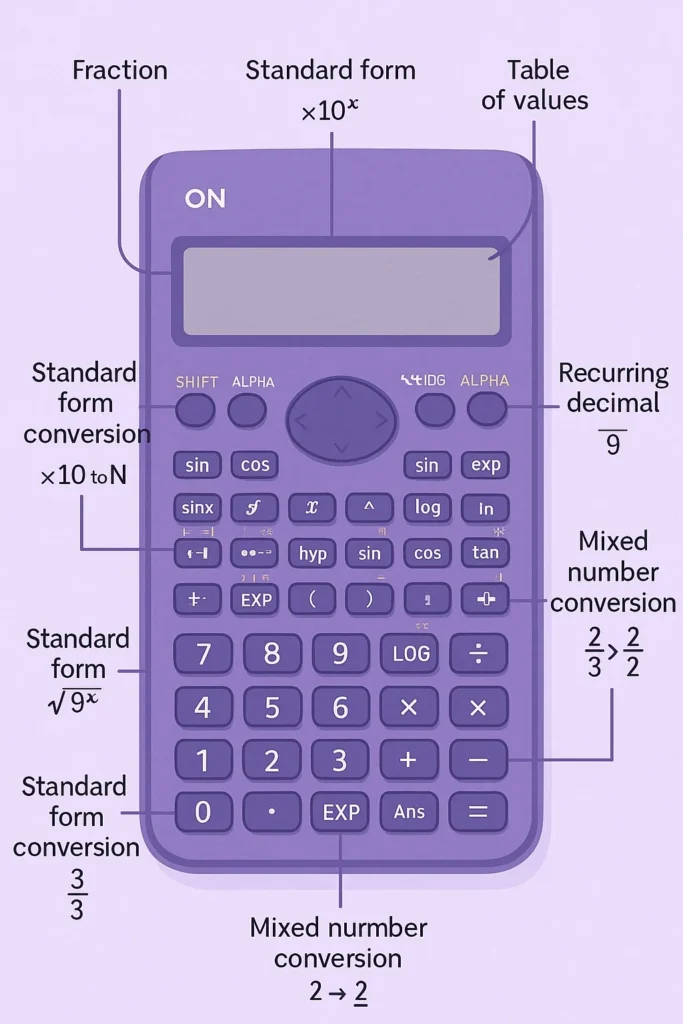
A scientific calculator is a powerful tool in GCSE maths. Familiarise yourself with its features beyond basic functions: prime factorisation, table of values, conversions between mixed numbers and improper fractions, standard form conversions and more. Practice solving different types of problems with your calculator so it becomes second nature on exam day.
Visualisation and memory techniques
Maths can become much easier when you visualise complex concepts. Use mind maps and diagrams to represent relationships between equations and theorems. To memorise formulas and procedures, create mnemonics such as FOIL (First, Outer, Inner, Last) for expanding quadratics or BIDMAS (Brackets, Indices, Division, Multiplication, Addition, Subtraction) for order of operations. Flashcards are a great way to recall key facts quickly.
Collaborative learning
Working with classmates can reinforce your understanding and keep you motivated. Organise study groups or teaching circles where each person explains a topic to the others. Discussing questions with peers can reveal alternative methods and clarify doubts. Online forums and revision communities allow you to share solutions and ask questions. However, stay focused, study sessions should be structured to avoid turning into social gatherings.
Look After Your Wellbeing and Health
Manage stress
Exams can be stressful, but stress is manageable with the right strategies. Incorporate mindfulness or breathing exercises into your daily routine to calm nerves. Plan regular short breaks into your study sessions to avoid burnout. Healthy habits such as sufficient sleep, balanced nutrition and physical activity support brain function. If you find your stress levels rising, speak to a teacher, parent or professional early; you don’t need to struggle alone.
Stay positive
Confidence is a major contributor to exam success. If you get stuck on a difficult problem, move on and come back later rather than letting it derail your exam. Focus on the questions you know and trust in your preparation. After your exam, avoid comparing answers with classmates; this can cause unnecessary worry.
Reward yourself
Small rewards keep you motivated. After completing a good revision session, treat yourself to something you enjoy, a favourite snack, a film or time with friends. Giving yourself breaks helps you return to revision with renewed energy.
Parents: How to Support Your Child
As a parent, you play a crucial role in creating a supportive environment for your child’s success.
- Help with planning: sit down with your child to create a revision timetable. Build in time for relaxing activities so your child doesn’t feel overloaded. Encourage them to review topics they find hardest rather than those they like.
- Provide resources: ensure your child has access to essential materials (textbooks, revision guides, practice papers, scientific calculator). You could print past papers or download them from exam board websites.
- Create a study space: a quiet, tidy space reduces distractions. Remove phones or devices that might tempt them away from studying.
- Encourage healthy habits: remind your child to take breaks, stay hydrated, eat nutritious meals and sleep well.
- Stay positive: reassure your child that it’s okay to make mistakes. Praise effort rather than just results, and avoid comparisons with friends or siblings.
- Know when to seek help: if your child struggles with a topic or loses confidence, consider extra support from teachers or a tutor. Early intervention prevents gaps from widening.
When and How to Use a Tutor
A tutor can provide personalised support that addresses specific weaknesses and builds confidence. Our expert tutors at RS Remote Tutoring specialise in GCSE maths and have a track record of helping students achieve their potential. Tutoring can be particularly beneficial if:
- Your child is working towards a grade jump (e.g., from a 5 to a 7).
- They struggle with exam technique despite understanding the content.
- They need help structuring their revision.
- Confidence is low, and they need encouragement from a skilled educator.
What to expect from a good tutor
A good Maths GCSE tutor will:
- Understand the exam board specification and tailor lessons accordingly.
- Assess your child’s current level through diagnostic tasks.
- Create a structured plan that targets weaknesses while reinforcing strengths.
- Provide clear explanations and break down complex topics.
- Give regular feedback and homework to consolidate learning.
- Offer practice under timed conditions and teach exam techniques.
- Support your child’s mental wellbeing and boost confidence.
Our online tutoring platform offers one‑to‑one sessions with UK‑qualified teachers via interactive video. Lessons are recorded so your child can revisit them later, and we provide homework and feedback after each session. To learn more about our tutors and the range of subjects we support, visit the expert tutors page.
Essential Revision Resources
While there is an ocean of materials online, focusing on high‑quality resources saves time and reduces confusion.
- Past paper bank: download past exams and mark schemes from the official exam board. Practising with these helps you understand question styles and examiners’ expectations.
- Topic question bank: websites compile past paper questions by topic (e.g. all algebra questions from past papers). These are excellent for targeted practice.
- Revision flashcards: physical or digital cards summarise formulas, definitions and key concepts. Use apps that support spaced repetition to remember facts longer.
- Mind maps and revision guides: summarise each topic in your own words; create visual aids to see how ideas connect.
- Formula sheets: Create your own formula sheet for quick reference. Rewriting formulas by hand helps memorisation.
- Interactive videos and tutorials: watch short clips on topics you find difficult; pause and practise alongside them.
- Diagnostic quizzes and online test banks: quick quizzes highlight misconceptions and track progress over time.
- Scientific calculator manual or tutorial videos: learn advanced functions to use your calculator efficiently.
Frequently Asked Questions
How do you revise for maths GCSE effectively?
Start by understanding your exam board’s specification and the topics it covers. Create a revision timetable at least three months before the exam. Focus on practising questions rather than simply reading. Use past papers, topic questions and diagnostic quizzes to identify areas for improvement. Incorporate varied techniques like mind maps, flashcards, collaborative learning and online resources. Maintain a balance with other subjects and look after your well-being.
How many hours should I study per day?
Quality matters more than quantity. Aim for two to three focused hours per day in the weeks leading up to the exam, broken into 30-45‑minute sessions with regular breaks. If you’re revising for multiple subjects, spread the sessions across the day. Avoid marathon study sessions; they lead to fatigue and reduced retention. Remember to schedule days off to recharge.
When should I start revising for GCSE maths?
Ideally, start revision at least three months before the exams. The earlier you begin, the more time you have to cover each topic thoroughly and revisit challenging areas. If you start later, focus on prioritising topics and practising past papers rather than trying to relearn everything from scratch.
What topics should I prioritise for higher marks?
Examine your exam board’s specification to determine topic weightings. Generally, algebra and numbers carry significant weight, followed by geometry and ratios. Focus on topics with both high weighting and personal weaknesses. Don’t neglect low‑weight topics completely; even a few marks can make the difference between grades.
How can I deal with exam stress?
Stress is natural, but it can be managed. Practise mindfulness and breathing exercises; take regular breaks; maintain healthy eating and sleep habits; talk to friends, family or teachers about how you feel. Being well‑prepared also reduces anxiety, so stick to your revision plan and avoid last‑minute cramming.
Do I need a tutor to do well in GCSE maths?
Not everyone needs a tutor. Many students succeed using a structured revision plan and high‑quality resources. However, a tutor can provide personalised guidance, address specific weaknesses and build confidence, especially if you’re aiming for a top grade or need help managing exam anxiety. A good tutor is particularly helpful when you have limited time and want to maximise your progress.
Plan and Execute GCSE Maths Revision
Revising for GCSE maths is a journey that requires planning, perseverance and support. By understanding the exam structure, identifying your weak areas, using a mix of topic‑focused and mixed‑topic revision, and practising past papers under timed conditions, you’ll build the confidence and skills you need for exam day. Balance your study with rest and look after your mental and physical wellbeing. And if you ever feel stuck, remember that help is available, from supportive parents and teachers to expert GCSE tutors who can guide you every step of the way.
With the right approach, you can transform revision from a source of stress into an empowering process. The effort you invest now will pay dividends not only in your GCSE exam results but also in the problem‑solving and time‑management skills you carry forward into A‑levels, university and beyond.
Raja specializes in Physics and Maths, with over 5 years of experience. He offers KS2, KS3, and GCSE Science and Maths lessons. He graduated from one of the top universities in the UK.
1 Comment
[…] Revision is where many students stumble, not because they lack ability but because they choose ineffective methods. Here are the main pitfalls tutors see, along with strategies to avoid them. […]