For many learners, the hardest part of preparing for Functional Skills Math Level 2 is not the maths itself, it is understanding what the exam actually looks like. I have worked with students who revised endlessly for fractions and percentages but still walked into the exam unsure about:
- how many papers there were
- whether calculators were allowed
- how timing worked
- what the questions would actually feel like
That uncertainty creates unnecessary stress.
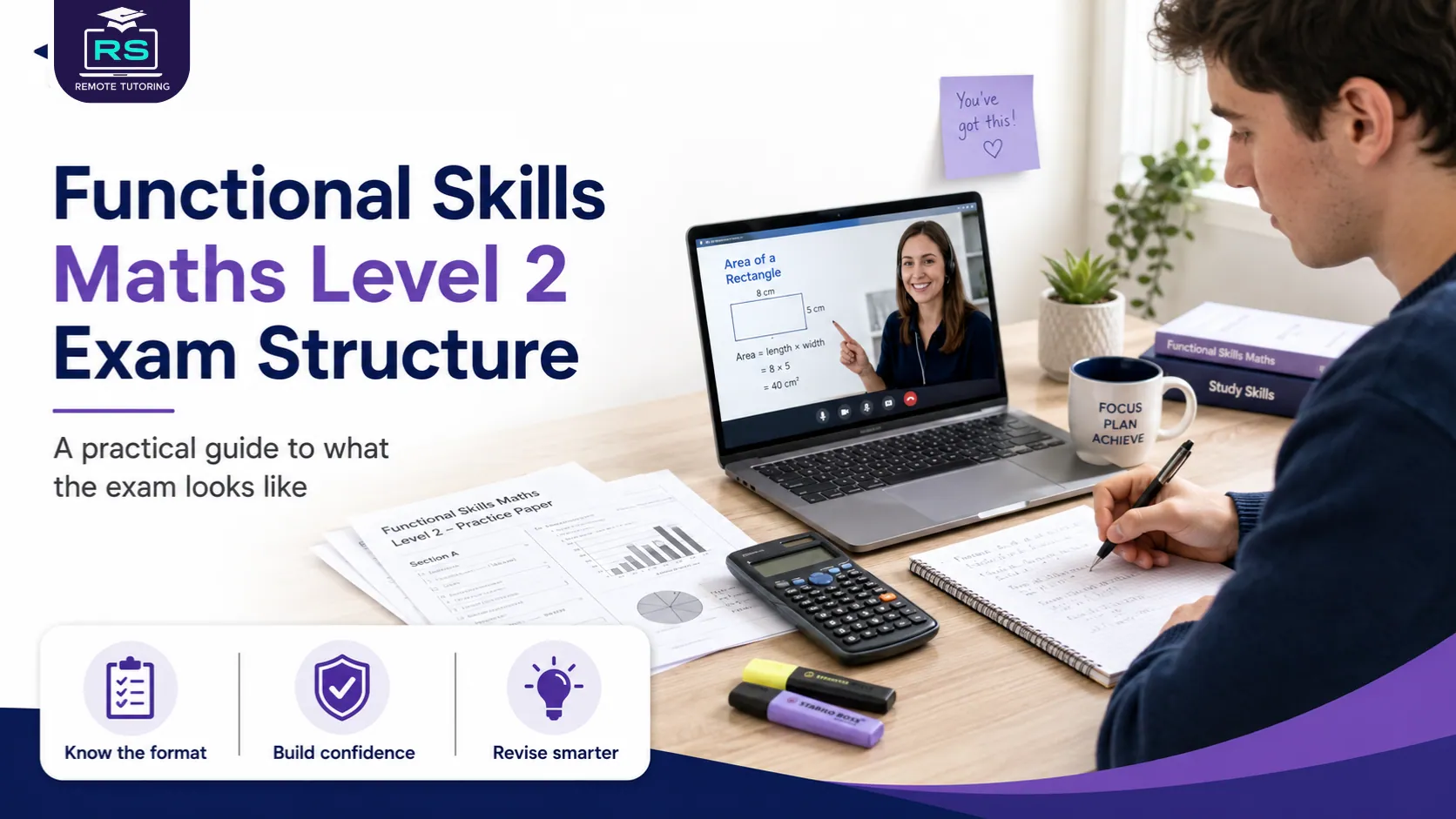
So in this guide, I am going to break down the complete Functional Skills Maths Level 2 exam structure in the simplest and most practical way possible that genuinely helps learners feel prepared and confident before exam day.
Jump to Section
What Is Functional Skills Math Level 2?
Mathematics Functional Skills Math Level 2 is a UK qualification designed to test practical maths skills used in everyday life, workplaces, apprenticeships, and further education.It is widely accepted as equivalent to a GCSE Maths grade 4/C by many employers, universities, and training providers across the UK.Unlike traditional school maths, the exam focuses heavily on:
- real-life problem solving
- interpreting information
- practical calculations
- reasoning skills
One thing that becomes clear quite quickly is that learners who understand the exam format early usually perform far better than those who only memorise maths methods.
Functional Skills Maths Level 2 Exam Structure
The exam structure can vary slightly depending on the exam board, but most providers follow a very similar format.
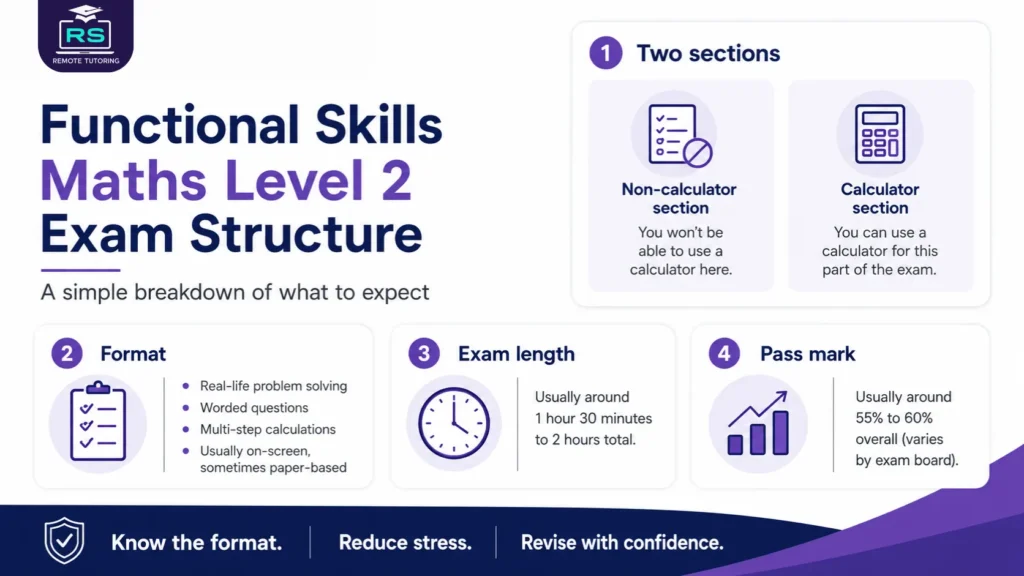
Typically, the qualification includes:
Two sections;
- The one section allows no calculator
- While the second one is multistep problem solving which allows the use of a calculator. Most exams are completed on-screen, although paper-based options still exist with some providers.
The Non-Calculator Section
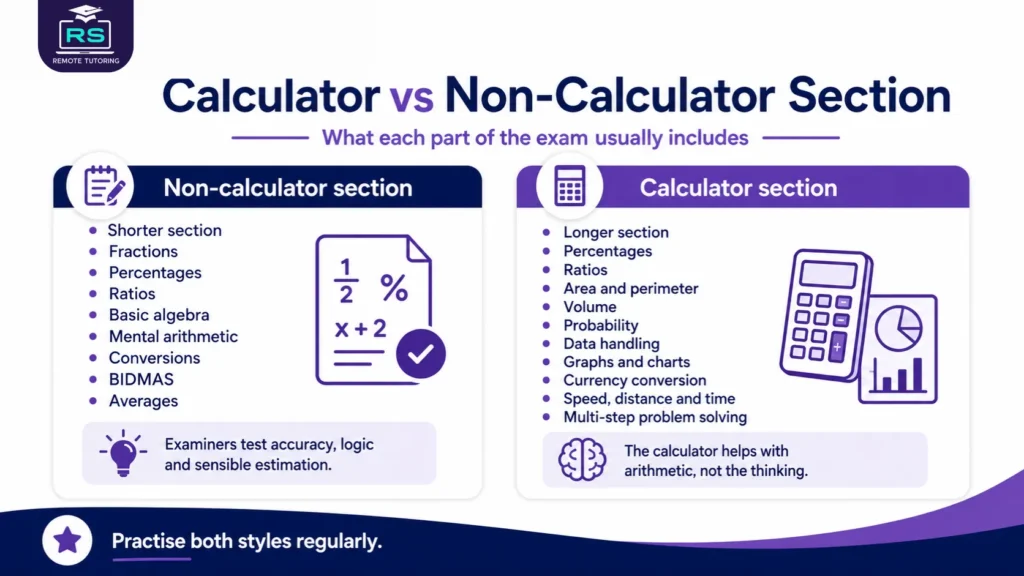
This section is usually shorter but often causes the most anxiety. Students know they cannot rely on a calculator, so they panic early and rush questions. From my experience, this is where confidence matters more than advanced maths ability.
Common Topics in the Non-Calculator Paper
You may see questions involving:
- Fractions
- Percentages
- Ratios
- Basic algebra
- Mental arithmetic
- Conversions
- BIDMAS
- Averages
What Examiners Are Really Testing
The non-calculator section mainly checks whether learners can:
- apply basic maths accurately
- estimate sensibly
- work through calculations logically
One of the most common patterns I have seen is learners revising everything with a mobile calculator beside them. Then during the exam, basic calculations suddenly feel unfamiliar. What made the biggest difference for many of my students was practising short daily calculations mentally:
- percentages
- multiplication
- conversions
- fractions
Even 10 minutes a day improves speed surprisingly quickly.
The Calculator Section
This is usually the longer section and includes more detailed real-life problem-solving tasks. The calculator helps with arithmetic, but many learners misunderstand something important:
The calculator does not solve the thinking part.
Students still need to:
- interpret information
- choose correct methods
- understand worded questions
- manage time carefully
Topics Commonly Included
The calculator section often includes:
- Percentages
- Ratios
- Area and perimeter
- Volume
- Probability
- Data handling
- Graphs and charts
- Currency conversion
- Speed, distance, and time
- Multi-step problem solving
Worded Questions Are the Real Challenge
I still remember one learner saying:
“The maths wasn’t impossible, understanding the question was harder.”
That is incredibly common. Many Functional Skills questions are written around:
- shopping
- bills
- travel
- wages
- timetables
- workplace situations
The maths itself is often manageable, but students lose marks because they rush the reading.
How Long Is the Functional Skills Maths Level 2 Exam?
The timing depends slightly on the exam board, but most exams last around: 1 hour 30 minutes to 2 hours total
Some providers split the sections separately, while others combine them into one assessment.
How to Manage Your Time Properly
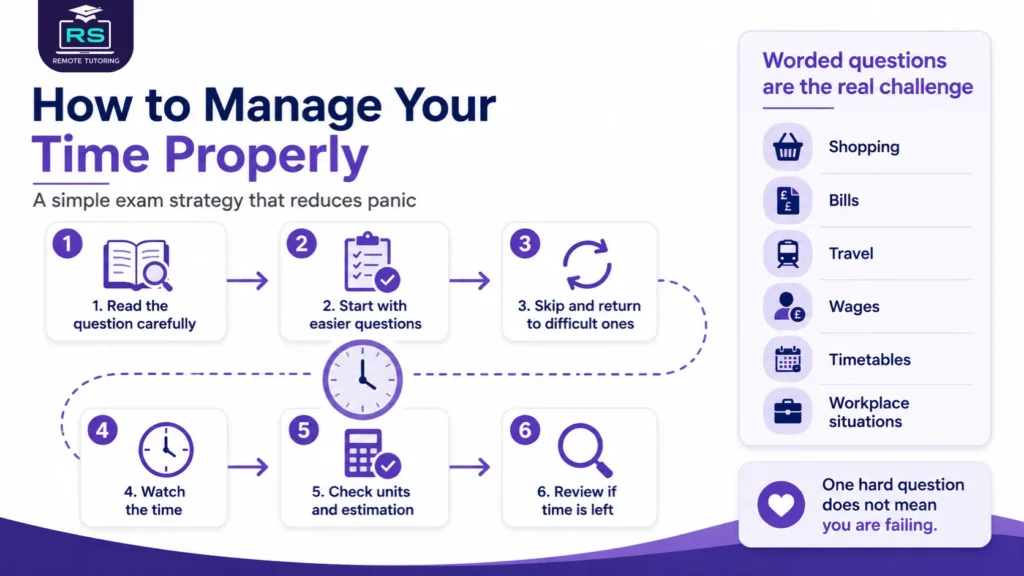
Time management is one of the biggest hidden challenges. We quickly realised during tutoring sessions that many learners spend too long trying to perfect difficult questions early on. A better approach is:
- Answer easier questions first
- Skip difficult ones temporarily
- Return later with fresh focus
That simple change alone often improves marks significantly.
Functional Skills Maths Level 2 Pass Mark Explained
The pass mark changes slightly between exam boards and exam sessions.Usually, learners need around: 55% to 60% overall to pass
However, this can vary. One thing students often do not realise is that you do not need 100% accuracy to pass. Similarly, strong performance in practical questions can compensate for weaker areas elsewhere.
Most Important Topics to Revise
If time is limited, prioritise these Functional Skills Maths Level 2 Topic areas first.
- Percentages
- Fractions
- Ratios
- Proportion
- Averages
- Data interpretation
- Area and perimeter
- Worded problem solving
These appear repeatedly across most Functional Skills Maths Level 2 exams.
Common Mistakes Learners Make
- Ignoring Worded Questions: Students often jump into calculations before understanding what is actually being asked.
- Poor Time Management: Spending 15 minutes on one difficult question can damage the entire paper.
- Weak Estimation Skills: Many learners never check whether answers make logical sense.
- Over-Reliance on Memorisation: Functional Skills maths rewards understanding more than memorised formulas.
- Lack of Timed Practice: From experience, confidence grows dramatically once learners complete full mock papers under timed conditions.
Best Revision Strategy for Adult Learners
Adult learners often balance:
- work
- family responsibilities
- childcare
- apprenticeships
So revision needs to feel manageable. What stayed with me most from tutoring adult learners was how much confidence improved once revision became structured instead of overwhelming.
A Realistic Weekly Revision Plan
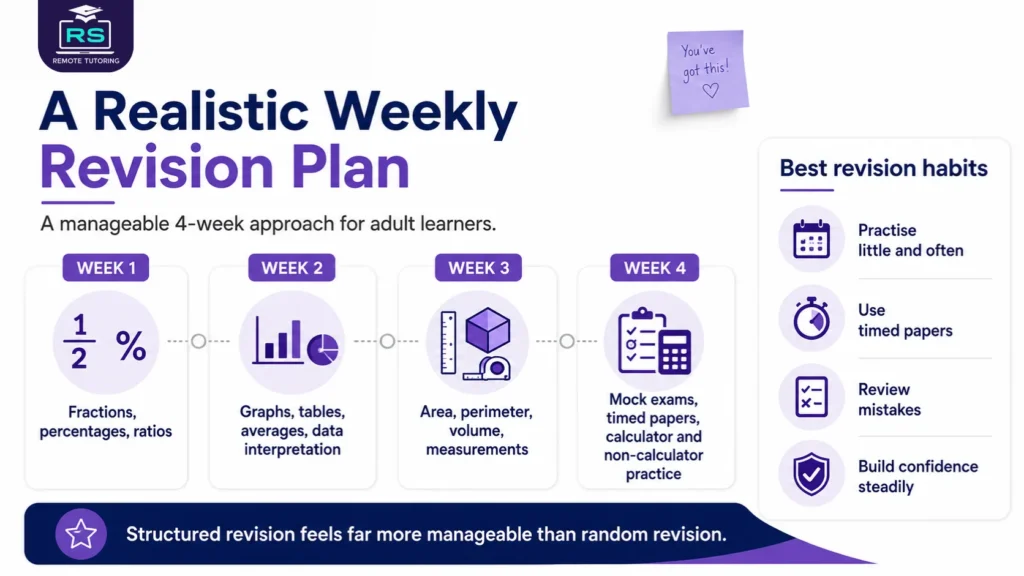
Week 1
Focus on:
- fractions
- percentages
- ratios
Week 2
Practise:
- graphs
- tables
- averages
- data interpretation
Week 3
Work on:
- area
- perimeter
- volume
- measurements
Week 4
Complete:
- mock exams
- timed papers
- calculator and non-calculator practice
What the Exam Feels Like on the Day
One thing I did not expect when first tutoring Functional Skills learners was how many capable students doubted themselves before the exam even started.In reality, most learners usually find:
- the first few questions manageable
- confidence improves once they settle in
- practical questions feel more familiar than expected
The biggest challenge is staying calm when encountering one difficult question.I would genuinely recommend treating difficult questions as temporary obstacles rather than signs you are failing.
That mindset shift matters more than many students realise.
FAQs
Is Functional Skills Maths Level 2 harder than GCSE Maths?
Functional Skills Maths Level 2 is usually considered more practical than GCSE Maths. The exam focuses on real-life maths skills rather than advanced theoretical topics, although many learners still find the problem-solving aspect challenging.
Can you use a calculator in Functional Skills Maths Level 2?
Yes, most Functional Skills Maths Level 2 exams include a calculator section. However, there is usually also a non-calculator section where learners must complete calculations manually.
What topics appear most in Functional Skills Maths Level 2?
Percentages, fractions, ratios, graphs, averages, measurements, and real-life problem-solving questions appear very frequently in most Level 2 Functional Skills Maths exams.
What is the pass mark for Functional Skills Maths Level 2?
The pass mark usually falls between 55% and 60%, depending on the exam board and assessment session.
How should I revise for Functional Skills Maths Level 2?
The best approach is consistent practice with real exam-style questions. Timed mock papers, calculator practice, and worded problem-solving exercises usually improve confidence faster than passive revision.
How long does it take to prepare for Functional Skills Maths Level 2?
For many learners, 6 to 10 weeks of steady revision is enough to prepare well, especially when practising regularly rather than cramming close to the exam.
Final Thoughts
Understanding the Functional Skills Maths Level 2 exam structure early changes the entire revision experience. Students who know:
- how the papers work
- what topics matter most
- how timing feels
- how questions are presented
Usually walk into the exam far calmer and more confident.And honestly, that confidence often becomes the difference between panic and passing.

Raja specializes in Physics and Maths, with over 5 years of experience. He offers KS2, KS3, and GCSE Science and Maths lessons. He graduated from one of the top universities in the UK.