Most parents want to help their teenager through GCSEs, and most end up hovering by the bedroom door wondering if “have you done your revision?” is helping or making it worse. Usually it’s making it worse. A strong parent–tutor partnership replaces that anxious guesswork with something structured, and it’s one of the most underrated ingredients in GCSE success.
The evidence backs this up. The Education Endowment Foundation rates parental engagement as a genuinely worthwhile, low-cost way to lift attainment but only when it’s structured and informed. That last part is the catch. Vague pressure for grades, without understanding the exam or the plan, tends to raise anxiety and dent confidence rather than help.
So this isn’t about supervising harder. It’s about parents and tutors pulling in the same direction, with shared goals, clear roles, and honest data. Get that alignment right and the student feels stability instead of pressure. Here’s how to build it.
Jump to Section
Why does the parent–tutor relationship affect results?
It affects results because a student surrounded by aligned, informed adults revises with less friction and more confidence. When a parent reinforces at home exactly what the tutor is teaching, effort compounds. When the two pull in different directions, the student absorbs the confusion and the stress that comes with it.
The key word is constructive. Involvement that’s supportive and informed builds motivation and resilience. Involvement that’s really just pressure in disguise does the opposite. An effective partnership is organised and evidence-led, not emotional and reactive. Our guide on how parents can support GCSE preparation covers the day-to-day side in more depth.
How do you set a shared vision from the start?
You set it by agreeing, before tutoring really begins, on where the student is, where they’re heading, and by when. Every strong partnership starts with clarity: current grades, target grades, the exam board, subject weaknesses, and post-16 goals. Without that anchor, everyone pulls slightly differently.
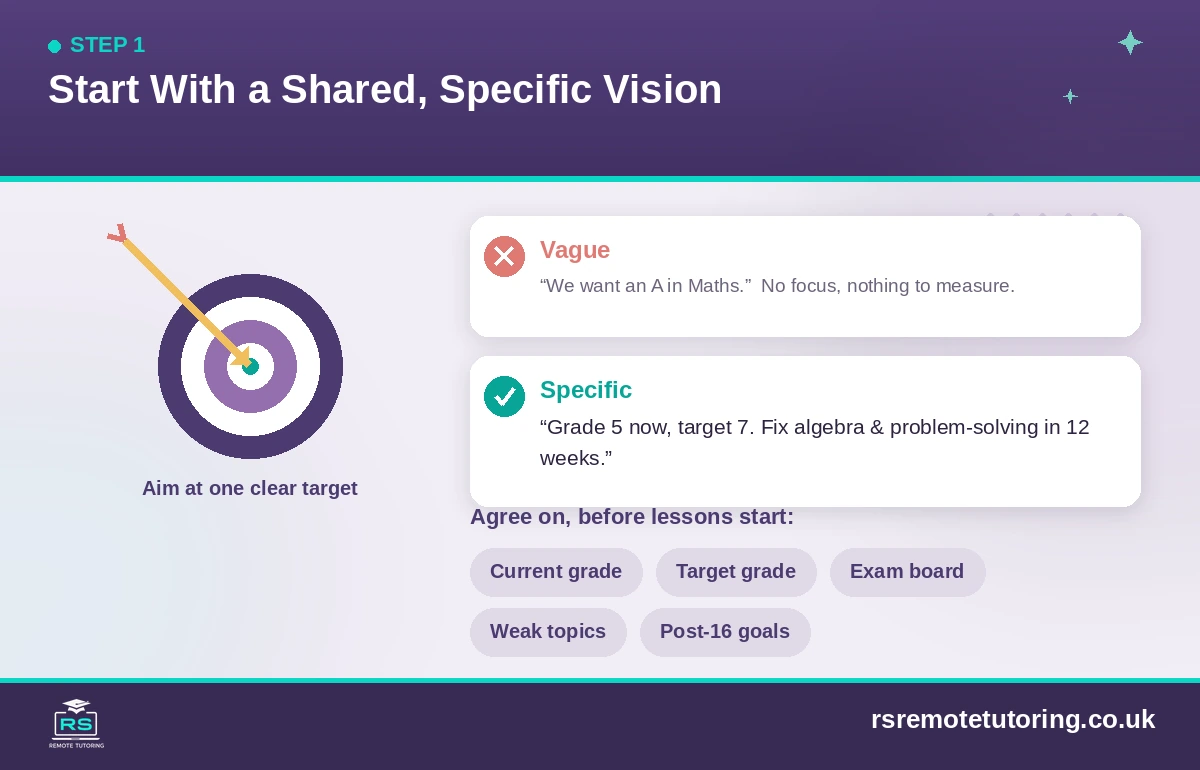
Goal-setting research is clear that specific, measurable targets beat vague hopes. So instead of “we want an A in Maths,” the useful version sounds like this:
Current grade 5. Target grade 7. Algebra and problem-solving accuracy need work within twelve weeks.
That sentence gives the tutor a brief, gives the parent something concrete to watch, and gives the student a finish line. If A-levels or college are on the horizon, factor those in early too, our A-level tutors often pick up students who planned the transition from Year 11.
Who does what & how do you define roles?
You define roles by agreeing, up front, who owns what because most partnership friction comes from overlap. The tutor owns the teaching and the data. The parent owns the environment and the encouragement. The student owns the effort and, increasingly, the ownership itself.
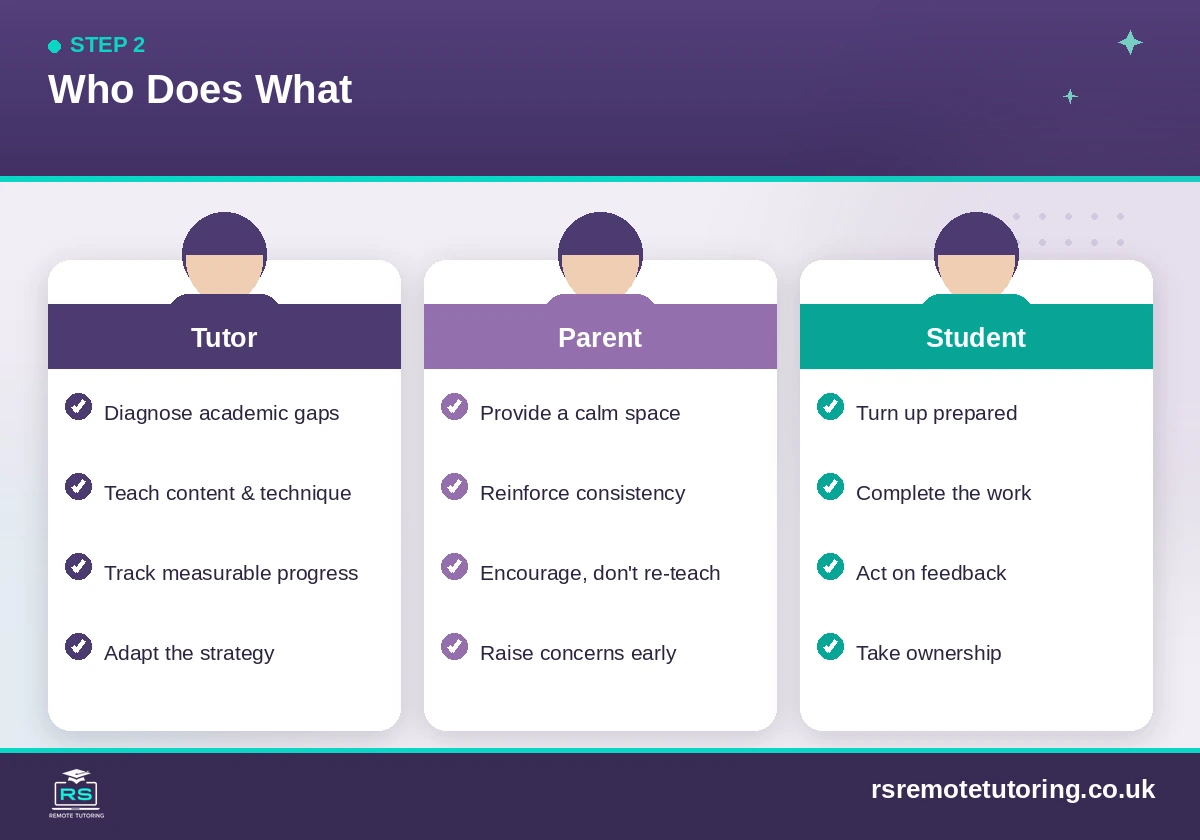
Spelling it out prevents the classic tension where a parent starts re-teaching content and the student ends up with two conflicting methods.
| Tutor | Parent | Student |
| Diagnose academic gaps | Provide a calm study space | Turn up prepared |
| Teach content and exam technique | Reinforce revision consistency | Complete the work set |
| Track measurable progress | Encourage, don’t re-teach | Act on feedback |
| Adapt the strategy | Raise concerns early | Take growing ownership |
The tutor teaches; the parent supports the conditions; the student does the learning. Clear lanes keep everyone efficient and calm. If you’re still choosing a tutor, our tutors page and how it works explain the fit.
What does good parent–tutor communication look like?
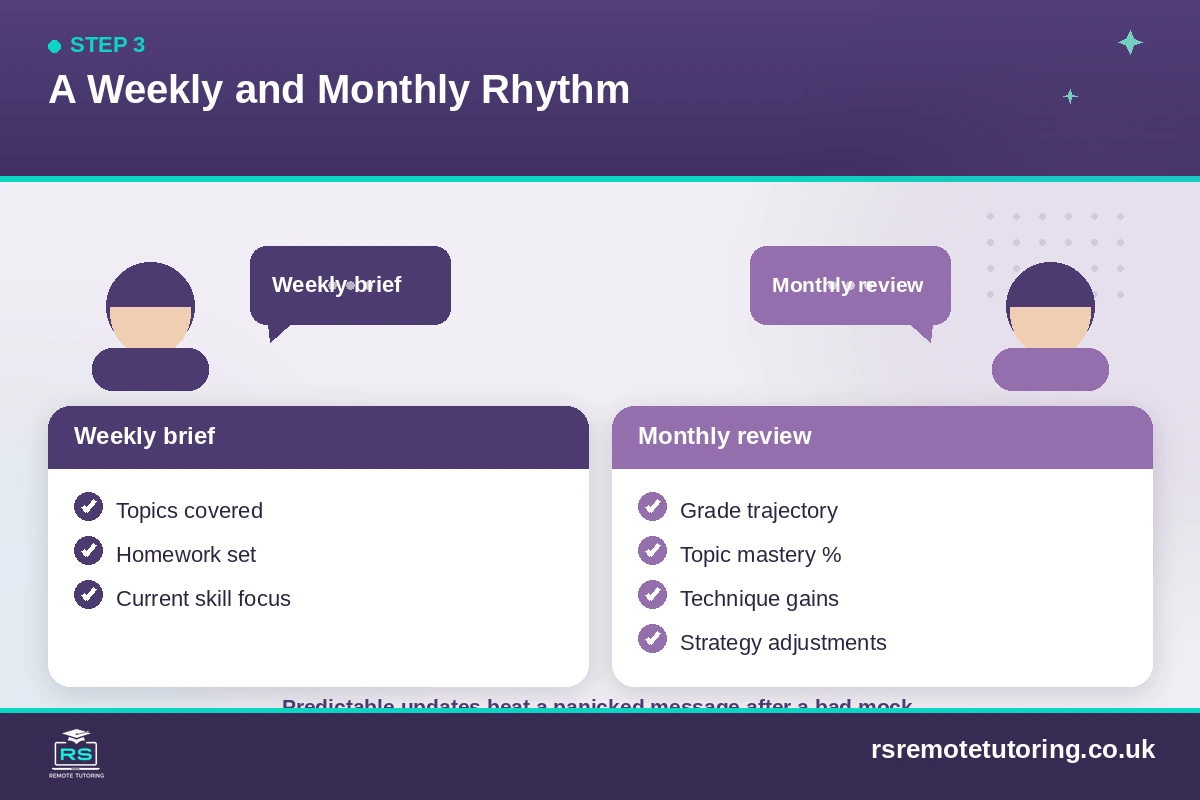
Good communication is proactive and predictable, not a panicked message after a bad mock. The strongest partnerships set a rhythm from the start: a short weekly note on what’s been covered, and a fuller monthly review of progress and any changes to strategy.
A simple cadence works well. Weekly, the tutor shares topics covered, homework set, and the current skill focus. Monthly, the conversation zooms out to grade trajectory, topic mastery, exam-technique gains, and any adjustments to the plan. Predictable updates lower everyone’s stress, because nobody is left guessing. Reviewing mock exam feedback together is a natural anchor for the monthly check-in.
How should you track progress with data, not emotions?
Track it with measurable indicators rather than gut feeling. Mock percentages, error patterns, time-per-question, and assessment-objective breakdowns keep conversations constructive. The moment progress becomes a number everyone can see, the emotional heat drains out of it.
Compare the two ways of raising the same concern. “They’re weak in English” invites defensiveness and vagueness. Something like “AO2 analysis has climbed from 50% to 72%, but evaluation still lacks depth” gives everyone a shared target and a next step. Structured data, reviewed after each mock exam, keeps the partnership honest and calm. The evidence-based methods behind that progress are covered in our memory hacks for GCSE guide.
How do you keep the student at the centre?
You keep them central by handing them ownership rather than doing everything for them. Motivation research is consistent: autonomy improves performance. So the partnership should support the student’s system without smothering it, the aim is independence, not dependence.
Practical ways to build that ownership include student-led reflection at the end of a topic, personal goal tracking, independent revision planning, and a simple accountability log. Parents and tutors set the scaffolding; the student does the climbing. A partnership that never lets go quietly teaches helplessness, which is the opposite of what you want by exam season.
What causes parent–tutor partnerships to break down?
They usually break down through unrealistic grade pressure, too many tutoring hours, micromanagement, patchy communication, and overreacting to short-term dips. Each one chips away at the student’s confidence. Ironically, the most well-intentioned parents often cause the most strain.
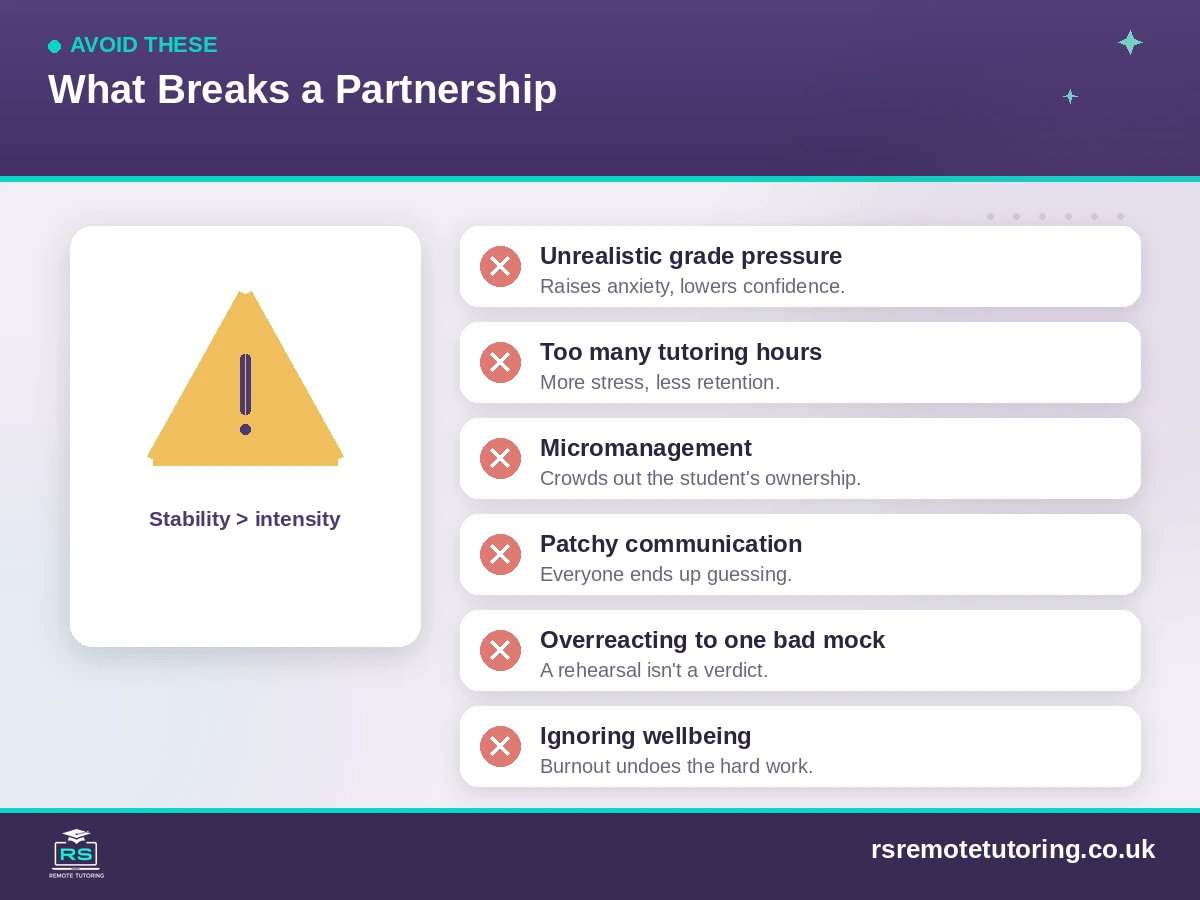
Watch especially for piling on extra hours and for treating one bad mock as a catastrophe. Stability matters more than intensity. A calm, consistent partnership that rides out the wobbles will nearly always beat an intense one that lurches from crisis to crisis. Protecting the student’s wellbeing isn’t soft, it’s strategic.
What are the long-term benefits beyond GCSE?
The benefits outlast the exams. A well-run partnership leaves a student with time-management skills, strategic revision habits, resilience, self-regulation, and exam confidence. Those transfer straight to A-levels and beyond, long after the specific GCSE content is forgotten.
That’s the real return. The grades matter, but the lasting prize is academic maturity, a young person who can plan, self-correct, and stay steady under pressure. Those habits are what make the next set of exams, and the ones after that, far less daunting. You can book a free trial or get in touch to set up a partnership like this around your child.
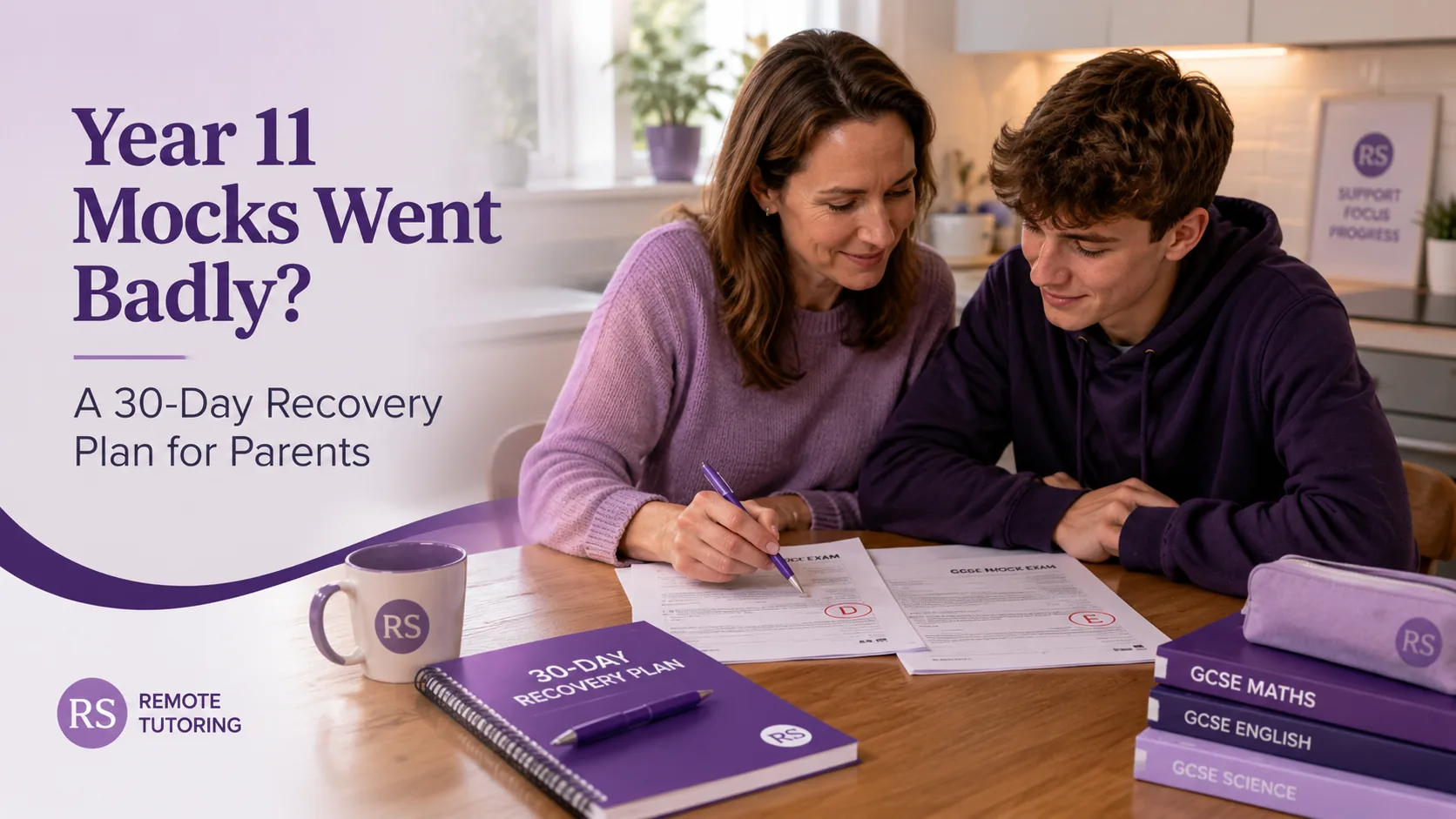
How should a parent and tutor handle a disappointing mock?
Treat it as data, not disaster. A weak mock is one of the most useful things that can happen mid-year, because it exposes exactly which topics and skills need attention while there’s still time to fix them. The worst response is panic; the best is a calm, specific plan.
The temptation, understandably, is to react to the grade. A stronger move is to react to the breakdown behind it. Sit down with the tutor’s analysis and separate the causes, was it knowledge, exam technique, timing, or nerves? Each one has a different fix, and lumping them together as “they did badly” helps nobody. Then let the tutor rebuild the next few weeks around those specific gaps. For the student, the message that matters is that a mock is a rehearsal, not a verdict, and rehearsals are meant to catch problems. Handled this way, a disappointing mock in December can be the reason a grade climbs by May. Our guide on turning mock feedback into a plan walks through the process.
Frequently Asked Questions
What makes a parent–tutor partnership successful?
Clear, specific goals, well-defined roles, structured and regular communication, and shared commitment. When parents, tutors and students each know their part and track progress with data, the student gets stability — and stability drives performance.
How involved should parents be in GCSE tutoring?
Parents should stay informed and supportive without controlling daily academic tasks or re-teaching content. The most helpful role is providing a calm environment, reinforcing consistency, and raising concerns early, while leaving the teaching to the tutor.
Can too much tutoring actually reduce results?
Yes. Overloading a student with hours can increase stress and reduce retention. Quality and consistency outweigh quantity, so a focused, sustainable schedule beats cramming in extra sessions that leave the student drained.
How often should parents and tutors communicate?
A brief weekly update plus a fuller monthly review works well for most families. Predictable, regular communication prevents the panic-driven messaging that tends to follow a disappointing mock or a stressful week.
Should parents help with subject content directly?
Usually not. Re-teaching content can clash with the tutor’s methods and confuse the student. Parents add more value by supporting routine, motivation and wellbeing, and by leaving subject explanations to the tutor.
How do you keep a teenager motivated without adding pressure?
Give them ownership. Let them lead reflections, track their own goals, and plan some of their revision, while the adults provide calm structure. Autonomy builds motivation far better than pressure, which usually backfires.

Raja specializes in Physics and Maths, with over 5 years of experience. He offers KS2, KS3, and GCSE Science and Maths lessons. He graduated from one of the top universities in the UK.