
GCSE Grades 1–9 Equivalent: Full Guide to UK Grade Boundaries & Pass Marks 2026
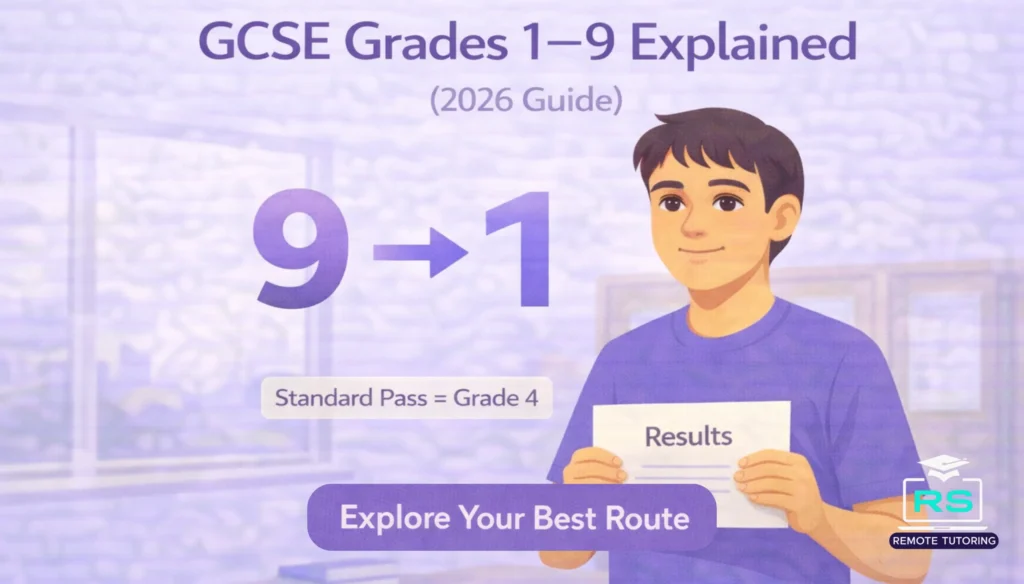
When the UK reformed GCSEs in 2015 to 2017, familiar A*–G grades were replaced with numbers 9–1. The change caused confusion among parents and students, especially around what counts as a pass and how the new scale aligns with the old system. Understanding this grading system is crucial when setting expectations, planning revision, or retaking exams. This guide explains GCSE grades 1–9 equivalents, how grade boundaries work for different exam boards, and what marks typically achieve a standard pass. The focus is on the 2026 exam series, with London‑specific advice for results day. Why the grading system changed The government introduced the 9‑1 scale for several reasons. It distinguishes reformed GCSEs from pre‑2015 qualifications and provides finer discrimination at the top end. There are now three grades (9, 8 and 7) where there used to be two (A* and A), allowing universities and employers to identify exceptional performance more easily. Official guidance notes that the bottom of grade 7 is designed to align with the bottom of the old grade A, grade 4 aligns with the bottom of a grade C, and grade 1 aligns with the bottom of the old grade G. As a result, grade 4 is considered the minimum standard pass while grade 5 is labelled a strong pass. Understanding the 9‑to‑1 scale: mapping numbers to letters The number scale does not translate directly to letters, but key alignment points make comparisons easier: These alignments mirror other sources such as Ofqual and the Department for Education, which emphasise that a student who would have received at least a C under the old system should now receive at least a 4. A summary table is shown below: New grade Old letter grade equivalent Comments 9 Above A* Highest grade, awarded to very few students 8 A*–A 7 A Bottom aligns with old A 6 High B Middle of old B 5 Low B/High C Strong pass 4 Low C Standard pass 3 D/High E Below pass 2 Low E/High F 1 Low F/G Bottom of grade 1 aligns with bottom of old G U Ungraded Insufficient evidence Standard pass vs strong pass The reformed system distinguishes between standard and strong passes: Achieving a strong pass improves options for higher‑level apprenticeships, selective sixth forms and certain university pathways, while a standard pass ensures students meet the minimum national benchmark. Why grade boundaries vary Grade boundaries are the minimum raw marks needed to achieve each numerical grade. Exam boards set these boundaries after all papers are marked, using statistical analysis and examiner judgement to ensure standards remain consistent. Boundaries change each year because paper difficulty and student performance vary. Since nearly all GCSEs are assessed by final exams rather than coursework, the raw marks required for a grade may differ significantly between boards and years. For example, in the 2025 GCSE maths series: Higher‑tier papers target a different distribution: half the marks aim at grades 9 to 7 and half at grades 6 to 4. Because grade 4 content represents only about 20% of a higher paper, grade boundaries at this level are often very low. In 2025, grade 4 on AQA higher required just 63/240 marks (about 26%). Release of grade boundaries Grade boundaries in 2026 are published on results day, never beforehand. For the 2026 summer exams, boundaries will be released on Thursday 20 August 2026. Students sitting November resits should expect boundaries on Thursday 15 January 2026 when resit results are announced. London schools usually receive electronic grade boundary tables from exam boards at 8:00 AM. GCSE Results & 2027 Support Got Your GCSE Results? Let’s Plan the Right Next Step Whether your child is preparing for GCSE 2027, considering a resit or wants to improve a particular subject, our expert tutors can help. Book a free 30-minute one-to-one assessment to discuss their current grade, target grade and the support they need. Book a Free GCSE Assessment × Free 30-Minute Assessment Turn GCSE Results Into a Clear Plan Tell us the subject, current grade and target grade. Our team will contact you to arrange a free online assessment and recommend the right tutoring support. How many marks for a Grade 4 in GCSE maths? A common question is “how many marks is a 4 in GCSE maths foundation?” The answer depends on the board and year, but recent boundaries give a useful guide. GCSE Grade in 2025: These low percentages reflect the exam paper design: half of foundation marks target grades 5–3, while the other half target grades 3–1. In higher tier, grade 4 boundaries can be similarly low because only a fifth of questions target grade 4. Marks versus percentages Because different boards use different total marks (e.g., OCR uses 300), it is more reliable to think in terms of percentages. Generally, achieving 15–20 % of the marks will secure a grade 4 on the foundation paper. However, the safe strategy is to aim higher. Strong performance across number, ratio and algebra topics increases the chance of achieving a strong pass or higher. GCSE grade boundaries by exam board (2025 example) Exam board Paper totals Grade 4 boundary (Foundation) Grade 4 boundary (Higher) Notes Edexcel 240 marks 29 marks (~12%) 53 marks (~22%) Boundaries show low thresholds for a pass; grade 5 required 87 marks. AQA 240 marks 39 marks (~16%) 63 marks (~26%) AQA papers often have slightly higher boundaries than Edexcel. OCR 300 marks (scaled to 240) 45/300 (≈36 scaled) 69/300 (≈55 scaled) Raw marks appear higher because OCR papers carry more marks. WJEC Eduqas 240 marks 21 marks (~9%) 27 marks (~11%) Lowest boundaries among main boards. Note: These values are from the 2025 series and only provide guidance; 2026 boundaries may differ. Grade boundary tables for previous years are available on exam board websites once results are released. GCSE grading systems across the UK In England all GCSEs use the 9–1 scale. Elsewhere in the UK, different systems remain: Combined Science double grades GCSE Combined Science counts as two GCSEs. Students
GCSE Resit Results Day 2026: Dates, Timelines and What to Expect
If you need to retake a GCSE, you’re not alone. Thousands of students re‑sit English and maths every year, and even more choose to retake other subjects to improve their grades. For London students, understanding the resit timeline and knowing when to expect your results is critical for planning your next steps. This guide explains everything about GCSE resit results day 2026, from the key dates for November and summer resits to how to collect your results, and what to do afterwards. We draw on official sources and expert advice to make sure you’re fully prepared. Key Dates: When Are GCSE Resit Exams and Results in 2026? Knowing your exam and result dates allows you to organise revision, book holidays and plan applications for sixth form, college or apprenticeships. There are two GCSE resit windows: The table below summarises the key dates for 2025/26: Resit session Exam dates Results released to schools Results released to students Notes November 2025 (English & maths) 4–10 Nov 2025, English & maths papers for AQA, Edexcel, OCR Wednesday 7 Jan 2026 Thursday 8 Jan 2026 Only English language and maths can be retaken in November; entry deadlines are around 4 Oct 2025 Summer 2026 (all subjects) May/June 2026, same timetable as main GCSE exams; maths papers on 14 May, 3 Jun and 10 Jun Wednesday 19 Aug 2026 (provisional) Thursday 20 Aug 2026 You can retake any subject; results day coincides with the main GCSE results day; entry deadlines usually mid‑February. Get First 1-on-1 Online Session Free with Our Specialized GCSE Tutors And Get: Clear guidance on what to study (and when) Mock practice tied to real exam dates Flexible online scheduling Contact Now November 2025 Resit Results Day If you sit your English or maths GCSE again in November 2025, your results will be ready in the New Year. According to the Tes guide, schools and colleges receive resit results on Wednesday 7 January 2026 and students receive them on Thursday 8 January 2026. This applies across AQA, Edexcel and OCR exam boards. Your school might specify a time (typically from 8am) when you can collect your results, check ahead so you know when to arrive. Summer 2026 Resit Results Day Students who retake exams during the summer 2026 series will get their results at the same time as those taking GCSEs for the first time. The University of Brighton’s guide lists Thursday 20 August 2026 as GCSE results day. Schools receive results the day before, on Wednesday 19 August 2026, so they can prepare statements and support for students. Entry Deadlines and Timetables Why Do Students Resit GCSEs? Many London students choose or are required to re‑sit GCSEs for several reasons: Resitting GCSEs doesn’t negatively affect you, you keep your highest grade from all attempts. Get First 1-on-1 Online Session Free with Our Specialized GCSE Tutors And Get: Clear guidance on what to study (and when) Mock practice tied to real exam dates Flexible online scheduling Contact Now How to Prepare for Results Day Before Results Day On Results Day After Results Day Results Day FAQs (Structured for Search) Tips for Success After Receiving Resit Results Celebrate or Re‑Evaluate Whichever way the results go, take time to process them: Consider Functional Skills Qualifications If English or maths remains a struggle, functional skills provide an alternative route. These qualifications are available on demand and can be taken at any time, offering flexibility. They’re widely recognised by employers and apprenticeship providers. Plan Your Next Step After results day, you may need to: Keep track of application deadlines for September 2026 admission and ensure you meet course requirements. RajaRaja specializes in Physics and Maths, with over 5 years of experience. He offers KS2, KS3, and GCSE Science and Maths lessons. He graduated from one of the top universities in the UK.
Reducing Exam Anxiety For GCSEs: Tools, Techniques and Evidence
Exam anxiety is the emotional state characterized by stress,fear that stresses the students at various phases of life, especially in connection with the assessments process, exam and tests. When it comes to the GCSE exam, as it is the major milestone in the student academic journey, being pissed off and overwhelmed are quite normal behaviours of the students. For many people it brings that phase where normally everyone is suffering, the fear of failing, the pressure of expectation and future goals, often leaves the students with anxiety, stress, and detached behaviour. At a certain level , it is quite normal but excessive and intense stress and anxiety leads to memory loss, distraction, and affects the overall performance ratio of the students. Today’s students, teachers and even parents are seeking GCSE exam anxiety relief techniques to make it easier for handling the distracted behaviors at the same time, which are practical, evidence based and are easy to implement. The writing explores the causes of the stress, the psychologically proven tools that help to reduce anxiety, practical tips and techniques and scientifically proven approaches that are helpful and supporting the approaches. One thing to note is that this writing offers reassurance and anxiety can be tackled easily with the right guidance and support. What is GCSE Exam Anxiety Exam anxiety is not just nervousness, it’s a way more than that. Psychologically it is proven that it is a response that is perceived through exam and academic pressure. During GCSEs Students almost fear and are totally stressed and often experience Research shows that students often feel high anxiety because they associate their future with GCSEs and often feel that the last career option to be attached with only passing this exam. Without actual and effective stress relief strategies, this anxiety can become a cornerstone of failure. Causes of Exam Anxiety There are various causes of exam anxiety and these causes are multifaceted, involving a set of stimulants that uplifts the negative reaction towards the unexpected anticipated event both affecting mind and body.The sudden rush of adrenaline may cause rapid heart beat, sweating due to extreme pressure, fast breathing. Another factor causing exam anxiety is the extreme focus on negative thoughts. Suddenly questions arise in the mind of the students such as What if I fail? What if I could not get my desired grades? These negative questions often break down the potential of the students and they feel more stressed and anxious. The more students focus on negative potential, the anxiety and fear multiplies which also reflect the exam results. Symptoms of Exam Anxiety There are various factors that indicate that students are suffering from exam anxiety. Negative thoughts dominating the student’s mind may cause insomnia and stress. Performance disturbance may also affect thinking and remembering problems. Deep down psychologically, symptoms of exam anxiety include stomach pain, excessive sweating, dryness of lips and throat, attention divergence, concentration problem in the educational settings. Why Managing Exam Anxiety is Utmost Necessary: Managing exam anxiety is utmost important. Often unchecked anxiety before exams leads to In contrast, students learning to tackle their exam anxiety are often associated with better performance rate, better focus ratio and higher emotional resilience. Recognizing the emotional well being of the students is utmost important for schools and institutions. Exam Anxiety Relief Tips: Evidence Based Following are the tips and techniques that need to be used before the approach of the final exam to build credibility and boost your learning. Controlled Breathing and Exercising Regularly: When anxiety hits, the body enters a ‘flight or fight’ situation. Breathing techniques help to stay calm in the nervous system. Research in psychology states that controlled and lower breathing helps to improve exam focus and makes one of the easiest accessible CSE exam anxiety relief techniques. Meditation and Mindfullness: Mindfulness trains students to present rather than manifesting the outcomes.Even short sessions can help to overcome anxiety alot. This practical tip has shown tremendous results such as; Different AI tools and apps help to make mindfulness practice the teenagers in a more practical and engaging way. Schools should implement mindfulness exams making a fair decrease in the exam related stress. Cognitive Behaviour Therapy: There are different theories and practices that might work but the most important is cognitive behaviour therapy that is widely recognised as the most effective GCSE exam anxiety relief technique. CBT helps students to navigate challenges and helps them overcome exam anxiety.For example; Studies from the expert journals show that reframing your thoughts can reduce the stress hormones and improve exam performance ratio. Practical Revision Strategies: Organized Revision Schedule: Without Organization and discipline, studying is the failed attempt towards success. A realistic timetable offers clarity and fuels success rate. This can be done through A clear plan is utmost necessary to build harmony and discipline in the preparation and also works as one of the most successful practical strategies for reducing GCSE exam anxiety. Rigorous Practice: Fear of unknown multiplies the anxiety practising regularly and consistently may also work as stress reliever for GCSE exams. Evidence suggests that repeated exposure to exam conditions may work as better options in decreasing stress and uplifting confidence. Online Learning Platforms: Modern GCSE practices use online tools for further assistance and boosting confidence.There are different apps and tools with features such as; These tools help students to feel supported rather than being overwhelmed, anxious and stressed out. Mental Health Apps for Students Well being: There is the growth of evidence supporting the use of mental health apps for reducing stress and anxiety, and are especially designed for young minds who are often entangled between fear and mental chaos.Many apps offers When these are used alongside with revision strategies they become most effective. Role of Parents in helping Reducing Exam Anxiety After getting expert online GCSE tutoring support and experts guidance, Parent’s support is utmost necessary for boosting Students morale and confidence. Parents can support in a way Supporting thorough Communication: Students often feel internalised pressure from adults,
How Parents Can Support Teenagers Preparing For GCSE Without Stress

GCSE exam time is the most stressful part of a teenager’s academic life. Students are most fundamentally exhausted when it comes to the preparation and examination phase of GCSE. At this crucial time period, students are always in need of comfort and mental support, which is most importantly provided by parents. Many families struggle to find the balance between encouragement, pressure and motivation. Parent support for GCSE preparation is not just about constant supervision or high expectations; it means uplifting children when they feel low, creating an environment that often feels secure to the learners, offering emotional reassurance and guiding teenagers towards healthy and sustainable study habits. This guide explores effective, practical, evidence-based strategies and ways parents can provide a nurturing environment to the children going for GCSE, helping them to perform their best while also supporting their mental well-being. Why GCSE preparation is Stressful and overwhelming for Learners GCSE represents the first experience for the children, as this is the first step towards their career growth. The pressure not only comes from the exam itself but also through the word GCSE symbolises the career and future tied to the GCSE. This makes the situation more anxious and stressful. A student may feel stressed due to Truly understanding the emotional turmoil of the student going for GCSE is the first and foremost obligatory step for parents’ support for GCSE exam success. The Parents’ Duty: Supportive and Non-Supervisory One of the most serious mistakes that parents make is becoming the second teacher of their child. Parents should know that teachers are here to guide and prepare learners according to the GCSE exam schedule. The role of parents should be to promote a stress-free and pressure-free environment so that students find peace while fighting with endless chaos in their minds. Involvement is important; over-monitoring can lead to an increase in anxiety and shatter confidence. The role of effective Parents includes Teenagers perform best when they are trusted and understood. Creating the Calming Environment for GCSE Revision A supportive, nurturing and calm environment is very much necessary, a nd it significantly reduces stress, making the preparation easier and stress-free. Students do not feel anxious if their preparations are structured and well-organised. Parent should encourage their children Consistency reduces anxiety because teenagers benefit from organisation, not rigidity. A quiet and well-organised area is of utmost importance to make learning more satisfying and encouraging. The place does not need to be perfect, but it should be free from distractions and interruptions. This practical step by parents is the cornerstone for effective GCSE preparation. Encouraging Revision without Pressure: Encouraging GCSE revision schedules without pressure should be the key role of parents. The question comes to the minds of parents: How do I make sure they are revising without wasting time? This can be done through; Parents should help teenagers through Once the plan is made, step back because trust builds confidence. Parents should encourage and praise small efforts, consistency and improvement rather than mock exams alone. This again builds confidence and reduces the fear of failure. Understanding Stress in Teenagers: Stress is not always obvious. Some teenagers become overly ambitious, heavy perfectionists. Common signs of stress include; Parents’ utmost support for GCSE includes helping their children to overcome stress and anxiety and dealing with empathy,n ot discipline. Conversing About GCSE without Pressure Talking about GCSEs can unintentionally lead to high anxiety and fear of expectations. During this situation, what helps the most is Mistakes to Avoid Learners are in need of reassurance and emotional safety that their worth is not defined by their failure. Incorporating Healthy Habits in the Revision Phase Parents should incorporate healthy habits in the revision phase for students that protect both performance and well-being. The healthy habits include; Every human being needs almost 8-9 hours of sleep. Sleep deprivation increases memory retention and increases anxiety and fear. A balanced meal is extremely important for a healthy lifestyle. Regular hydration improves concentration and mood. This is the most overlooked aspect of [parent support of GCSE exam preparation. Small Breaks after long hours of study are of utmost obligatory, which often works in reducing stress, preventing burnout and improving focus for a long time. Helping teenagers cope with Anxiety: Exam anxiety is highly manageable with the right support and guidance. Parents can help through this task by; Parents should avoid using such phrases you will be fine, instead they should validate feelings while offering reassurance and emotional safety. When Extra Academic Support this Required: Sometimes, stress does not come from exams or preparation; it comes with academic gaps. Several signs that reveal that extra support is required: Tutoring revision courses may help to reduce stress and polish it positively. Result Day: Supporting without Stress Result day is one of the most stressful days in the life of a teenager. The day is emotionally intense despite the outcomes. Parents should Even if results are not up to the mark, there are always many pathways; communication makes everything easy, reduces fear and builds resilience. Benefits of Stress-Free Parental Support: Teenagers who feel supported rather than pressurised are Effective and Strategic Parent support for GCSE exam preparation benefits not only exam performance but also builds mental confidence and well-being. FAQS Finale Thoughts GCSEs are an important milestone, but they are not the final measure of a teenager’s potential. The most powerful tool parents can give to their children is to stay calm and consistent. When parents focus on wellbeing, communication, and trust, teenagers are more likely to perform well, ot because they are pressured, but because they feel supported. Effective parents’ support for GCSE exam preparation is not about pushing harder. It is about standing beside your teenager, reducing stress, and helping them believe in their ability to succeed. RajaRaja specializes in Physics and Maths, with over 5 years of experience. He offers KS2, KS3, and GCSE Science and Maths lessons. He graduated from one of the top universities in the UK.
The Role Of Digital and Visual Learning In GCSE Revision
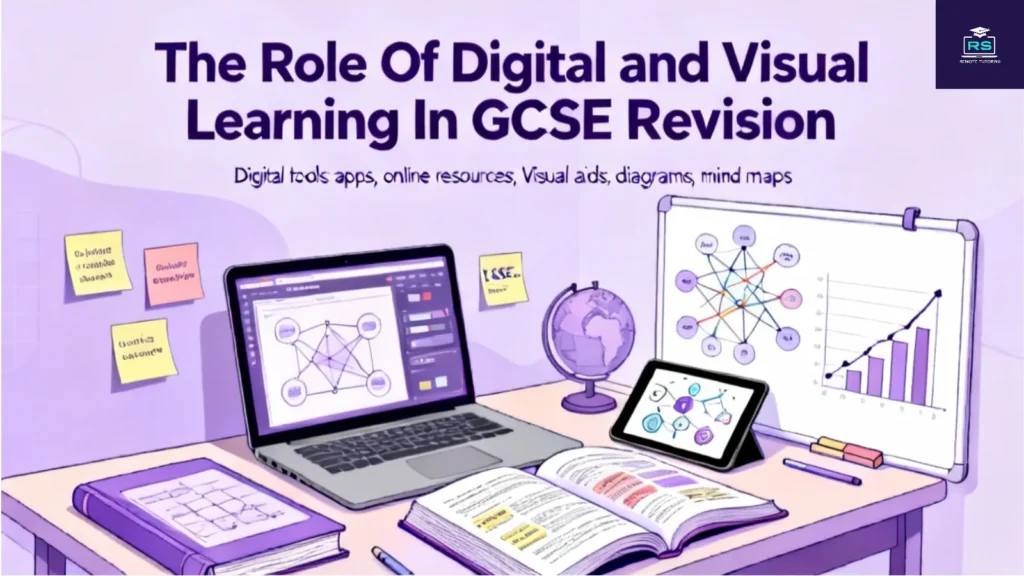
Certain things should be done before the end of the exam, and the number one of utmost importance is revision. After preparing for exams, there comes the revision phase. But as the world is undergoing drastic changes, GCSE revision has also changed over the past decade. The days are gone when students were totally relying on textbooks, notes and cramming sessions. Now the GCSE revision with the advancement of technology is taking a 3360-degree turn. Digital and visual learning tools, especially videos and revision apps, have become significantly important for effective GCSE preparation. All the Professional instructors, Parents and learners look for smart strategies, digital and visual learning tools are most effective for GCSE revision, proving to be more helpful, engaging and accessible. This guide explores how these tools are more effective and engaging, how they work and how students can use them to make their preparation more effective and strategic. Understanding Digital and Visual Learning Digital learning integrates the use of technology such as apps, online platforms and visuals to support education. The type of learning which focuses on images, diagrams, and animation rather than text alone is called visual learning. The integration of both learning methods creates the most powerful and effective revision for GCSE. Scholarly articles elaborate that learners retain more information when the learning process is quite interactive, visually appealing and can be broken into manageable bites. This is the point where digital learning tools have gained importance across the UK. Limitations of the Traditional Revision Method: Before getting into the importance of digital tools and techniques, let us first discover what the key reasons students are facing while revising with traditional methods are. The key limitations of the traditional approaches include Using the traditional approach, revision becomes stressful and boring. GCSE students are already facing exam pressure, time limitations and performance expectations. Digital tools help to address these challenges by making learning more personalised, effective, and engaging, and obviously flexible. The power of Video-Based learning in GCSE Revision: Making the Subjects Easiest to Tackle Subjects like maths, Physics, Chemistry often encompass complex ideas which are difficult to grasp. Digital learning makes it feasible to learn difficult concepts easily. Explained through visuals, these help in Instead of thoroughly re-reading the one complex topic, learners can learn and revise the topic through actions, making understanding faster and clearer. Beneficial for Auditory Learners There are different types of learners; some learn through cramming, some through visual objects, while others learn through listening. Visuals are also helpful for the students who are more comfortable with auditory learning based Learning is a most important tool designed for such types of learners. The learning support This inclusivity makes video learning especially effective for mixed-ability classrooms and independent revision. Encouraging Self-Paced Learning One major advantage of revision videos is flexibility. Students can: Pause and rewind difficult sectionsRewatch topics they find challengingSkip material they already understandThis self-paced approach builds confidence and encourages independent learning—an essential GCSE skill. Revision Apps: Turning GCSE Study into Smart Practice While videos help explain concepts, revision apps reinforce learning through practice and feedback. Together, they form the backbone of modern GCSE revision. 1. Active Learning Through Practice Revision apps move students from passive learning to active engagement by offering: Active recall is scientifically proven to strengthen memory, making apps a vital digital learning tool for GCSE revision. 2. Personalised Learning Paths Many GCSE revision apps adapt to a student’s performance. If a learner struggles with a topic, the app: This personalised approach ensures time is spent where it matters most. 3. Motivation Through Gamification One of the biggest barriers to revision is a lack of motivation. Apps overcome this by using: By turning revision into a game-like experience, digital tools make GCSE preparation less stressful and more enjoyable. How Digital Tools Improve GCSE Exam Performance The effectiveness of digital learning tools for GCSE revision lies in how they align with proven learning science. Key Benefits Include: Students who regularly use digital and visual learning tools often report feeling more prepared and less overwhelmed before exams. Supporting GCSE English, Maths, and Science with Digital Learning GCSE Maths GCSE Science GCSE English Across all subjects, digital learning tools for GCSE revision help bridge the gap between understanding and application. Accessibility and Inclusivity in Digital Learning Another major advantage of digital tools is accessibility. Students can revise: For students with learning difficulties, anxiety, or attention challenges, visual and interactive content is often far more effective than traditional methods. Digital learning also supports students who miss school or need extra reinforcement outside the classroom. The Role of Parents and Teachers Parents and teachers play a crucial role in guiding students toward effective use of digital tools. They can: When used correctly, digital learning tools for GCSE revision enhance not replace, quality teaching and disciplined study habits. Avoiding Common Mistakes of Digital Revision While digital tools are powerful, they must be used wisely. Students should avoid: The most successful GCSE students use digital tools strategically, combining them with active revision techniques like exam practice and self-testing. The Future of GCSE Revision As education continues to evolve, digital and visual learning will play an even greater role in GCSE success. Advances in AI, adaptive learning, and interactive content will make revision more personalised and efficient than ever. Schools and exam boards are already embracing technology, making digital literacy an essential skill for modern learners. For today’s students, mastering digital learning tools for GCSE revision is not just helpful, it’s essential. Final Thoughts GCSE revision no longer has to be stressful, boring, or overwhelming. Digital and visual learning tools, especially videos and apps offer a smarter, more effective way to prepare for exams. By improving understanding, boosting motivation, and supporting personalised learning, digital learning for GCSE revision empowers students to take control of their studies and achieve their academic goals with confidence. When used thoughtfully, these tools don’t just improve grades, they transform the entire learning experience. RajaRaja specializes in Physics and Maths, with
How to Pass GCSE Maths: Important Easy Strategies for GCSE Grade 4
Passing GCSE Maths can feel like climbing a mountain, especially if you’re aiming for the all‑important grade 4, which counts as a standard pass under the 9 to 1 grading system. In the United Kingdom and particularly in a large, competitive city like London, success in GCSE maths opens doors to A‑levels, apprenticeships and further study. Whether you’ve struggled with numbers or you’re just looking for practical exam strategies, this comprehensive guide explains how to achieve that grade 4 pass. We draw on expert GCSE tutors advice, examiner insights and research to create a roadmap that exceeds anything you’ll find elsewhere. Understand GCSE Grade 4: What Does It Mean? A grade 4 is officially a standard pass in GCSE maths. It is equivalent to a low C or high D in the old A to G grading system. On the foundation tier, a grade 4 lies near the upper end of the scale, meaning you must correctly answer roughly 40 to 60 % of marks to secure a pass. A grade 4 in mathematics is sufficient for most sixth‑form subjects and apprenticeships, although some courses require a grade 5 (a strong pass). Students can sit either the foundation or higher tier exam. The foundation tier covers grades 1 to 5, making it ideal for those aiming for a grade 4; the higher tier covers grades 4 to 9, allowing for top marks but with more demanding content. There is no shame in choosing the foundation route. In fact, examiners have noted that many students who struggle with the higher tier end up ungraded. Talk to your teacher or tutor to determine which tier best suits your goals and abilities. Is a Grade 4 a Weak Pass? While grade 4 is often labelled a standard pass, it remains a significant achievement. Many employers and colleges accept grade 4 as evidence of functional numeracy, and it still qualifies you for most post‑16 programmes. If you’re aiming for STEM A‑levels or competitive sixth‑forms in London, targeting a grade 5 or higher is advisable. Otherwise, focus on achieving the secure grade 4 required for progression. Know the Exam Structure and Choose the Right Tier To pass GCSE Maths confidently, you must understand how the exam is structured and choose the right tier: Decide Your Tier Choosing between foundation and higher is a strategic decision. Experts recommend considering your predicted grades, confidence with algebra, and future goals. If you consistently score grade 6 or above in practice papers and wish to study A‑level maths, the higher tier might suit you. If your goal is to obtain a grade 4 or 5 and maths isn’t your strongest subject, the foundation tier is likely a better fit. Set Goals and Plan Your Revision Start Early and Make a Schedule One of the biggest mistakes students make is leaving revision to the last minute. You should start preparing at least six months before the exam. According to education experts, creating a revision timetable early in Year 11 and gradually increasing your study time is critical. For example: Use SMART Goals Setting SMART goals (Specific, Measurable, Achievable, Relevant, Time‑bound) provides structure and motivation. For instance, a specific goal might be: “Complete all number and ratio questions from a past paper within 90 minutes by 1 April, aiming for 60 % correct.” This level of detail keeps you accountable and ensures you track your progress. Master the Basics: Focus on Foundation Content A grade 4 requires solid knowledge of the basics. The foundation specification places heavy weighting on topics such as number, ratio, proportion and rates of change. To maximise marks, focus on mastering the following areas: Pro Tip: Use resources like Maths Genie or CorbettMaths 5‑a‑day to practise foundational questions daily; they cover every topic and build confidence. Develop a Revision Routine and Use Quality Resources Regular Practice Beats Cramming Experts recommend daily practice rather than occasional marathon sessions. Commit to 20 to 30 minutes of maths each day for at least six months. Regular exposure prevents forgetting and helps topics stick. For example, solve 5 to 10 practice questions after dinner or on your commute. Cover the Whole Syllabus A common mistake is focusing only on favourite topics. To secure a grade 4, you must cover all six subject areas: number, algebra, ratio/proportion, geometry/measure, statistics and probability. Revision guides and websites such as Maths Genie or GCSE Bitesize provide checklists that help ensure no topic is missed. Reinforce each topic with practice questions and watch short video tutorials to build understanding. Use Past Papers Wisely Practise past papers after you’ve covered the entire syllabus. Doing them too early can be discouraging. Once you’re ready: Many exam boards provide free past papers. Ensure you choose the correct board (AQA, Edexcel or OCR) and the right tier. Build Exam Technique with Examiner Insights An examiner’s perspective can boost your marks. Former examiners emphasise the following tips: These small habits make a big difference in borderline grade cases. Build Confidence and Problem‑Solving Skills High Expectations and Contextualised Learning Education researchers emphasise that students should set high expectations, believing they can achieve a pass, even if they’ve struggled before. Teachers and parents can help contextualise maths by relating it to real‑life situations, such as budgeting for London transport, calculating travel times or understanding discounts in shops. This relevance helps concepts stick and shows the practical value of maths. Take Baby Steps and Build Resilience Break down complex problems into small, achievable steps, gradually increasing difficulty. For example, when tackling algebra, start with single‑step equations, then progress to simultaneous equations and simple quadratics. Encourage yourself to combine topics such as ratio and probability to develop problem‑solving resilience. Use a Variety of Resources Different resources appeal to different learning styles: Exam Day Strategies: Perform Under Pressure When exam day arrives, stay calm and follow these strategies: Revision Plan: Four‑Week Intensive for Last‑Minute Learners Some students find themselves only a month away from the exam. While cramming isn’t ideal, an intensive four‑week plan can
What the Latest GCSE Entry Data Means for Your Subject Choice
Subject selection is one of the most crucial aspects in an academic journey. When it comes to the GCSE subject selection, it often feels overwhelming and exciting. With numerous options available, students often feel confused about what to choose and which options are more reliable, as well as which selected subjects will offer better prospects. Understanding the latest trends and GCSE data is foremost important, and it is one of the backbone before choosing the subject, especially the early predicted sample questions, which is one of the effective steps that students need to take; they should step into the world of following the trends to make their choice more effective and strategic. The trends are almost rising and falling in every way. Sometimes, the demand for one subject is growing and other times it declines. Owing to this situation, the students should confront the latest GCSE data and subject choice that helps to analyse which subject aligns with the student’s strengths, the rising career options and the uplifting demands of companies. Why is being updated with the Latest trends of the GCSE Subject always necessary? Every year, exam boards always generate a list with detailed statistical analysis showing, But as the whole world is evolving, with future forecasting models, institutions, a nd parents are also paying more attention towards the latest GCSE entry trends 2026 UK, which shows; Understanding the above-mentioned points helps to make future decisions more easily and strategically. Key GCSE trends: For what options are students going for and why The following information shows which subjects are being opted for by the students and what is the reason behind this rise, which subjects are being opted for less, and what are the factors causing the decline. STEM subjects are securing the top trend The statistical data show the continuous rise in choosing STEM subjects. There has been a deliberate rise in Biology, Chemistry, Physics and Mathematics. Predictions based on GCSE entry trends 2026 UK suggest that the options for choosing the STEM subjects will grow even more because of certain dynamics, the evolving landscape of the world. This utmost importance is due to STEM is the smart choice because of its evolving nature and changes in the technological landscape. If students want to open their career pathways, STEM is the smart choice. Computer Science to Hitae record in the year 2026 The shift towards a totally digital world has changed the dynamics of the world. People are more inclined towards digital well-being. Though the shift is exciting and totally challenging as well. Computer science is already a fast-growing field, and in the latest GCSE entry trends 2026 UK data shows that it may surpass more than 80,000 entries, and why is because the United Kingdom is undergoing this shift because the UK government schools are now more inclined towards digital media and literacy. Additionally, the industries are seeking the best employees in the fields of artificial intelligence and digital media. Furthermore, technology-related careers are high-paying paying which is another focal point of choosing computer science by the students. Language Entries are falling. Language is one of the difficult subjects, and at the same time, fun and engaging. Research shows that entries in French and German are continuously decreasing, while Spanish is now at a stable position. However, current GCSE trends show that a small comeback in the language is due to extreme globalisation, and many people are moving around the world, a nd they need a different language to communicate besides English, so choosing a language is a better option. Secondly, the University launch the system of bilingual skills, so learning a second language might be important. A quite interesting fact is that few students are going for a language, so it may benefit them i the extra points securing admission in university. Humanities Subjects are Neutral according to the latest GCSE Entry trend 2026 UK. Humanitarian subjects are in the top neutral position. Subjects like Geography, History are in consistent harmony, neither falling nor rising. This forecast further elaborates that the History subject may see slight growth because e interest in the historical event. Secondly, the geography will remain in a subtle position because of environmental awareness. If the students gained much more capability in writing and analysis, these choices are the best options. Business Studies may see major Growth in 2026 Students are increasingly going for business studies because of the subject’s inclination towards this subject, due to the practicality it offers as to how the world works in terms of money, management, and entrepreneurial skills. Why these subjects matter to the students is that business and finance-related subjects unlock doors for diverse opportunities. Additionally, nourishes and uplifts the skills that are applicable in the real world. Creative and Design subjects are still at the end: GCSE arts, drama, and design are facing a lot of decline in the year, and students are opting more for practical skills. But recent data shows that students opting for creative GCS trends tend to be more vigilant in the skills of problem solving, innovation and creative skills. Architecture, media, film, and design are deeply inclined towards artistic and creative skills. So, if the student’s creativity is at its peak, choosing the arts is not just a choice based on passion and inclination but a strategic decision. How to Use the trends to Choose the GCSE Subjects wisely: A step by Step Guide Understanding the latest GCSE data is crucial, and it becomes powerful when applied in the right way. Here is the step-by-step guide on how to understand the GCSE latest trends and why understanding really matters. GCSE is one of the most challenging exams. First and foremost necessary step is to look for your strength, choose the subject that naturally aligns with your passion and studying that subject does not feel boring, but it feels exciting. Choosing that option is incredible. Data is quite helpful, but personal inclination and interest matter more. Choose subjects from different
GCSE Grade Boundaries 2026 Explained | Expert Exam Support
The Grade boundaries are very much essential for the smooth conduct of the examination. Understanding GCSE grade boundaries is the most important phase for parents, learners and instructors before the examination. The results day often deals with the scores the students got, but the real story lies behind how these scores are set, why they change and how they impact academic growth. With the increase in technology, everything in the GCSE is undergoing drastic shifts. With a sudden increase in the competition, adjustments in syllabus and curriculum are all influencing the assessment modes, GCSE grade boundaries in 2026 will still have an effect in shaping outcomes and results. The guide will help with everything that is important to know and how to prepare for the exam strategically and effectively. Understand GCSE Grade Boundaries Understanding the setback of the GCSE grade boundaries is of utmost importance. GCSE grade boundaries are the required marks that are needed to pass the exam in the specific subject and exam. These are the From the above-mentioned points, it is evident that GCSE exam date and boundaries evolve every year, even if the syllabus of the subject remains unchanged. Why GCSE Grade Boundaries Change Every Year Grade boundaries are not stagnant; they change every year because exams vary in difficulty. Exam boards adjust boundaries to ensure consistency in national performance standards. Factors Influencing GCSE grade boundaries Key factors influencing GCSE grade boundaries are Marks Distribution: Marks’ distribution is of utmost importance. How students perform across the country helps determine whether grades cut off should remain or undergo changes. Exam Difficulty: If the exam is difficult to tackle and the difficulty level is high, GCSE exam boundaries should be lowered. If the exam is much easier than expected, boundaries may be increased. Syllabus and Assessments changes The GCSE examination landscape is evolving rapidly. The changes in syllabus and formatting assessments can also affect the marking strategies. GCSE exam Boundaries: Expectations in 2026 While exact GCSE boundaries grade boundaries for 2026 will be exactly after exams are marked, current trends and suggestions reveal the following predictions: Returning to Pre-Pandemic standards: Most of the exam boards have opted for he transition strategy and are now working heavily on the grading systems that were used previously before the pandemic. This shaft ssuggeststhat: Subject-specific variations: Every subject is heavily different, a nd the marking criteria depend on the subject specification. GCSE Subjects such as Maths, Science and English show the most noticeable changes and fluctuations because of Higher Competition: The increase in the number of students involved and the inclination towards the digital tool competition is increasing day by day, and it leads to the result of higher competition and higher grades. How GCSE grade boundaries reflect the Final Grades The final examination grade depends on This can be reflected because, for example; Therefore, it is important to note that just focusing on the target grade is not just important; it is significantly important to understand the GCSE grade boundaries as well. How Students can Revise Smartly for GCSE exam with grading boundaries in Mind: The most important thing to note is that GCSE grade boundaries are evolving every year. It is very important to note that revising everything strategically is a significantly smarter way to achieve the grade of your choice. Aiming Above the Minimum: Students should always focus on aiming high. The wise step is to always target marks above 10- 15% of last year’s boundaries. To stay safe from fluctuations. Focusing on Marking Criteria Understanding how examiners award marks and check papers significantly boosts the exam scores. Many students fail and achieve low grades not because of low content or knowledge, but due to: Focusing on High-Yielding Topics: Not every topic requires your energy, and not every topic is equal. Prioritise high-yield topics, focus on key areas. The fine approach helps students to stay resilient and consistent even if grade boundaries reflect slight changes. How Parents can Support their Child Strategically and Effectively: After learning professional support, parents’ support is much needed during GCSE preparation. The preparation phase is one of high anxiety and restlessness. When it comes to GCSE grade boundaries, parents also feel overwhelmed and anxious when GCSE grade boundaries are blamed. Strategic helppack includes: When parents understand how GCSE grade boundaries work, it is much easier and feasible for students to tackle the task. Common Myths About GCSE boundaries The following myths are tremendously revolving around GCSE exam boundaries. Myth: If the exam is hard, everyone gets a higher grade The hard grade may reflect lower performance, but the grade still depends on relative performance. Myth: Teachers are well aware of boundaries This myth is most common that teachers are well aware of grade boundaries in advance, but it is not true. The truth i,s no one is aware of boundaries until the day arrives. Myth: Boundaries only matter for totop-achievingtudents students But the fact is that boundaries affect each type of student, whether the high-achieving one or the average student. FAQS Conclusion GCSE grade boundaries reflect the grades, but play a significant role in determining the result, nd the boundaries are something which students cannot control. But the things which can be controlled are the preparation strategies and confidence. If learners are preparing for GCSE in 2026, they must align with these steps. When approached correctly, GCSE grade boundaries become a guide to performance, not a source of fear. Focus on what you can influence and let your preparation speak louder than the cut-offs. RajaRaja specializes in Physics and Maths, with over 5 years of experience. He offers KS2, KS3, and GCSE Science and Maths lessons. He graduated from one of the top universities in the UK.
How to Choose Your GCSE Subjects in 2026: A Complete Guide
Selecting the right GCSE subjects is one of the first big decisions students make during their secondary‑school journey. Your choices can shape what you study in Years 10 and 11, influence which A‑levels you go on to take and even affect the university courses or careers you pursue later on. With changes to the curriculum on the horizon and a growing emphasis on digital skills and wellbeing, knowing how to choose your GCSE subjects wisely in 2026 is more important than ever. This guide distils expert advice from teachers, tutors and examiners to help students and parents navigate their options with confidence. Why GCSE subject choices matter GCSEs (General Certificate of Secondary Education) represent the first formal qualification stage in the UK. Achieving strong grades opens doors to A‑levels, vocational courses and apprenticeships. Universities and employers increasingly look beyond headline grades to the specific subjects students have taken. Following recent A‑level reforms, entry requirements for competitive degree programmes often specify minimum GCSE grades or certain subjects, particularly in English and maths. Even if university seems a long way off, thinking ahead now will keep your options open. Core subjects versus options Every student is required to take a set of core GCSEs. These core subjects include English, maths and science. Some schools also insist on a modern foreign language or a humanities subject (history or geography) as part of the English Baccalaureate (EBacc). Beyond the core, you’ll choose several optional subjects. These are what give you freedom to explore interests such as art, drama, technology or an additional language. How many GCSEs should you take? You must study at least five GCSE subjects, but most students take between eight and ten. A smaller number could limit your A‑level choices later, while taking too many can overload your timetable. A good rule of thumb is to prioritise quality over quantity: choose a broad, balanced set that reflects your strengths and ambitions without stretching you too thin. Timelines: when decisions are made Schools typically ask students to start thinking about their GCSE options during Year 9. At some schools, decisions are finalised towards the end of that year, though some may ask for choices as early as Year 8. It’s important to check your school’s deadlines and attend any GCSE option evenings. Use Year 9 to experiment with different subjects, talk to teachers and discover what you enjoy. Factors to consider when choosing your subjects Your interests and strengths One of the biggest indicators of success is how interested you are in a subject. Think about: What am I genuinely curious about? Do you look forward to science experiments or writing essays? Do numbers make sense to you, or do you prefer creative tasks? What comes naturally? Subjects that align with your strengths will feel less like a chore. How do I learn best? Practical subjects like music or design suit tactile learners; humanities subjects appeal to those who enjoy discussion and reading. Ask yourself the questions highlighted by experts: What am I interested in? What is the work like? Which A‑levels do I need for my future career? Do I want to go to university? Which courses suit how I learn?. Be honest with yourself and don’t choose a subject solely because friends are taking it. Future goals and university entry Some degree paths have very specific GCSE requirements. Medicine, dentistry and veterinary science often demand high grades in double or triple science, maths and English. For sciences, you will need to decide between a triple award (separate GCSEs in biology, chemistry and physics) or the double award (combined science). The triple route covers the three sciences in greater depth and is favoured by students considering scientific or medical careers. Humanities degrees may look for GCSEs in subjects such as history or a language, while creative courses might value art or design technology. Even if you have no firm career plans, choosing a balanced mix of academic and creative subjects will keep your options open. Universities pay close attention to English and maths, so aiming for at least a grade 4 (‘standard pass’) in these is essential. Some universities ask for grades 5s or higher in key subjects. School offerings and timetabling Availability varies between schools. A particular GCSE may not be offered if there are too few students interested or if specialist facilities are lacking. Some schools teach only double science, while others provide a wide range of languages and arts options. If your school doesn’t offer a subject you want, explore alternatives such as: Bear in mind that optional subjects often run in blocks. Two subjects in the same block cannot be taken together, so you may need to prioritise. Balance between coursework and exams Not all GCSEs are assessed in the same way. Some are entirely exam-based, while others include coursework or controlled assessments. If you thrive under exam pressure, subjects like maths and languages may suit you; if you prefer ongoing projects, consider art, design & technology or media studies. Choose a mix that plays to your strengths and spreads your assessment load across the year. Understanding the core GCSE subjects English Language and Literature English is split into Language and Literature. Both are compulsory at most schools. English Language focuses on communication skills like reading, writing, speaking and listening – while Literature explores novels, plays and poetry. Strong English skills are vital for all careers; they also underpin essay‑based A‑levels and university courses. Mathematics Maths is another core subject and a fundamental requirement for many careers. It develops problem‑solving, logical thinking and numeracy skills. GCSE maths is tiered: Foundation covers grades 1 to 5 and Higher covers grades 4 to 9. The higher tier includes more algebra, geometry and statistics, so choose based on your confidence and potential. Employers and universities often require at least a grade 4 in maths; some competitive courses expect grade 6 or higher. Science Students can choose between the Double Award (also known as Combined Science) and the Triple Award.
How to Prepare for GCSE Mock Exam: Proven Strategies and Timings for Higher grades
We have often heard that practice makes a man perfect. The well-proven saying is that without practice, nothing can be effective and cannot be achieved without fully committing to it. Rigorous practice is the key to success. When it comes to GCSE exam revisions, mock exams are often quoted as the ultimate fine-tuner successor of the GCSE. GCSE mock exams are more than just mere papers; they are the defining patterns that shape the preparation. Most students treat mock exams normally, missing the opportunities of identifying weaknesses, refining techniques and building confidence under a real-world exam environment. The fine guide will elaborate on how to prepare for GCSE mock exams, analysing the revision strategies, exam timings, subject-specific techniques and after mock analysis. Reasons Why Learning how to Prepare for GCSE mock exams: The first thing to clearly understand is actually understanding how to prepare for GCSE mock exams. Understanding is crucial, and this helps students Mock gives real-time exposure to the GCSE exam environment, setting it as the most crucial stage for practice before exams. A Step-by-Step Guide on How to Prepare for GCSE Mock Exams If the question comes, that usually comes to the mind of students how to prepare for the GCSE mock exam. Here is the step-by-step guide that assists every learner in the revision phase. Start Preparation Early There is the wise saying, The sooner the better. The more you start early, the more potential grades you will achieve. One of the biggest mistakes that is often made by students is not starting their preparation at an early time, which can lead a failure in the end. For effective planning, an effective and formulated timetable is necessary. Create an all-revised timetable. The strategic and well-devised timetable should include the following. Refer to the GCSE Specified syllabus for GCSE Revision: A key crucial element in how to prepare for the GCSE mock exam is practising and relying on what can be examined. This can only be done when a learner is totally aware of he specified syllabus. Download the specified syllabus from the UK Government website and use the syllabus as a checklist. This will ensure ; Focusing on Active Revision Techniques Traditional study methods are important, but now the world is shifting. The changing landscape involves the integration of modern tools. If the learner wants to truly seek the answer to how to prepare for the GCSE mock exam, then relying on passive learning and traditional methods won’t be enough. The active learning process should be integrated in order to achieve high. The high-impact vision method includes The active recall method strengthens the memory and also helps to improve the exam performance ratio. Effective Time Management: Timing is the most crucial aspect, and this is the point where most students lack. Practising mock exams through effective time management is a crucial aspect of GCSE preparation. This is the focal point which improves time management when going for actual exams. This ensures over answering, and time is managed effectively. If students often feel pressurized during exams. The key dimensions could be Specific Subjects GCSE mock exams preparation Tips and Tricks For the specific subjects such as English Language and Literature, Mathematics, and Science (the trio Biology, Physics and Chemistry) requires certain key techniques to make them study more effectively. English Language and Literature When learning how to prepare for GCSE mock exams for specific subjects, such as English. These things should be followed; Mathematics: The Difficult One For mathematics practice mock sessions; Science(the trio Biology, physics and Chemistry) Following the mentioned framework is really effective for learners who seek to prepare for GCSE mock exams. Past Papers: the most Crucial Aspect: Past papers are the backbone of how to prepare for GCSE mock exams. Practising past papers is the most effective trick that facilitates the learners in so many ways. But the most important thing is that the past papers should be used effectively and strategically. The effective practice helps to build confidence and improve techniques. What to do after GCSE mock exams: Just making yourself aware of how to prepare for GCSE mock exams, it is foremost necessary to figure out what to do next. After analysing the result, it is very much necessary to ask yourself the following questions; Creating a long analysis report for every subject is very effective for better performance. FAQS Conclusion Learning how to prepare for the GCSE mock exam effectively is one of the smartest investments a student can make. With the right revision strategies, exam timing skills, and post-mock analysis, GCSE mock exams become a powerful stepping stone toward final success. Treat your mocks seriously, revise strategically, and use feedback wisely, and you will walk into your real GCSE exams confident, prepared, and ready to achieve your best grades. RajaRaja specializes in Physics and Maths, with over 5 years of experience. He offers KS2, KS3, and GCSE Science and Maths lessons. He graduated from one of the top universities in the UK.