GCSE Resit 2026: How to Apply and Exam Timetable

GCSE resits give students a second chance to improve grades or achieve a required grade 4 pass in English and maths. For 2026, candidates can sit November resits for English language and maths and summer resits for other subjects. Entry deadlines fall in early October 2025 for the November series, and the exams take place during the first two weeks of November. Results are released in January 2026. If you miss the November series or want to resit a different subject, you’ll need to wait for the main exam season in May/June 2026. Students required to resit English or maths because they did not achieve grade 4 do not usually pay a fee; those retaking to improve a grade or resitting other subjects often do. GCSE results aren’t always what we hope for. Whether you just missed a grade 4 in maths, need a higher grade to access your chosen sixth‑form course, or want to improve your overall results, resitting can provide a fresh opportunity. This complete guide breaks down everything you need to know about GCSE resits in 2026, including application methods, deadlines, exam timetables, costs, and advice for private candidates. We pay special attention to learners in London and across the UK, offering context, seasonal advice and practical tips. Understand GCSE resits in 2026 Who needs to resit? According to Ofqual guidelines, no GCSE grade from 1 to 9 is technically a “fail”, but in England a grade 4 is considered the minimum standard pass, while grade 5 is a strong pass. Students who do not reach grade 4 in English language or mathematics must resit these subjects in the next academic year. Schools and colleges expect this because literacy and numeracy skills underpin most further study and employment. Resits are also open to any candidate who wishes to improve their grade for university or apprenticeship entry. Unlike the compulsory English/maths resit, resitting other subjects is voluntary. Private candidates can enter resits through an approved exam centre, though fees apply. Types of resit examinations Costs and funding How to apply for GCSE resits 2026 1. Decide which series to sit If you need to retake English language or mathematics, you have two choices: For all other subjects, resits occur only in the May/June 2026 series. 2. Speak with your school or college Most candidates resit through their current school or college. Speak with your exams officer or head of year early in the autumn term. They will: If you’ve moved schools or are an adult learner, contact the nearest exam centre that accepts private candidates. For London students, there are numerous centres in each borough, including some independent colleges and training providers. 3. Register as a private candidate If you’re not enrolled at a school or college, you’ll need to register as a private candidate. The process typically involves: Once registered, you’ll receive a statement of entry showing exam dates, times and venues. Keep this safe and note any deadlines for amendments. GCSE resit timetables for 2026 November 2025 GCSE resit timetable (English & Maths) The TES guide lists the key dates for the November resit series. Deadlines and exam dates are usually similar each year: Event Date (approx.) Notes Entry deadline Saturday 04th October 2025 Schools/exam centres must submit entries by this date. Private candidates should register earlier to allow processing. Deadline for spoken language endorsement (English) Wednesday 05th November 2025 Schools must submit evidence for the English language speaking element. English language Paper 1 Tuesday 04th November 2025 Morning exam. Mathematics Paper 1 (non‑calculator) Wednesday 05th November 2025 English language Paper 2 Thursday 06th November 2025 Mathematics Paper 2 (calculator) Friday 07th November 2025 Mathematics Paper 3 (calculator) Monday 10th November 2025 Results released to schools Wednesday 07th January 2026 Results released to students Thursday 08th January 2026 Collect results from your school or exam centre. These dates may change slightly each year, so check your exam board’s published timetable. May/June 2026 resit timetable (All subjects) Resits in the summer series follow the same schedule as main GCSE exams. The exam season begins in early May 2026 and ends on Friday 26 June 2026, with contingency days reserved for emergencies. Here’s a general outline: Resit result are released on the same day as the main GCSE results in August 2026. The exact date will be announced by Ofqual (typically the third Thursday in August). Entry deadlines for summer resits Applying as a private candidate (London & nationwide) Private candidates include home‑educated students, adult learners or anyone resitting outside a school. The application process can seem daunting, but with careful planning you can secure your exam slot. Advice for Local London Students for GCSE Resit Revision and exam preparation Resitting a GCSE can feel daunting, but preparation is your ally. Here are some strategies to help you succeed: 1. Reflect on previous performance Analyse your original exam papers and feedback. Identify the topics or question types where you lost marks. Use exam board mark schemes and examiner reports to understand what markers look for. 2. Create a tailored study plan Your revision schedule should align with the exam timetable. Focus on core topics early (e.g., number, algebra and ratio for maths; reading comprehension and writing skills for English). Use early May deadlines for May/June resits and late September/October deadlines for November resits as milestones. 3. Practise with past papers Work through as many past papers as possible under timed conditions. Past papers help you familiarise yourself with the structure, time pressure and command words. After each paper, mark your answers using official mark schemes and highlight where you lost marks. Repeat the questions until you can answer confidently. 4. Seek targeted support If you struggled before, consider enlisting a tutor. Personalised tutoring helps address specific weaknesses and provides accountability. Online platforms, local colleges and tutoring centres (especially abundant in London) offer one‑to‑one sessions. Many centres also run intensive resit courses during half‑term or over Easter. 5. Use high‑quality resources 6. Look after your wellbeing Resitting can
Failed Your GCSE ? Here Is What You Can Do Next . Complete 2026 Guide.
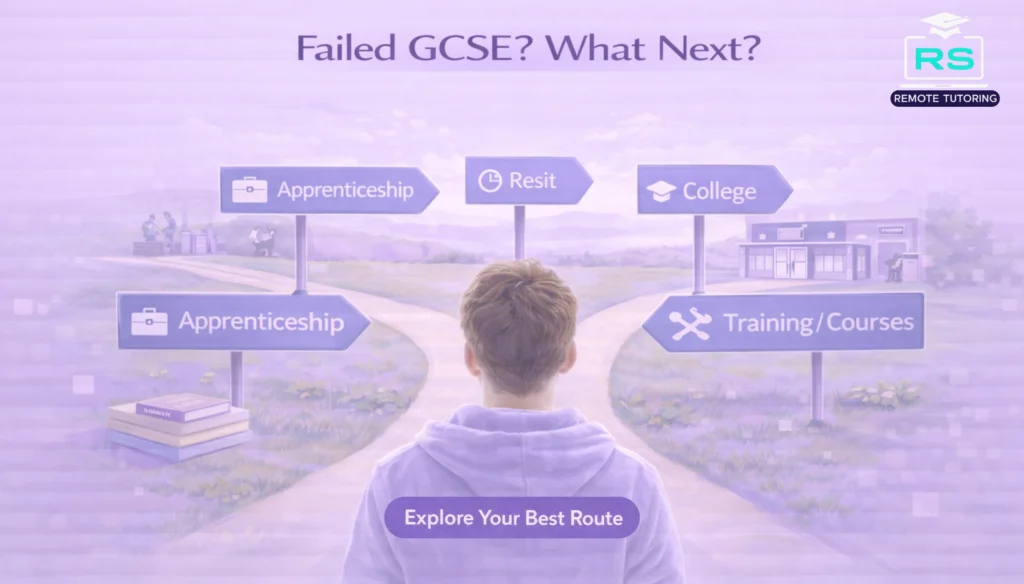
GCSE is one of the most important exams in the lives of students. Most students tie themselves, their future is totally bound with success in the exams. GCSE failed can feel devastating. Result day is often marked by anxiety, stress and fear. One moment, suddenly it feels like the future has collapsed.And students started asking themselves in the state of depression, asking Have I ruined Everything? Will I Ever get enrolled in College? What will people think? Understanding the key important focus is that failing GCSE is not the end of education, career, or life. In fact thousands of well known educators, Professionals, entrepreneurs, and graduates failed one or more GCSEs and still went on achieving as high as they have ever imagined. The following blog will explore exactly what to do next, the real options that help to achieve high even after failing the most demanding and prestigious exam and how this turns a setback into a strategic setback. Understanding What Does Failing A GCSE Actually Means? Before panicking, before making yourself feel anxious it is very important to understand who is considered a failure in the GCSE exam. To understand clearly what actually is a pass. But here is the focal point. Failing one or even several GCSEs does not mean you have failed education altogether. Most colleges, sixth forms, employers, institutions and training providers seeks; After Failing GCSEs: What To Do Next The following will explore what are key important steps and what are the valid options to do even if you failed the GCSE. Do not Panic: Give Yourself Perspective It is very normal for every student sitting for GCSE to feel disappointed and depressed when encountering failure. They feel embarrassed, overwhelmed and anxious. But reacting emotionally can lead to rushed decisions . It is very important to be strategic and emotionally mature when encountering such situations. The following points should be remembered. At this crucial stage, the job is not to make your self heavy hearted or judge yourself but to choose the right option. Resit For GCSE: The Quiet Common Option Resitting GCSE is the most common option that students choose when they encounter failure in the most trusted path , the GCSE examination. Another significant myth that is often tied with the rest is that students feel overwhelmed and their brain revolves only around one path: what people will think? The most hard working student is again appraising in the GCSE exam. It is important to understand that Students should actually consider Resits if: GCSE Maths matter more than ever because they are required by each and every company so if students fail in the most demanding subject Resiting is the quite common option. The Following will explore how to resit successfully without performing the past mistakes; Many students jump to higher grades while sitting for Resitts, with the write approach and guidance. Get Enrollment In College or Sixth Forms with Conditions Another path that can be chosen even if you failed the exam, is getting admission in college or sixth forms with certain conditions, because failing the GCSE can not simply block you from college. Many Colleges offer; To further explain with the example; Getting admitted to college keeps you moving and making progress without getting back because of failure. Choose Vocational Qualification: GCSEs are not the only route to success. The World is beyond the GCSEs success. Vocational qualification focuses on practical skills, course work and real world applications. Some fine alternatives includes; These options are valid and ideal for those of; Many vocational Courses still allow for resit while also resuming the new enrolled courses. Apprenticeships: Learn, Earn and Make Progress. Apprenticeship is another wide career option and they are seemingly powerful alternatives when traditional exams are not the student strength. Before choosing the wide career option, it is necessary to understand why apprenticeships work. Entry requirements vary from institution to institution and not many of the employers seek GCSE full passes, especially at intermediate level. This option is valid for those who are; Understanding Why Most Students Fail GCSE: Gcse exams are not just exams based on intelligence and hard work. Though Intelligence and hard work is the ultimate need, using the intelligence and hard work in a strategic and smart way builds the gap between high Achieving Student and the failed one. Common reasons for failing includes; Once the common reasons of failure are addressed, the improvement becomes mandatory. How to Avoid Failing Again: Building A Smart Strategy In order to avoid disruption and obstacles in the progress. Building a smart plan which is focused and strategic is utmost necessary. If the student is continuing, retaking the exam the following are utmost necessary. Focus on; By focusing on these areas, one can masterfully create an impact but creating the long term impact needs proper guidance. With the right support and guidance students can statistically perform better in sitting again for exams. How Failing Seemingly Affects Your Future: Failing is the part of life but what happens, how failing in one exam affects your Future. The short term impacts include; But failure is not just bound to appearing again for an exam or simply choosing other career options. The long term impacts includes; Failure might seem the end at the start but it is unlocking several other pathways which are unknown to many. FAQS Final Thoughts: Failing your GCSEs hurts, but it doesn’t define you. What defines you is: With the right plan, support, and mindset, many students come back stronger, more focused, and more successful than before.If you’re willing to take action now, this “failure” could become the turning point that finally puts you on the right path. RajaRaja specializes in Physics and Maths, with over 5 years of experience. He offers KS2, KS3, and GCSE Science and Maths lessons. He graduated from one of the top universities in the UK.
Are GCSEs Getting Harder

GCSEs are the toughest exams in the UK. Students tie a lot of their expectations, mostly they tie their future by successfully achieving high grades but mostly students fail often hearing the exam is one of the difficult exams and getting a 9 which is a high achieving grade is exceptional.The constantly hearing myths that success and luck both are significantly important in today’s world. Parents supporting their children appearing for GCSEs or itself the students often asked this question: Are GCSEs getting harder than they used to be? The persistent question, and the grades are highly difficult to achieve. Top marks are rare to achieve,teachers are constantly talking about exam techniques, and students feel overwhelmed, anxious before taking the exams. So the ultimate flux , the cyclical nature, what’s really going on? The complete guide will explore whether GCSEs are genuinely getting harder or whether they have simply been changed. Additionally, this will also explain what these challenges mean for today’s generation and how the right support can make all the difference. Historical Perspective: How GCSEs Evolve over time In order to fully understand the changing nature of the GCSEs exam it is very important to unleash a brief history encapsulating the evolving nature of GCSEs exams. GCSEs were developed in the late 1980s to replace O level in the UK for a more fair and inclusive exam oriented system. For many years course work played a highly significant role but with time the traditional exam system started getting replaced. In 2015, the UK government introduced major reforms in order to raise standards. The raise standard, the called reforms fundamentally reshaped the GCSEs exam. The Reforms that Reshape the GCSEs Exam: The following reforms changed the difficulty level of the GCSEs exams and rebuilt the entire traditional system of the examination. The Move from A-G To the grading system : The theoretical shift from rebuilding the grade boundaries work as the significant step for reshaping the entire system. The traditional system mostly depends on the grade from A-G but with the introduction of the boundaries from 9-1 was not just a cosmic change. The grade boundaries increase the pressure in competition to achieve the top position which becomes the significant evidence to the most persistent argument: are GCSEs getting harder? Reduction of the Coursework: The significant decrease in the course work marks the dramatic shift in the GCSE history. Mostly with the previous inclusion towards the course work helped students; Shift from Content focus: Modern GCSEs examination demands highly and deep analytical and critical thinking. Exam questions are mostly composed which only demands analytical reasoning and critical interpretation. Exam questions increasingly require students to ; The following examples will clearly explain the mentioned points Are GCSEs Exam Getting Harder The answer to the persistent question, in short, is yes but in a different way than before. The syllabus content has not increased or decreased but the way of asking the question , the exam style has evolved demanding more hard work than the traditional exam system. Modern paper are Examiners undoubtedly includes These are the reasons students mostly say, “I revised everything but the paper was still hard.” Grade Boundaries: Harder or Fairer? One common belief is that grade boundaries are rising every year. And this shift leaves student confusion and anxiety mostly leading to the questions: are these grade boundaries more harder to achieve or these are the fair marking strategies. But in reality: However, what has significantly changed is how narrow the margins are. A few marks can now mean: Why Students Feel GCSEs Are Harder Today Even if GCSEs are not “harder” in content, students experience them as harder because of several modern pressures: Increased Academic Competition One of the most common challenges that students face is the increased academic competition with the evolving nature of the exam. Mental Health and Exam Anxiety With the increased competition students feel more overwhelmed and confused which leads to Less Margin for Error The evolving nature has undergone the shift with torelating less errors. Are GCSEs Harder for Certain Subjects? Yes, some subjects have seen sharper increases in difficulty.Such as; GCSE Maths GCSE English Literature GCSE Sciences What This Means for Students and Parents: The key important thing to note is that GCSE success today depends less on “working harder” and more on “working smarter.” Students need: This is where many students struggle, not because they lack ability, but because they lack guided preparation. How GCSE Tutoring Helps in a Harder Exam System A high-quality GCSE tutor doesn’t just teach content. They help students: With GCSEs becoming more application-focused, personalised support can be the difference between an average grade and an exceptional one. Are GCSEs Getting Harder? The Honest Response Yes, GCSEs have become more demanding, but not impossible. They now reward: Students who adapt to this new style can still thrive,and often outperform previous generations. Conclusion If GCSEs feel harder, you’re not imagining it. But difficulty doesn’t mean unfairness. It means the system has changed and success requiresthe right approach. With: students can not only cope, but excel. If your child is feeling overwhelmed, stuck, or underperforming despite effort, the issue may not be intelligence or motivation. It may be a simply strategy and strategy can be taught. RajaRaja specializes in Physics and Maths, with over 5 years of experience. He offers KS2, KS3, and GCSE Science and Maths lessons. He graduated from one of the top universities in the UK.
The Future of GCSE Exams: How Digital Assessments will transform the Secondary Education
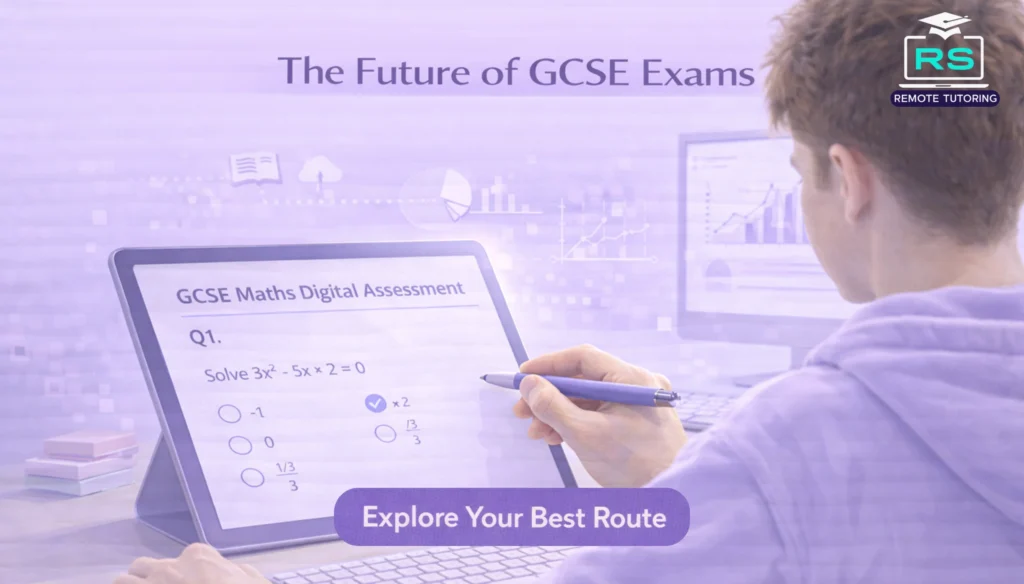
The traditional GCSE exams methods remained unchanged over decades, the traditional rules of fixed exams, pen and papers under rigid examination ha;ls have tied the future of many of the students but with the advancement sin eerie field, the world is undergoing the decisive shift, the future of GCSE is also going to change with the integration of emerging technology. The fundamental shift after learning from the outbreak of pandemic has led to the evolution of digital assessing framework. The transition is not very simple or rapid but just about replacing the exams but is more than that. It is the system eliminating the vast transfusion of how students are accessed , how teachers prepare learners, how marks are awarded and how students are judged ensuring fairness and accuracy. As educators, teachers and policy makers explore the digital accessing tools, students and parents should also fully understand what this future looks like and how to prepare for it. The below guide will explain the future of GCSE exams through digital assessments, examining the opportunities, challenges and implications for the students, schools and tutoring industries. Understanding Why GCSE is moving towards Digital Assessments The question tremendously circulates among parents and teachers that why the traditional GCSE is moving towards digital Assessments.Understanding the reasons why the shift occurred is extremely important. The following is going to explain which factors lead to the decisive shift. Lessons Learned from Pandemic COVID-19 pandemic exposed the fragility of the traditional examination system. Every institution suffered whether it was the educational industry or the health institutions.The closure of schools, cancellation of examinations and totally reliance on teachers accessed grades exposes the emptiness of the traditional education system. This highlighted the need for flexible and resilient educational assessment models. Digital assessments often looks The advantages lead to the policy makers to re-think and replace the traditional assessing environments to the digital assessing tools which are modern in the chaotic world. Integration of Digital tools in the Environment In today’s fast paced world, students are much more inclined towards learning the things which are encapsulated via technology. Accessing students digitally and integrating today’s artificial intelligence, creates alignment between both learning and assessment, reflecting in better worldly skills. Demand for more Fair and Justified Assessment The rapid shifting of the world , leads to a rethink that students need more to be accessed with fair and justified assessing tools. GCSE assessments enable them to: The shift actually supports fair outcomes for diverse learning styles. Understand Digital GCSE Assessments Digital Assessments are gaining much more importance in today’s era. These involve delivering, completing and marking exams using secure digital platforms rather than paper scripts. These assessments integrate; One important thing is to note that digital exams do not mean easier exams but the exams which are judged and accessed smartly. Key Important Components of the Future Digital GCSE Exams The following will explore future GCSE exams key features which are encapsulated under the fine umbrella term of digital assessments. Adaptive Assessment Technology: Digital exams are throughout made adaptive , questioning difficulty in real time scenarios. Digital assessments as they are adaptive to the environment holds significant importance. There are several key benefits, which includes; Adaptive testing allows the examiners to access the depth of student’s understanding instead of focusing on cramming. Questions Formatted beyond Multiple Choice: The traditional methods of GCSE examination include multiple choice questions but the digital assessment evolved and has the pattern of exams involving the rich questions that are beyond the multiple choices. Digital exams allows for The given points illustrate the explanation beyond the memorization and more focus on application and reasoning. Automated and AI Assisted marking: As human examiners remain essential and sometimes students feel that marking is deliberately unjustified, but the digital assessments involve The digital assessments leads to the For difficult subjects such as science and maths, digital and automated AI marking leads to accuracy How Digital Exams will Reshape Student’s Preparation The persistent question arises how the digital assessments will change the student’s preparation. The world is rapidly changing and the rise of digital assessments are consistently reshaping the future. The following will explain how these will reshape the entire history. Shift from Cramming to Skills Development: The consistent focus on application and reasoning assessments have evolved the shift from mere memorization to skill development. Digital assessments involve; Student’s needs to focus on Increased Data Driven Revisions: Digital assessments involve detailed performance analysis. These includes; This enables personalized revision strategies, especially when supported and guided by expert tutors. Impact on Teachers and Students Digital Exam assessments with thor benefits impact teachers and students in different ways. Reduced Administrative Burden: Digital exam assessments decrease the administrative burden. All become excessively easy and feasible.Insturctors and teachers can now focus more on teaching and learning rather than exam administration. Excessive need for Teachers Literacy: To ensure success in the digital economy, institutions must focus on teacher’s digital literacy and their training. Schools should invest in Digital GCSEs are as professional and time taking. The safety measured should be ensured to get desired success. What this Change of GCSE Exam Means To Parents Parents are one of the important pillars that thoroughly work in the success of digital GCSEs assessments. Parents must adapt and support strategies by; Understanding the format early can reduce anxiety and last minute panic. Role of Artificial Intelligence in the Future GCSE landscape Artificial intelligence has gained a lot of importance but the question arises how it will change the evolving landscape of the future GCSEs. AI will not replace the teachers or examiners but it will enhance Through these benefits students will increasingly interact with The future GCSEs ecosystem will be hybrid, data driven and learners centered. FAQS Final Thoughts Digital GCSE assessments are not a passing trend, they are the next evolution of secondary education assessment. While challenges exist, the potential benefits for fairness, flexibility, and skill-based evaluation are immense.For students, early exposure to digital assessment formats will be a
How to Get a 9 in GCSE Maths
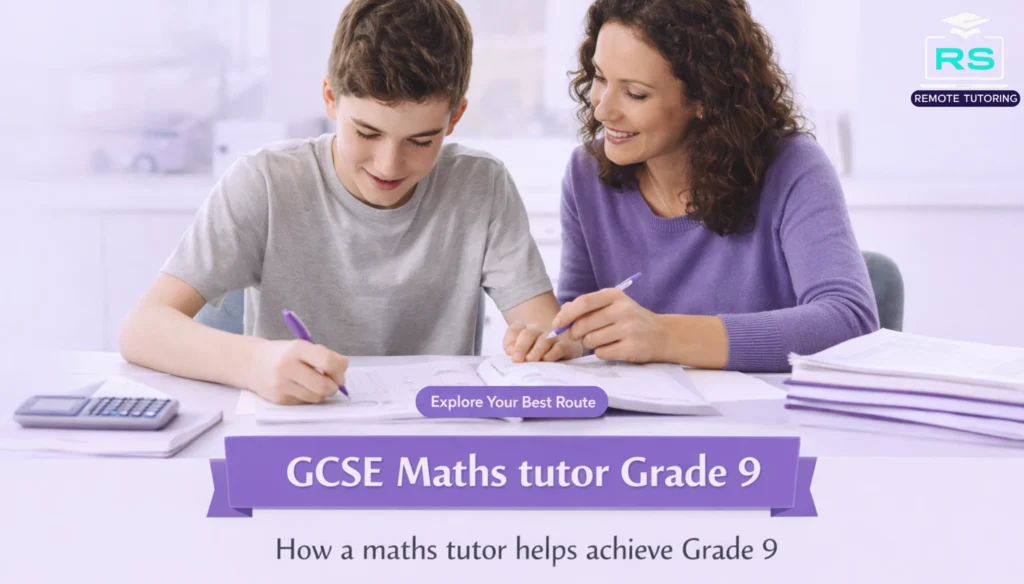
Getting a 9 in GCSE Maths is every student’s dream. Not only in one subject but every student wants to slay in the whole GCSE process, but the process is time consuming and demands a lot of success and patient. Maths is the subject which is often associated with difficulty. Most students hesitate to talk about GCSE maths as the syllabus seems like a huge rock to cover, But these are all the myths. Undoubtedly most students find it difficult not because the subject is hard to tackle but because the key interest areas of students are difficult. Getting a grade 9 is not about being naturally good at maths, but it is whole about consistency and strategic preparation. Every year students fall short of grade 9 not because they lack the finest ability to tackle the purest difficult subject but because they prepare and revise ineffectively, misunderstands how marks are awarded and in most cases there is the high probability of problem solving skills. The guide will explain what separates grade 9 students from grade 7 or grade 8 and how you can bridge the gap with structured approach and right guidance. Understanding what Grade 9 actually means? Grade 9 does not actually reflect full marks or students’ high intellectual ability but it reflects students’ key abilities of focus and consistency. Grade 9 in mathematics suggest; Grade 9 is basically awarded to the most intellectual and highest achieving students and basically to stretch the 5 or 6 % candidates. GCSEs papers mostly include questions including One key thing should be noted that students should make it clear that they are not revising for maths but how to master how GCSE maths tests actually maths. A complete Road map for getting 9 in GCSE Maths The following guide will break down the most important areas to focus on and what actually builds up to make a grade 9 in GCSE Maths. Mastering the GCSE Exam Specification: The most crucial and finest step is to understand clearly what GCSE demands. Students pay a lot of hard work but still miss marks not because of efforts but because of ineffectively revising and considering everything as a whole. GCSE demands not everything but everything done in a strategic and smarter way. What is actually needed by students is; Grade 9 most important topics include Being gripped at these topics saves one from failing. Work on Building Conceptual Understanding rather than speed: A common mistake that usually students rush up in is working on time management and speed rather than building strong roots in the subject. The key difference between grade 9 student and other student is that \ For Example; instead of memorising the quadratic formula ; grade 9 student The in depth explanation allows flexibility to adapt to every unfamiliar question that can be asked in the exam. Learning How marks are awarded: Maths is quite the subject encapsulating the methodological approach rather than the theoretical one. The key distinction of grade 9 student is that ; And the examiners reward only to those navigating the following steps Correct setups Understanding the indepth marks rewarding strategy can work as the formulate ladder for achieving Grade 9.Correct ideas with poor structure can lose the marks. A well-structured answer with the minor error can still score high. Rigorous Practice for Grade 9 Problem Solving Question: GCSE questions are rarely direct. Because they test In order to gain well reputable success in mathematics A well proven strategy is that After practising the question ask yourself the following question; This reflection is what separates the high achievers. Use Past Papers strategically: Most students use the past papers without thoroughly gaining and learning from them. Past papers are utmost obligatory for understanding the what and how the examiner asked the question. The best guide for achieving the highest grade is focusing on following steps Fluency is utmost important: Students achieving grade 9 are not slow or procrastinate but they work faster and smarter. Rushing does not save time but also creates a lot of fuss that is difficult to tackle. Strong fluency is utmost necessary that ensure; Two ensure such a smooth fluency in exams and to shine as the top achiever daily rigorous practice of Is utmost necessary to achieve the higher tier success. Use Targeted Revision Time Table: Scheduled timetable is very much necessary for ensuring smooth Maths revision before the final exam phase. A strong timetable include: An effective timetable includes, for example; Using such timetables and splitting the work will ensure smooth flow of preparation because quality beats quantity. GCSE Maths Tutor making the Difference: GCSE Maths Tutors are the fine guiding star that makes up the difference in the preparation of the top students. A good tutor FAQS Final Thought Getting a Grade 9 in GCSE Maths is not about last-minute cramming or luck. It is the result of intentional practice, examiner awareness, and deep understanding. Students who achieve a 9: If you approach GCSE Maths with the right strategy, a Grade 9 is absolutely achievable and often closer than you think RajaRaja specializes in Physics and Maths, with over 5 years of experience. He offers KS2, KS3, and GCSE Science and Maths lessons. He graduated from one of the top universities in the UK.
How to Appeal GCSE Result or Get Papers Remarked
Exams period is often marked by anxiety and stress. But what is most dangerous and anxious is the day when the result comes out. Result day brings both joy and nervousness for the students. GCSE results day can be life changing. It opens doors for various opportunities, to sixth forms, various apprenticeships, college courses and long term career paths.But what happens when the students could not achieve desired grades, and the result could not reflect the efforts put in. Every year thousands of students appear to take the GCSE exam, uncover the first step of their career success and thousands of hopes are tied to this one exam, but the sudden shift in the result day shatters their dreams. Every year many students challenge their results through reviews of marking, clerical checks and formal appeals. Yet many students miss this finite opportunity due to confusion, fear or misinformation. The following guide will help both students and parents, explaining how to appeal GCSE results or get papers remarked on, when it is worth doing and how to make informed decisions blacked by evidence not emotion. Understanding GCSE Result Review System: Before initiating the process of paper rechecking. Understanding the core essential components of the review system is very much significant. GCSE exams follow strict marking schemes designed by bodies such as AQA, OCR and WJEC. The whole process is standardized, it is not infallible specially in subjects involving extended answers, interpretations or essay based exams. If the students could not achieve the desired grades, there are three post result services available. Each service works on different levels, serving different thoughtful purposes. A Guide for Rechecking GCSE Result The following steps will help the parents and students to tackle the most thoughtful process after the results have been declared. Deciding whether the Appeal for Marks renewal is worth it ? The first and foremost obligatory step is deciding whether the marks rechecking step is worth it or not , the most asked question is whether it may shift the result or students are only left with thor declared previous marks. Following steps should be considered before reviewing the papers. A remark or appeal may be appropriate if: If you are Lacking at some peaks, consider the following points explaining why the appeal is not worth it Request for GCSE Answer Scripts Another key important area to heaven is on requesting for the access of the scripts. Schools may request the exam boards for access to the answer scripts.The step is worth crucial because; Viewing the paper allows: Teachers to assess whether marks were harsh or misappliedIdentification of missed credit in longer answersEvidence-based decision-making rather than guesswork Paper reviewing is very much beneficial for the students having the following subjects Types of GCSEs Reviews Understanding the type of reviews is an important step that students and parents felt short of. Most families are not actually aware of the options that are valuable for the paper rechecking. Clerical Recheck: This is the most simplest option of the rechecking phase. This basically navigate; This option is quite reliable for the exam containing expected admin errors. The cost is mostly lower than the recheck but the grades do not change significantly. Review of Marking: This is another crucial type of the paper appealing. Most widely common option The process occur through a the different examiner A key point to consider is that examiners do not recheck the paper from scratch but checks whether the marks are aligning with the original marking scheme. Paper remarking , te quiet common option often leads to Formal Appeal: Another wide option for paper remarking is the formal appeal. These appeals are not about academic paper judgements and they are only valid if Another key dimension to look into it is that appeals are rare and difficult to win and usually pursued after the review of marking. GCSE Appeal and Marking Deadlines: This is the most important step because this is the focal point where many of the parents and students are unaware and miss the finest opportunity. Deadlines are strict and missing the means of losing the right to challenge the result. Access to Scripts: Usually within days of resultsClerical Re-check: Early SeptemberReview of Marking: Mid to late SeptemberAppeals: After review outcome, often October Schools mostly submit the request on the behalf of students, immediate and early communication if necessary. Strategies Consideration: Maximizing Success The following should be considered for maximizing success. Choose the Right Papers Listen to Teacher Judgement Teachers often have access to: Their guidance significantly improves success rates. Emotional Realities: Managing Expectations Appealing GCSE results can be stressful. It is important to: In many cases, schools allow conditional enrollment while results are under review. FAQs Conclusion Appealing GCSE results or requesting a remark is neither a desperate move nor a guaranteed fix; it is a formal academic process designed to protect fairness.When done strategically, with teacher input and clear evidence, it can genuinely change outcomes and unlock opportunities. When done impulsively, it can waste time, money, and emotional energy. The key is understanding when to challenge, how to challenge, and what to expect. GCSE results do not define a student but ensuring those results are accurate is a right worth exercising carefully. RajaRaja specializes in Physics and Maths, with over 5 years of experience. He offers KS2, KS3, and GCSE Science and Maths lessons. He graduated from one of the top universities in the UK.
When Do GCSEs Start in 2026?
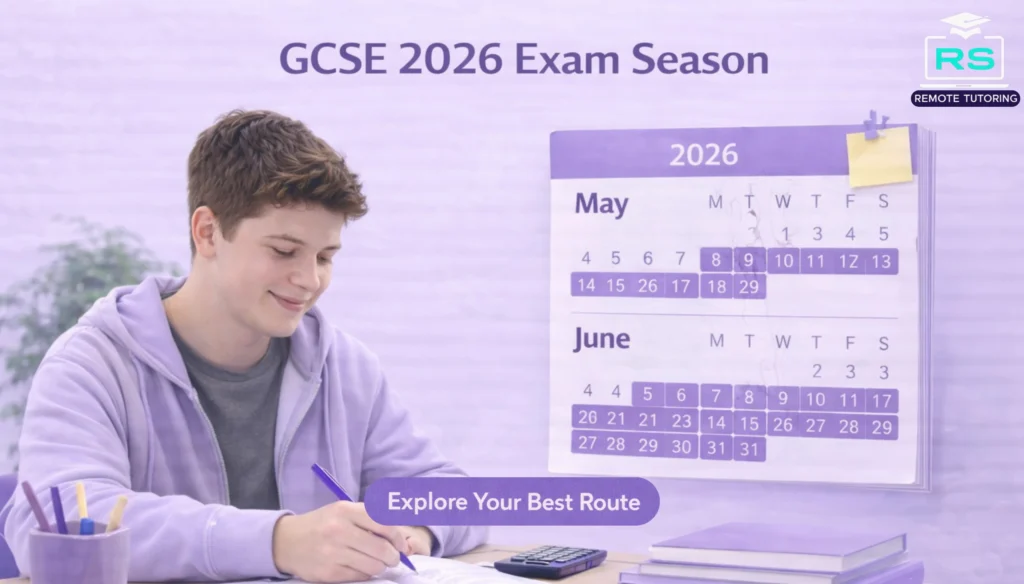
GCSE exams are a rite of passage for young people across the United Kingdom. Parents and students often ask “When do GCSEs start in 2026?” because knowing the exam window helps you plan revision, book any necessary accommodation, and avoid accidentally scheduling a family holiday during exam week. This guide answers that question comprehensively and compares the timetables of AQA, Edexcel, OCR, WJEC/Eduqas and CCEA. We also shared advice for exam travel, offered a realistic revision timetable, and answered frequently asked questions about GCSEs in 2026. Key takeaways: GCSE exams in England, Wales and Northern Ireland begin in early May 2026 and continue until the end of June. The provisional timetables released by the major exam boards show that the first mainstream GCSEs start during the week beginning Monday 4 May 2026, with some BTEC or vocational exams starting earlier (BTEC Travel & Tourism on 1 May). The season ends after Friday 26 June 2026, although students must be available until the contingency day on 24 June in case an exam is moved. All boards follow national standards, so the difference lies only in the dates of particular papers and their formats. Overview of the 2026 GCSE exam season The awarding bodies that set GCSEs are AQA, Pearson Edexcel, OCR, WJEC/Eduqas and CCEA are regulated by Ofqual, so the exam window is broadly synchronised. The BBC’s 2026 exam guide states that GCSE exams start during the week commencing Monday 4 May 2026 and finish on Friday 26 June 2026. Atom Learning confirms this, noting that “GCSE exams will start the week of Monday, 4th May 2026” and end on 26 June 2026. Within this window, individual subjects follow their own timetables, for instance, mathematics papers are held on 14 May, 3 June and 10 June. Early BTEC and vocational papers The provisional timetables show that some vocational or BTEC qualifications begin slightly earlier than the main GCSE season. A timetable issued by a secondary academy lists BTEC Travel & Tourism on 1 May 2026 and BTEC Sport on 7 May 2026, both before the first GCSE paper. However, the first mainstream GCSE subject in that timetable like Drama appears on 8 May 2026, and major subjects such as English Literature and Business commence on 11 May 2026. Edexcel’s official timetable also shows its earliest GCSE papers (Biblical Hebrew, Psychology and Turkish listening) on Thursday 7 May 2026. OCR’s provisional timetable lists Studies and applications in psychology on 7 May am and Citizenship in action on 7 May pm. These early exams mean students may have to sit formal papers even before the main exam week begins. Contingency days Ofqual requires all students to remain available until the end of the exam series in case national or local disruption necessitates moving an exam. The OCR timetable describes Wednesday 24 June 2026 as a contingency day. This day is reserved for any rescheduled exams. Parents should avoid booking travel or holidays before Friday 26 June, ensuring children can attend any rearranged exams. GCSE exam dates by board Each exam board publishes a provisional and then a final timetable. Schools typically decide which board to use for each subject, so your personal timetable depends on your school’s choices. Here is a summary of the 2026 start dates and key exam windows for each board. AQA AQA’s final 2026 GCSE timetable was not available for text parsing while writing this guide. However, AQA follows the same exam window as other boards. AQA’s first mathematics paper (non‑calculator) takes place on Thursday 14 May 2026, and subsequent papers occur on 3 June and 10 June. Because AQA tends to schedule some language or niche subject exams a week earlier, students should check the official timetable once it is published. Key points for AQA candidates Pearson Edexcel The final Edexcel timetable lists the first GCSE papers on Thursday 7 May 2026. These include Biblical Hebrew, Psychology and Turkish listening. Drama follows on Friday 8 May. High‑entry subjects such as English Literature and Business are scheduled for Monday 11 May. Maths Paper 1 for both Foundation and Higher Tiers occurs on 14 May, Paper 2 on 3 June, and Paper 3 on 10 June. Key points for Edexcel candidates OCR (Oxford Cambridge and RSA) OCR’s June 2026 provisional timetable indicates that the first GCSE exams are on Thursday 7 May. Students taking Studies and applications in psychology have a paper that morning, and those studying Citizenship sit the “Citizenship in action” paper that afternoon. Other subjects such as Biology, Business and Classical Civilisation begin during the week of 11 May. OCR maths papers mirror AQA and Edexcel: Papers 1 & 4 (Foundation & Higher non‑calculator) on 14 May, Papers 2 & 5 on 3 June, and Papers 3 & 6 on 10 June. Key points for OCR candidates WJEC/Eduqas WJEC (Wales) and Eduqas publish separate timetables. WJEC mathematics numeracy unit 1 exams are on Thursday 7 May, coinciding with AQA, Edexcel and OCR’s maths schedule. WJEC/Eduqas english and science papers generally occur on the same days as the English and science papers for other boards. Schools in Wales often use WJEC for many subjects but may opt for AQA or Edexcel for certain courses. Because of devolved education policy, Welsh schools should refer to the WJEC/Eduqas timetable for exact dates. CCEA (Northern Ireland) CCEA (Council for the Curriculum, Examinations & Assessment) serves Northern Ireland. According to BBC Bitesize, CCEA maths units 1-4 (foundation & higher) are scheduled for 14 May, aligning with other boards. CCEA English and science papers follow a similar pattern, though some non‑core subjects appear at slightly different times. CCEA candidates should consult the board’s final timetable for details. GCSE subject Exam timetables at a glance Below is a consolidated overview of the major subjects, highlighting the first paper for each board. Note that each paper lasts 1 hour 30 minutes unless stated otherwise and that separate science papers may have slightly different durations. Subject Board First paper date (Morning unless stated) Notes Mathematics
Do You Need A GCSE Tutor?

GCSE years are marked by in-depth understanding and endless preparation, often termed as the most demanding phase in secondary education. Most of the students are bound with endless confusion, anxiety and the fear of not getting good grades, which gives rise to the most persistent question across every household in the UK. Do the Students Need a GCSE tutor? The clear answer is not yes or no, because any tuition whether for GCSE or any other exam is not just about failure or intelligence or high grades. It is about consistent struggles, endless support and strategic preparation. After Parents’ undeniable support students often are dependent on their tutors , not just in terms of academics but also seek emotional support through them because tutors are the ones who all made through these struggles in a place to reach where they are now. This guide will help you understand whether the tutor is obligatory for the students sitting for the GCSE, when it may not be and the impacts that the tutors bring in the academic, grades and long term outcomes of the students. The Role of the Tutor A GCSE tutor is more than an examining person. He is not the one who only guides the students academically , delivers the lectures and meets the endless requirements needed for the GCSEs students in the hectic and thoughtful preparation phase. But the one who brings clarity and confidence in the students lacking their motivation. The role of effective tutor include: Unlike classroom teachers who only reflect 20 to 30 minutes to the students, the tutor’s role is to entirely focus on the learner’s pace, strength and abilities to handle the tasks effectively. GCSEs: A challenging Exam GCSEs are the hardest and toughest exams students face for the first time. Most students align their future goals with the GCSEs good grades, It is important to note why the GCSEs are most challenging. This decisive shift in the lives of students even overwhelms the most capable and genius ones. The difficulties that students often face includes; The ultimate role of the tutor is to navigate these challenges, addressing them to the students before turning out to be the most long term academic pressure. Signs You might need a Tutor The following signs indicate and reflect that you are in the ultimate need for the tutor. If these signs are relevant to you , it is a warning to hire someone to pass with good grades. Grades do not Reflect Efforts One of the most persistent signs that occurs among those who need the tutor but are ignorant of the sign . Grades do not reflect effort, if the child is excessively working hard but still not getting good grades. It is not the lack of effort but the lack of strategy. Common problems include A GCSE tutor helps the student to learn how the marks are awarded, not just putting consistent efforts without navigating the outcomes. Lack of Confidence in Essential Subjects The most important core essential subjects of the GCSE are These three are the foundational and core subjects for further education and employment. If a student is struggling in these areas , this can limit their future endeavours. An expert Online GCSE tutor can provide fine guidance with; Confidence is the ultimate key , the finite difference between grade 4 and grade 7. Falling Behind or Missing School Support Classrooms are often over-saturated with innumerable students , which means that teachers can not always look at each and every student. Teachers often lack as A tutor fills the gap, especially If a student Do the Top Performers Need Tutors? The high achievers are often mistaken as they are god gifted and the sudden question arises as do they need tutors ? The official sudden answer is yes but in most cases. High Achieving students seeks tutors help through For most of the competitive pathways such as medicine, law, engineering, every tiny grade matters. A tutor helps students to move from satisfactory to exceptional. Reasons you do not need a tutor: Tutoring support is not necessary in some cases. The following reasons illustrate when you do not need a tutor. However, confident and intelligent students often need tutors’ support for effective mock revision. How GCSE tutor Improves Result: Tutoring is effective in many ways. GCSE tutors support helps students to improve their grades. Tutoring helps grades through: Personalized Learning: Through Personalized learning tutors The efficient command of the tutors is far more effective than generic revision. Exam Strategy and Marking Scheme: GCSE reward only those students whose responses contain; Tutors basically teach to master the skills and pass the exams with flying colors. Tutors guide through: This whole inside and indepth knowledge is missing in independent revision. Structured Revision Plan: A well organized and well structured revision plan is necessary to get your name done in the top high achievers. Mostly students start revision too late or ineffectively. A very compassionate tutor helps to create The effective timetable helps to navigate from burnouts and last minute panic. FAQS Final Thought You don’t need a GCSE tutor because a student is failing. You need one when a student wants to succeed with clarity, confidence, and strategy. Tutoring is not about dependency, it is about learning how to learn, mastering exams, and reducing unnecessary stress during a critical academic stage.For some students, school support is enough. For others, a GCSE tutor can be the difference between struggling and thriving. The real question is not “Do I need a tutor?” It is “Would the right support help me reach my full potential?” RajaRaja specializes in Physics and Maths, with over 5 years of experience. He offers KS2, KS3, and GCSE Science and Maths lessons. He graduated from one of the top universities in the UK.
Do GCSE Grades Matter for University and Jobs
The question that whether GCSE grades matter hovers over the UK students like a persistent fog, the brain is like the scrambled egg where everything seems confusing and overwhelming. The announcement of the GCSE result brings moments of both joy and fear.The set of numbers and letters determine future success and failure of the students. But do these grades matter for the university or future prospects? The questions are always tangled in the minds of both parents and students: does hard work matter for future needs? Or are the grades over emphasised , exaggerated in the education curriculum and are the total verdict of the continuous growth? The official answer is YES, because GCSE grades often matter but not in a simple way they are portrayed or they are often exaggerated. Their importance varies by day, depending on the pathways, prospects and contextually dependent. The fine guide offers a balanced and more realistic nuanced perspective on how GCSE grades affect employment opportunities , career growth, university admission and long term career progression, while also delving into common assumptions and pitfalls. What GCSEs Grades Actually Represents GCSEs exams are basically designed to access GCSE is basically the standardised academic qualification, the set of designed rules , a key important certificate the student earns during the initial years of the education that is the biggest reason that companies and employers seek the GCSE as the most prominent tool for accessing students ability.However, GCSE grades are not the indicator of the student’s key intelligence abilities , learning abilities or deep imparted knowledge but these reflects the students performance under the specific set of circumstances and under the timid condition. Do GCSE Grades Matter for University The fine guide will answer the most specific question , entangled in the minds of students and parents during the preparation phase of the students. GCSE As Entry Requirements: For most UK universities, GCSE is the first marking edge and the good grades in the exam marks as the edge for most of the accomplished students. But one thing to note is that these are not the final decision markers. Mostly Universities technically look for ; If the students fail to fit into the minimum requirements despite the strong A grade , they might not be enrolled in their specific desired field. Competitive Universities and Courses For high competitive institutions such as Oxford, Harvard , Russell group universities and courses such as GCSE grades carry more weight. Admission officers usually use grades to enrol high achievers in thor top ranked institutions. They mostly use grades in order to To illustrate this with an example, the candidate with mostly 8 and 9 grades may appear more competitive and highly consistent than the students with several grade 4s , despite the predictions suggesting that both students have the A grade. GCSEs are not highly viewed in isolation, instead contextual data such as school background, socioeconomic factors are increasingly important. DO GCSEs Matter Less than A levels Getting an A level is the hughes edge for the students wanting to get desired enrollment into thor dream universities. However, To compose, GCSEs are the set borderline while, the grade A signifies the outcome. Do GCSEs Grades Matter for Jobs This is typically a question , often more associated as all desired grades are for the prominent role in the public sector. How the grades impact the future career prospects, does they really impact , if they do so , then what are the outcomes. GCSEs and entry level Jobs For early career applicants , GCSEs are only formal applications employers seek and can only access. Many of the formal job listing undoubtedly requires. GCSE maths and English standardized passed it means passed with grade 4. Formal certificate as the evidence for that student encompassing basic communication skills. This is most evident and required for: GCSEs matter practically and immediately. GCSEs in Competitive Market GCSEs exam applications are required for before the screening text particularly if applying for the roles in The reason for early application is because the fields are mostly competitive and a large number of students want to be enrolled as the competitive edge they provide. Several reasons include: However, beyond the academic outreach, GCSEs outweigh degree classifications, internships and special abilities once the students reach the interview stations. Long Term Career Outreach As the career progress takes the charge, the role of GCSEs drops sharply.After the degree, Professional qualification outreach and innumerable work experience they employers mostly seeks Until the students reach their mid career , GCSEs grades become highly irrelevant until and unless specific job employers require for legal reasons. Do Companies/Institutions really care for the GCSEs specific grades? This is the most uplifted debate, do the employers really care about the phenomenal performance of the student at GCSE level. The answer to this thoughtful debate is that employers mostly care about Although Grade 9 is marked as highly efficient and impressive but it won’t outweigh In Practical fields, GCSEs are highly used as screening tools not as th decision markers. The Psychological Weight of the GCSEs Grades The reason a very thoughtful importance is given to the GCSEs because Students sit at the exams And the situation often leads to A very important point for both parents and students is that GCSEs are not just the vital important career step, it’s not the only blue point, or the actual destination , there is a way more than that. How GCSEs Grades Fix into the Bigger Picture GCSEs are not just the set designed grades but they are the: The strong foundation of the GCSEs marks the initial stages easy and feasible. Weak GCSEs require alternative strategies but do not close the doors permanently. FAQS Final Thought GCSE grades do matter but not forever, and not in isolation. They influence: But they do not define intelligence, ambition, or future success.Education and careers are built through consistent effort, adaptability, and long-term growth, not a single exam result. Your future is shaped far more by
Which GCSE Exam Board Is Easier? AQA vs Edexcel vs OCR

If you attend secondary school in the United Kingdom, chances are you’ll sit your GCSEs with one of three major exam boards: AQA, Pearson Edexcel or OCR. Headlines like “Which GCSE board is the easiest?” flood forums and search engines every year, yet few guides separate myth from fact. All boards follow Ofqual’s national curriculum and assessment objectives, so differences lie mainly in exam style, support resources, grade boundaries and subject emphasis. This GUIDE unpacks those differences and gives students clear, practical advice to help them choose confidently. Understanding GCSE Exam Boards in the UK What exam boards are there? Five awarding bodies set GCSEs in the UK. AQA, Edexcel and OCR dominate in England, while WJEC is used widely in Wales and CCEA in Northern Ireland. Each board produces syllabuses, exam papers and mark schemes that must meet national standards. They all work to the same assessment objectives, recall of techniques (AO1), reasoning & interpretation (AO2) and problem‑solving (AO3) and they each issue grades on the 9–1 scale. Although the subject content is almost identical across boards, the way it is presented and assessed can differ. Which board does London use? London schools almost exclusively choose AQA, Edexcel or OCR. Students generally have no say in the decision; the subject department picks an exam board based on teaching preferences, resource availability and timetables. However, private candidates or home‑educated students in London can select their board when registering through an approved exam centre. Comparing Exam Format and Structure Number of papers and marks GCSE Maths and most other subjects are assessed by three 90‑minute papers. AQA and Edexcel each award 80 marks per paper, totalling 240 marks. OCR differs: its papers are worth 100 marks each (300 in total), allowing more opportunity for method marks. WJEC and CCEA follow structures similar to AQA and Edexcel but may vary slightly by subject. Sequence of calculator and non‑calculator papers AQA and Edexcel place the non‑calculator paper first, followed by two calculator papers. OCR flips the order: Paper 1 is a calculator paper, Paper 2 is non‑calculator, and Paper 3 returns to calculator. The position of the non‑calculator exam influences revision scheduling, students who prefer tackling arithmetic without a calculator early may favour AQA or Edexcel. Exam style and question presentation Grade boundaries and perceived difficulty Grade boundaries vary annually based on exam difficulty. In the summer 2019 series, the foundation tier OCR paper had lower grade boundaries than AQA and Edexcel, reflecting its 300‑mark structure. For the higher tier, Edexcel set lower boundaries up to grade 6. This does not mean those boards are inherently easier. Ofqual standardises grade outcomes across boards but it can affect how many marks are required to reach a grade. Students should review recent grade boundaries for their chosen board. Assessment objectives and syllabus content All boards must allocate similar weightings to assessment objectives (AO1, AO2, AO3). The Department for Education specifies the same subject content for each board. Differences lie in how the specification is presented: AQA and OCR organise topics into user‑friendly tables (e.g., Basic/Foundation/Higher) while Edexcel lists topics in bold to identify higher‑tier content. Exam Board Comparison: Strengths, Subjects and Styles AQA: Clear Structure and Accessible Papers Best for Students who like clarity, consistency and a gradual increase in difficulty. AQA exams suit learners who prefer accessible language over complex context and want extensive past‑paper resources.. Edexcel: Analytical and Globally Recognised Best for Students who excel at applied learning and want globally recognised qualifications. The board’s structured exams benefit those comfortable with multi‑step problems and real‑world applications. OCR: Interpretive and Critical Thinking WJEC & CCEA: Regional Boards Costs: Exam Entry Fees by Board When registering as a private candidate, costs vary by board and subject. According to a 2024–25 fee guide, the average entry fee per subject is around £48 for AQA, £52 for Edexcel and £53 for OCR. Fees increase for subjects with practical components or coursework, such as sciences, art and PE. International GCSEs (IGCSEs) typically cost between £170 and £400 per subject. Schools often cover these fees for enrolled students, but private candidates should budget accordingly. Additional costs to consider Pro Tip: When budgeting for private exams, factor in travel expenses to exam centres in London. Consider sitting your exams during spring or summer when daylight hours and public transport are more reliable. How to Choose the Right GCSE Exam Board Making a decision about exam boards can feel overwhelming, but focusing on your individual needs and circumstances simplifies the process. Here are key considerations: 1. Assess your learning style 2. Consider your subject strengths and future plans 3. Look at resources and support Each board provides a suite of free and paid resources. Edexcel offers gold/silver/bronze papers to scaffold revision, and shadow papers that mirror past exams. OCR has interactive scheme‑of‑work builders and alternative papers. AQA provides extensive past papers and mark schemes. Use the board’s resources to practise exam‑specific question styles. 4. Check exam centre availability and timetables For private candidates, ensure your preferred board is available at a nearby London exam centre. Boards have identical exam dates for core subjects but may differ slightly for options. If mixing exam boards, verify that timetables do not clash. 5. Discuss with teachers or tutors Teachers choose boards based on their expertise and teaching resources. Discuss with them why a particular board is used and whether it suits your strengths. If you are unhappy with the board, speak to your head of department early, switching boards mid‑course is difficult and may require catching up on different specifications. 6. Factor in costs and budgeting Entry fees differ slightly across boards. If cost is a primary concern, AQA may offer slightly lower fees, but the difference is modest. Consider travel costs to exam centres and revision resource expenses. 7. Think about long‑term goals Universities and employers treat grades from all boards equally. Choose the board that allows you to perform at your best and develop skills relevant to A‑level or vocational plans.