GCSE Syllabus Update 2026: Key Changes & Tips
Changes to the 2026 GCSE syllabus will be incremental rather than a wholesale overhaul. Confirmed updates include continued use of formula and equation sheets in mathematics, physics and combined science through 2027, subtle tweaks to English Language and Religious Studies assessments, and the introduction of a new “The Sciences” double award in Wales from 2026. Meanwhile, a longer‑term curriculum review is under way with talk of reducing content in several subjects and expanding breadth, but no sweeping reforms will be rolled out before 2026. We’ll decode what these changes mean for students and parents, look at how exam boards and governments design new specifications, and offer advice from teachers and expert tutors to help you prepare. A gentle note about tone and purpose This guide is written with an aims to strike a balance between factual information and empathetic support. If you feel worried about changes to the syllabus, you are not alone. With clear information and a plan, we can turn uncertainty into an opportunity to learn and grow. GCSE Syllabus Update 2025 – Is Your Child Ready? Understand the latest GCSE syllabus changes Personalised study roadmap for your child Expert guidance from our top UK GCSE tutors ✅ DBS-checked tutors ✅ 1:1 online sessions ✅ Free 15-min consultation Book Free GCSE Consultation Dr. Anna Müller Physics Tutor Daniel Evans Computer Science Tutor Olivia Brown Science Tutor Why do GCSE syllabuses change? The GCSE examinations you see today are the product of decades of evolution. It takes years for any reform to make its way from concept to classroom. Typically, the Department for Education (DfE) or a devolved government body commissions a review, education experts and exam boards consult teachers and universities, draft specifications are published, and then the new courses are taught from Year 10 two years before the first exam. This cycle can take five years or more. The last major reform occurred between 2015 and 2017 when linear exams replaced modular ones and the A–G* grade scale became the 9–1 scale. Reforms are typically driven by: In 2026 the changes are comparatively modest. This is partly because another curriculum and assessment review is under way, and the government does not want to introduce large reforms until that review concludes. Nevertheless, there are important updates you should know about. Confirmed syllabus changes for 2026 Continuing formula and equation sheets in maths and science During the pandemic, students sitting GCSE mathematics and physics were given formula and equation sheets so they didn’t have to memorise every equation under stressful conditions. Following a consultation by Ofqual and the DfE, students taking GCSE mathematics, physics and combined science will continue to receive formula and equation sheets in exams through 2027. The support sheets will be published by September of the academic year of the exam so teachers can integrate them into lessons. This change recognises that problem solving matters more than rote memorisation; it also reduces stress and levels the playing field. What this means for you: English Language (AQA) updates for summer 2026 The AQA exam board is making light-touch changes to the GCSE English Language paper in summer 2026. These are meant to improve clarity and fairness without altering the overall structure or total marks. Key changes include: Implications: Religious Studies (AQA) updates for 2026 AQA is also updating the Religious Studies specification A (8062) and the short course (8061). The changes are described as “light but meaningful” and come into force for exams in 2026. Notable amendments include: Practical advice: Practice using sample papers with the new mark distribution. In our tutoring sessions we teach students to plan their answers according to mark weightings: spend less time on one‑mark questions and more on extended essays. Our tutor Sarah Ahmed, who specialises in Religious Studies, says, “Students often over-write on shorter questions. Practising with the new layout helps them allocate time effectively.” New Science GCSE in Wales – “The Sciences” (Double Award) In Wales, the Curriculum for Wales brings a raft of new GCSEs across six Areas of Learning and Experience, phased in from September 2025 and 2026. One headline change is the introduction of “The Sciences” double award, originally slated for 2025 but delayed to 2026 to allow for refinement. The new specification will: Existing single-science GCSEs (biology, chemistry, physics) will remain available for students starting in 2025 but will be phased out by 2026. GCSE Syllabus Update 2025 – Is Your Child Ready? Understand the latest GCSE syllabus changes Personalised study roadmap for your child Expert guidance from our top UK GCSE tutors ✅ DBS-checked tutors ✅ 1:1 online sessions ✅ Free 15-min consultation Book Free GCSE Consultation Dr. Anna Müller Physics Tutor Daniel Evans Computer Science Tutor Olivia Brown Science Tutor Updates to other subjects While the big headlines centre on maths, science, English and Religious Studies, there are other tweaks worth noting: How new specifications are developed Understanding the development process can demystify why changes take time and why teachers sometimes feel unprepared. Here is a simplified overview: Our own tutors stay abreast of these developments and regularly attend training sessions. Emily Johnson, our English tutor, notes: “With the 2026 English Language changes, the fundamentals remain the same. It’s all about improving clarity so that students aren’t tripped up by ambiguous wording.” Potential future reforms and speculation Beyond confirmed changes, there is speculation about broader reforms. A recent curriculum review signalled a desire to reduce content and encourage a broader curriculum, potentially replacing the English Baccalaureate (EBacc) requirement with a more flexible approach. Teachers debate whether additional content cuts are needed, especially in subjects like French and Spanish where grade boundaries are considered harsh and the jump to A‑level is steep. Public commentary suggests that a new government might roll out reforms after 2026, but with a general election due by 2029 and pressing issues like immigration and NHS funding, big educational reforms may be deprioritised. Our recommendation: Keep an eye on announcements from Ofqual, the DfE and exam boards. At the time
GCSE 2026 Mark Scheme: How Examiners Grade GCSE Papers

Facing GCSEs can feel like walking into a maze without a map. Students spend months, or even years, learning content, practicing questions and trying to master GCSE exam technique to get their desired result. Then, on results day, they receive a single letter or number that sums up all their efforts. Understandably, we know a lot of students and parents ask us: how is that grade decided? What happens after the exam is over, and how do examiners turn handwritten answers into reliable grades? In this guide, we cover the GCSE marking process and explain how mark schemes, examiner training and grade boundaries work together to make fair grading and consistent results. Along the way you’ll find insights from our experienced tutors and students who have seen the process from both sides. What Is a Mark Scheme of GCSE? A mark scheme is a set of instructions that tells examiners how to award marks for each question. It does not just list the correct answer; it sets out the criteria required to achieve each level of response. For example, a mark scheme might specify that one mark is awarded for a correct calculation and another mark for clearly showing the method. In essay‑based subjects, the mark scheme describes the quality of content, analysis and structure needed for different mark bands. Mark schemes are written by subject experts when they set the exam paper and are updated each year to reflect changes in the specification. Every GCSE subject has its own mark scheme, tailored to the knowledge and skills required by the syllabus. Once marking begins, examiners use the mark scheme as their reference to ensure that every student is judged by the same standards. Grade boundaries are then applied to convert raw marks into grades, a process we’ll explore later. GCSE Results & 2027 Support Got Your GCSE Results? Let’s Plan the Right Next Step Whether your child is preparing for GCSE 2027, considering a resit or wants to improve a particular subject, our expert tutors can help. Book a free 30-minute one-to-one assessment to discuss their current grade, target grade and the support they need. Book a Free GCSE Assessment × Free 30-Minute Assessment Turn GCSE Results Into a Clear Plan Tell us the subject, current grade and target grade. Our team will contact you to arrange a free online assessment and recommend the right tutoring support. Why Understanding Mark Schemes Helps Students Knowing how marks are awarded helps you focus your revision. When you review past exam papers using the mark scheme, you can see where you gained marks and where you lost them. This allows you to target specific weaknesses instead of re‑reading notes endlessly. Understanding the mark scheme also shows you how examiners expect answers to be structured. For essays, the scheme often highlights assessment objectives such as content, organisation and communication, with descriptors for each level. By aligning your answers with these descriptors, you increase your chances of achieving higher marks. Assessment Objectives (AOs) Every mark scheme is built around assessment objectives. These objectives describe what skills the exam is measuring. For example, the Edumentors guide lists four common AOs: Different subjects emphasise different AOs. In the English language, reading and analysing texts (AO1 and AO2) may carry more weight, while in maths, using standard techniques and reasoning (AO1 and AO2) dominate. Even exam boards weigh the objectives differently; Edexcel may give equal weighting to knowledge and application while OCR weights application more heavily. Knowing these variations helps you tailor your revision to the demands of your subject and board. How Are GCSE Papers Marked? GCSE Results & 2027 Support Got Your GCSE Results? Let’s Plan the Right Next Step Whether your child is preparing for GCSE 2027, considering a resit or wants to improve a particular subject, our expert tutors can help. Book a free 30-minute one-to-one assessment to discuss their current grade, target grade and the support they need. Book a Free GCSE Assessment × Free 30-Minute Assessment Turn GCSE Results Into a Clear Plan Tell us the subject, current grade and target grade. Our team will contact you to arrange a free online assessment and recommend the right tutoring support. Pre‑Marking: Setting Papers and Mark Schemes Exam papers are designed by subject experts up to two years before the exam date. Alongside the paper, they create a mark scheme that outlines how marks should be awarded. The paper and mark scheme are reviewed and adjusted to ensure that questions are valid, fair and measure the intended skills. Once the specification is finalised, it is submitted to the regulator (Ofqual) for accreditation. Step 1: Collecting Scripts After students sit their exams in May and June, their answer booklets (often called scripts) are sent to the exam board. Increasingly, scripts are scanned so examiners can mark them on screen. In some cases the physical scripts are sent to a named examiner for marking. Step 2: Training and Standardisation Before they can mark live scripts, examiners must be trained. They attend standardisation meetings where they learn the mark scheme and practise marking sample answers to ensure consistency. They must demonstrate that they can apply the mark scheme accurately before they are allowed to mark real scripts. Examiners are usually qualified teachers and subject specialists, though the level of experience can vary. Training ensures that even newer examiners understand what constitutes a valid response and how to award marks fairly. Step 3: Marking – On‑Screen and On Paper The marking window usually lasts 3-4 weeks per paper. Each examiner is assigned scripts to mark, either question by question or whole papers. For long papers, scripts may be split so multiple examiners each mark a particular question. This approach speeds up marking and helps examiners focus on a single type of response. According to Ofqual, examiners mark more than seven million scripts each summer. During marking, exam boards carry out quality checks. Where marking is done on screen, pre‑marked answers known as seeds are inserted randomly.
How to Use GCSE Past Papers to Maximise Your Score
The weeks leading up to GCSE exams can feel like running a marathon without a map. You know there’s a finish line somewhere, but the course seems endless and the pressure can be overwhelming. For parents, watching their child juggle revision, homework and anxiety can be just as stressful. One of the most powerful tools students and families can use to bring order and confidence to this process is GCSE past papers. When used properly, past papers transform revision from endless reading into focused practice, reveal knowledge gaps and help students build the exam skills they need to succeed. This guide explains what past papers are, why they matter and how to use them effectively for maths, science, English and other subjects. Along the way, we’ll share insights from our team of experienced tutors and stories from students who have turned past papers into their secret weapon. What Are GCSE Past Papers? Past papers are real exam papers from previous years. They’re published by the exam boards AQA, Edexcel/Pearson, OCR and WJEC, along with mark schemes and sometimes examiner reports. Because they mirror the content, structure and timing of the actual exams, past papers provide the closest possible rehearsal for the real thing. Working through past papers helps students become familiar with question formats, practise answering under timed conditions and learn the style of language examiners use. Importantly, they also reveal which topics appear frequently and how marks are allocated, allowing students to prioritise their revision. Why Past Papers Are So Useful When to Start Using Past Papers Past papers are most effective when you’ve covered at least a portion of the syllabus and can apply what you’ve learned. The revision experts at Atom Learning recommend introducing past papers gradually from Year 10 onwards, increasing their use as exams approach. Here’s a guideline: Stage How to use past papers Rationale Year 10 Use single questions or topic sections to test understanding as you learn new material. Early exposure helps students see how concepts are examined and prevents misconceptions from taking hold. Start of Year 11 Incorporate full or partial papers into revision sessions and plan targeted revision based on results. Regular practice identifies gaps and builds stamina early. Before mock exams Use recent papers under timed conditions to practise exam technique and refine revision plans. Mock exams simulate the real thing; past papers train you for them. After mock exams Review your answers carefully, noting what went well and what needs improvement, then revisit past papers to focus on weaker areas. Reflection prevents repeating mistakes and guides further study. Run‑up to GCSEs Practise complete papers across all subjects in exam‑like conditions and use the mark schemes to guide revision. Full papers polish exam skills and build confidence. It’s important to learn the content before jumping into full papers. Past papers work best when they reinforce what you’ve already studied and help you apply knowledge under pressure. How to Use Past Papers Effectively 1. Set Up Exam‑Like Conditions To get the most out of past papers, replicate the exam environment as closely as possible: This disciplined approach transforms past paper practice into exam rehearsal. Students who practise under realistic conditions are more confident and less stressed on the day because they’ve already experienced the intensity of a timed papers. 2. Use the “Blurting” Method to Test Recall Active recall is proven to strengthen memory. The blurting method is a simple but powerful way to use past papers for short‑answer or topic‑specific questions: This technique forces you to recall information rather than just recognise it, helping to consolidate knowledge and highlight areas needing further study. 3. Understand and Use Mark Schemes Mark schemes are invaluable because they show exactly what examiners look for and how marks are awarded. They include: When marking your paper, read the corresponding mark scheme thoroughly. For each question you answer incorrectly, analyse why the mark scheme’s answer earns marks and yours doesn’t. Make a note of important phrases and expressions. Over time, you’ll develop a sense for how to phrase answers to earn all available marks. 4. Review and Reflect Doing the paper is only half the process. To benefit fully, you must spend time analysing your performance: 5. Balance Past Papers with Other Revision Past papers are powerful, but they’re not the only tool you need. It’s important to balance them with other revision methods: 6. Avoid Common Past Paper Pitfalls Past papers are most helpful when used wisely. Avoid these mistakes: Past Papers by Subject While the general principles apply across subjects, each GCSE subject has its own quirks. Here’s how to get the most out of past papers for maths, science and English. You can apply similar ideas to history, geography, languages or other subjects. Maths Past Papers Maths is perhaps the subject where past papers are most valuable, because exam technique and practice play such a big role in success. From early in Year 10, work through individual questions by topic (e.g. algebra, geometry, statistics), then progress to full papers. When practising: Science Past Papers Science GCSEs (biology, chemistry, physics and combined science) test knowledge and application. Past papers help you understand how to structure longer answers and use scientific terminology. To maximise your score: English Past Papers For English language and literature, past papers help you understand what examiners expect in essays, comprehension and creative writing. Unlike science or maths, there are no definitive “right answers,” but there are still clear criteria. Where to Find GCSE Past Papers The best places to find authentic past papers are the exam boards themselves. Each board makes papers and mark schemes freely available on its website. You can also ask your teacher or tutor for past papers tailored to your course. Here are a few sources: Supporting Your Child with Past Paper Revision Parents often ask how they can help their children use past papers effectively without taking over their revision. Here are some practical steps: Insights from Our Expert Tutors Our team of
Common Mistakes to Avoid in GCSE Exams – Expert Tutors’ Insights
Every student has felt that stomach‑fluttering mix of nerves and anticipation as exam season approaches. Parents, too, know the strain of watching their child wrestle with revision timetables, practice papers and the ever‑present pressure of GCSEs. The stakes feel high because these qualifications open doors to A‑levels, apprenticeships and future careers. When mistakes happen. whether through a misplaced decimal point or a blank essay page, it can feel like all that hard work has been wasted. This guide walks you through the most common missteps students make before, during and after their GCSE exams and shows how online tutoring for GCSE can help learners avoid them. Understanding the Structure of GCSE Exams Before diving into common pitfalls, it helps to understand how GCSE exams are structured. The UK uses several exam boards, AQA, Edexcel/Pearson, OCR, WJEC/CBAC and SQA (in Scotland for National 5 and Higher Maths). Each has a slightly different specification, but all are designed to assess the same broad curriculum. Students usually sit three papers: a non‑calculator paper and two calculator papers in maths, while subjects like English and sciences are assessed through a mix of reading/writing papers and practical or spoken components. There are two tiers, Foundation (grades 1–5) and Higher (grades 4–9). Your teacher will advise which tier is appropriate based on predicted grades and confidence. It’s crucial to read the specification and understand how much of each topic will appear on the exam, for example, number and algebra carry more weight than geometry and statistics in many maths papers. Exam Board Differences and Tier Choice While the content overlap is large, exam boards arrange topics differently. For example, Edexcel uses a 240‑mark system for maths, whereas AQA’s papers are marked out of 80 each. Some boards include more context‑based questions (WJEC), while others emphasise multiple‑choice questions. Knowing your board helps you practise with the right past papers and mark schemes and prevents the mistake of revising the wrong style of questions. Choosing the correct tier also matters; students aiming for grades 7–9 sit the Higher tier, where the questions can be more challenging but allow higher grades. Those on the Foundation tier should remember that they cannot score above grade 5 but will not face the trickiest algebra or trigonometry. Why Deadlines Matter GCSE exams take place in May and June each year, with results published mid‑August. Revision should begin months before this – leaving it too late encourages cramming and increases stress, a mistake many teachers and tutors see every year. Starting early allows time for consolidation, spaced repetition and self‑testing, which are proven to improve memory and understanding. It also leaves room for unexpected setbacks – illness, family commitments or simply topics that take longer to master. Common Mistakes During Revision Revision is where many students stumble, not because they lack ability but because they choose ineffective methods. Here are the main pitfalls tutors see, along with strategies to avoid them. 1. Passive Revision Simply reading notes or highlighting textbooks feels productive, but it rarely leads to deep learning. Research and tutor experience suggest that active practice – answering questions, teaching concepts to someone else, or writing from memory – works far better. One educational coach notes that many students think revision is passive and boring, expecting information to “magically transfer into their brains.” Instead, learners should engage as active participants, testing themselves and reflecting on feedback. How to avoid it: Turn your notes into flashcards or questions, then cover the answers and test yourself. Use practice questions after each revision session to check understanding. Mind maps and diagrams are excellent for visualising how topics connect. Try explaining a concept aloud, if you can teach it clearly, you’ve learned it. 2. Making Unrealistic Plans Some students create meticulous revision timetables with every minute scheduled. When one topic overruns, the whole plan collapses, leaving them feeling like failures. Others leave all their revision to the last week and then cram, which research shows leads to poor recall and higher stress. How to avoid it: Build flexibility into your schedule. Break tasks into 45‑minute blocks with 10‑ to 15‑minute breaks. Aim for regular, consistent practice rather than marathon sessions. Identify topics by difficulty and weight in the specification, then allocate more time to those that need improvement. Plan buffers so a missed session doesn’t derail the week. 3. Revising Without Knowing the Specification Many pupils revise every topic equally without understanding which ones carry the most marks. An experienced tutor from Open Study College pointed out that students often miss the connection between what the exam is actually testing and the learning objectives. Not understanding exam requirements means you could spend hours on low‑mark content while neglecting high‑value topics. How to avoid it: Download your exam board’s specification and mark schemes. For each topic, note the percentage of marks it receives. Create a “traffic‑light” list – topics in red need urgent attention, amber require more practice and green are confident areas. Revisit this list every couple of weeks to see how your weaknesses shift. 4. Reading Notes Without Testing Yourself Continuously re‑reading notes may feel comfortable but seldom reveals whether you truly understand the material. Without testing yourself, you don’t know how quickly you can recall facts or apply formulas under pressure. How to avoid it: After reviewing a topic, write down three or four questions relating to it, take a break and then answer them from memory. Use online quizzes or create your own flashcards to encourage active recall. Follow up by checking your answers against the mark scheme. 5. Looking for Shortcuts Powerful AI tools can summarise notes or generate answers, but relying on them too much undermines your subject knowledge. One tutor warns that using AI to summarise notes could miss important points or misinterpret a crucial concept needed for the exam. How to avoid it: Use AI and online resources as supplementary tools. For example, to clarify explanations or generate extra practice questions but always verify information against your textbook and the specification. Real
Online Tutoring for GCSE: Is It Worth It?
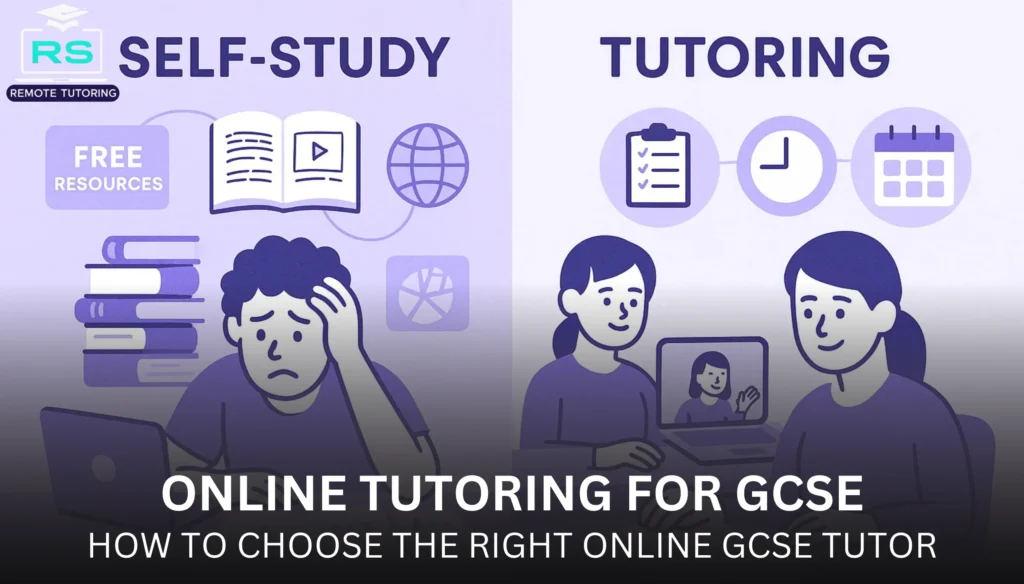
Preparing for GCSE exams can be one of the most stressful periods for students and parents alike. Not only are students juggling multiple subjects, but the pressure to achieve high grades often mounts as exam season approaches. In recent years, online tutoring has become a popular option for those seeking extra support. But is online tutoring for GCSE worth the investment? This guide explores how online tutoring works, its benefits, how to choose a tutor, and whether it’s right for your family, all while addressing common questions from parents and students. What Is Online Tutoring for GCSE and How Does It Work? Online tutoring connects students with qualified tutors via video conferencing platforms and interactive tools. Instead of travelling to a tutoring centre or inviting a tutor into your home, sessions take place virtually, often through a secure learning platform with digital whiteboards, file-sharing capabilities, chat functions and screen‑sharing. Lessons are usually scheduled at a convenient time and can be recorded so the student can revisit explanations later. Most reputable online tutoring services offer: Online tutoring can be one‑to‑one or small group. One‑to‑one sessions provide the most personalised attention, while group sessions can be more affordable and offer a collaborative learning atmosphere. Benefits of Online Tutoring for GCSE Students Flexible Scheduling and Convenience One of the biggest advantages of online tutoring for GCSE is convenience. Sessions can be scheduled at times that fit the student’s routine, evenings, weekends or even during half‑term breaks. There’s no travel time, which can be especially beneficial for families in rural areas or those without easy access to tutoring centres. Access to Specialist Tutors Traditional in‑person tutoring limits you to tutors who live nearby. Online tutoring removes this barrier, letting students connect with subject specialists across the country. Whether your child needs help with GCSE maths, English, science, computer science or even religious studies, there’s likely a qualified tutor available. Personalised Learning and Immediate Feedback Good online tutors create customised lesson plans based on diagnostic assessments. They identify a student’s strengths and weaknesses, then focus on areas needing improvement. During sessions, students receive real‑time feedback and can ask questions without fear of embarrassment. Research shows that targeted practice improves understanding more effectively than generic revision. Recorded Lessons and Reusable Resources Many online tutoring platforms record sessions. Students can replay explanations, revisit problem solutions and review feedback at any time. Additionally, digital resources such as worksheets, slides and interactive quizzes are often shared, providing further practice between sessions. Cost‑Effectiveness and Range of Options Online tutoring can be more cost‑effective than in‑person tuition because tutors don’t need to travel. Some providers offer group sessions at lower rates, while others provide subscription packages or pay‑as‑you‑go options. There’s also a broader price range, from university students offering affordable rates to experienced teachers or examiners charging more for their expertise. Builds Confidence and Reduces Anxiety For many students, the biggest challenge isn’t the material itself but the confidence to tackle exam questions. A supportive tutor can help students overcome exam anxiety by teaching them how to break down complex problems, practise exam technique and manage time effectively. The reassurance and encouragement provided by a dedicated mentor often reduce stress and boost motivation. How Online Tutoring Boosts GCSE Performance Focused Attention on Problem Areas Classroom teachers have to divide their time among many pupils. In a one‑to‑one online session, tutors can concentrate on specific misconceptions or gaps in understanding. For example, if a student consistently loses marks in algebra, a tutor can spend extra time explaining methods for solving equations, factoring and working with graphs. This targeted approach ensures difficult topics receive the attention needed for mastery. Aligns with Exam Board Specifications Different exam boards emphasise different topics and question styles. Experienced GCSE tutors know these nuances and tailor their teaching accordingly. They use past papers and mark schemes from the student’s exam board to practise specific question types and exam techniques. This ensures the student isn’t caught off‑guard by unfamiliar formats. Improves Exam Technique and Time Management Answering exam questions isn’t just about knowing the content; it’s about presenting answers clearly and within the time limit. Tutors teach strategies for allocating time across sections, showing working (even when the final answer isn’t obvious), and spotting command words like “compare”, “simplify” or “justify”. Practising with timed exams also trains students to work efficiently under pressure. Our tutors recommends attempting at least one practice paper each week leading up to the exam. Encourages Independent Study Skills While tutors provide guidance, they also teach students how to revise subjects like maths independently. They can show how to create effective revision timetables, use flashcards, summarise topics into mind maps and practise spaced repetition. By learning these study habits, students continue improving even when sessions end. Comparing Online Tutoring with Self‑Study and Free Resources Free Resources and Self‑Directed Learning There are many free GCSE resources available, including revision websites, past papers, worksheets, YouTube videos and community forums. Students with the discipline to study independently can achieve excellent grades using these materials. They save money and can tailor their learning schedule exactly how they like. However, self‑study requires strong motivation and good organisational skills. Without a clear plan, it’s easy to jump between topics without mastering any of them. Free resources also vary in quality and may not align perfectly with the exam board. What Online Tutoring Adds Online tutoring adds structure and accountability. A good tutor provides a clear plan, ensures the student covers all specification topics and challenges them with exam‑style questions. They can explain concepts in a way that resources might not and adapt lessons based on the student’s progress. For students aiming for top grades or struggling with motivation, the personal guidance can be invaluable. Deciding If a Tutor Is Worth It Choosing to hire a tutor depends on multiple factors: It’s important to remember that tutoring is not a requirement for success. Many students achieve high grades through a combination of self‑study, school teaching and occasional help from teachers. But
GCSE Maths Revision 2026: Best Guide for Students & Parents

Revision of GCSE maths can feel overwhelming, but with the right strategies, resources and support, you can turn GCSE maths revision for exams into a manageable (and even rewarding) journey. Our guide is designed to hepl you through everything you need to know about revising for maths exams in 2026, whether you are a student facing the GCSE for the first time or a parent seeking to provide the best support. How to Do GCSE Maths Revision Before Exam Exam boards and paper formats GCSE maths is assessed by several exam boards (AQA, Edexcel, OCR, WJEC and others). Each board has slightly different course content and exam structure, so it’s important to check which board your school uses. Most boards offer two tiers: Your teacher will advise which tier matches your ability. Both tiers include a mix of: Know your topics and weightings. GCSE maths covers six broad areas: Number, Algebra, Ratio and Proportion, Geometry and Measures, Probability and Statistics. Each area carries a different weighting in the exam. Your exam board’s specification details what proportion of the marks comes from each topic – this helps you prioritise gcse maths revision. An experienced teacher or tutor can help you interpret the specification and understand which topics to focus on. Coursework and internal assessments Unlike some GCSE subjects, GCSE maths is assessed entirely by exams; there is no coursework. However, your school may run mock exams and internal tests; treat these as opportunities to practise exam technique under timed conditions. Create an Effective Revision Plan to Prepare for GCSE Maths Exam Start early and map out your time It’s easy to put off revision until the last minute, but research shows that spreading out study sessions over time is far more effective than cramming. At least three months before your exam, look at your calendar and block out regular study sessions. Break your revision into manageable chunks. For example, you might study for 45 minutes followed by a 15‑minute break; this keeps your mind fresh and maintains motivation. Prioritise topics Once you know the weighting of topics, evaluate which areas you find difficult. Use self‑assessment tools or past test results to identify weak spots. Rank topics by importance and difficulty, then allocate more time to high‑priority topics. Don’t spend all your time on topics you already enjoy; tackling challenging concepts early gives you time to seek help if needed. Balance revision with other subjects If you’re also preparing for other GCSEs such as English, science, computer science or religious studies, adjust your timetable so you’re not overwhelmed. Alternate between different subjects to avoid boredom and enhance retention, for example, follow a maths session with some English reading or science note‑taking. Build flexibility into your schedule Life happens. Unexpected events can disrupt even the best‑planned revision timetable. Plan buffers in your calendar so that if you miss a session, you can make it up later. An overly rigid schedule can add unnecessary stress; instead, aim for a framework that guides your progress but allows adjustments. Active Revision Techniques That Work for GCSE Maths Always Practise, don’t just read Mathematics is a skill you develop through practice, not through passive reading. One article notes that the only way to revise maths is to do maths. Working through a variety of problems improves problem‑solving ability and boosts confidence. Spend more time answering questions than reading notes or watching tutorials. Use past papers effectively Past papers are one of the most powerful revision tools. Doing a paper under timed conditions simulates the exam environment and reveals how well you manage time and pressure. Mark your answers, analyse your mistakes and learn from them. One resource suggests attempting one past paper per week in the months leading up to your exam. Gradually increase the number of papers as the exam approaches. When working through past papers: Mix topic‑focused and mixed‑topic revision. A helpful approach is to start with topic‑focused revision, pick specific areas with gaps and re‑learn them and then switch to mixed‑topic revision as the exam approaches. Mixed‑topic practice, through full papers or revision mats, prepares your brain to switch between different types of questions quickly. Embrace technology and online resources. Interactive platforms and apps can make maths revision engaging: Master Scientific Calculator for GCSE Maths Exam Help A scientific calculator is a powerful tool in GCSE maths. Familiarise yourself with its features beyond basic functions: prime factorisation, table of values, conversions between mixed numbers and improper fractions, standard form conversions and more. Practice solving different types of problems with your calculator so it becomes second nature on exam day. Visualisation and memory techniques Maths can become much easier when you visualise complex concepts. Use mind maps and diagrams to represent relationships between equations and theorems. To memorise formulas and procedures, create mnemonics such as FOIL (First, Outer, Inner, Last) for expanding quadratics or BIDMAS (Brackets, Indices, Division, Multiplication, Addition, Subtraction) for order of operations. Flashcards are a great way to recall key facts quickly. Collaborative learning Working with classmates can reinforce your understanding and keep you motivated. Organise study groups or teaching circles where each person explains a topic to the others. Discussing questions with peers can reveal alternative methods and clarify doubts. Online forums and revision communities allow you to share solutions and ask questions. However, stay focused, study sessions should be structured to avoid turning into social gatherings. Look After Your Wellbeing and Health Manage stress Exams can be stressful, but stress is manageable with the right strategies. Incorporate mindfulness or breathing exercises into your daily routine to calm nerves. Plan regular short breaks into your study sessions to avoid burnout. Healthy habits such as sufficient sleep, balanced nutrition and physical activity support brain function. If you find your stress levels rising, speak to a teacher, parent or professional early; you don’t need to struggle alone. Stay positive Confidence is a major contributor to exam success. If you get stuck on a difficult problem, move on and come back later rather
How Many GCSEs Can You Take in 2026? Minimum, Average & Maximum Guide
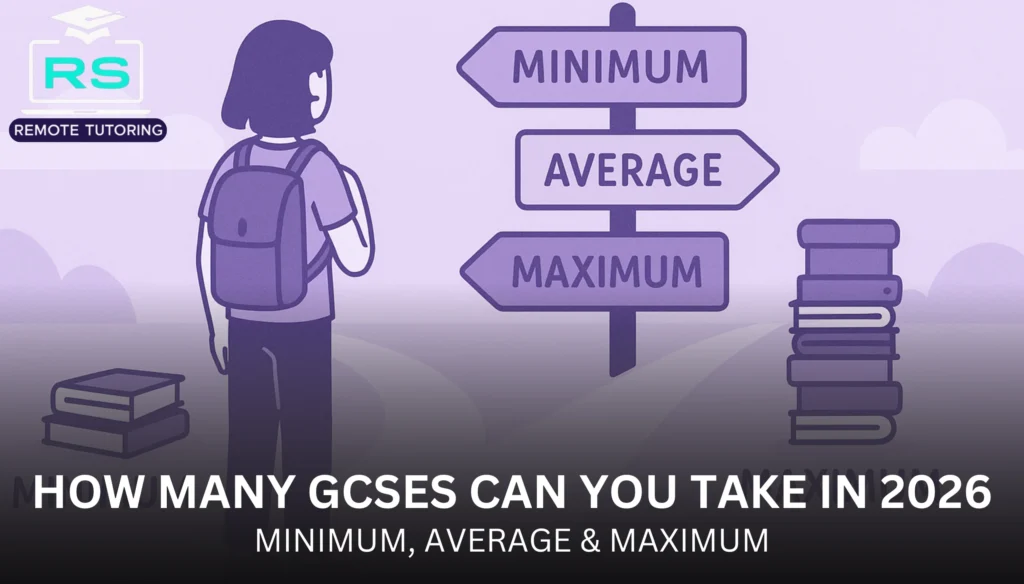
General Certificate of Secondary Education (GCSE) qualifications are the gateway to further education and employment in the UK. They mark the end of Key Stage 4, usually in Year 11, and they are an important measure of the knowledge and skills pupils have acquired. As parents and students plan for GCSEs in 2026, one of the most common questions is: “How many GCSEs can you take?” This guide answers that question in detail, clarifying the minimum number, the average range, and the upper limits, while also offering guidance on how to choose the right mix of subjects. We explore compulsory subjects, optional courses, exam board differences, and the impact of your future goals on your subject choices. We also consider practical constraints like workload, wellbeing and school policies, and provide examples to help you decide what’s realistic for you. Throughout, we draw on official guidance and advice from educational bodies to ensure our information is accurate and up‑to‑date. Tip for skimmers: If you only have a minute, jump to the sections on the minimum number of GCSEs, the average range, and the maximum load to get a quick overview. What Are GCSEs and How Many GCSEs Can You Take? GCSEs are Level 2 qualifications taken mainly by students aged 15–16. They serve three key purposes: Core vs Foundation Subjects The national curriculum divides GCSE subjects into core subjects and foundation (or optional) subjects: Note: Many schools encourage pupils to take at least one subject from each of the following groups: humanities (History, Geography), languages (French, Spanish, German), creative/technical (Art & Design, Music, Design & Technology, Computer Science), and religious or citizenship studies. These broad categories provide a balanced GCSE curriculum and keep options open for later studies. Minimum Number of GCSEs While there is no statutory minimum, there are practical limits. Five GCSEs including English, Maths and Science are generally considered the minimum needed to progress to A‑levels and post‑16 study. Taking fewer than five could restrict options for further education and employment. Some schools insist that students also take English Literature and a language or humanity, meaning the realistic minimum could be seven. For example, one Reddit student explained that their school mandated Mathematics, English Language and Literature, Combined Science, a modern language and Religious Studies, plus either History or Geography, before adding any options. Another student had Combined Science, Maths, both English courses, and one humanity as core, then had three choices. These examples illustrate that minimums vary by school, but the idea remains: Core subjects plus a handful of electives. Why Not Fewer? Average Number of GCSEs Most students in the UK take between eight and ten GCSEs. This range appears repeatedly across reputable sources. There is no set number but students typically take between seven and ten subjects and that schools usually cap the total at around 12. Why Do Students Take 8–10 GCSEs? Maximum Number of GCSEs Technically, there is no national limit on the number of GCSEs you can take. The Joint Council for Qualifications does not impose a maximum. However, school timetables and workload considerations create a practical cap. While there’s no formal limit, “the suggested maximum is 12” because beyond that, the heavy study load can increase the risk of failure so schools often set a limit “around 12 GCSEs”. Some students go beyond the average, there are cases of high achievers taking 13–14 GCSEs by starting some early (in Year 10) or studying non‑timetabled subjects after school, such as Further Maths or Classical Greek. However, such cases are exceptional and typically require strong study skills and supportive schools. Considerations When Taking Many GCSEs Case Study: Doing 12+ GCSEs Some schools allow students to do extra subjects like Further Maths in Year 10 or after school. One Reddit user described taking 14 GCSEs, including early entries and extras. While they managed, they acknowledged it required long hours and a high workload. In most cases, 12 is considered the upper practical limit. Core and Optional GCSE Structure Understanding how GCSEs are structured helps you plan your portfolio. Schools usually categorise subjects as follows: Core GCSE Subjects Optional GCSE Subjects Optional subjects vary by school, but they often include: Some schools also offer vocational or technical courses (e.g., BTECs) that are equivalent to one or more GCSEs. Students may substitute a GCSE with a BTEC in Business or Health and Social Care. These still count toward the total number of qualifications. How Schools Determine Your GCSE Pathway Different schools use different pathways or options blocks to structure GCSE choices. Examples include: Schools typically hold options evenings in Year 9 where students and parents can ask questions and explore course combinations. Always check your school’s specific guidelines because option blocks, teacher availability and timetable restrictions will influence the subjects you can take. Factors to Consider When Deciding How Many GCSEs to Take 1. Future Goals 2. School Policy and Resource Availability Schools often set a range (e.g., 9–12 GCSEs) to ensure timetabling works. Additionally, not all schools offer every subject. You may wish to study Latin or Computer Science, but if your school doesn’t provide it, you might have to take it privately or online. Also note that some schools combine science into double award or offer triple science only for top sets. 3. Personal Interest and Strengths Choose subjects you enjoy and are good at. Passion drives motivation; it’s easier to revise for subjects you find interesting. If you love literature, take both English Literature and a foreign language. If you’re more technical, consider Computer Science or Design & Technology. 4. Workload and Wellbeing Balance is crucial. Each GCSE requires time for coursework, revision and exams. Overloading yourself can lead to stress and lower grades. Ask yourself 5. Alternative Qualifications Don’t forget that some subjects count as more than one GCSE. For example, Combined Science awards two GCSE grades, while Triple Science yields three. Similarly, there are vocational courses and functional skills that may be more appropriate if you struggle with traditional academic
KS3 and KS4 Curriculum Explained for Parents & Students (2026 Guide)

Understanding how your child’s learning is structured is crucial for supporting them through school and preparing for their future. In England, the national curriculum is divided into key stages that map to age ranges and year groups. Key Stage 3 (KS3) covers the early years of secondary school (ages 11–14), while Key Stage 4 (KS4) encompasses the GCSE years (ages 14–16). In this comprehensive guide we explain what students study during KS3 and KS4, how assessment works, and how parents can help. Along the way we’ll address common questions, highlight curriculum changes and give practical advice. Overview: What Is the National Curriculum and Why Does It Matter? The national curriculum sets out what most state schools in England must teach. It acts as a framework to ensure children receive a broad and balanced education. Although academies and free schools can vary, many still follow the curriculum to maintain standards. The curriculum is divided into key stages that reflect children’s developmental stages and learning needs: The national curriculum defines core subjects (English, mathematics and science) and foundation subjects (e.g., computing, history, geography, languages). Schools must also teach personal, social, health and economic (PSHE) education and religious education, though content may vary. Understanding how KS3 and KS4 are structured helps parents and students make informed choices and manage expectations. Key Stage 3 (KS3): A Broad Foundation (Ages 11–14) What Is KS3 and Why Is It Important? Key Stage 3 marks the transition to secondary school. It covers Years 7 to 9 (ages 11–14) and introduces students to a wide range of subjects while developing essential skills like critical thinking, problem‑solving and independent study.. The aim is to build a strong foundation before students specialise in KS4. Pupils begin exploring subjects in greater depth, including practical and creative disciplines, and they learn to manage timetabled lessons across multiple classrooms and teachers. Subjects Taught in KS3 According to the national curriculum, state‑funded schools must teach the following subjects at KS3: Schools must also provide relationships and sex education and PSHE (personal, social, health and economic education). Some subjects, such as drama and additional languages, may be offered depending on school resources. Students in Wales may also study Welsh. Assessment in KS3 Unlike KS4, there are no national exams at KS3. Schools use teacher assessments, class tests and end‑of‑year examinations to track progress. Pupils receive levels or grades to indicate attainment and identify areas for improvement. Parents should engage with school reports and parents’ evenings to understand their child’s progress. How Parents Can Support KS3 Learners Key Stage 4 (KS4): Preparing for GCSEs (Ages 14–16) What Is KS4 and How Is It Structured? Key Stage 4 covers Years 10 and 11 (ages 14–16). During this stage students work towards qualifications, usually General Certificate of Secondary Education (GCSE) or International GCSE (IGCSE). KS4 builds on KS3 foundations but narrows focus: pupils study compulsory core subjects and choose optional subjects aligned with their interests, career goals and further education plans. This is the stage where exam boards (such as AQA, Edexcel, OCR and WJEC) influence course content and assessment methods. Compulsory Core Subjects Government guidance specifies that students must study the following core subjects at KS4: Core subject Overview English Students typically take GCSEs in English Language and English Literature. They analyse fiction and non‑fiction texts, practise writing for different audiences, and develop spoken language skills. Mathematics The GCSE mathematics syllabus covers number, algebra, ratio and proportion, geometry and measures, probability and statistics. It emphasises problem‑solving and real‑world applications. Science There are different pathways: students can take Combined Science (worth two GCSEs) or choose Triple Science (separate GCSEs in Biology, Chemistry and Physics). Combined science gives a broad overview, while triple science delves deeper, benefiting those pursuing science A‑levels. In addition to the core subjects, schools must provide computing, physical education and citizenship, though these may not be examined at GCSE level. Schools are also required to provide relationships and sex education and religious education, though these may be delivered through PSHE or other lessons. Optional Subjects and the EBacc KS4 students usually select between two and four optional subjects. Options vary by school but may include: Schools encourage students to select a broad and balanced set of subjects. The EBacc is a set of GCSEs considered vital for keeping options open: English, maths, science, a language and either history or geography. While not compulsory, many schools encourage it. Assessment and Examinations in KS4 KS4 leads to GCSE examinations. Coursework has largely been replaced by final exams, although some subjects retain non‑exam assessment (e.g., practical work in science, fieldwork in geography, performances in drama or music). Exams take place annually in May–June and are graded on a 9–1 scale, with 9 representing exceptional performance and 4/5 indicating a pass. There are several important points to note about GCSE exams: How Parents Can Support KS4 Learners KS4 can be stressful. Support your child by: Key Differences Between KS3 and KS4 While both key stages are part of the secondary curriculum, there are significant differences: Aspect KS3 KS4 Ages and years 11–14 (Years 7–9) 14–16 (Years 10–11) Purpose Broad learning; develop foundational knowledge and skills Preparation for exams and qualifications; specialise in chosen subjects Subjects Wide range: English, maths, science, languages, humanities, arts, computing, PE etc. Core subjects (English, maths, science) plus optional subjects; emphasis on depth and specialisation Assessment Teacher assessments and end‑of‑year exams; no national tests. Formal exams (GCSEs) plus controlled assessments; results affect future education and careers. Choice Students typically follow the same curriculum with limited choice. Students choose options (languages, humanities, creative subjects) aligned with interests and goals. Support needs Building study habits, exploring interests. Managing revision, exam preparation, stress and next steps. Understanding these differences helps families plan ahead and ensure a smooth transition from KS3 to KS4. Encourage your child to use KS3 to discover interests and develop resilience; KS4 then builds on those foundations with a clear focus on qualifications. Key Stages Beyond KS4 Although this guide focuses on KS3 and
How to Choose GCSE Tutor for 2026
General Certificate of Secondary Education (GCSE) exams are a pivotal milestone for students in England, Wales and Northern Ireland. Achieving strong grades at age 16 opens doors to sixth form, A‑levels, apprenticeships and further education. It also builds confidence ahead of A‑levels or vocational courses. Yet not every student finds the two‑year GCSE programme easy. By 2026, exam boards will continue to use the linear course model, with all assessments at the end of year 11 and core subjects such as English and maths requiring at least a standard pass (grade 4). Parents often worry about revision habits, missing coursework, lack of motivation or simply not understanding a particular topic. If you are looking to hire private tuition, it is important to know how to choose GCSE Tutor, and our guide explains everything you need to know to choose best GCSE tutor for 2026 for any subjects such as, maths, engish, science, etc. Why Consider a Tutor for GCSE Preparation and Exam Before rushing to hire a tutor, first decide if your teenager truly needs extra support. Ask questions such as: if the answer to all of these questions is “yes,” a tutor may not be essential, otherwise additional support could make a difference. Common reasons to hire a GCSE tutor include: However, tutoring is not a magic wand. A tutor cannot force a teenager to study, motivation and engagement must come from within. Tutors also only see students for a limited time each week, so independent study between sessions is critical. Steps To Choose Best GCSE Tutor for your Child in 2026 GCSE Exams Our panel of tutors has carefully considered and identified 9 steps that every parent or child should follow to properly assess their exact requirements before hiring a tutor in the United Kingdom for exam preparation, ensuring the best results. Step 1: Assess Your Child’s Needs Every student is different, so start by understanding what your child needs. Identify strengths and weaknesses Compile recent test results, teacher comments and predicted grades. Look for patterns: are there specific topics causing difficulty, or does your child struggle with exam technique? Many students are motivated but lack confidence or struggle with exam questions or techniques. Know the curriculum and exam boards Different exam boards have slightly different specifications. For example, AQA, Edexcel and OCR all offer GCSE maths but structure their papers differently and use separate formula sheets in 2026. A good tutor should align lessons with your child’s exam board and syllabus. Be prepared to tell prospective tutors which board your child is taking, and ask them about their familiarity with that board. Determine goals Decide whether you are targeting a grade improvement, building general confidence, or preparing for higher tiers (e.g., aiming for grades 7–9). Also consider if the support is for specific subjects or multiple courses. Some students benefit from tutors in only one subject (such as maths) while others may need help across science, English and humanities. Having clear goals will help you evaluate potential tutors and measure progress. Step 2: Understand Qualities of a Great Tutor Several competitor guides highlight the qualities parents should look for in a tutor. Principal Tutors emphasises six key characteristics, which we expand below: 1. In‑depth subject knowledge The tutor must deeply understand the current curriculum and the latest exam board specifications. They should know how topics are examined and be able to teach exam techniques and mark schemes. For example, GCSE maths tutors should be comfortable with the new formula sheets used in the exam from 2025–2027 and able to explain how to apply them in problem solving. Subject‑specific tutors for English, science, computer science or religious studies (subjects we specialise in at RS Remote Tutoring) should be able to help students interpret texts, design experiments or write analytical essays with exam‑style rigour. 2. Effective communication Communication is more than speaking clearly; it involves listening, questioning, checking understanding and adjusting explanations to suit your child’s learning style. Good tutors also provide feedback to parents about progress. Tutors need to listen to concerns, identify difficult areas and coach exam techniques. Look for someone who can explain complex ideas in simple terms and is patient with repetition. 3. Patience and empathy Learning can be frustrating when a topic doesn’t click. Great tutors create a non‑judgemental environment where students can ask questions without feeling stupid. They show empathy for exam anxiety and encourage a growth mindset (“you can learn this with practice”). 4. Adaptability and personalised teaching No two students learn the same way. Tutors should adapt their approach to match your child’s learning style, energy level and progress. They might use visual aids, practice questions, video explanations or real‑world examples. They also need to adjust the pace of lessons depending on how quickly your child grasps concepts. Look for tutors who mention differentiated strategies rather than a rigid “one‑size‑fits‑all” plan. 5. Strong organisational skills A tutor should plan each session, monitor progress and keep track of homework. They should know how to use digital tools, exam board resources and revision timetables to keep lessons structured. A disorganised tutor who arrives unprepared wastes valuable time and undermines your child’s confidence. 6. Motivation and inspiration Finally, tutoring isn’t just about knowledge; it’s about inspiring students to believe in themselves. Principal Tutors emphasises that tutors should celebrate small wins, show enthusiasm for learning and make subjects relevant to students’ interests. A great tutor acts as a mentor, boosting self‑belief and encouraging independent study. Step 3: Check Qualifications, Experience and Safety Not all tutors are equal. Here are factors to investigate: Teaching qualifications While there is no legal requirement to hold a teaching qualification to be a private tutor in the UK, many parents prefer tutors with Qualified Teacher Status (QTS) or relevant degrees in their subject area. Head Start Learning notes that you should look for relevant qualifications (e.g., a maths tutor with a maths degree and QTS) and check that they are familiar with the major exam boards. Experience and specialisation Ask prospective tutors
GCSE Exam Date 2026: Timetable, Key Dates and Complete Guide for Students and Parents

Every spring, millions of pupils across the UK prepare to sit their General Certificate of Secondary Education (GCSE) exams. These tests mark the culmination of Key Stage 4 and open the door to sixth‑form study, apprenticeships or vocational courses. Knowing exactly when the 2026 GCSE exams take place is crucial if you want to build a revision timetable, book holidays and avoid last‑minute stress. In this comprehensive guide we explain when GCSE exams will run in 2026, how exam timetables are organised, what to expect in different subjects, entry deadlines, results day, GCSE reforms that will affect exam formats and how to prepare effectively. Whether you’re a pupil, a parent or a private candidate, this guide will help you navigate the exam season with confidence. When are the GCSE Exam Date in 2026? The 2026 summer exam period is scheduled to run from the week beginning Monday 4 May 2026 and finish on Friday 26 June 2026. This window covers all written papers set by the main exam boards, AQA, Pearson Edexcel, OCR, WJEC/Eduqas and CCEA. The boards publish their full timetables each autumn, and individual schools issue personalised schedules to their students. Dates may change slightly in the months leading up to the exams, so always check the final timetable from your exam centre. Note: The Joint Council for Qualifications (JCQ) exam timetable page is the official source for the latest GCSE schedules. Key takeaways about the 2026 exam window: Get Free 1-on-1 Online Session with Our 15 Specialized GCSE Tutors Clear guidance on what to study (and when) Mock practice tied to real exam dates Flexible online scheduling Contact Now Morning and afternoon exam sessions All exam boards hold two sessions each day: a morning session starting at 09:00 and an afternoon session starting at 13:30. Schools must follow these start times, though they can vary by a few minutes for local arrangements. Some larger exams may run into the late afternoon. Occasionally a board will schedule an evening session for exams that cannot fit elsewhere, but this is rare. Contingency days and national events The Joint Council for Qualifications (JCQ) usually reserves contingency days toward the end of the exam period. These are additional days set aside in case a national or local event (for example, a national mourning period or widespread transport disruption) forces the rescheduling of an exam. Students must remain available until the final contingency day. Check your exam timetable for details. How GCSE timetables are organised Exam boards and their timetables GCSEs are offered by several exam boards. Each board sets its own timetable, but they coordinate via the JCQ to avoid clashes for popular subjects: Each exam board releases its final summer timetable by the end of the preceding October. Schools and exam centres then create personalised schedules for each pupil, listing paper codes, dates, times and exam rooms. Candidates should always use the timetable given by their centre rather than generic schedules. Example subject timing Although the specific dates differ each year, the structure of GCSE exam date follows a familiar pattern. Here are typical timings for major subjects, based on recent exam cycles (note that 2026 may vary): These patterns give you a rough sense of when subjects fall. You must consult the final timetable for exact dates. Get Free 1-on-1 Online Session with Our 15 Specialized GCSE Tutors Clear guidance on what to study (and when) Mock practice tied to real exam dates Flexible online scheduling Contact Now Key dates and deadlines Understanding the administrative calendar helps you avoid missed opportunities or penalty fees. Here are the main milestones for the summer 2026 GCSE series: Key event Typical date range (2026) Notes Entries open October 2025 Schools start entering candidates with exam boards. Private candidates should register through an approved centre at this time. Normal entry deadline Early February 2026 Schools and centres must submit final candidate entries. Late fees apply after this date. Late entry/amendment deadline March 2026 Last chance to add or change entries (with additional fees). Exams begin Week beginning 4 May 2026 First written papers (often for foreign language listening or smaller boards’ subjects). Contingency day(s) Late June 2026 Reserved in case of national disruption; all candidates must remain available. Results day Thursday 20 August 2026 (provisional) Schools receive results the day before. Students collect results from 08:00 on Thursday. Post‑results deadlines Late August/September 2026 Deadlines for priority reviews of marking (for university applicants), access to scripts, and remarks. Autumn resits November 2026 Resit window for English Language and Maths only. The entry deadline is early September. GCSE results day 2026 Results day is expected to be Thursday 20 August 2026 (the third Thursday in August). On this date, students can collect their provisional results from their school or log on to digital portals. Schools and colleges receive results a day earlier under embargo. Shortly after receiving results, you should: Reforms and changes affecting GCSE exams in 2026 Extension of formula and equation sheets The COVID‑19 pandemic led to temporary changes in how GCSEs were assessed. One of the most significant modifications was the introduction of formula sheets in mathematics and equation sheets in physics and combined science exams. The UK government’s Department for Education (DfE) decided that students should not have to memorise formulae or equations for the 2025, 2026 and 2027 exam series. Instead, exam boards will provide these sheets in the exam booklets. Note: Full details are outlined in Ofqual’s guidance on formula and equation sheets A public consultation by Ofqual found that continuing the use of formula sheets levels the playing field for students whose education was disrupted and supports those with special educational needs. Students must still understand how to apply the formulas; memorisation is no longer assessed. If you are sitting maths, physics or combined science in 2026, practise using the formula sheet so you know where to find each equation quickly. Digital exam trials Exam boards are piloting digital assessments. Pearson Edexcel, for instance, has trialled online