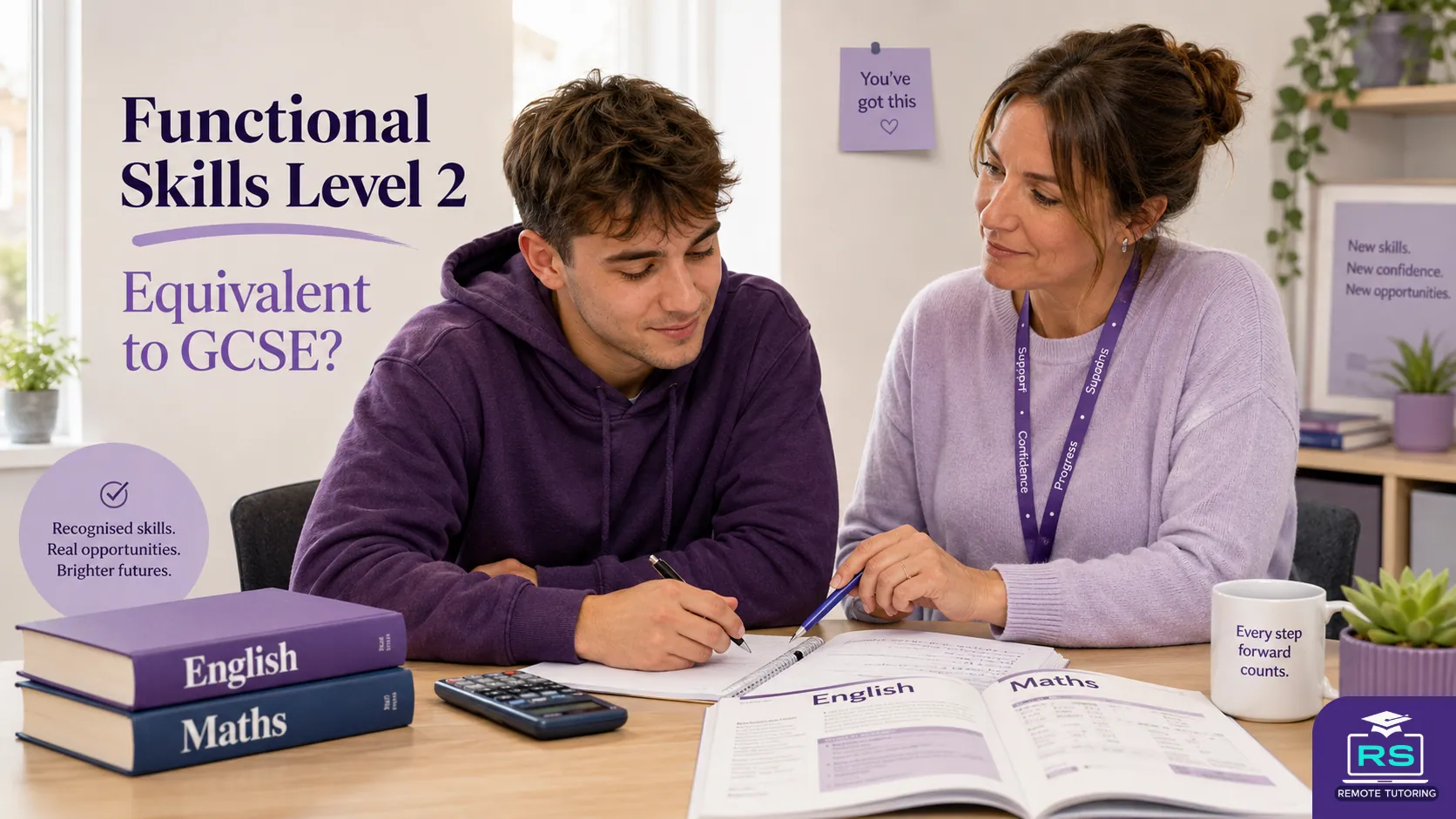
There is a moment I have seen repeatedly as a tutor. A student sits quietly at the start of a lesson and says something like: “I just don’t think I’m academic.”
Sometimes they failed GCSE Maths years ago. Sometimes they left school early. Sometimes life simply gets in the way. Work, family responsibilities, anxiety, confidence issues, I have genuinely seen all of it. And more often than not, what they are really asking is this:
“Does this qualification actually count?” That is why so many people search whether Functional Skills Level 2 Equivalent to GCSE qualifications are truly recognised and respected.
The short answer is yes, in many situations, Functional Skills Level 2 is accepted as equivalent to a GCSE grade 4/C for English and Maths. As a tutor, one thing I have noticed is that students are not only looking for facts. They are looking for reassurance. They want to know whether this path will genuinely help them move forward in life, work, university applications, apprenticeships, or simply rebuilding confidence in education again.
So this guide is not just about definitions. It is about what this qualification actually means in the real world application.
Jump to Section
What Is Functional Skills Level 2?
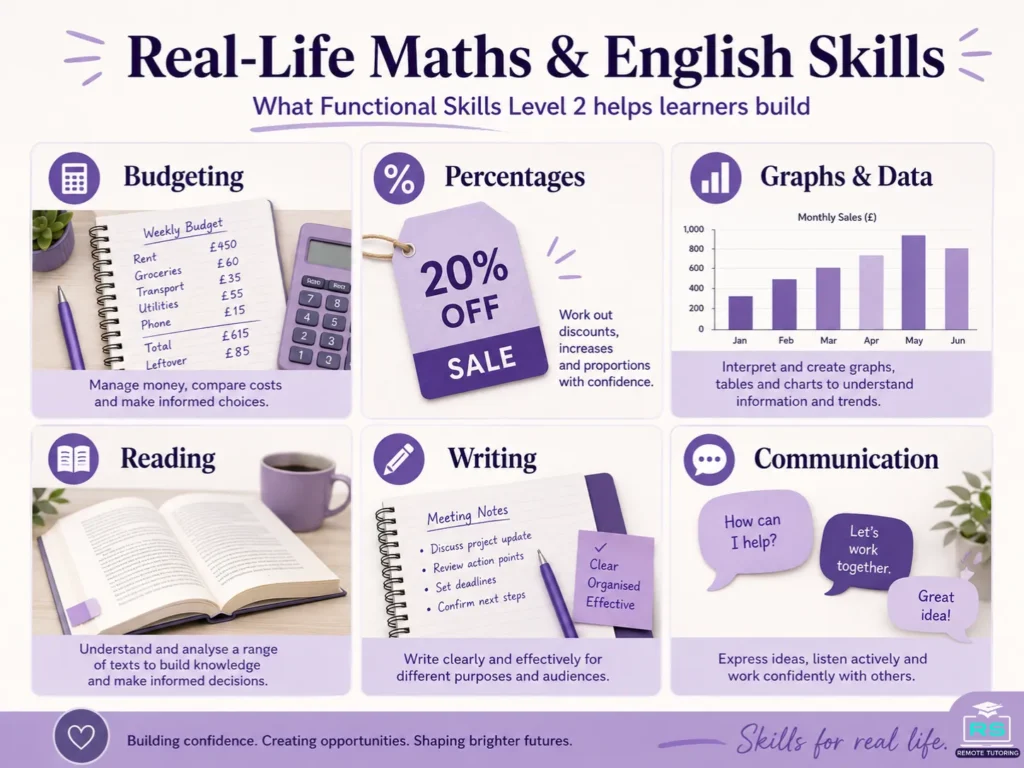
Functional Skills Level 2 is a practical qualification in English or Maths designed to help learners develop real-life skills they can use in work, education, and everyday situations. Unlike traditional GCSEs, Functional Skills qualifications focus less on memorisation and more on applying knowledge practically. For example:
Functional Skills Maths may include:
- budgeting
- percentages
- interpreting graphs
- measurements
- practical problem-solving
Functional Skills English often focuses on:
- communication
- reading comprehension
- writing clearly
- speaking and listening
From experience, many adult learners immediately feel more comfortable with this approach because it feels relevant rather than purely academic.
I still remember one learner telling me: “This is the first time maths has actually felt connected to real life.”
That reaction is incredibly common.
Is Functional Skills Level 2 Equivalent to GCSE?
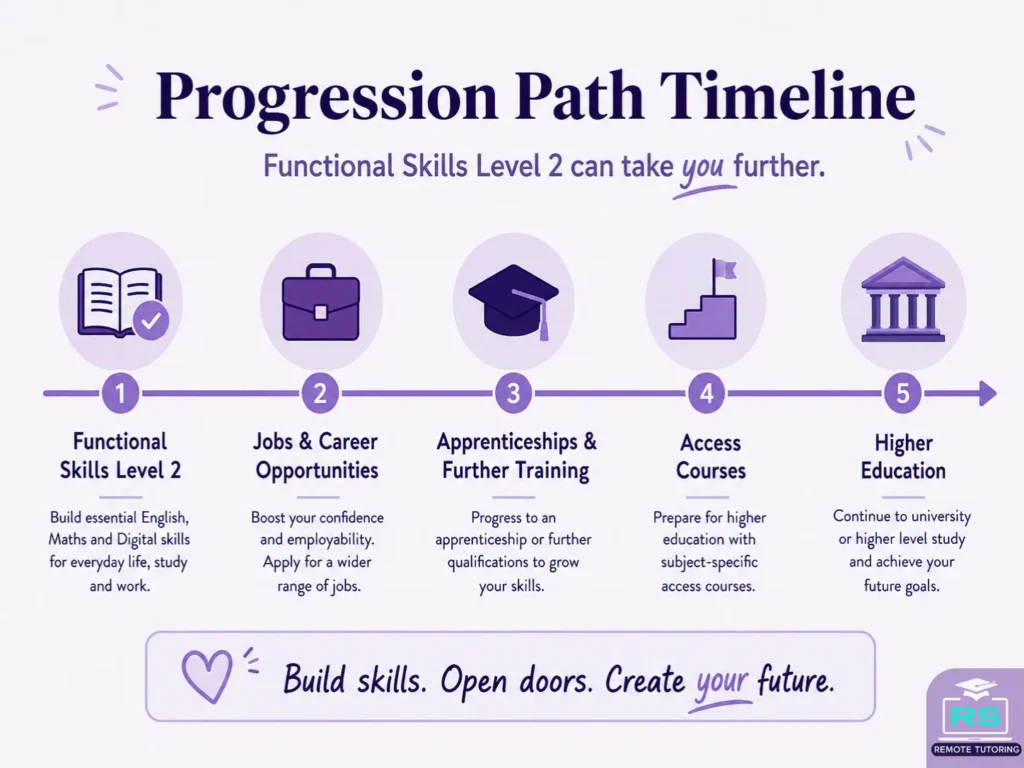
This is the most repeated question that people ask and the simple answer is yes, but in many cases. Functional Skills Level 2 is widely recognised as being comparable to a GCSE grade 4/C. This means employers, apprenticeship providers, colleges, and many universities accept it as meeting English and Maths entry requirements.
However, one thing that becomes clear quite quickly is that acceptance can vary depending on the institution or career path. For example:
Usually accepted for:
- apprenticeships
- many job applications
- access courses
- vocational qualifications
- adult education programmes
- many university courses
Sometimes GCSEs are specifically required for:
- highly competitive university courses
- teacher training programmes
- certain nursing or healthcare routes
- some government or civil service roles
This is one of the most important things students often do not realise. A qualification being “equivalent” does not always mean every organisation treats it identically in every situation. That is why I always recommend checking specific entry requirements directly before enrolling. And this is what you need to do as well.
Why Many Students Choose Functional Skills Instead of GCSE Resits
This is where the emotional side matters. Many learners searching this topic are not simply comparing qualifications academically. They are comparing experiences. And honestly, for some students, GCSE resits can feel emotionally exhausting. I have worked with learners who:
- failed GCSE Maths three or four times
- developed severe exam anxiety
- believed they were “bad at learning”
- avoided applying for jobs because of qualification requirements
Functional Skills often change that experience completely.
Why most students often prefer it:
- shorter qualification pathway
- more practical learning style
- faster progression opportunities
- flexible online learning options
- less overwhelming content
- confidence-focused teaching
What made the biggest difference for many of my students was not only the qualification itself. It was finally feeling capable again. That confidence shift matters more than people realise.
Functional Skills vs GCSE: What Is the Real Difference?
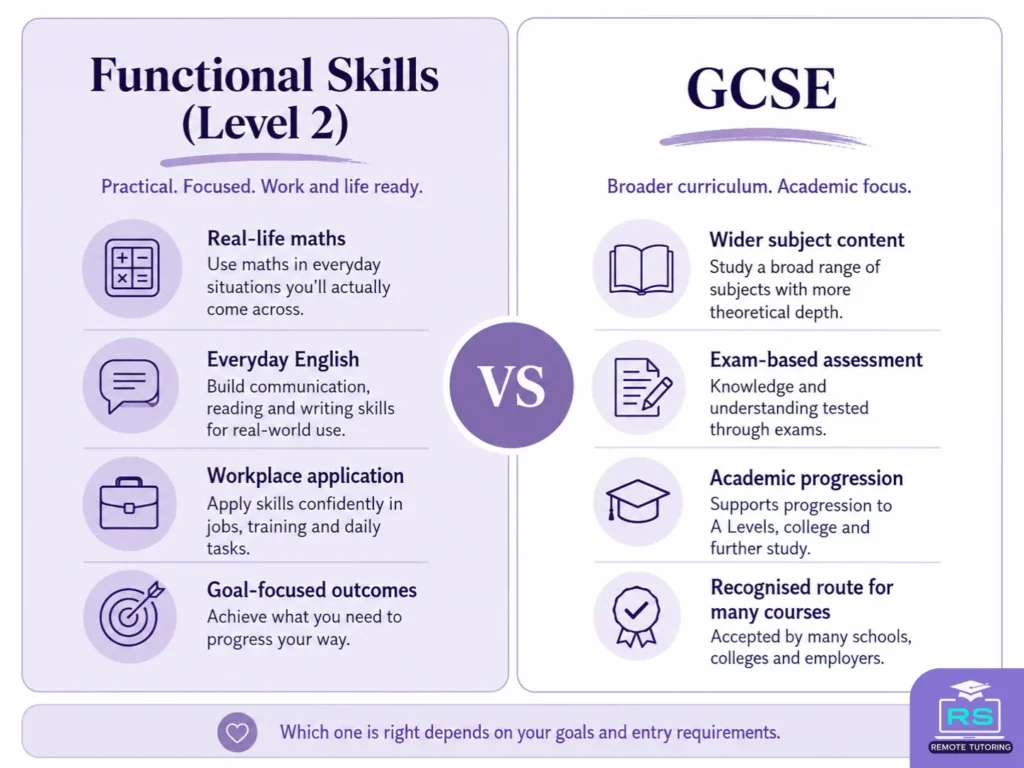
Here comes the most important part and this is probably the biggest area of confusion.
GCSEs
GCSEs are broader academic qualifications covering:
- theory
- deeper subject knowledge
- extended curriculum content
Functional Skills
While Functional Skills focus on:
- practical application
- workplace relevance
- real-world communication
- everyday problem-solving
Neither is automatically “better.”
They simply suit different learners and goals. One of the most common patterns I have seen is this: Student who struggled in highly academic classroom environments often thrive when learning becomes practical and direct. That does not mean they are less intelligent.
It usually means they learn differently.
Is Functional Skills Level 2 Easier Than GCSE?
This question comes up constantly. And honestly, the answer depends on the learner.Many students find Functional Skills more approachable because:
- the content is more focused
- the exams feel less overwhelming
- questions are more practical
- there is less emphasis on memorising large amounts of theory
However, that does not mean it is “easy. ”I think this misconception sometimes causes students to underestimate preparation. Functional Skills still requires:
- consistent practice
- exam preparation
- understanding core concepts
- time management
I have seen students succeed brilliantly when they approached it seriously and steadily. And I have also seen learners struggle because they assumed it required no preparation at all.
Who Recognises Functional Skills Qualifications?
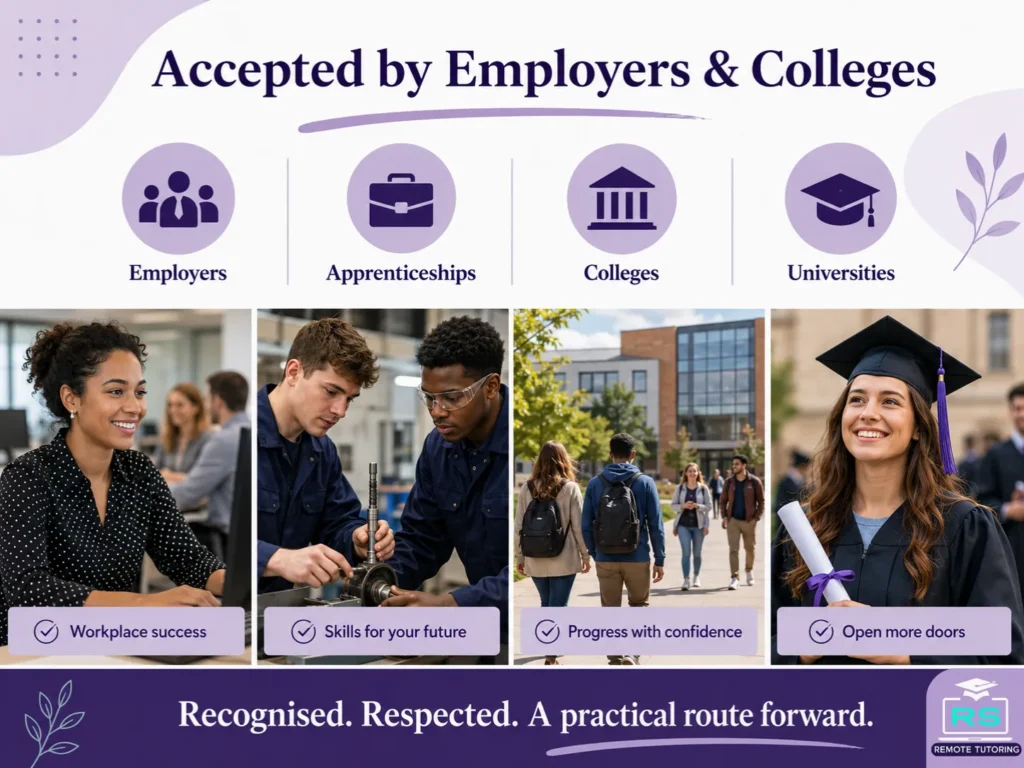
This is where reassurance matters most. Yes, Functional Skills qualifications are recognised by many employers and educational institutions across the UK.
These qualifications are regulated and widely used within:
- apprenticeships
- vocational education
- adult learning pathways
- workforce training programmes
Employers often value:
- practical communication skills
- numerical confidence
- workplace readiness
- problem-solving ability
In fact, many employers care far more about whether someone can actually apply Maths and English confidently than whether they followed a traditional route.I remember speaking with an adult learner in her 30s who delayed applying for promotions for years because she lacked GCSE Maths.
After completing Functional Skills Level 2, she finally applied, and got the role within months.
Sometimes qualifications are not just certificates. They become turning points.
Can You Go to University With Functional Skills Level 2?
In many cases, yes. A large number of universities accept Functional Skills Level 2 qualifications, especially when combined with:
- Access to Higher Education courses
- BTECs
- apprenticeships
- vocational qualifications
However, universities vary significantly. Some degree programmes, especially competitive or highly regulated ones, may still require GCSEs specifically. This is particularly common in:
- medicine
- teaching
- nursing
- dentistry
From experience, the safest approach is always:
- check the university website carefully
- contact admissions directly
- confirm acceptance in writing if possible
This small step can prevent major disappointment later.
The Biggest Mistakes Students Make
There are a few mistakes I repeatedly see learners make when starting Functional Skills courses.
1. Assuming it is “too basic”
Some students delay enrolling because they think it lacks value. Then they later realise it was exactly the qualification employers required.
2. Ignoring exam preparation
Practical qualification does not mean “no studying needed. ”Regular practice still matters enormously.
3. Choosing the wrong provider
Not all courses provide proper tutor support. And honestly, support matters more than many students realise.Good tutoring can completely transform confidence.
4. Feeling embarrassed about starting later in life
This one stays with me deeply because I hear it so often.Adults apologise for returning to education. But genuinely, some of the most determined and successful learners I have taught were adults rebuilding confidence after years away from studying.
Education does not expire.
What Functional Skills Exams Actually Feel Like
Most websites explain the structure of the qualification. Very few explain the emotional reality. The first thing many learners notice is that Functional Skills exams usually feel less intimidating than GCSE exams. The questions tend to feel:
- more direct
- more realistic
- less heavily academic
That alone reduces anxiety for many students. I remember one learner saying after her Maths exam:
“It felt like solving real problems instead of trying to trick me.”
That sentence honestly captures the difference quite well.
Choosing the Right Functional Skills Course
If you are considering Functional Skills Level 2, look carefully for:
- qualified tutor support
- clear exam guidance
- mock tests
- flexible scheduling
- structured feedback
- student support systems
A good course should not only prepare you for exams. It should help rebuild confidence as a learner.
FAQs
Is Level 2 Functional Skills a GCSE?
Functional Skills Level 2 is not technically a GCSE, but it is widely recognised as equivalent to a GCSE grade 4/C in English or Maths for many employers, apprenticeships, and education providers.
Is Functional Skills Level 2 easier than GCSE?
Many learners find Functional Skills more manageable because it focuses on practical, real-world applications rather than broader academic theory. However, it still requires preparation, practice, and understanding core skills.
Does a Level 2 qualification count as a GCSE?
A Level 2 qualification can be considered comparable to a GCSE pass depending on the qualification type. Functional Skills Level 2 is commonly accepted as equivalent to GCSE grade 4/C in many situations.
Are Functional Skills Level 2 recognised by employers?
Yes. Functional Skills qualifications are recognised by many employers across the UK, particularly for roles requiring practical English and Maths skills. They are also widely used in apprenticeships and vocational pathways.
Final Thoughts
One thing I genuinely wish more learners understood is this: Needing an alternative route does not mean you failed. For many people, Functional Skills simply provides a learning style that finally makes sense. And from what I have seen as a tutor, students often perform far better once education becomes practical, supportive, and connected to real life rather than fear. Sometimes the qualification itself matters. But sometimes what matters even more is finally realising: “Maybe I was capable all along.”

Raja specializes in Physics and Maths, with over 5 years of experience. He offers KS2, KS3, and GCSE Science and Maths lessons. He graduated from one of the top universities in the UK.

1 Comment
[…] fine. The exam tests exactly that, and there’s no fixed exam window. We’ve compared Functional Skills Level 2 against GCSE in detail, including who accepts it and who doesn’t, because a minority of competitive […]