There’s a moment I notice with almost every learner starting Functional Skills Level 2 Maths and English. It usually lands within the first ten minutes, and it’s always the same. They apologise.
Sometimes for being “bad at maths.” Sometimes for leaving school years ago. Sometimes for fractions, spelling, or confidence itself. After years of tutoring adult learners and resit students, one thing is clear: most people aren’t failing because they lack ability. They’re carrying an old story that once told them they weren’t capable.
That story is worth challenging with a number. According to National Numeracy, around half of working-age adults in the UK have the numeracy skills expected of a primary-school child. If your maths feels shaky, you are firmly in the majority, not the exception. And that is exactly the gap Functional Skills is built to close.
Unlike traditional academic routes that reward memorisation, Functional Skills Maths and English focus on real-life understanding. For many learners this qualification isn’t just another exam. It’s the thing standing between them and a nursing course, an apprenticeship, a promotion, teacher training, or simply feeling confident with money and emails again.
I still remember a healthcare assistant who put off applying for nursing for six years because maths terrified her. Within four months of structured preparation, she passed both papers. The difference was never intelligence. It was finally learning in a way that made sense.
Jump to Section
What is Functional Skills Level 2?
Functional Skills Level 2 is a nationally recognised UK qualification in Maths and English, regulated by Ofqual and accepted as equivalent to a GCSE grade 4 (an old grade C). You can see where it sits on the official qualification levels list on gov.uk. It focuses on practical application rather than pure theory, which is why so many adults find it more approachable than a GCSE.
Instead of abstract textbook drills, you build skills you already use in daily life: interpreting information, solving practical maths problems, writing clearly, and handling percentages, ratios, and budgets. The first time most learners realise the exams are practical rather than heavily theoretical, you can watch the relief land. That emotional shift matters more than people expect. For a fuller breakdown, our guide on what Functional Skills Maths is walks through the basics.
Why do Functional Skills Maths and English matter so much?
They matter because without Level 2 Maths and English, a long list of doors quietly closes. Universities, apprenticeships, NHS roles, teaching assistant posts, the police, and the civil service all commonly ask for them. It’s the qualification employers screen for before they read anything else.
There’s a second reason I care about, though, and it rarely shows up in a course brochure. This is a confidence qualification as much as an academic one. Parents tell me passing it changed how they help their kids with homework. Others say it was the first time in years they felt calm writing a work email or handling a budget. That impact is real, even if no exam board measures it.
What’s the difference between Functional Skills Level 2 and GCSE?
Functional Skills Level 2 is accepted as GCSE grade 4/C equivalent by most employers, universities, and apprenticeship providers, but the two feel very different to study. Functional Skills is practical, quicker to prepare for, and can be sat all year round. GCSE is broader, more theoretical, and tied to fixed exam windows.
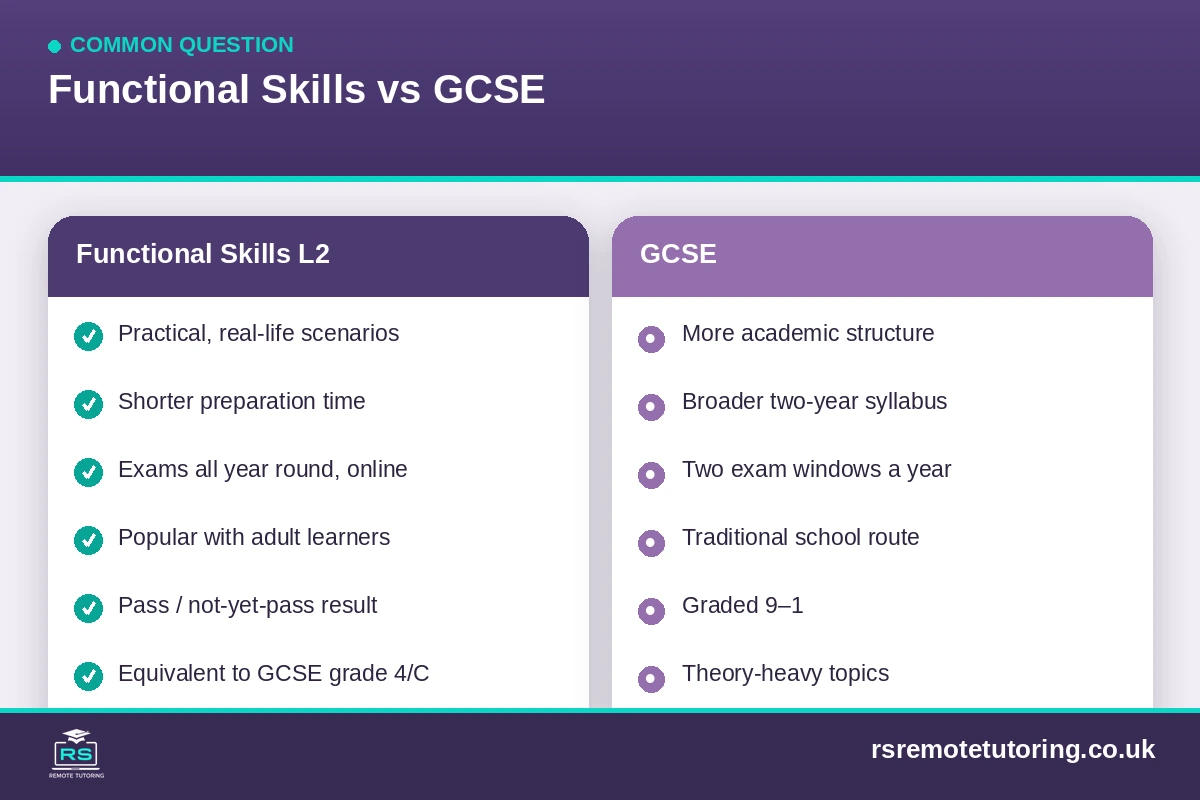
Here’s the honest side-by-side.
| Functional Skills Level 2 | GCSE |
| Practical, real-life scenarios | More academic structure |
| Shorter preparation time | Broader two-year syllabus |
| Exams available all year, online | Two exam windows a year |
| Popular with adult learners | Traditional school route |
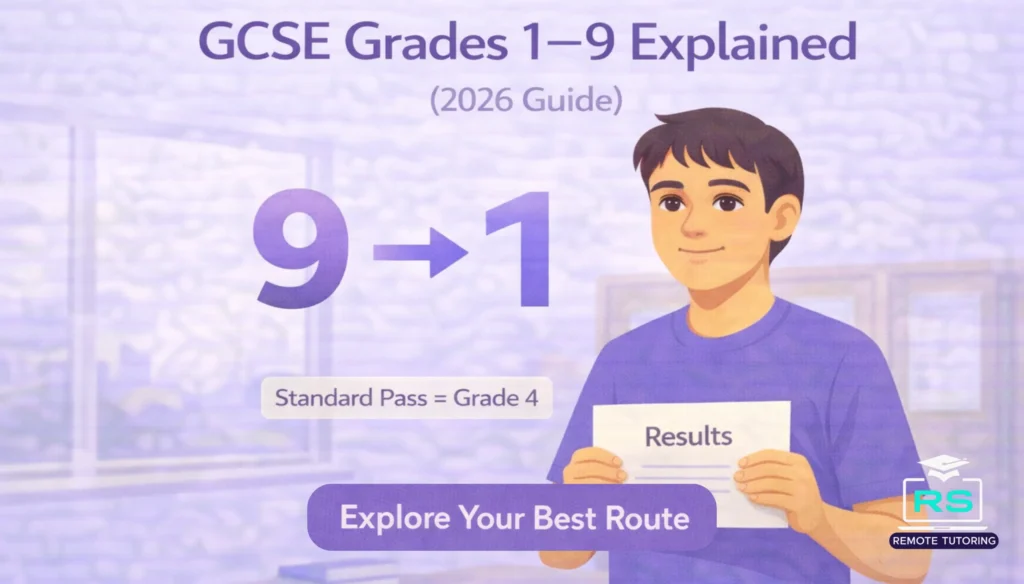
| Marked pass / not-yet-pass | Graded 9–1 |
| Equivalent to grade 4/C | Standard pass at grade 4 |
From a tutor’s chair, learners who struggled emotionally in a GCSE environment often thrive here. The reason is simple: the qualification feels relevant. When someone understands why they’re learning percentages, engagement climbs fast. If you want the full comparison, we cover it in depth in Functional Skills Level 2 equivalent to GCSE.
What do students struggle with most in Functional Skills Maths?
Most learners don’t fail on advanced algebra. They come unstuck on fractions, percentages, multi-step questions, exam timing, and reading the question properly under pressure. Confidence, not capability, is usually the real obstacle.
I’ve watched a learner solve a problem perfectly out loud, then freeze the moment the same numbers appear formally on paper. That’s not a maths gap. It’s a nerves gap, and it responds to practice, not lectures.
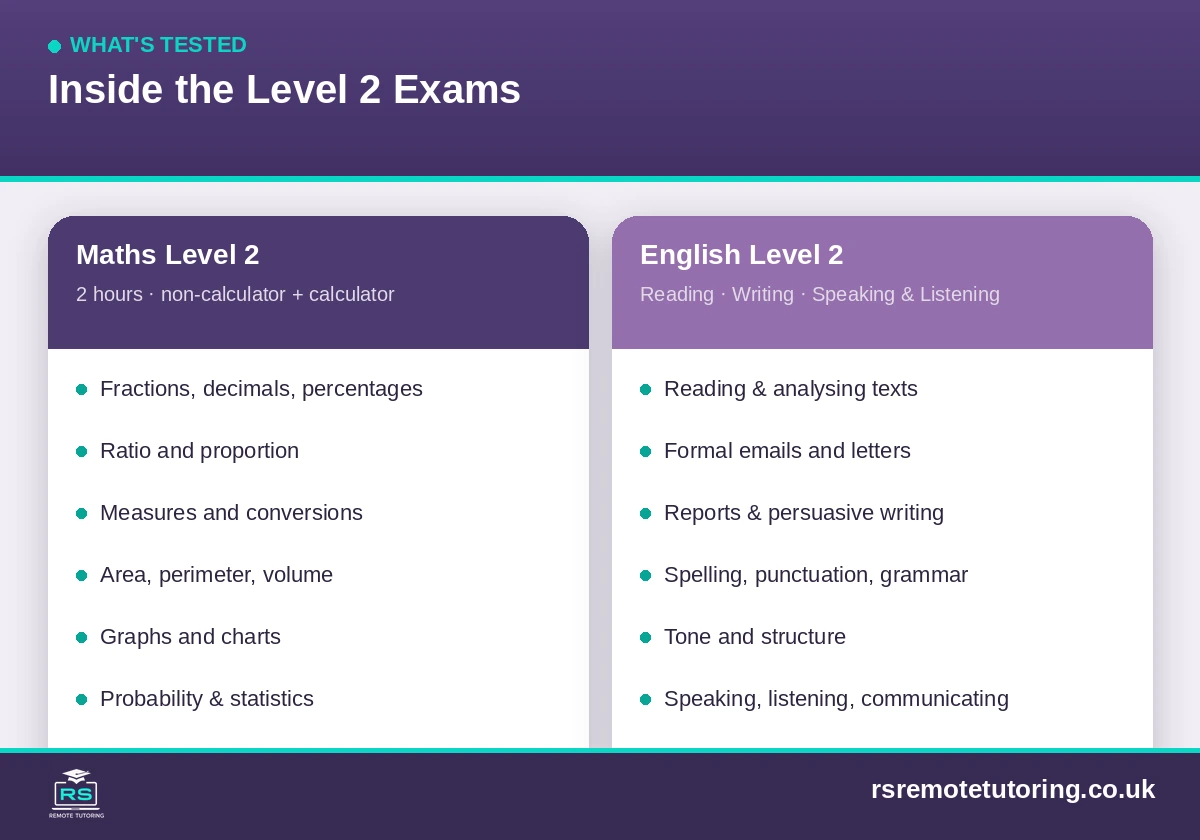
The Maths Level 2 exam runs for two hours and splits into a non-calculator section and a calculator section. It covers:
- Fractions, decimals, and percentages
- Ratio and proportion
- Measures and conversions
- Area, perimeter, and volume
- Graphs and charts
- Probability and statistics
The learners who improve fastest all share one habit. They practise actively instead of watching videos passively. They attempt timed questions, review mistakes carefully, and hunt for the patterns behind the numbers. Our Maths Level 2 exam structure guide and the Maths topics checklist map out exactly what to expect.
How do strong students pass Functional Skills Maths Level 2?
Strong students follow the same handful of habits, and none of them require being a natural at maths. They stop repeating “I’m bad at maths,” they practise little and often, they learn the exam’s wording, and they sit mock papers early. Small, consistent moves beat rare heroic ones.
Four patterns come up again and again:
- They drop the label. “I’m bad at maths” quietly sabotages progress. We replace it with repetition, familiarity, and small wins.
- They practise little and often. Twenty focused minutes a day beats one stressful six-hour session.
- They learn exam language. Many questions test interpretation, not calculation. Students often know the maths but misread the task.
- They use mocks early. A mock exposes hidden weaknesses far faster than re-reading notes ever will.
What is included in Functional Skills English Level 2?
Functional Skills English Level 2 covers three components: Reading, Writing, and Speaking, Listening and Communicating. It tests clarity and communication far more than obscure grammar rules, which surprises learners who expect a dry English exam.
In the reading section you analyse real texts: articles, adverts, workplace documents, and opinion pieces. In writing, you produce formal emails, letters, reports, and persuasive pieces. The speaking and listening task feels intimidating on paper, yet most learners do well once the discussion becomes a conversation rather than a performance.
Confidence shapes English too. One learner avoided writing tasks entirely because teachers had picked apart her spelling years earlier. Once we focused on communicating clearly first and tidying spelling second, her writing improved on its own. Our English Level 2 exam structure guide shows how each paper is marked.
What are the biggest mistakes in Functional Skills English?
The biggest mistakes are overcomplicating your writing, mismanaging your time, and never reading everyday material. Strong Functional Skills writing is clear, structured, and purposeful, not academic and showy. Simple and well-organised almost always scores better than clever and cluttered.
Timing trips people up too. Learners often sink most of the clock into reading analysis and then rush the writing, where a big chunk of marks sits. And those who never read articles, news, or workplace content outside lessons find comprehension slow, because they’ve had no everyday practice at decoding real text.
Are online Functional Skills courses actually worth it?
Online Functional Skills courses are worth it when they come with real structure and tutor feedback, and a waste of time when they don’t. The format isn’t the deciding factor; the support behind it is. A good course gives you marked mocks, clear explanations, and accountability. A bad one uploads worksheets and disappears.
Online learning suits working adults, parents, anxious learners, and anyone who needs flexible pacing. But flexibility only works with routine behind it. The learners who thrive online have someone explaining mistakes calmly and keeping them on track. That’s the difference between a course you finish and one you abandon. You can see how our online tutoring works, and the Level 2 online exam guide explains sitting the assessment from home.
How long does it take to pass Functional Skills Level 2?
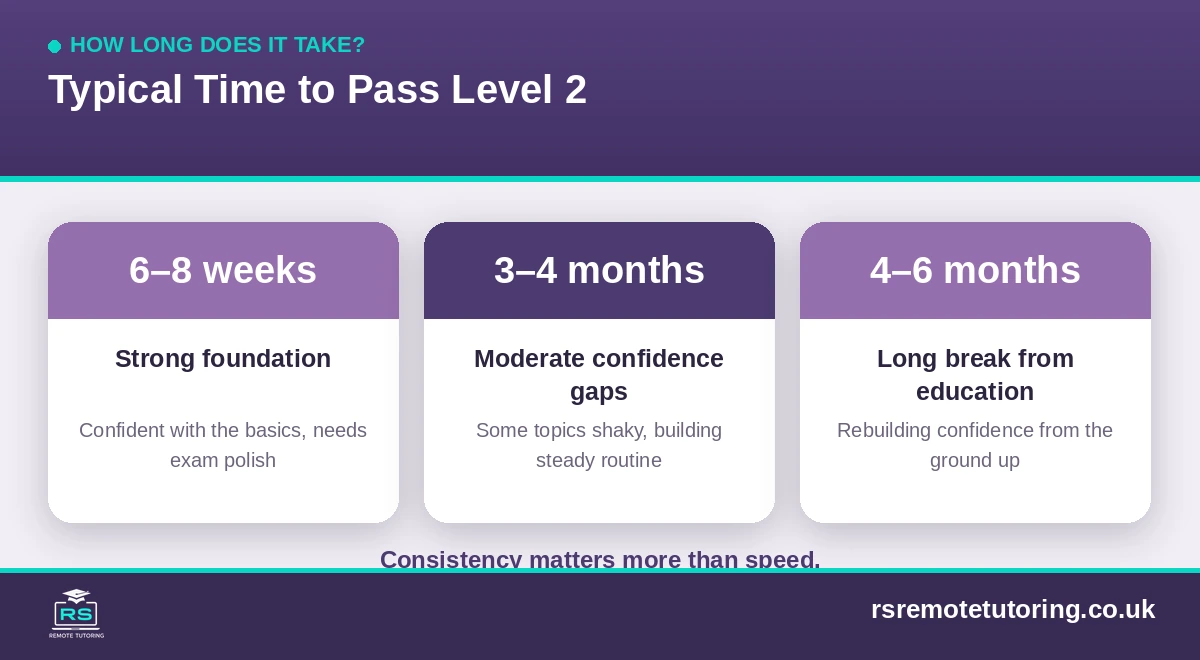
It usually takes anywhere from six weeks to six months, depending on your starting point. Learners with a strong foundation often pass in six to eight weeks. Those with confidence gaps take three to four months, and learners returning after a long break away from education tend to need four to six.
| Starting point | Typical time |
| Strong foundation | 6 to 8 weeks |
| Moderate confidence gaps | 3 to 4 months |
| Long break from education | 4 to 6 months |
What matters more than speed is consistency. Adult learners in particular compare themselves unfairly, especially against a memory of school. But confidence rebuilds gradually, and once it starts, progress speeds up more than people expect.
What does a realistic weekly revision plan look like?
A realistic week pairs short daily maths practice with regular reading and writing, not one giant catch-up session. Little and often keeps material fresh and keeps nerves low. The plan below is the structure I recommend to most learners.
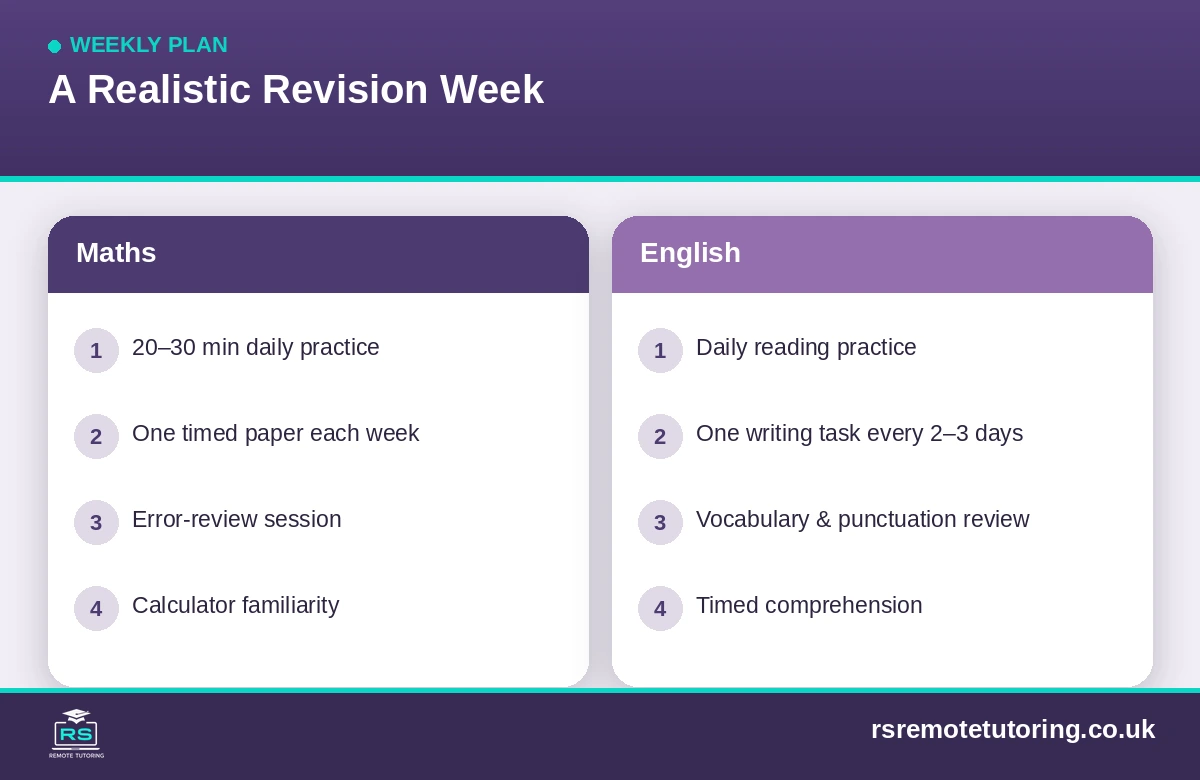
For Maths
- 20 to 30 minutes of practice daily
- One timed paper each week
- A dedicated error-review session
- Time spent getting familiar with your calculator
For English
- Daily reading practice, even ten minutes of an article
- One writing task every two to three days
- Regular vocabulary and punctuation review
- Timed comprehension exercises
Can adults return to Functional Skills after years away?
Yes, and adult learners are far more common than most people fear. Many arrive carrying embarrassment, comparison anxiety, or a bad memory of school that failed them the first time. None of that predicts how they’ll do now.
I remember a learner in her forties admitting, quietly, that she thought she was the only adult still struggling with maths. She wasn’t, not by a long way. Adults often become the strongest students precisely because they understand why they’re studying, and that motivation builds real resilience.
How much difference does a tutor make?
A tutor’s biggest job isn’t explaining answers; it’s removing fear, building routine, and translating confusing exam language into plain English. Students don’t need perfection from a tutor. They need patience and a calm voice when a topic won’t click.
Over the years I’ve learned that calm explanations change confidence faster than complicated teaching ever does. That’s the whole model behind our Functional Skills Level 2 Maths tutoring and English Level 2 tutoring: one-to-one support, marked mocks, and steady structure. If you’re resitting a GCSE instead, our GCSE resit tutors can help you weigh up which route fits, and you can always book a free trial to start.
If you’re preparing right now, hold on to one thing. Struggling with Maths or English doesn’t mean you’re incapable. It usually means nobody taught you in a way that matched how you learn. Once that clicks, the qualification that felt impossible starts to feel manageable, and the opportunities behind it move back within reach.
Frequently Asked Questions
Is Functional Skills Level 2 equivalent to GCSE?
Yes. Functional Skills Level 2 is widely accepted as equivalent to a GCSE grade 4/C in Maths and English by many employers, universities, and apprenticeship providers across the UK. Always check a specific course’s entry requirements, as a few competitive programmes still ask for GCSEs.
Is Functional Skills Maths Level 2 hard to pass?
For most learners it feels more approachable than GCSE Maths, because it focuses on practical, real-life problem-solving rather than heavy theory. Consistent practice and exam familiarity make the biggest difference.
Can adults take Functional Skills Level 2 online?
Yes. Many adults complete Functional Skills Level 2 online through flexible courses with tutor support, mock exams, and remotely invigilated assessments taken from home.
How quickly can you complete Functional Skills Level 2?
Some learners finish in six to eight weeks, while others take several months. Your pace depends on prior knowledge, confidence, and how consistently you study, not on natural ability.
Do universities accept Functional Skills Level 2?
Many do, especially alongside other qualifications. Some competitive courses still prefer GCSEs, so it’s worth checking each university’s entry requirements directly before you apply.
What’s the best way to revise for Functional Skills Maths?
Combine short daily practice, weekly timed papers, careful mistake reviews, and time spent learning exam wording. Focus consistently on your weak topics rather than reworking the ones you already find easy.

Raja specializes in Physics and Maths, with over 5 years of experience. He offers KS2, KS3, and GCSE Science and Maths lessons. He graduated from one of the top universities in the UK.