I’ve watched a learner grind through fifteen past papers and still walk out of the exam shaken. I’ve also watched someone do five, use them properly, and pass with room to spare. After enough years tutoring this qualification, the pattern is impossible to miss: the number of Functional Skills Maths Level 2 past papers you complete matters far less than how you use them.
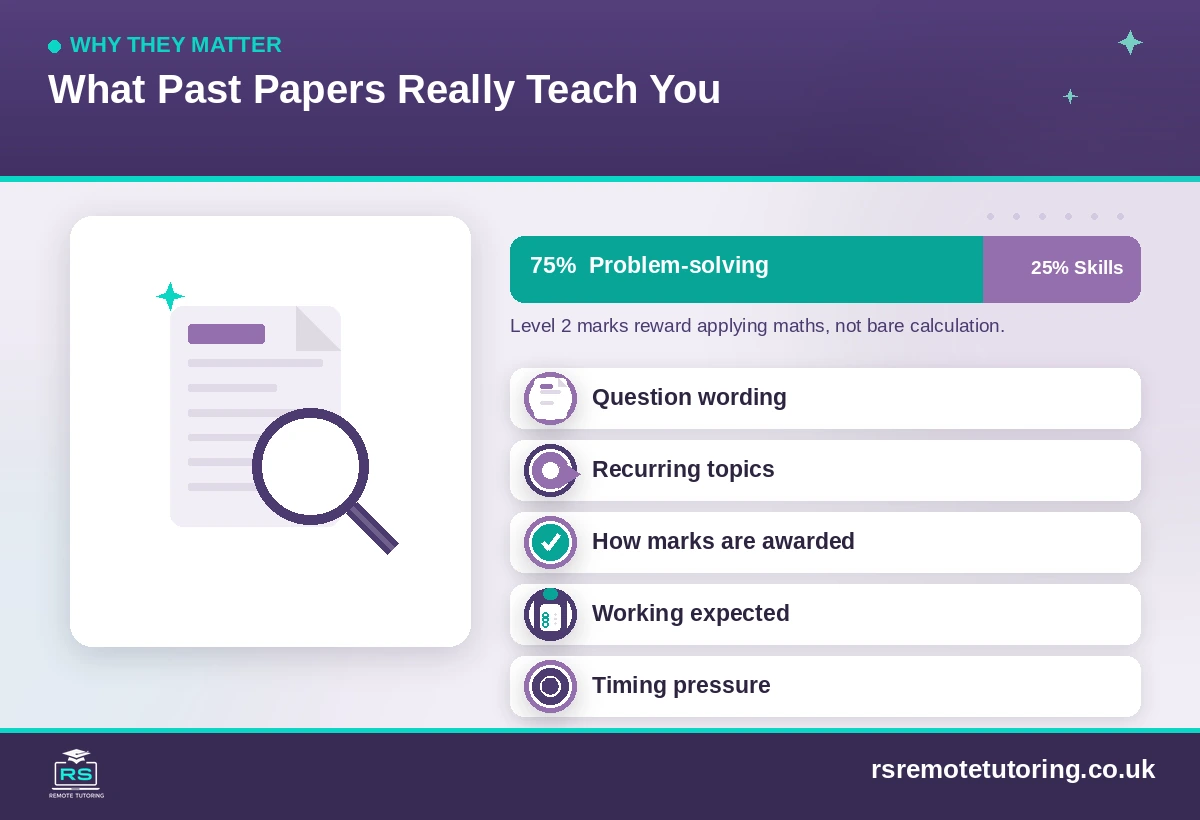
Here’s the fact that reframes the whole thing. In the reformed Level 2 Maths qualification, only about a quarter of the marks come from straightforward calculation, roughly 75% are awarded for problem-solving, applying maths to real situations, according to the subject content set by Ofqual. So a paper isn’t really testing whether you can do the sum. It’s testing whether you can work out which sum the question is even asking for.
That’s why blindly churning through papers doesn’t work. Used well, past papers show you how questions are worded, which topics recur, how marks are awarded, and how fast you need to move. Used badly, they just rehearse your mistakes. This guide is about using them the right way.
Jump to Section
What are Functional Skills Maths Level 2 past papers really for?
Past papers aren’t just a test of what you know, they’re one of the best learning tools available. They show you how the exam thinks: the phrasing of questions, the topics that appear again and again, how marks are split, how much working is expected, and how quickly you have to work under pressure.
Most learners already know more maths than they think. Where they come unstuck is decoding what a wordy, real-life question is actually asking. Past papers bridge that gap better than any textbook, because they train the exact skill the exam rewards. For the full picture of what’s assessed, our Maths Level 2 exam structure guide breaks down each section.
Should you build topic knowledge before starting full papers?
Yes, jumping straight into full papers too early is the most common mistake I see. It’s like playing a full match before you’ve learned to pass or shoot. If the fundamentals aren’t there, a full paper just confirms you’re stuck, without showing you a way forward.
Before you attempt whole papers, make sure you’re reasonably comfortable with:
- Percentages, fractions and decimals
- Ratio and proportion
- Probability and averages
- Graphs and data handling
- Area, perimeter and conversions
If several of those feel shaky, strengthen them one at a time first. What made the biggest difference for many learners I’ve worked with was focusing on a single topic until it clicked, rather than drowning in a full paper that touched ten topics at once. Our Maths Level 2 topics checklist is a good way to spot which foundations need work, and what Functional Skills Maths covers explains the basics.
What’s the best way to use past papers?
The best approach moves through three stages: untimed learning first, then guided practice, then full exam simulation. Rushing straight to timed papers skips the learning and just manufactures panic. Each stage removes a support until the paper feels like the real thing.
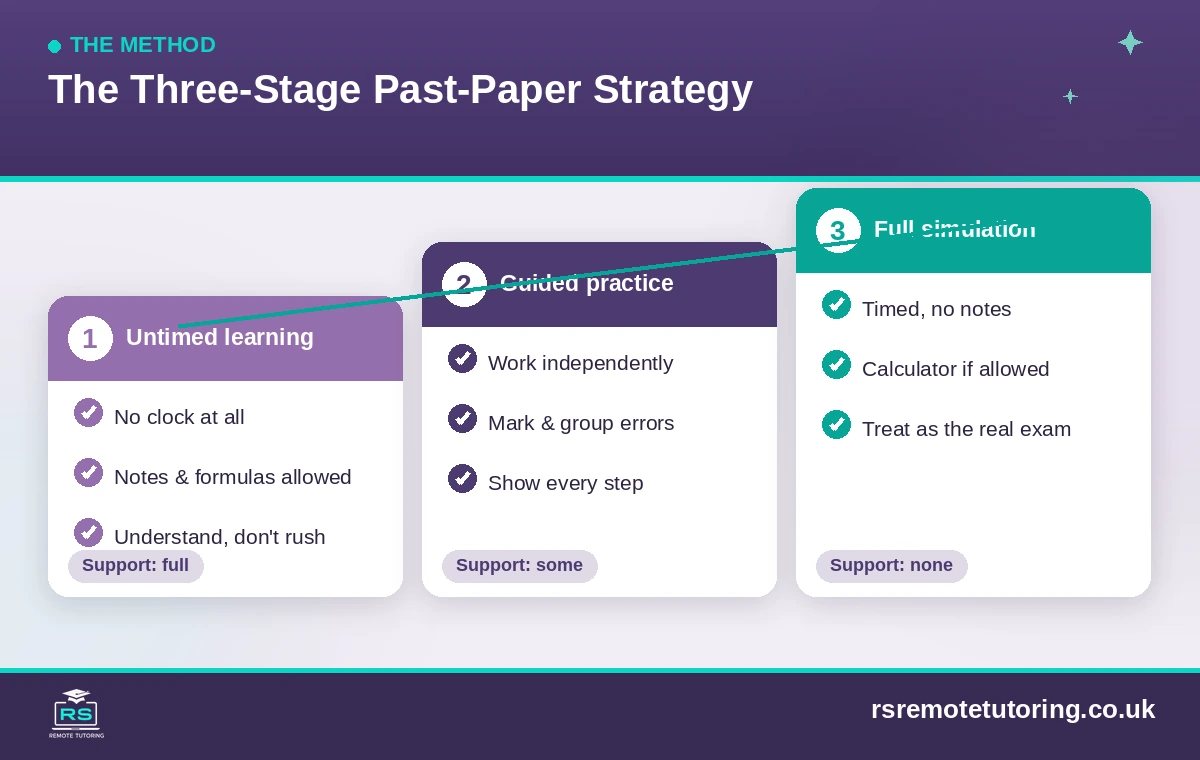
Stage 1: Untimed learning practice
Work through questions with no clock at all. Use your notes, check formulas, watch a topic video, pause whenever you need to. The goal here is understanding, not speed. I once removed the timer entirely for a panicky learner for two weeks, and her confidence transformed once the pressure was gone.
Stage 2: Guided practice
Now pull the supports back. Work independently, resist checking answers mid-question, use your calculator only where allowed, and show every step of your working. Then mark the whole paper, and group your errors by topic. This is where real improvement starts.
Stage 3: Full exam simulation
Finally, treat the paper like the real exam: timed, no notes, no internet, calculator only where permitted, no interruptions. By the time you sit the actual test, the process should feel routine rather than frightening. That familiarity is the whole payoff. The Level 2 online exam guide explains how the remote exam works if you’re sitting from home.
How do you analyse mistakes like a tutor?
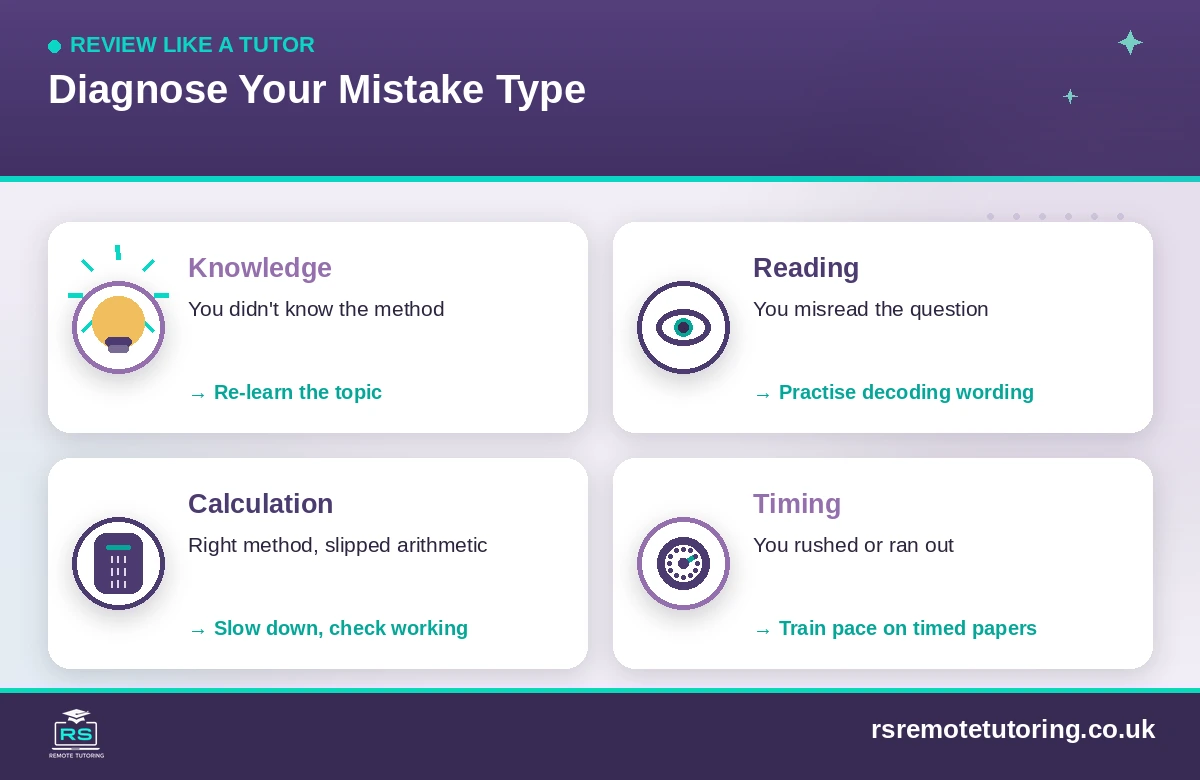
Finishing a paper is only half the work, the real learning happens when you review it. For every dropped mark, ask why you lost it, because the fix depends entirely on the cause. The same wrong answer can come from four completely different problems.
- Knowledge: you didn’t know the method.
- Reading: you misunderstood the question.
- Calculation: your method was right, but the arithmetic slipped.
- Timing: you rushed or ran out of time.
I once had a student convinced she was weak at percentages. After reviewing a few papers together, we realised almost every error came from misreading the question, not the maths. That single insight rewrote her whole revision plan. Keeping a simple mistake log makes these patterns obvious.
| Question | Topic | Mistake type | Action |
| Q4 | Ratio | Method error | Reviewed and re-practised |
| Q7 | Percentages | Reading error | Practised question decoding |
| Q11 | Area | Calculation slip | Slowed down, checked working |
After a few papers, the log points a flashing arrow at exactly where your revision time should go.
What mistakes do students make when using past papers?
The big ones are completing papers without reviewing them, memorising questions instead of methods, ignoring working, and burning time on a single hard question. Each one quietly wastes the practice. A paper only becomes valuable once you understand why answers were right or wrong.
A few specifics worth calling out. Examiners change the numbers and scenarios, so memorising a past question is pointless, learn the method instead. Always show your working, because a correct method can earn marks even when the final answer is wrong. And if a question has you stuck, note it, move on, and come back; draining ten minutes on one question can cost you three easier ones later.
How many past papers should you complete?
Most learners do well with somewhere between five and ten full papers, alongside steady topic practice. Beyond a point, more papers with no proper review adds very little. Quality of review beats quantity of papers, every time.
Start with individual questions once you’ve covered the main topics, and save full timed papers for the final few weeks. Confidence doesn’t come from positive thinking, it comes from evidence. Each completed paper is proof that you can handle the questions, the timing, and the pressure, and that evidence is what quietens exam nerves. If you’d like a second pair of eyes spotting your patterns, our Functional Skills Level 2 Maths tutoring does exactly that, one-to-one.
What should the final week before the exam look like?
The final week is for consolidation, not cramming. Review your mistake log, revisit weak topics, complete one or two final papers, and protect your sleep. Piling on new content now mostly adds stress without adding marks.
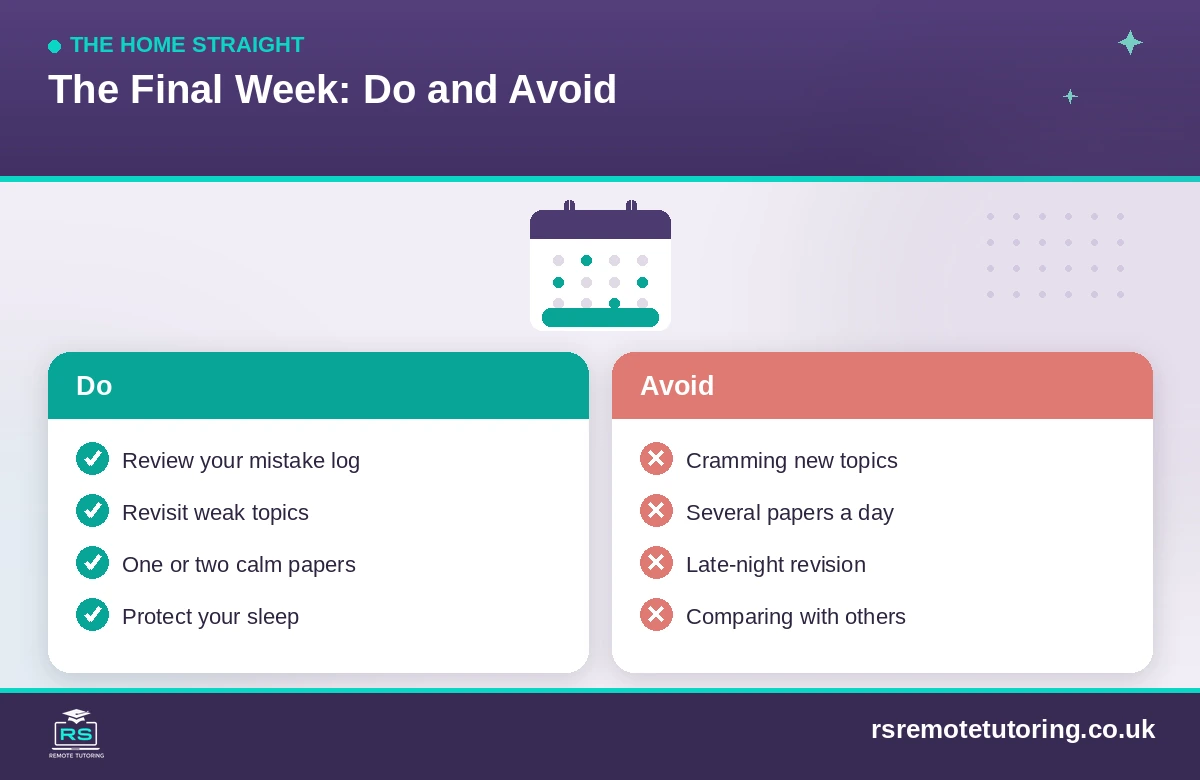
Focus on
- Reviewing past mistakes
- Revisiting weak topics
- One or two calm, full papers
- A steady sleep schedule
Avoid
- Cramming brand-new topics
- Several papers a day
- Late-night revision
- Comparing yourself with others
What’s stayed with me after years of tutoring is that learners perform best when they trust the preparation they’ve already done and walk in calm. The papers you’ve reviewed properly are working for you in that room, whether it feels like it or not.
How do past papers build real exam confidence?
Confidence in this exam is built on evidence, not pep talks. Every paper you complete and review properly is proof, sitting in front of you, that you can handle the questions, the timing, and the pressure. That stack of evidence is what quietens the nerves on the day.
Almost every learner I’ve worked with felt overwhelmed at the start. What changed wasn’t their intelligence — it was repeated exposure to realistic exam questions until the format stopped being a shock. By the tenth question of a certain type, your brain treats it as familiar rather than threatening, and familiarity is the thing that keeps you calm enough to think clearly. That’s also why matching your exam board matters: papers from City & Guilds, Pearson, AQA, NCFE and others vary in timing and layout, so practising the wrong board’s format can hand back some of the confidence you’ve built. Check which board you’re sitting with, then practise mostly with that one. Our guide to Functional Skills Level 2 and how it compares to GCSE is a useful primer if you’re still deciding on a route.
Frequently Asked Questions
How many Functional Skills Maths Level 2 past papers should I complete before the exam?
Most learners benefit from five to ten full papers alongside topic practice. Careful review of each one matters far more than the total number you complete.
When should I start using past papers?
Start with individual questions once you’ve covered the main topics. Full timed papers are usually most effective in the final few weeks of revision, once your foundations feel solid.
Are older Functional Skills Maths Level 2 past papers still useful?
Yes, but check the date. The specification was reformed in 2019, so prioritise post-2019 papers that match your exam board. Older papers can still be handy for practising individual calculations and techniques.
Can I pass using only past papers?
Past papers are powerful, but they work best alongside topic revision, formula practice, and targeted work on weak areas. Think of them as the practice arena, not the whole training programme.
Should I always complete papers under timed conditions?
Not at first. Begin untimed to build understanding, then add the clock once you’re confident with the topics, and finish with full timed simulations close to the exam.

Raja specializes in Physics and Maths, with over 5 years of experience. He offers KS2, KS3, and GCSE Science and Maths lessons. He graduated from one of the top universities in the UK.