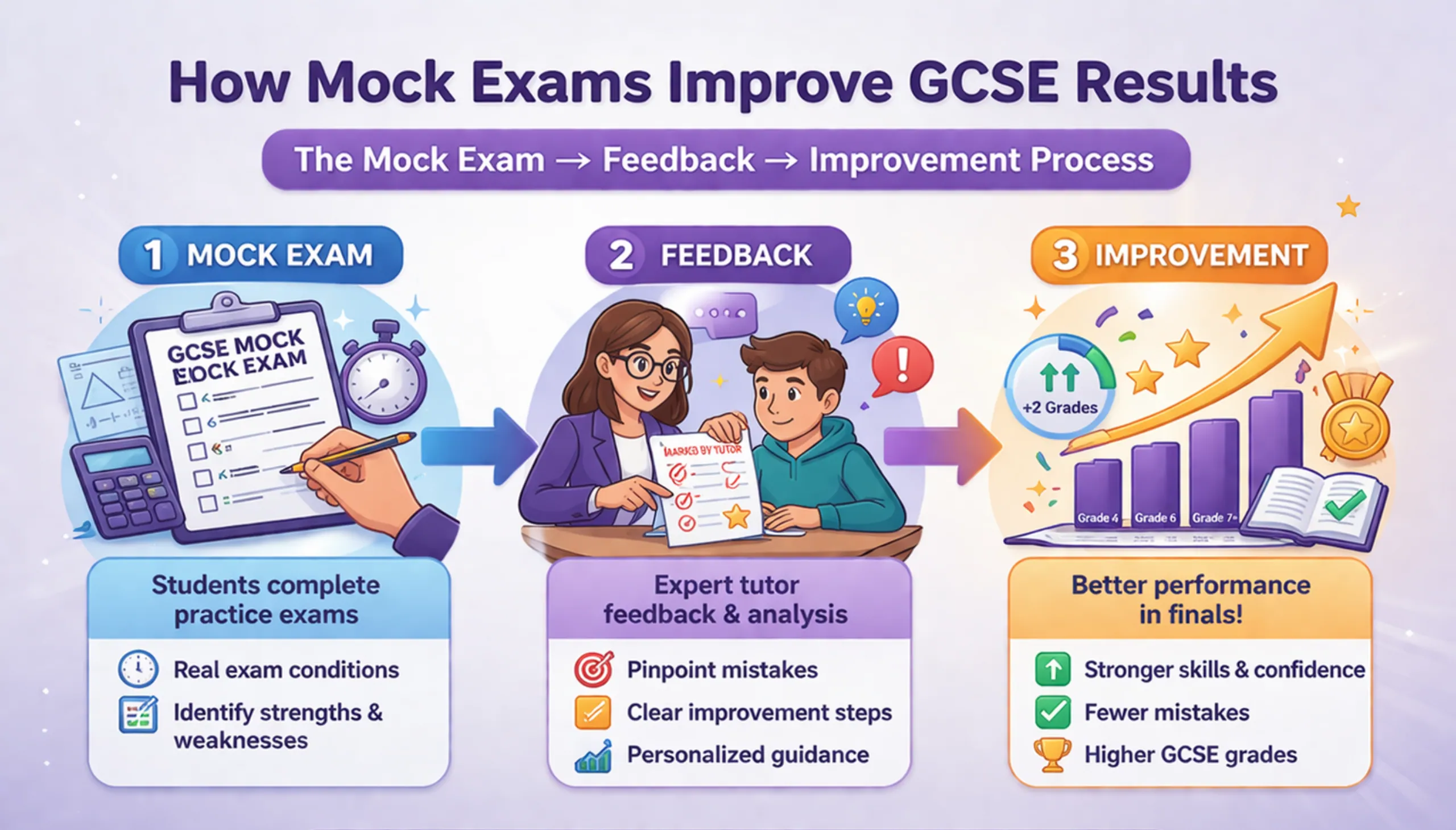
GCSE Tutoring is not only about just delivering extra lectures and guidance other than school that helps the students to achieve their desired grades but it is a whole hearted and tiring process. Tutors are another form of guidance that helps to clear the brain fog already set in the minds of students appearing for the GCSE exams. Online GCSE tutoring helps in many ways but the most beneficial aspect is the one on one, personalised feedback that cannot be easily gained from the school teachers.
Similarly, the mock exams are not just those papers but they are the most important practice exams, the predicative indicator of the performance, confidence and exam readiness. Getting the higher tier grade is not just the only valuable outcome but the most important is the tutor’s feedback. Additionally, the student’s gain can also lie in how effectively the student uses the tutor’s feedback after the GCSE mock exam.
For the parents and students investing their time and energy in the online tuitions in the UK, mock exams provide the structured, predictable checkpoints. When tutors’ feedback is analyzed and interrupted clearly, it becomes a powerful academic accelerator, transforming all the weaknesses into measurable improvements before the final GCSE examination.
Most parents and Students are worried about how to use the tutor’s feedback effectively in order to unleash all the negativity and get the desired grades.
This research informed guide well explores how to systematically use the tutors feedback after the mock exams to upgrade the performance, refine the exam techniques and build long term academic confidence.
Jump to Section
Understanding Why Tutor’s Feedback Matters More than Ever In GCSE Exams
Before diving into how to use the feedback effectively it is important to learn the benefits why this matters a lot. Educational research suggests that feedback is one of the highest impact strategies for academic progress. Furgorore, according to the findings widely cited in the UK education research states that, structured and well organized feedback can increase the learning process when it is;
- Timely
- Specific
- Actionable
- Followed by deliberate practice
Additionally, mock exams are the diagnostic tools. They further highlights;
- Knowledge gaps
- Skill deficiencies
- Misinterpretation of questions
- Exam technique errors
- Time management problems
But most of the students are highly inclined towards achieving good grades, that is Grade 8, 7 and 6 without critically analyzing why their marks were lost. For most families, using Online tuitions in the UK, it is important to understand that mock feedback becomes more important and valuable because tutors can personalise the target’s improvement plans immediately after reviewing the mock exam scripts.
Types of Tutors Feedback
After GCSE mock exams, tutors’ feedback typically falls into the following categories.
Content Gaps:
One important feedback category is that students lack the content. For example;
The tutor may provide a feedback like;
- “You lacked a detailed explanation of osmosis.”
- “Key historical dates were missing.”
This further indicates that the student lacks the knowledge depth, misunderstanding or the incomplete revision.
Application Errors:
Another important type of feedback is the application error. Students may fail to attempt the answer correctly by incorporating a failed methodology. For example, tutor may imply the feedback as;
- “Correct method, but applied incorrectly.”
- “Evidence not linked back to the question.”
This further suggests that students may hold the conceptual clarity but struggle to apply it under exam conditions.
Depth and Analysis Weakness:
Another important category of the feedback is the lack of ana;ysis and depth in the answer. It is particularly evident in the higher tier GCSE examinations. Tutor may refer;
- “Limited analysis.”
- “Points not developed.”
This is the point that separates the Grade 6 student from the grade 7 and 8
It is important to understand the feedback category without fully understanding in which point you are lacking, you may fail to achieve your desired grades.
How to Use the Tutors Feedback
The following guide encapsulates the steps that should be navigated in order to correctly and effectively the tutors feedback.
Conduct a Post Mock Performance Audit:
Before jumping into revision, students should firstly conduct a post mock performance audit. In order to do this you should create a mock analysis table. This further includes the detailed postmortem of the feedback given by the tutor. This further transforms vague feedback into measurable targets, To illustrate this with an example, if the students gains the less marks should make the table:
6-mark biology question | -3 marks | Limited explanation | Depth issue | Practise extended answers |
The structured analytical approach is far more effective than simply re-reading notes.
Prioritizing the High Impact Weakness:
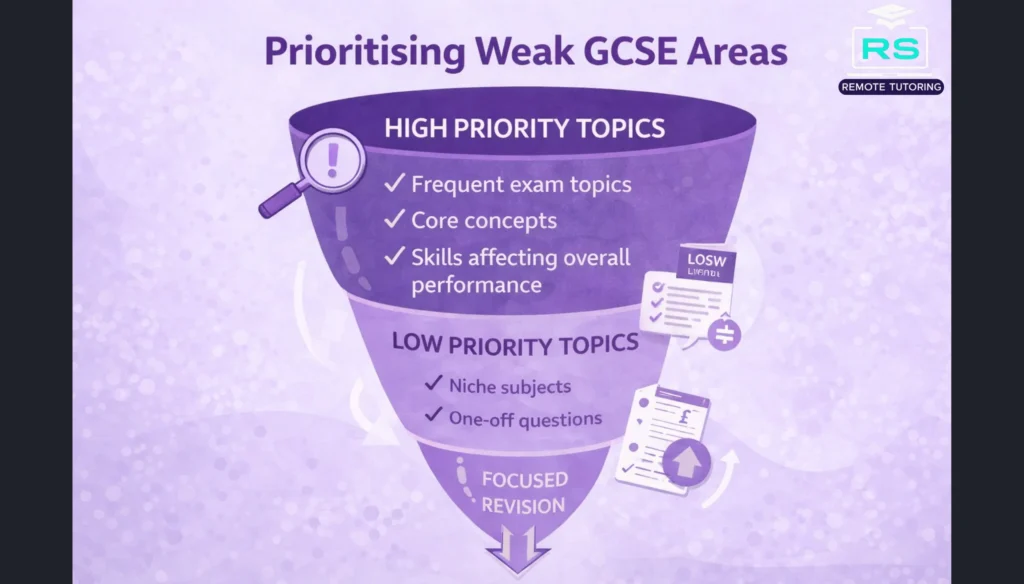
Another important step to inca;clate into your revision strategy is prioritising the weak areas that are utmost important. Not all mistakes are equal. Research into the effective revision states that targeted intervention produces stronger gains than broad revision. Firstly focus on;
- Topics that appear frequently in past papers
- Skills repeated across multiple questions
- Core concepts that affect overall understanding
For example, if allergic errors appear multiple in maths questions, prepare algebra before your niche topics. Students using the structured online tuition in the UK such as ur platfrom RS remote tutoring, benefit from tutors creating topic weighted revision plans thoroughly aligned with the exam board specifications.
Turning Feedback Into Small Academic Goals:
Feedback is utmost necessary and it must translate into the precise goals. Instead of just vaguely mentioning;
I need to improve science.
Set clear and precise goals such as ;
“I will complete three 6-mark biology questions on osmosis this week and receive tutor marking by Friday.”
In order to make clear smart goals are;
- Specific
- Measurable
- Achievable
- Relevant
- Time-bound
Goal clarity reduces the overwhelming and increases the confidence.
How to Use Evidence Based Revision Methods:
Not all revision techniques benefit the students. Cognitive Science highlights the strategies that are genuinely effective and improves retention and exam performance. It is important to note that testing yourself without notes strengthens memory pathways more effectively than re reading. After feedback is analyzed, weak topics are identified then student should;
- Attempt exam-style questions
- Mark answers immediately
- Compare with model responses
Focusing on Exam Techniques rather than Knowledge:
One of the foremost benefits of online tutoring is that it focuses on exam techniques, guides the students on how to prepare the answer effectively instead of just focusing on the knowledge and the content. Common techniques problem revealed in the mock exams includes;
- Not answering the command word
- Failing to evaluate
- Poor paragraph structure
- Lack of time management
- Ignoring mark allocation
For example:
A 6-mark question requires six developed points or three well-developed ones. Writing only two points automatically caps marks.
Professional tutors in online tuitions in the UK often train students specifically in:
- Structuring 8–12 mark answers
- Using PEEL paragraphs
- Timing strategies
- Planning essays efficiently
This skill-based refinement frequently results in rapid grade jumps.
Common Mistakes Students Make After GCSE Mock Exams
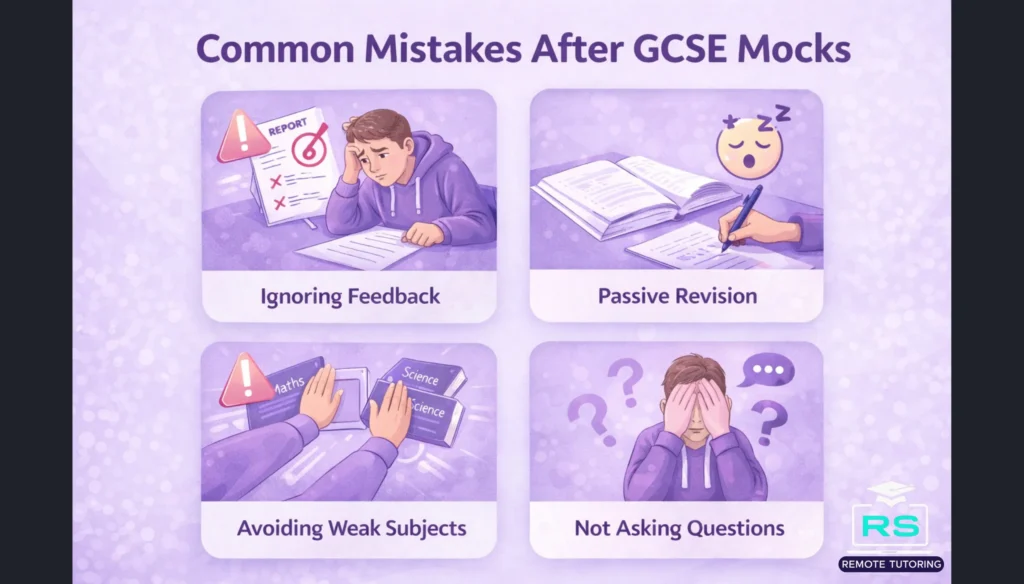
The quite common mistakes that mostly student undergo are
- Ignoring Written Comments
- Revising Everything Equally
- Passive Revision
- Avoiding Weak Subjects
- Not Asking Questions
The Psychological Impact Of Using Feedback Correctly
When students use feedback strategically:
- Confidence increases
- Exam anxiety reduces
- Control over learning improves
- Motivation becomes internal
A growth-oriented approach reframes mock results from “judgement” to “data.”
This mindset shift is particularly powerful in Year 11, where confidence significantly influences final outcomes.
FAQS
How soon should students review tutor feedback after GCSE mocks?
Students should review and act on feedback within 48 hours to maximise improvement.
What is the biggest mistake students make after mocks?
Focusing on the grade and ignoring the detailed tutor comments.
How can online tutors personalise mock feedback effectively?
They tailor revision plans to the student’s specific gaps and exam board criteria.
Final Thought:
GCSE mock exams are rehearsal stages. The grade provides direction, but tutor feedback provides transformation.
When students:
- Analyse feedback strategically
- Categorise weaknesses
- Prioritise high-impact areas
- Use evidence-based revision
- Engage in feedback loops
- Track progress consistently
They significantly increase their probability of achieving higher final GCSE grades.For families committed to structured preparation through online tuitions in the UK, post-mock feedback is one of the most powerful tools available.
The question is not:
“What grade did I get?”The better question is:
“What is this feedback teaching me, and how will I use it?”
When that shift happens, improvement becomes inevitable.

Raja specializes in Physics and Maths, with over 5 years of experience. He offers KS2, KS3, and GCSE Science and Maths lessons. He graduated from one of the top universities in the UK.