It’s the question every Year 10 household eventually asks at the kitchen table. When should you start revising for GCSEs, and how early is too early? Ask five people and you’ll get five answers, which is exactly why so many students either panic-start in April or drift until it’s genuinely too late.
There’s a reason timing matters this much, and it comes from memory research rather than opinion. Back in the 1880s, psychologist Hermann Ebbinghaus mapped what’s now called the forgetting curve. His work showed we lose a large share of new information within days unless we deliberately revisit it. Cram everything into a few weeks and you’re fighting that curve at the worst possible time.
GCSE exams themselves run across roughly six weeks, from mid-May to late June, with dates set by the exam boards through the JCQ. Work backwards from there and the smart move becomes obvious. Revision isn’t a switch you flip in Year 11. It’s a slope you climb from Year 10, and the students who start early tend to arrive calm instead of frantic. This guide lays out that slope, stage by stage.
Jump to Section
Why does starting revision at the right time matter?
Starting at the right time matters because memory is built through repetition over weeks, not a single burst. Space your revision out and each review strengthens what you know. Leave it late and you’re relearning whole topics under pressure, which raises stress and lowers recall exactly when you need it.
Starting early, done well, buys you real advantages:
- Less exam anxiety and last-minute panic
- Stronger long-term memory of key concepts
- Time to find and fix weak topics before they matter
- Room to practise proper exam technique
- A study routine that feels normal, not forced
The students who begin early usually perform better, and not because they grind more hours. They spend those hours understanding rather than cramming. If you want the science behind spacing, our guide to memory hacks for GCSE explains the forgetting curve in plain terms.
When should you start GCSE revision in Year 10?
Year 10 is for building the habit, not heavy revision. Short, regular reviews after each topic keep knowledge fresh and stop it slipping away. Thirty minutes a subject each week is enough to save you weeks of relearning later.
Although exams sit at the end of Year 11, the foundation is poured in Year 10. This is the year to turn good lessons into lasting memory before the syllabus piles up.
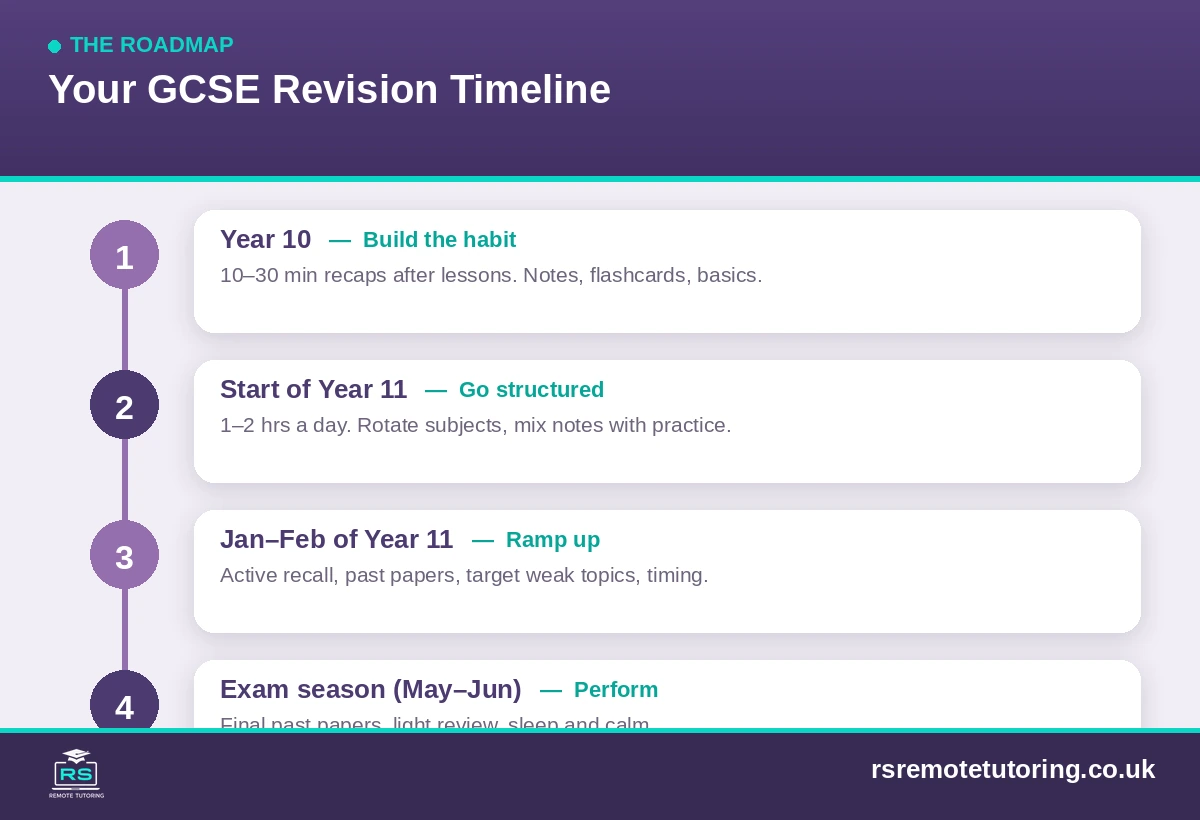
A light Year 10 routine looks like this:
- Review each topic briefly after you’re taught it
- Keep concise, one-page revision notes as you go
- Start subject flashcards for key terms and formulas
- Try a few basic exam questions to get the format
Students who skip this step usually pay for it in Year 11, when they’re relearning material rather than revising it. A gentle start keeps everything manageable.
When should structured revision begin in Year 11?
Structured revision should begin at the start of Year 11, ramping up through the autumn term. This is the shift from casual reviews to a real plan, aiming for one to two hours on school days and rotating subjects so nothing gets neglected.
At this stage, blend content review with active practice rather than just reading notes. Start creating detailed summaries, drilling flashcards for key facts and formulas, and working through topic-based exam questions. The goal is steady, full coverage of the syllabus long before the final run-in.
Here’s how the whole journey maps out.
| Stage | Focus | Rough daily time |
| Year 10 | Build habits, review as you go | 10–30 min per subject, weekly |
| Start of Year 11 | Structured, rotating revision | 1–2 hours most days |
| Jan–Feb of Year 11 | Intensive: recall, past papers | 2–3 focused hours |
| Study leave (May–Jun) | Final review and exam performance | 3–5 hours with breaks |
When should intensive GCSE revision start?
Intensive revision should start three to four months before your exams, roughly January or February of Year 11. This is the phase for active recall, past-paper practice, targeting weak topics, and training your timing. By now you’re refining, not learning the course for the first time.
Students who wait until this window to learn content, rather than revise it, almost always struggle. There’s simply too much to cover in too little time. If you reach this stage feeling behind, focus ruthlessly on high-mark topics; our post on how many hours you should study for GCSEs helps you set realistic targets without burning out.
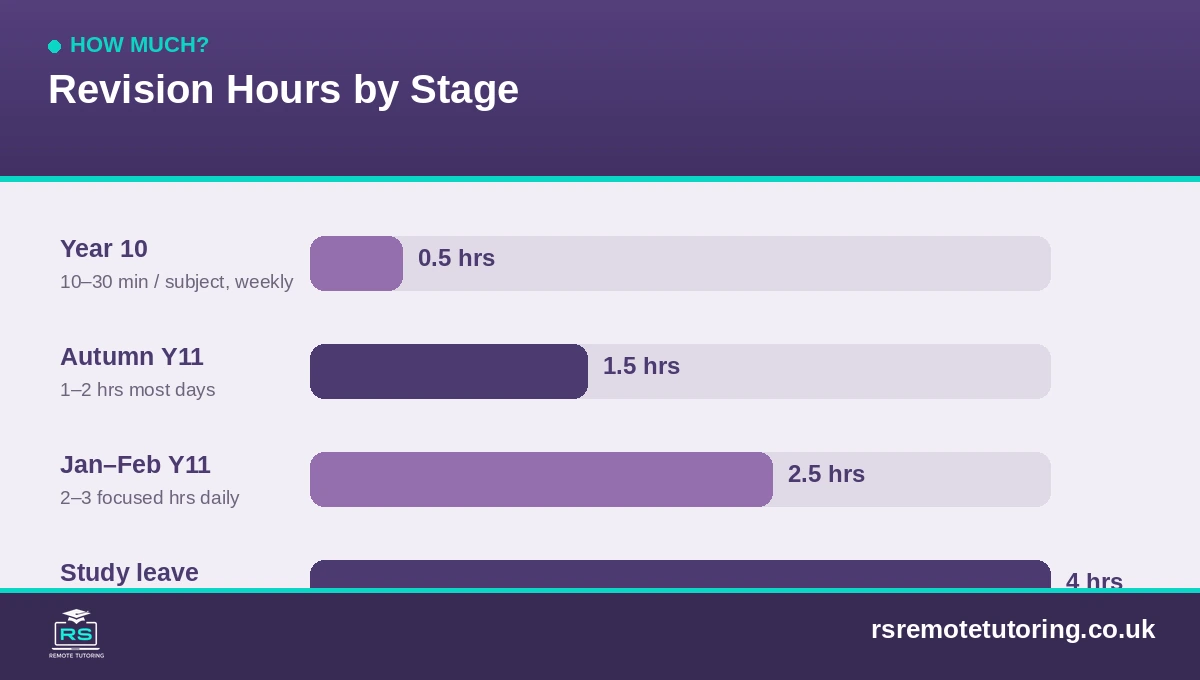
Notice the hours climb gradually. That gentle ramp is the whole point. Jump straight to five-hour days in May and you’ll burn out; build up from Year 10 and those hours feel normal by the time they matter.
How do mock exams fit into your revision timeline?
Mocks are checkpoints, not verdicts. Schools usually run them in late Year 10, the autumn of Year 11, and again in spring. Each one tells you which subjects need the most work and how you cope under real exam conditions, which is information you can’t get from notes.
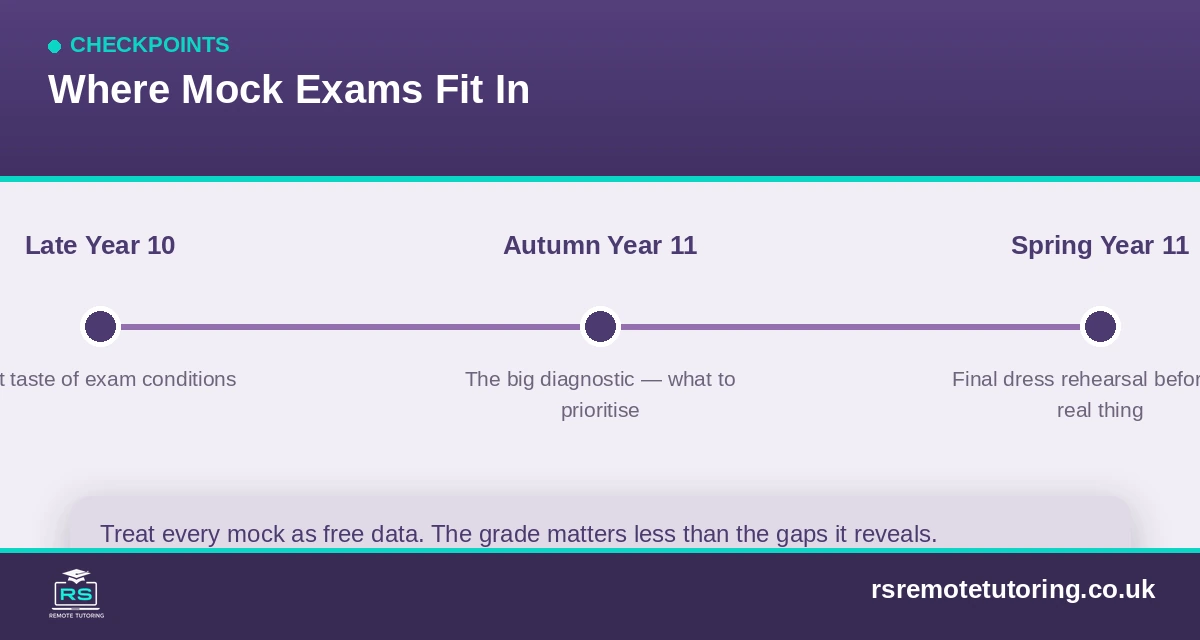
Treat every mock as free data. The grade matters far less than the gaps it reveals. Afterwards, go through the paper properly:
- Work out which topics cost you the most marks
- Note where exam technique, not knowledge, let you down
- Rebuild your plan around what the mock exposed
This is where a second pair of eyes pays off. Our guides on preparing for a GCSE mock exam and using tutor feedback after mocks show how to turn a disappointing result into a targeted plan.
What revision techniques work best once you’ve started?
Knowing when to start only helps if you also know how to revise. The methods with the strongest evidence are spaced repetition, active recall, and interleaving, all of which beat re-reading by a wide margin. Timing gets you to the start line; technique wins the race.
Spaced repetition
Revisit each topic at growing intervals, so it sticks instead of fading:
- Day 1 – learn the topic
- Day 3 – review it again
- Day 7 – test yourself
- Day 21 – one final review
Active recall
Close your notes and retrieve the answer from memory before checking. Write down everything you remember, quiz yourself, and use flashcards properly. Free quizzes on BBC Bitesize are handy for this. It’s harder than re-reading, which is exactly why it works.
Interleaving
Mix subjects within a session rather than blocking one for hours. Forty-five minutes of Maths, then Biology, then English trains the flexible recall a mixed exam paper demands. For a deeper toolkit, our roundup of proven GCSE revision hacks covers each method with examples.
How can parents support GCSE revision?
Parents help most by creating the conditions for revision, not by doing it. A quiet space, a steady routine, help planning a timetable, and a close eye on stress levels go a long way. Consistent support at home is strongly linked to better exam performance.
You don’t need to understand the syllabus to be useful. Protecting study time, keeping meals and sleep on track, and staying calm during wobbles all count. Our guide on how parents can support GCSE preparation has practical ideas that don’t require any subject knowledge.
What are the most common revision timing mistakes?
The most common timing mistakes are starting too late, revising passively, ignoring weak subjects, and working without a plan. Each one wastes the time you do have. Starting late is the costliest, because it forces cramming and strips away the spacing that makes memory stick.
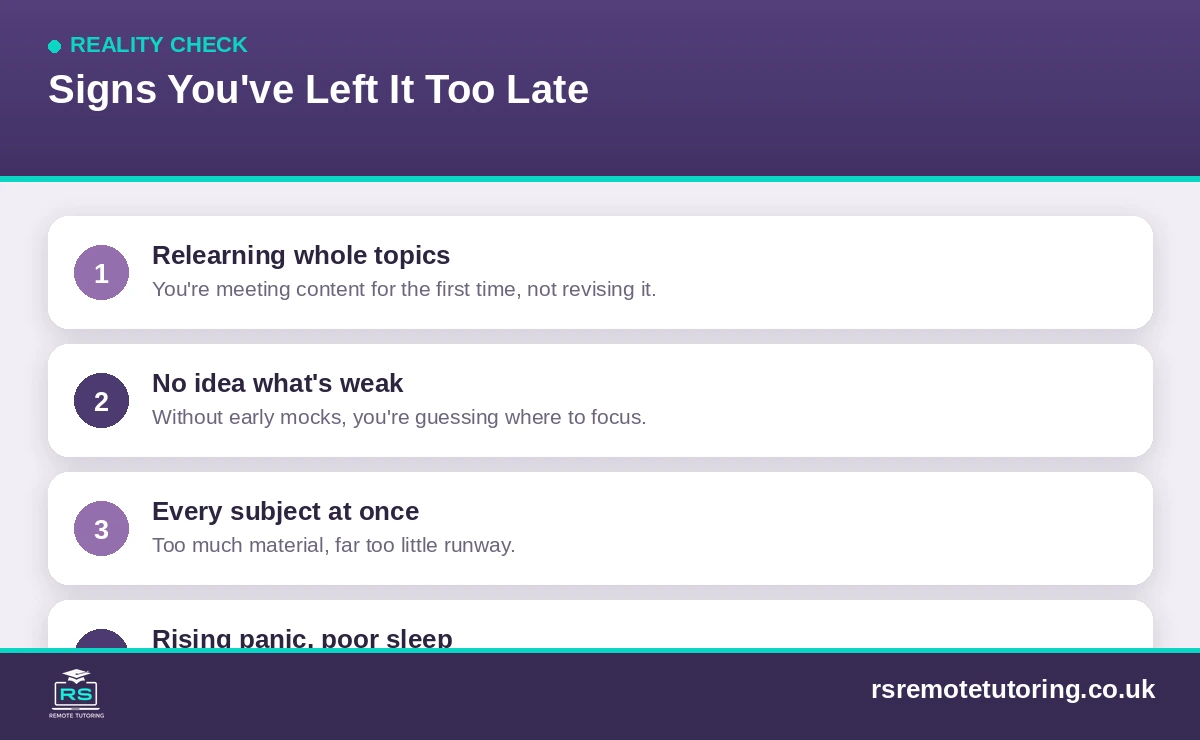
Watch for the warning signs that you’ve left it too late: you’re meeting content for the first time instead of revising it, you can’t say which topics are weak, and everything feels like it needs doing at once. If that sounds familiar, don’t panic, but do act. Our last-minute GCSE revision tips and one-month revision plan are built for exactly this situation.
Is it ever too late to start revising?
No, it’s never truly too late, though earlier is always easier. Even with a few weeks left, focused work on high-mark topics, past papers, and active recall can lift your grades. Late revision just has to be sharper and more selective than early revision.
The trade-off is simple. Start in Year 10 and you get to be relaxed and thorough. Start a month out and you have to be surgical. Both can work; one is a lot less stressful. And if you’re not sure your exam dates line up with your plan, check them against the official schedule in our GCSE exam dates 2026 guide.
How can a tutor help you stay on track?
A tutor turns a vague intention to “start soon” into a plan you actually follow. Structure, honest feedback, and weekly accountability are usually what’s missing, not effort. Left alone, most students drift back to comfortable re-reading and start too late.
At RS Remote Tutoring, our online GCSE revision tutors build a timeline around your exact exam dates, then keep you moving through it week by week. Sessions run one-to-one through flexible online tutoring, so a Year 10 head start or a Year 11 rescue plan both fit around school. You can book a free trial to map out your own revision timeline in a single session.
Frequently Asked Questions
When should students start revising for GCSEs?
Start light revision habits in Year 10 and structured revision from the beginning of Year 11, ramping up to intensive work three to four months before exams. Little and often, started early, beats a late scramble every time.
Is it too early to revise in Year 10?
No. Light review in Year 10 strengthens long-term memory and saves you weeks of relearning later. Keep it short, around 30 minutes a subject each week, so it stays manageable.
How many hours a day should I revise in Year 11?
Aim for one to two focused hours on school days early in Year 11, building to three to five hours during study leave, always with breaks. Quality matters far more than raw hours.
Are past papers important for GCSE revision?
Yes. Past papers help you practise exam technique, learn command words, and understand mark schemes. Start them once a topic feels solid, then build up to full timed papers.
When do schools usually hold GCSE mock exams?
Most schools run mocks in late Year 10, the autumn of Year 11, and again in spring. Use each one as a diagnostic to find weak topics rather than as a final judgement.
Can I still get good grades if I start revising late?
Yes, though it’s harder. Focus on high-mark topics, active recall, and past papers, and get help prioritising. Late revision works best when it’s selective and well-planned rather than frantic.
Raja specializes in Physics and Maths, with over 5 years of experience. He offers KS2, KS3, and GCSE Science and Maths lessons. He graduated from one of the top universities in the UK.