Facts checked 16 November 2026
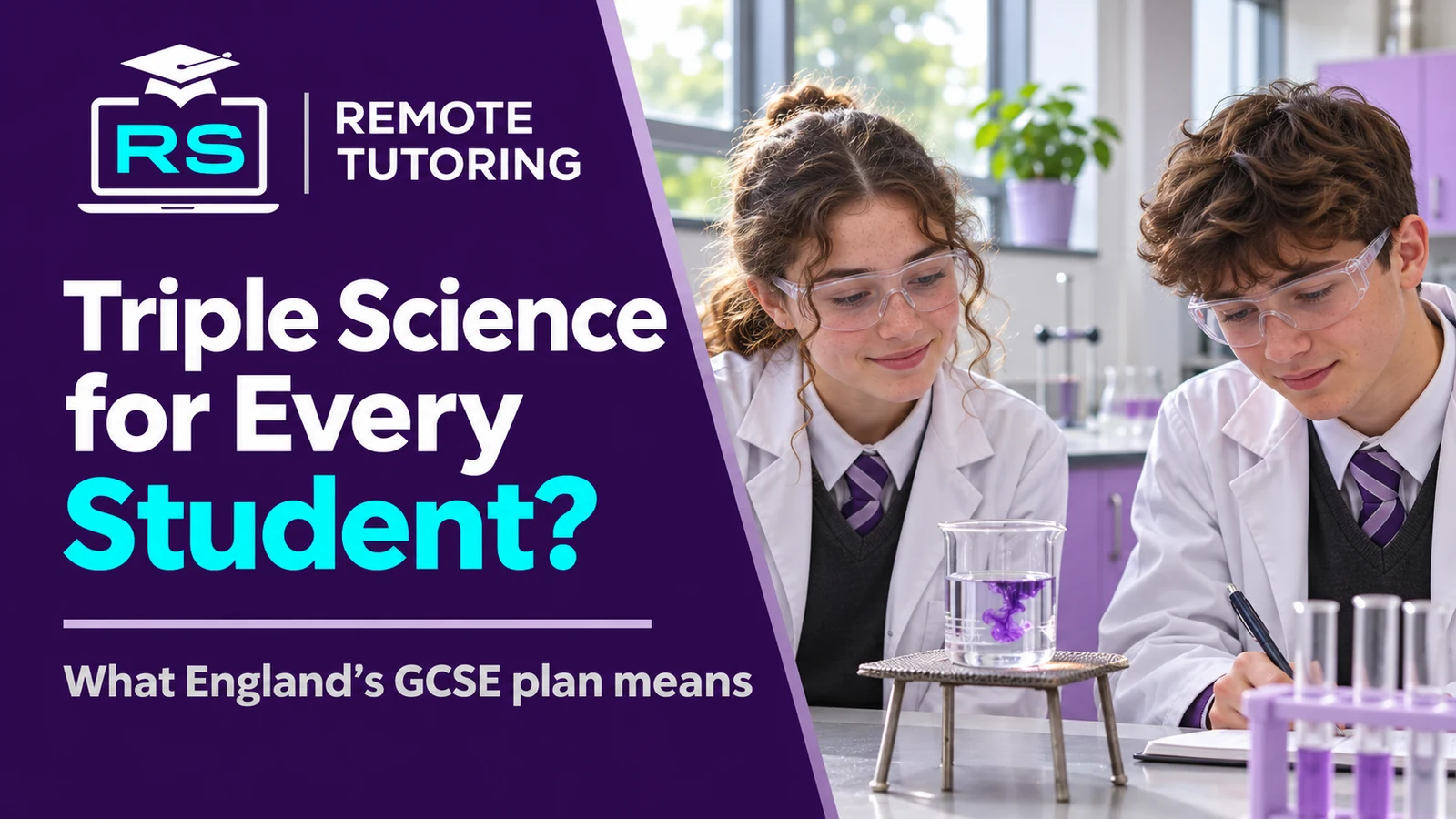
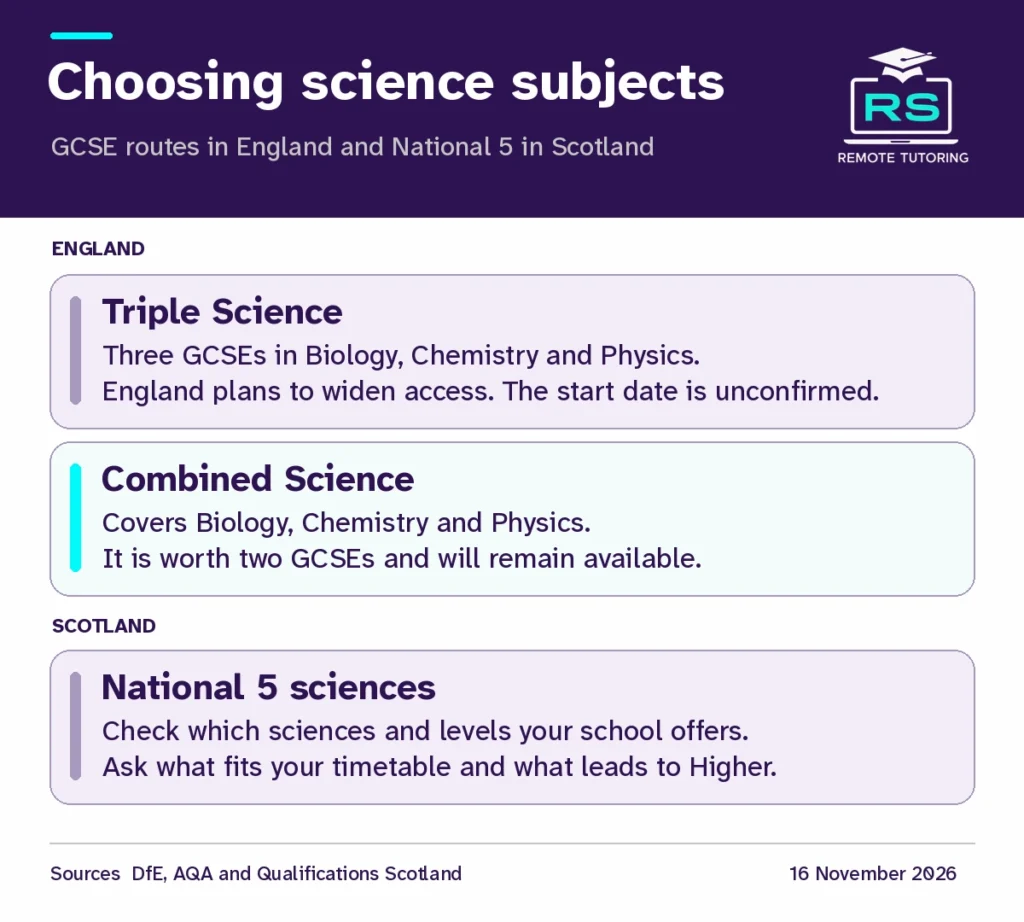
Triple Science will remain a choice. England’s Department for Education plans to give more pupils the opportunity to take separate GCSEs in Biology, Chemistry and Physics. Combined Science will remain available. The entitlement has no confirmed start date, so check what your school offers your year group. If you’re choosing subjects in Inverness, ask about Scotland’s National 5 science courses.
Table of Contents
What would the Triple Science entitlement change?
It would widen access to the three separate science GCSEs. The Curriculum and Assessment Review recommended making Triple Science available to pupils who want to take it. The government backed a statutory entitlement and said it would first help schools address barriers such as staffing. How schools would handle selection or timetable clashes under the entitlement is still to be confirmed.
What about 2027? If you’re sitting your GCSEs in 2027, use the course and exam board your school confirms for you. If you’re choosing subjects for Year 10, use your school’s options booklet for your own year group. The DfE’s published timetable aims for first teaching of the wider revised national curriculum from 2028 and updated GCSEs in phases from 2029 and 2030. The start date for the Triple Science entitlement is still open.
What’s the difference between Triple and Combined Science?
Both cover Biology, Chemistry and Physics. Triple Science goes further in each subject and awards three separate GCSE grades. Combined Science awards a pair of grades across all three subjects, worth two GCSEs.
| Current AQA example | Combined Science: Trilogy | Triple Science |
|---|---|---|
| Qualifications | One double award, worth two GCSEs | Three GCSEs, each with its own grade |
| Written papers | Six, at 1 hour 15 minutes each | Six, at 1 hour 45 minutes each |
| Total scheduled writing time | 7 hours 30 minutes | 10 hours 30 minutes |
These timings are for AQA Trilogy, Biology, Chemistry and Physics. Confirm your board and specification before choosing revision materials.
If you enjoy all three sciences and want the extra content, ask how Triple Science fits alongside your other subjects. Ask whether it uses an option slot or is taught in the usual science lessons. Combined Science can also lead to science A-levels. For example, Slough & Eton accepts a 6-6 in Combined Science for its Biology, Chemistry and Physics A-levels, alongside other entry requirements. Check the sixth form you want to attend for its own criteria, and read our guide to choosing GCSE subjects before options forms are due.
What should families in Inverness choose?
Use your school’s Scottish subject choices for the year you’re entering. The GCSE entitlement is an England policy. In Scotland’s senior phase, from S4 to S6, pupils can work towards National qualifications and Highers.
Inverness Royal Academy, for example, lists Biology, Chemistry and Physics as separate subjects. Ask your school which sciences are available at National 5, which combinations fit your timetable and what you would need to take a science at Higher. For revision, use the current Qualifications Scotland materials for your course: National 5 Biology, National 5 Chemistry and National 5 Physics.
What to ask before submitting an options form
Ask the school’s science department or guidance team these three questions.
- Which science courses and levels can I take in my year group? Ask how to request your preferred route and when places are confirmed.
- How will my choice affect the rest of my timetable? Ask what happens if two choices clash, and whether you can change route after teaching starts.
- Which grades and subjects do I need for the next step? Check directly with the school or college offering the Higher or A-level you might take.
If you’re already studying for the GCSEs and want help with a specific topic or exam paper, we offer one-to-one Combined and Triple Science tutoring. Book a free 30-minute trial with your exam board, route and the topic you want to work on.
Raja specializes in Physics and Maths, with over 5 years of experience. He offers KS2, KS3, and GCSE Science and Maths lessons. He graduated from one of the top universities in the UK.